Key Takeaways for Sustainable Water Management
Effective sustainable water management in industrial cleaning hinges on a multi-faceted approach. It involves reducing water consumption at the point of use, implementing systems for water recycling and reuse, and ensuring wastewater is treated effectively. This strategy not only conserves a critical resource but also offers significant operational advantages. By focusing on efficiency across the entire cleaning lifecycle, manufacturing facilities can achieve both environmental and financial goals.
- High-efficiency equipment, such as low-flow sprayers, steam cleaners, and microfiber systems, can significantly cut cleaning water consumption.
- Waterless cleaning technologies, including dry ice blasting, can eliminate cleaning-related water demand in certain manufacturing applications.
- Advanced wastewater treatment processes enable the recycling of substantial volumes of process water for non-potable industrial uses, including cleaning activities.
- Optimized cleaning chemistries can reduce rinse water requirements and simplify wastewater treatment, supporting greater water reuse and overall efficiency.
Addressing Water Challenges in Manufacturing Cleaning
Manufacturers today operate under increasing pressure related to water. Rising utility costs, stricter environmental discharge regulations, and the growing risk of water scarcity in many regions create a compelling case for conservation. Industrial cleaning processes, which are often water-intensive, represent a significant and frequently overlooked opportunity for substantial water savings within Manufacturing environments.
By strategically optimizing cleaning protocols, facilities can lower their environmental footprint while realizing considerable operational cost reductions. According to the EPA, water efficiency measures in industrial and commercial facilities can lead to 20 to 30 percent reductions in total water use, demonstrating the tangible benefits of a focused strategy. Integrating these conservation strategies does more than just save money; it also enhances operational resilience against water-related risks and strengthens corporate sustainability profiles, which is increasingly important to stakeholders and customers.
Optimizing Cleaning at the Point of Use
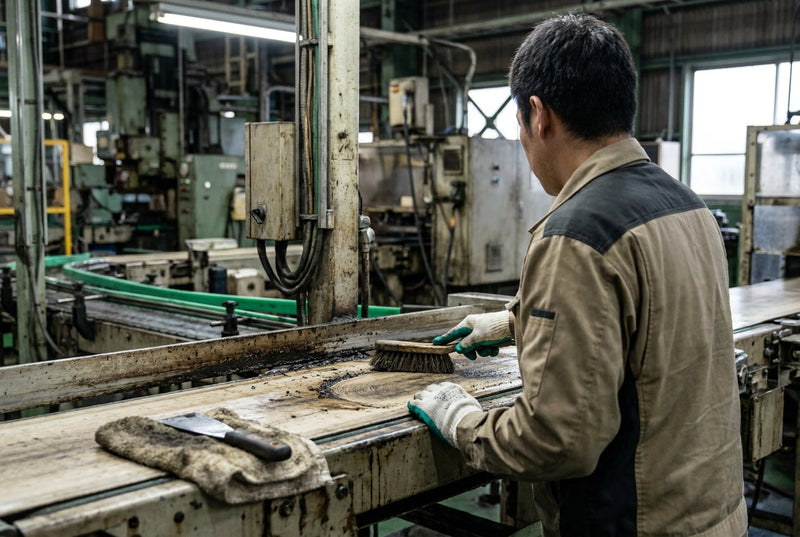
The most direct way to manage water consumption is by optimizing its use at the point of application. Implementing modern, low-flow and high-efficiency cleaning equipment can reduce water usage by 50 percent or more without compromising hygiene standards. For example, high-pressure, low-flow sprayers are highly effective for cleaning heavy equipment and parts, delivering strong mechanical action with minimal water volume.
Beyond powered equipment, simple changes in manual cleaning tools can yield impressive results. Microfiber and pulse mop systems can cut water use by 70 to 95 percent compared to traditional mops and buckets, all while maintaining or even improving cleaning outcomes. Similarly, steam cleaning methods use a fraction of the water required for conventional hot water washing, offering the added benefit of disinfecting surfaces as they remove soils. Even basic operational adjustments, like training staff to turn off water hoses between tasks, contribute to immediate and cumulative water savings.
Leveraging Waterless and Low-Water Cleaning Technologies
For certain industrial cleaning tasks, it is possible to eliminate water use entirely. Waterless cleaning technologies provide a powerful solution for reducing water consumption and completely removing the secondary liquid waste stream associated with cleaning. This is particularly valuable in sensitive environments or for equipment that cannot be exposed to moisture.
Dry ice blasting is a prime example of a waterless method. It uses solid carbon dioxide pellets that sublimate on impact, creating no secondary liquid waste. This makes it an ideal choice for cleaning sensitive electrical components, production molds, and other machinery where water is not permissible. For applications where some moisture is acceptable, certain steam cleaning methods offer a low-water alternative that is effective at removing tough soils and biofilms. These technologies not only conserve fresh water but also cut costs related to wastewater treatment and disposal, and they can minimize operational downtime by eliminating the drying time required with water-based cleaning.
Chemical Optimization for Enhanced Water Efficiency
The choice of cleaning chemistry plays a crucial role in water efficiency. High-efficiency cleaning formulations can reduce the need for multiple cleaning cycles and lower the volume of water required for rinsing, which has a direct impact on total water consumption. Furthermore, selecting biodegradable and low-toxicity cleaning agents can simplify wastewater treatment processes by decreasing the load of persistent or harmful substances.
Choosing the appropriate cleaning agent for a specific soil and substrate supports effective surface preparation and maintenance while minimizing environmental impact. The right chemical choice helps remove grime, buildup, and stains with less water and mechanical effort. For industrial needs, CG Chemicals offers solutions that are part of a water-conscious cleaning program. Surgical Strike is formulated for challenging degreasing and stain removal tasks, while New-Clear Blast is used for multi-surface cleaning. For a complete list of uses, see our Applications list.
Advanced Wastewater Treatment and Recycling
A comprehensive water management strategy includes recovering and reusing process water. Advanced wastewater treatment systems allow manufacturers to reclaim a significant portion of their water, potentially up to 80 percent, for non-potable uses. This transforms wastewater from a liability requiring costly disposal into a valuable reusable asset.
Modern treatment trains typically involve multiple stages, starting with primary solids removal and followed by advanced processes like membrane filtration, reverse osmosis, or disinfection with UV or ozone. A key technology in this area is Advanced Oxidation Processes (AOPs), which use highly reactive species to break down persistent organic pollutants that are difficult to remove with conventional methods. The high-quality water recovered from these systems can be safely reused in various industrial applications, including equipment washing, floor cleaning, and cooling tower makeup, thereby reducing both freshwater intake and sewer discharge fees.
Mechanism-to-Outcome Map for Water-Wise Cleaning
Understanding the link between specific actions and their outcomes is key to developing an effective water management program. Different mechanisms contribute directly to water conservation and cost savings.
- Chemical Formulation: Using concentrated, biodegradable formulations reduces the amount of rinse water needed and simplifies wastewater treatment, leading to lower overall water consumption and easier recycling.
- Equipment Design: High-pressure nozzles, steam cleaners, and microfiber systems deliver effective cleaning with less water, directly reducing water use at the source of application.
- Treatment Processes: Advanced methods like AOPs, UV, and membrane filtration effectively remove contaminants, which enables higher rates of wastewater recycling for non-potable applications.
- Operational Practices: Implementing water monitoring systems, sub-metering high-use areas, and using automated chemical dosing systems helps identify waste and ensures precise, efficient use of both water and cleaning agents.
Regulatory, Safety, or Compliance Considerations
Implementing a robust water efficiency program provides benefits beyond cost savings. These initiatives strongly align with broader environmental, social, and governance (ESG) goals and help companies meet their corporate social responsibility commitments. By reducing freshwater withdrawals and optimizing wastewater treatment, facilities can more easily comply with local environmental discharge regulations and avoid potential fines.
Safety remains paramount in any cleaning operation. When using cleaning solutions, it is important to always follow label directions for proper application, dilution, and disposal. For any cleaning process, safety protocols should be in place. Use with adequate ventilation. Avoid contact with eyes and prolonged skin contact. Keep products out of reach of children. From a risk management perspective, effective wastewater treatment and recycling can also mitigate operational risks associated with regional water scarcity or potential supply interruptions.
Selection Checklist for Sustainable Cleaning Solutions
To systematically improve water management, facilities can follow a structured approach to evaluate and implement new solutions. This checklist provides a framework for making informed decisions.
- Evaluate current water consumption: Use sub-metering and process audits to identify the most water-intensive cleaning steps.
- Assess cleaning equipment: Prioritize upgrading to low-flow, high-pressure, steam, or waterless alternatives where appropriate.
- Review cleaning chemistries: Opt for concentrated and high-efficiency formulations to minimize rinse water and simplify treatment.
- Consider wastewater treatment capabilities: Determine the feasibility of upgrading treatment systems to support internal water recycling.
- Analyze cost-benefit: Calculate the potential return on investment from reduced water, sewer, and chemical costs against the capital expenditure for new technologies.
- Evaluate implementation impact: Consider the effects on operational uptime, cleaning effectiveness, and worker training and safety during the transition.
Failure Modes or Operational Risks in Water Management
While the benefits of water-wise cleaning are significant, facilities must be aware of potential operational risks. Inadequate or improperly maintained wastewater treatment systems can result in recycled water that fails to meet quality standards, which could potentially damage equipment or compromise hygiene. Similarly, poorly maintained low-flow equipment may lose its effectiveness, leading operators to use more water or chemicals to compensate.
A failure to regularly monitor water consumption and system performance can mask developing inefficiencies, preventing the facility from realizing the expected savings and environmental benefits. Using incompatible cleaning chemicals can also complicate treatment processes, increasing the cost and complexity of recycling water. Finally, insufficient training on new methods or equipment can lead to incorrect application, wasting both water and chemicals and ultimately failing to achieve the desired cleanliness standards.
Clean and prep surfaces with CG Chemicals
If you are dealing with buildup, residues, or tough soil before maintenance or finishing work, CG Chemicals offers practical cleaning solutions for high-use environments. Explore New-Clear Blast and Surgical Strike based on your surface and soil type.
Sources
- https://www.intercleanshow.com/news/sustainability/solutions-to-help-save-water-in-the-cleaning-industry
- https://www.valicor.com/blog/industrial-wastewater-treatment-fuels-sustainability
- https://www.epa.gov/watersense/industrial-water-management
- https://www.waterworld.com/industrial
- https://www.fcsindustrialsolutions.com/about-us/news-and-press/industrial-cleaning-practices-and-environmental-impact/
- https://www.greatlakespowervac.com/news/sustainability-in-industrial-cleaning-how-were-making-a-difference/
- https://blog.coldjet.com/how-to-reduce-water-in-manufacturing-facilities
- https://www.servicemasterclean.com/servicemaster-of-kalamazoo/tips-and-resources/local-blog/2025/march/water-conservation-in-manufacturing-cleaning-processes/
- https://greenermethod.com/the-greener-method-approach-to-industrial-cleaning-safe-effective-sustainable/
- https://ascelibrary.org/doi/abs/10.1061/%28ASCE%29EE.1943-7870.0001655
- https://emag.directindustry.com/2023/03/30/4-new-eco-friendly-solutions-for-cleaning-water-and-wastewater/
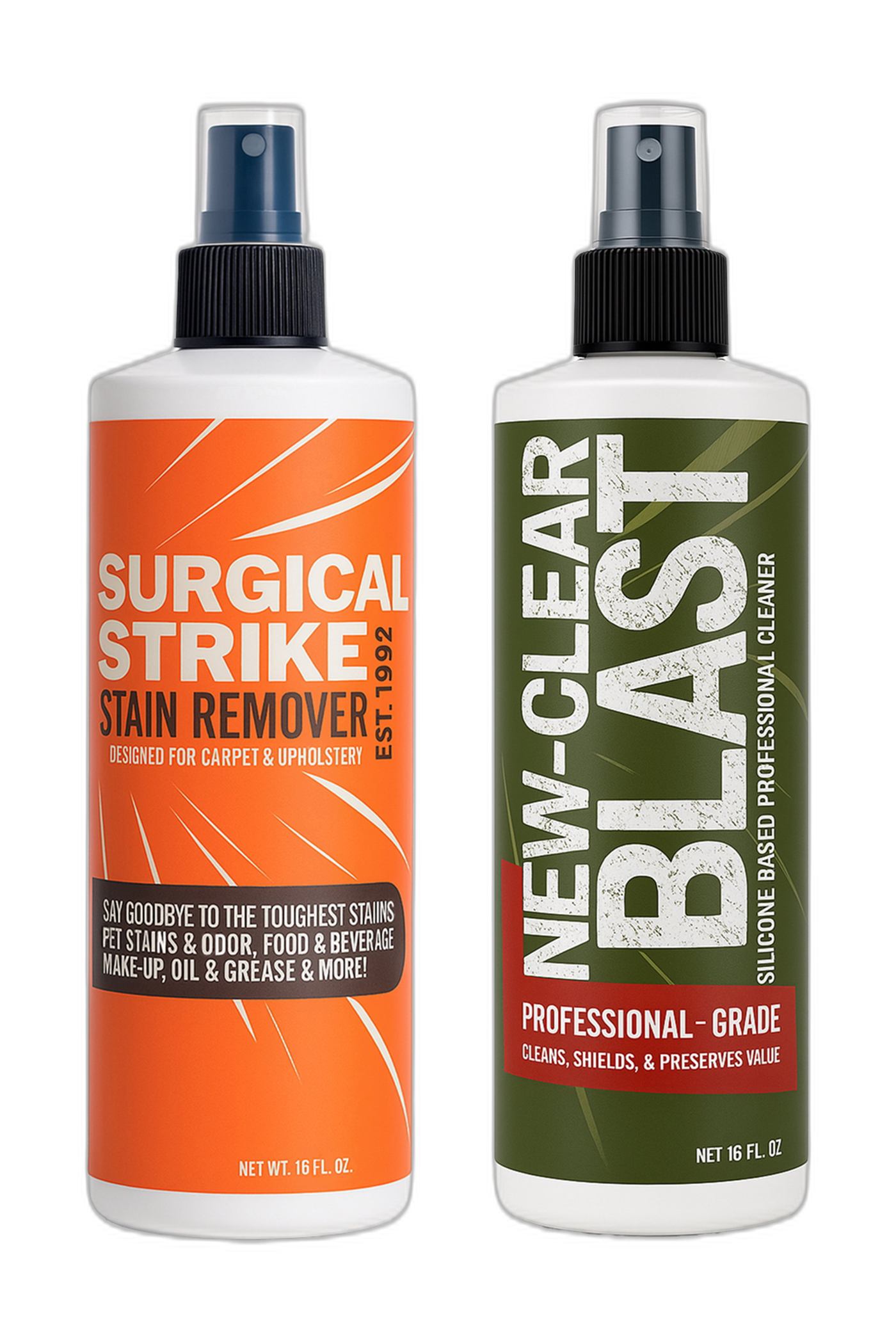
Two formulas. Serious range.
Use Surgical Strike for stains and odor, then New-Clear Blast to clean, shield and preserve hard surfaces.