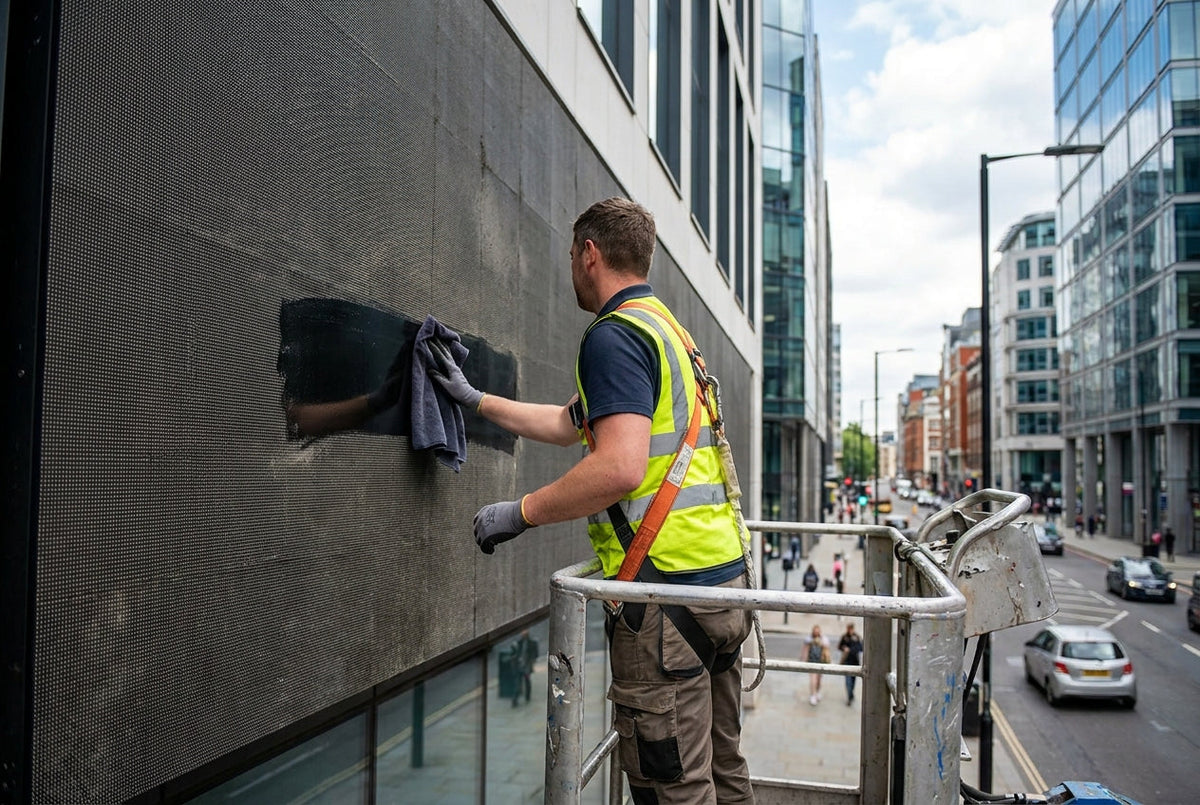
Key Takeaways
Maintaining the clarity and function of high-performance outdoor displays requires specific knowledge and procedures. Understanding the core principles of material compatibility, cleaning methods, and environmental factors is foundational to a successful maintenance strategy.
- Outdoor display cleaning is not generic surface cleaning; it demands material-specific protocols to protect screens, bezels, coatings, plastics, films, and sealed housings from damage.
- A conservative and repeatable cleaning procedure involves powering down and cooling the display, using a clean microfiber cloth for initial dusting, applying a compatible cleaner to the cloth rather than the screen, wiping gently, and drying with a separate, clean microfiber cloth.
- To prevent common risks like scratching, residue buildup, or chemical damage, avoid using ammonia or alcohol based cleaners, paper products, abrasive materials, excessive liquid, and untreated tap water.
- The durability of outdoor displays is a function of multiple variables, including UV exposure, time of wetness, temperature, pollutants, and the local climate, all of which influence the required frequency and type of cleaning.
- A complete maintenance routine should extend beyond the viewing surface to include inspections of frames, bezels, ventilation, cables, mounts, power connections, and enclosures.
The Challenge of Maintaining Outdoor Digital Signage Legibility
Outdoor digital displays are constantly exposed to environmental challenges that can compromise their primary function: clear communication. Factors such as airborne dust, road film, grime, and pollutants accumulate on surfaces, reducing optical clarity and making messages difficult to read.
For high-performance commercial and public signage, maintaining consistent visibility is essential for effectiveness. Whether displaying advertising, transit information, or public service announcements, the legibility of the content is paramount. Unaddressed surface buildup can decrease display contrast and color vibrancy, diminishing the visual impact and accessibility of the information presented to the public.
Implementing a program of preventative maintenance helps protect these valuable assets. Regular, correct cleaning not only preserves the aesthetic quality of the displays but also supports their operational reliability and longevity by mitigating the cumulative effects of environmental exposure.
Precision Cleaning for Display Longevity
Cleaning an outdoor digital display should be treated as a precise, material-specific maintenance task, fundamentally different from general glass or surface cleaning. Modern displays are complex assemblies that often incorporate advanced plastics, specialized films, anti-reflective laminates, and protective coatings, each with distinct tolerances for chemicals and physical contact.
Precision cleaning protocols are designed to address this complexity, focusing on methods that maintain optical clarity and material integrity. The goal is to remove environmental deposits without introducing scratches, chemical haze, or other forms of degradation that could shorten the display's service life.
CG Chemicals LLC offers solutions that assist with maintenance for high-use environments and industrial facilities. For soils on compatible surfaces, products such as New-Clear Blast, a multi-surface cleaner, and Surgical Strike, a degreaser, stain and odor remover, can be used as part of a regular cleaning protocol.
Essential Steps for Effective Display Cleaning
Following a structured procedure is key to cleaning outdoor displays effectively without causing inadvertent damage. This approach helps ensure consistency and protects the sensitive components of the signage.
First, always power down the unit and allow it to cool completely before beginning. Cleaning a warm or active display can cause cleaning solutions to evaporate too quickly, leaving streaks, and poses an electrical risk.
Next, gently remove any loose dust, pollen, or light soil from the screen with a clean, dry microfiber cloth. This step is critical to avoid grinding abrasive particles into the surface during the wet cleaning phase, which could cause fine scratches. After the initial dry wipe, apply a compatible cleaning solution to a separate, clean microfiber cloth until it is damp, not saturated. It is important to avoid spraying liquid directly onto the display, as this can allow moisture to seep into bezels and internal components.
Wipe the display gently in a consistent pattern with minimal pressure. For the final step, use a third, completely dry microfiber cloth to buff the surface and remove any remaining moisture. This helps prevent streaks and ensures a clear, residue-free finish.
Understanding Material Compatibility and Chemistry Selection
Before applying any cleaning agent, it is essential to verify its compatibility with the specific materials of the display. This includes not just the screen but also any plastics, films, gaskets, and coatings used in its construction. Using an incompatible cleaner can lead to irreversible damage.
Many common cleaners are unsuitable for digital signage. Solutions containing ammonia, alcohol, or harsh solvents can cause clouding, cracking, or discoloration on certain plastic and coated surfaces. These agents can degrade the optical and protective layers over time, diminishing the display's performance.
The tools used for cleaning are just as important as the chemical solution. Paper towels, shop rags, and other wood-fiber or abrasive materials should be avoided, as they can easily scratch sensitive screen surfaces. Always use clean, soft microfiber cloths. Furthermore, water purity can play a role; using untreated tap water with high mineral content can lead to spotting and staining on exterior plastics as it evaporates, leaving deposits behind.
Environmental Factors and Maintenance Planning
The operational environment dictates the demands placed on an outdoor display and its maintenance schedule. Durability is significantly affected by a combination of factors, including UV radiation, the amount of time the surface stays wet, temperature fluctuations, and atmospheric pollutants.
An effective maintenance plan must be adapted to these local variables. For instance, a display in a coastal area with salt spray will have different cleaning needs than one in a dry, dusty urban center. Similarly, signage in industrial zones or high-traffic corridors often accumulates grime more quickly and justifies more frequent inspection and cleaning intervals.
By considering these environmental conditions, facility managers can develop a proactive and practical maintenance strategy. This approach helps in extending the useful life and preserving the intended appearance of the outdoor signage, supporting its long-term return on investment.
Comprehensive Inspection for Sustained Performance
A thorough maintenance program goes beyond simply cleaning the viewing screen. It includes a routine inspection of the entire display assembly to identify potential issues before they become significant problems. This holistic view is crucial for ensuring sustained performance and operational reliability.
During each maintenance visit, technicians should inspect the physical structure, including frames, bezels, and mounting hardware, for any signs of wear, corrosion, or damage. It is also important to check ventilation systems and airflow paths to ensure they are clear of obstructions, as proper thermal management is critical for the longevity of electronic components.
The inspection should also cover all cables, power connections, and data ports. Finally, examining the overall condition of the enclosure helps confirm that its seals are intact and continue to protect the internal components from environmental ingress. This comprehensive approach supports display longevity and helps prevent unexpected downtime.
Selection Checklist
When developing a cleaning protocol for outdoor digital signage, consider the following questions to guide your selection of methods and materials:
- Does the selected cleaning solution demonstrate material compatibility with the specific plastics, films, and coatings used in the display assembly?
- Is the cleaning methodology non-abrasive, utilizing soft cloths like microfiber and minimal pressure to avoid scratching or otherwise damaging sensitive surfaces?
- Can the cleaning agent effectively remove common outdoor grime, road film, and other environmental deposits without leaving behind streaks, haze, or other residues?
- Does the overall maintenance plan account for local environmental conditions, such as UV exposure levels, typical time of wetness, and pollutant types, to determine an appropriate cleaning frequency?
- Is there a strict protocol in place to always power down displays and allow them to cool to ambient temperature before initiating any cleaning procedures?
Failure Modes or Operational Risks
Improper maintenance practices can introduce significant operational risks and lead to premature failure of outdoor display assets. Understanding these potential failure modes is key to avoiding them.
- Abrasion Damage: Using abrasive cleaning tools such as paper towels or applying excessive wiping pressure can create micro-scratches on the display surface. Over time, these scratches accumulate, reducing optical clarity and creating permanent visual defects.
- Chemical Degradation: The application of incompatible cleaning agents containing alcohol or ammonia may cause clouding, discoloration, or delamination of sensitive display plastics, films, or protective coatings, permanently impacting performance.
- Residue and Spotting: Using untreated tap water, which often contains dissolved solids and minerals, can leave deposits and streaks on the screen after evaporation. This residue impairs luminous legibility and can be difficult to remove.
- Environmental Wear: Neglecting regular maintenance allows grime to build up and can accelerate material aging due to prolonged exposure to UV radiation, moisture, and fluctuating temperatures, ultimately reducing the display's operational life.
Mechanism-to-Outcome Map
Understanding the direct relationship between specific actions or conditions and their results can help reinforce proper maintenance protocols for outdoor displays.
- Mechanism: UV Radiation and Environmental Exposure → Outcome: Material Degradation: Continuous exposure to UV light, moisture, temperature cycles, and pollutants affects the long-term durability of outdoor display materials, requiring targeted maintenance to mitigate these effects.
- Mechanism: Incompatible Cleaning Chemistry → Outcome: Surface Damage: The use of unsuitable cleaning solutions, such as those with ammonia or alcohol, can chemically alter sensitive display surfaces, causing irreversible damage like clouding or reduced transparency.
- Mechanism: Untreated Water Application → Outcome: Spotting and Staining: Water containing high levels of dissolved solids, when used for cleaning, can evaporate and leave behind mineral deposits on exterior display surfaces, impairing visibility.
- Mechanism: Regular Inspection and Preventative Maintenance → Outcome: Sustained Luminous Legibility and Reliability: Consistent cleaning practices and comprehensive inspections of the entire display assembly mitigate grime buildup and help identify potential issues early, preserving both appearance and operational performance.
Operational and Regulatory Considerations
When maintaining outdoor digital signage, follow your organization's operating procedures and any local regulations that apply to the site. Factoring environmental responsibility into maintenance decisions supports sustainable operations over the life of the display.
It is essential to follow established electrical procedures for powering down any outdoor electronic display before work begins. This is a fundamental step for technician personal protection and to prevent damage to the equipment.
Always adhere to the label directions for any cleaning solution being used. These instructions typically include recommendations for use with adequate ventilation and avoiding prolonged skin or eye contact. Following manufacturer guidance is a key part of any workplace protocol. Additionally, ensure that the handling and disposal of any cleaning solutions comply with local environmental regulations to minimize impact.
Sources
- https://digitalsignage.com/digital_signage/docs/installation/maintenance-troubleshooting/
- https://store.astm.org/d1435-20.html
- https://www.signindustry.com/blogs/why-is-signage-maintenance-important/


Two formulas. Serious range.
Use Surgical Strike for stains and odor, then New-Clear Blast to clean, shield and preserve hard surfaces.