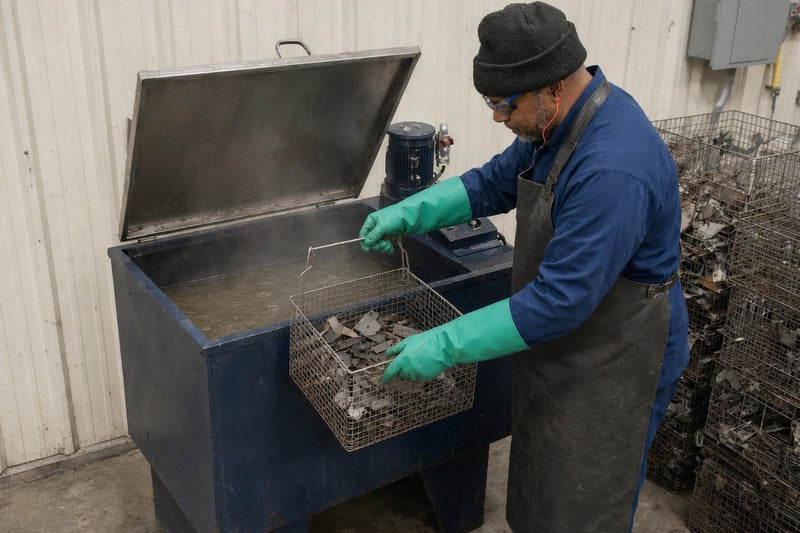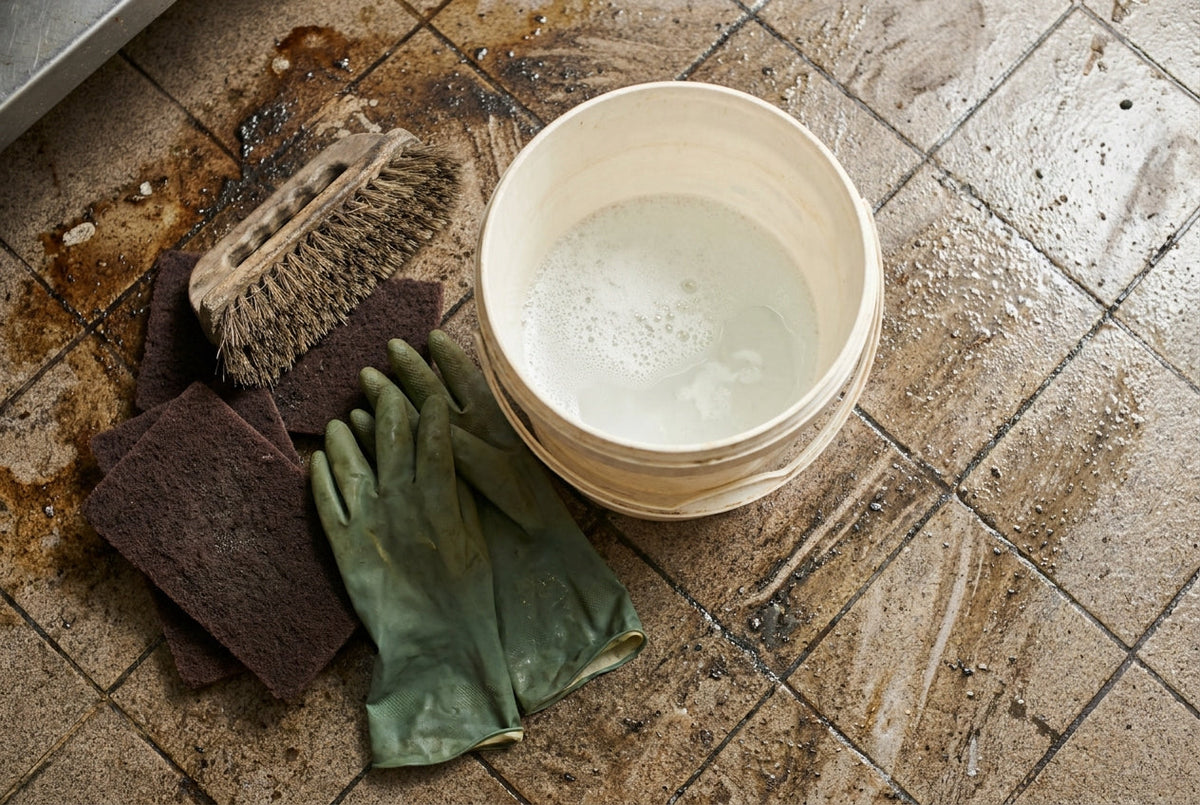
The answer is nuanced. While a higher concentration of cleaning solution can be effective, it is critical to stay within the manufacturer's specified dilution ratios. Exceeding these guidelines can lead to wasted product, surface damage, or sticky residues. A successful approach involves a balanced consideration of cleaner concentration, dwell time, and mechanical action.
Key Takeaways
- Heavily soiled surfaces may require a stronger working solution, but you must always stay within the product's stated dilution range.
- Increasing concentration alone is not always the solution. Other factors, including dwell time, agitation, temperature, application method, and soil removal, significantly impact results (source).
- A practical sequence for tough cleaning includes removing loose soil, applying the permitted stronger dilution, maintaining the specified wet dwell period, agitating the surface, and then thoroughly removing the loosened residue (source).
- Using a concentrated solution outside of product instructions can create residues or damage surfaces. Always test a small, inconspicuous area and follow all label directions (source).
- Many product instructions provide separate dilution guidance for general and heavy soil, supporting controlled adjustments rather than unlimited increases in concentration.
Understanding Dilution: It's More Than Just Concentration
A dilution ratio represents the measured relationship between a cleaner concentrate and water, which together form the working solution you apply to a surface. The primary purpose of dilution is to create a solution that is effective for the soil load without being wasteful or potentially harmful to the surface. Your initial assessment of the soil type and severity helps determine the appropriate starting point for the cleaner concentration.
Many product labels specify different dilution ratios for different tasks. For example, a floor cleaner might recommend a dilution of 2 fluid ounces per gallon of water for general cleaning but suggest 6 fluid ounces per gallon for stripping away heavy soil and old floor finish (source). This tiered approach provides a clear guide for adjusting the solution's strength based on the challenge at hand.
While concentration is an important variable, it is only one component of the cleaning process. A successful outcome depends on the interplay between chemical concentration, application time, temperature, and mechanical action. Simply increasing the amount of cleaner without considering these other factors often leads to unsatisfactory results (source).
How to Approach Heavily Soiled Surfaces
A methodical approach to heavily soiled surfaces helps ensure effective and efficient cleaning. Rather than immediately reaching for more concentrate, follow a structured process that combines chemical and mechanical effort.
First, begin by removing any loose soil, caked-on mud, or bulky debris from the surface. This step reduces the overall workload on the cleaning solution, allowing its active ingredients to work directly on the adhered grime and stains (source).
Next, consult the product instructions. If a stronger dilution ratio is provided for heavy soil, prepare the working solution accordingly, making sure you stay within the stated range. An example of a heavy-duty dilution could be 1 part cleaner to 3-6 parts water, but this varies widely between products (source). Apply this solution evenly and allow it to remain wet on the surface for the entire specified dwell period. Finally, after the dwell time has passed, use mechanical action like scrubbing and then thoroughly remove the spent solution and loosened soil with a clean cloth, mop, or extractor (source).
The Role of Dwell Time and Mechanical Action
Concentration is just one piece of the puzzle. Dwell time, or the amount of time a cleaning solution remains wet on a surface, is equally critical. This period allows the cleaner's chemistry sufficient time to penetrate, loosen, and disperse soil, making it easier to remove. Rushing this step can undermine the entire process, even with a strong solution. A product specification might direct users to keep a solution on a surface for 3 to 5 minutes before scrubbing or reapplication (source).
Mechanical action, such as scrubbing with a brush or scouring pad, physically helps to separate stubborn soil from the surface. Chemistry alone may not be enough to dislodge heavily adhered or embedded grime. The combination of chemical action from the cleaner and physical force from scrubbing is often required for a deep clean (source).
The overall efficiency of cleaning is a function of four interconnected factors: chemical action, time, mechanical action, and temperature. Adjusting one without considering the others can limit the final result. For consistent outcomes, especially in commercial settings, dispensing equipment can help ensure accurate dilution every time (source).
Common Dilution and Cleaning Pitfalls
Even with a suitable product, certain missteps can lead to poor results. Understanding these common pitfalls can help you avoid them and achieve a better outcome.
- Exceeding Recommended Ratios: Using too much cleaner concentrate can leave behind a sticky or hazy residue that attracts more dirt. It can also potentially damage sensitive surfaces and requires extra work to rinse away (source).
- Insufficient Dwell Time: Wiping away the cleaner immediately after application does not give it enough time to work. The solution needs to remain on the surface long enough to break down and lift the soil.
- Lack of Mechanical Action: Forgetting to scrub or agitate the surface can leave behind embedded soil that the cleaner has loosened but not fully dislodged.
- Using Dirty Tools: Cleaning with a dirty mop, cloth, or bucket can lead to soil redeposition, essentially spreading grime back across the surface you just cleaned.
- Allowing the Solution to Dry: If a cleaning solution dries on the surface, it can result in streaks or a film, particularly if the mixture was overly concentrated (source).
Mechanism to Outcome Map: How Cleaning Factors Influence Results
The effectiveness of any cleaning task is governed by the balance of four key factors. Understanding how they work together allows you to adjust your approach for different challenges.
- Concentration: A higher concentration, when kept within product guidelines, provides more active cleaning agents to interact with heavy soil. This is the chemical component of the cleaning process.
- Time (Dwell Time): Allowing adequate dwell time gives the cleaner's chemistry the necessary time to penetrate, emulsify, or suspend soil particles, making them easier to remove (source).
- Temperature: While not always adjustable for household tasks, warmer water can sometimes accelerate chemical reactions and help dissolve certain types of soils more effectively (source).
- Mechanical Action: Physical force from scrubbing, brushing, or high-pressure water helps to break the bond between soil and the surface, facilitating its removal. This is a crucial step for any tough cleaning job (source).
These four factors are interdependent. For example, if you reduce dwell time, you may need to compensate with more mechanical action to achieve the same result. Adjusting one without considering the others can limit overall cleaning efficiency.
Selection Checklist for Effective Cleaning
Before you begin any cleaning project, running through a quick checklist can help prepare you for success and ensure proper use of your cleaning solutions.
- Identify Soil Type and Load: First, determine the nature of the soil. Is it light dust, routine grime, or heavy grease, oil, or stains? This assessment will guide your choice of cleaner and dilution ratio (source).
- Consult Product Instructions: Always check the product label or technical data sheet for recommended dilution ratios for different soil loads. Follow these instructions carefully.
- Perform a Test Area: Apply the prepared working solution to a small, inconspicuous area to verify its effectiveness and to check for any adverse reactions with the surface material (source).
- Ensure Proper Ventilation: Regardless of the product, always use cleaners with adequate ventilation to maintain air circulation in your workspace.
- Protect Yourself: Follow all safety information on the product label. General practices include avoiding contact with eyes and prolonged skin contact, and keeping all cleaning products out of reach of children (source).
Choosing the Right Cleaner for the Soil Load
Different cleaning solutions are designed for specific types of soils and surfaces. Using the right product for the job is just as important as using the correct dilution. For general, multi-surface cleaning that requires a streak-free finish, New-Clear Blast can be applied across various surfaces in homes, vehicles, and facilities.
When dealing with heavier grease, tough stains, or persistent odors, a different approach may be needed. Surgical Strike works as a degreaser, stain and odor remover suitable for many challenging applications. For comprehensive cleaning and degreasing tasks that require both routine cleaning and heavy-duty soil removal, the Power Pack provides both formulas.
CG Chemicals solutions are used as part of surface preparation and maintenance routines across various environments, including Manufacturing settings and on Special surfaces.
Testing Before Broader Application
It is always a good practice to perform a test on a small, hidden area before applying any cleaning solution to a large surface, especially when working with an unfamiliar material or a particularly stubborn type of soil. This simple step serves several important functions.
The test area helps confirm that your chosen dilution, dwell period, and mechanical action will yield the desired results without causing any issues (source). By observing the test spot, you can check for any adverse reactions, such as discoloration, etching, or changes to the surface finish.
This preliminary check can prevent widespread problems that are difficult and time-consuming to correct. Confirming your cleaning process in a small test patch reduces the risk of rework and helps ensure effective soil removal across the entire project area (source).
Sources
- https://www.tandellresearch.com/academy/knowledge-centre/sinners-circle
- https://prosoco.com/Content/Documents/Product/SK_HD_Restoration_Cleaner_NE_SPC.doc
- NPS: Recommendations for Cleaning Government-Issued Headstones
- https://www.okumsupply.com/products/blue-concentrate-no-rinse-cleaner-for-all-floors-1-gl
- https://repository.uobaghdad.edu.iq/user/110789235148594803218/d14e3cbb-aab2-43c0-a883-50340bb9395b.pdf
- How to Boost the Efficiency of Cleaning
- https://www.prochemicalproducts.com/blog/

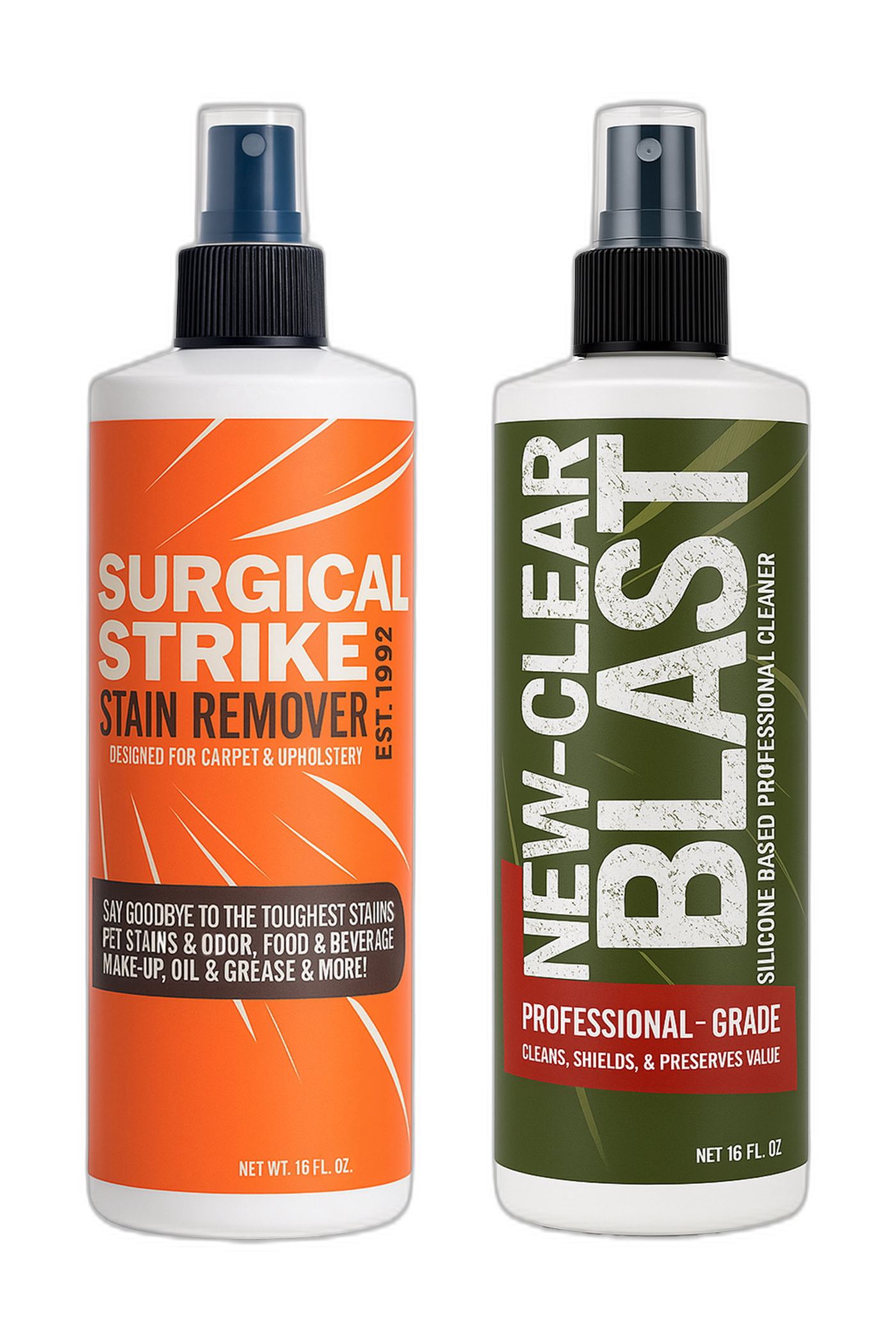
Two formulas. Serious range.
Use Surgical Strike for stains and odor, then New-Clear Blast to clean, shield and preserve hard surfaces.