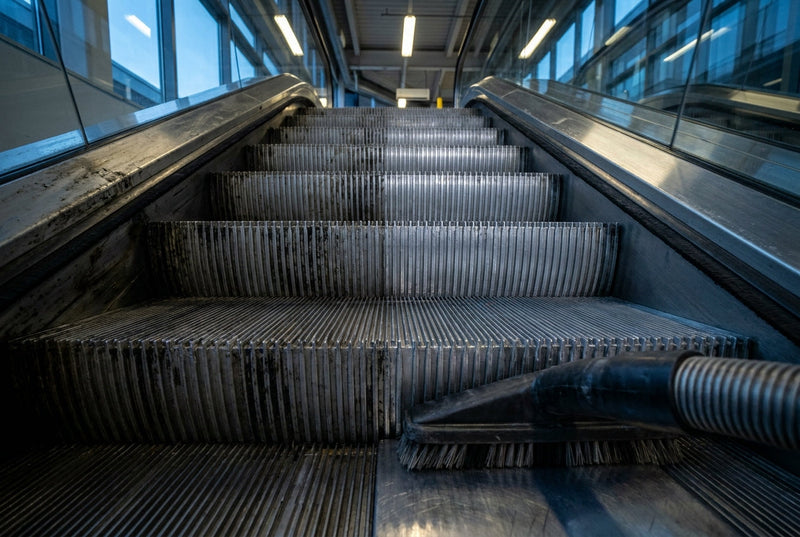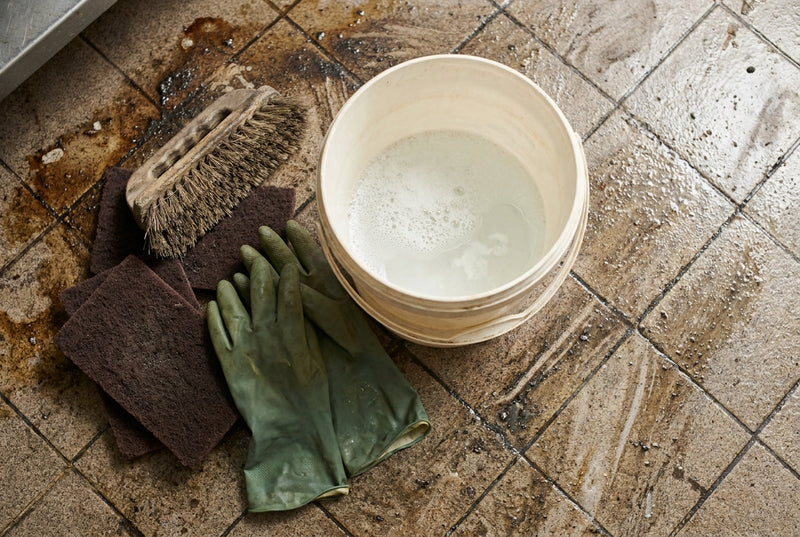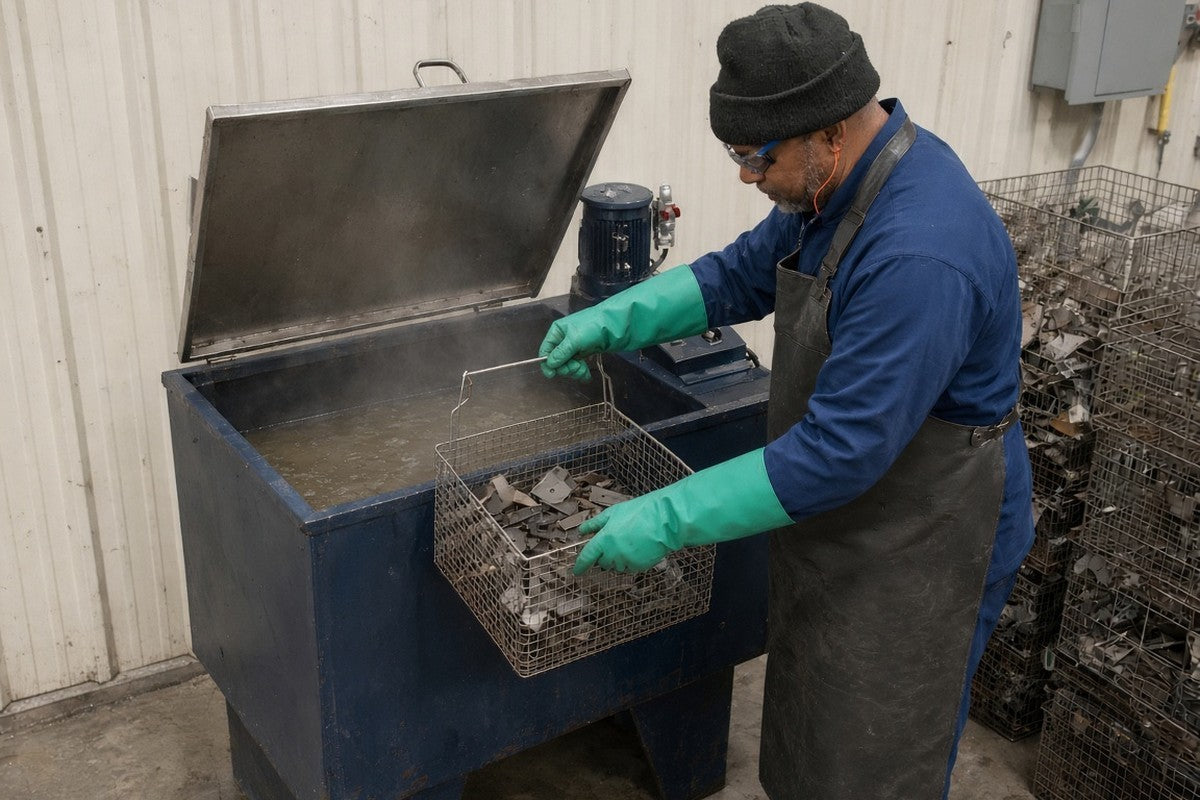
Effective surface preparation is a critical step in any industrial coating process. When metal parts are not properly cleaned, the integrity and longevity of the final finish can be compromised. Understanding what kinds of chemicals remove oil and scale from metal parts before coating in manufacturing is essential for operators and procurement teams focused on quality control and process efficiency. This guide outlines the different types of contaminants, the chemical solutions used to address them, and practical steps for preparing various metal substrates.
Key Takeaways
- Organic contaminants like oil, grease, lubricants, and shop soil are typically removed using alkaline, detergent, emulsion, solvent, or chelating cleaners. The choice depends on the specific metal, the soil, and the planned coating system.
- Inorganic contaminants such as rust, oxide deposits, and mill scale generally require different treatments, including acid pickling, acid descaling, etching, or mechanical removal. Degreasing alone is often insufficient for these issues.
- The type of metal substrate dictates the appropriate chemistry. Steel, galvanized steel, and aluminum each require specific cleaning solutions to avoid surface damage and ensure compatibility with subsequent processes.
- While chemical cleaning removes contaminants, it may not create the surface profile needed for mechanical coating adhesion. In many cases, abrasive methods are also required to achieve the necessary surface roughness.
- A complete surface preparation sequence involves several steps: degreasing, scale and rust removal, thorough rinsing, drying, and a final verification of cleanliness before any coating is applied.
Differentiating Contaminants: Oil, Grease, and Scale
In Manufacturing environments, metal parts are exposed to a variety of substances that can interfere with coating adhesion. These contaminants are broadly categorized as either organic or inorganic. Organic residues include oils, greases, lubricants, and general shop soils that accumulate during machining, forming, and handling processes. These substances create a film that prevents a coating from making direct contact with the metal substrate.
Inorganic contaminants include rust, heat treat scale, oxide layers, and mill scale. Unlike oils and greases, these are a part of the metal surface itself or a result of its reaction with the environment. Rust and other oxides require specific chemical or mechanical treatments for removal. Mill scale, a hard oxide layer that forms on hot-rolled steel, is particularly challenging and may necessitate grinding, wire brushing, or abrasive blasting.
A multi-stage approach is standard practice. The first step is typically precleaning or degreasing to remove organic soils. This is followed by a separate process to address any inorganic scale or rust, ensuring the surface is entirely free of foreign matter before moving forward.
Chemical Solutions for Degreasing and Organic Residue Removal
A range of chemical cleaners is available for removing organic residues from metal parts. The selection depends on the substrate, the type of soil, and process requirements. Common options include alkaline, solvent, emulsion, and chelate cleaners.
Alkaline cleaners are widely used to remove oils, greases, and shop soils from compatible metals. They work by saponifying fatty soils and emulsifying other oils so they can be rinsed away. Solvent cleaners are effective at dissolving or loosening specific organic residues, offering a targeted approach for stubborn contamination. Emulsion cleaners combine water-based and solvent-based components to lift and suspend oily soils from the surface.
For operations looking for a versatile degreasing solution, products like Surgical Strike, a degreaser, stain and odor remover, can be used as part of a surface preparation workflow to help remove grease and grime from equipment and parts. The choice of degreaser should always be made with consideration for the metal type, the subsequent coating system, and the available application equipment.
Addressing Rust, Oxide, and Mill Scale on Metal Parts
While degreasers handle organic soils, different chemistries are needed for inorganic scale. Acid treatments are the most common chemical method for removing rust, oxides, and scale. Acid pickling, for example, is a process used to remove surface impurities and scale from metals using an acid solution.
Acid descalers are specifically formulated to dissolve or loosen rust and mineral or heat scale, provided they are compatible with the metal substrate. The standard ISO 27831-2 covers various preparation methods, including degreasing, descaling, and pickling for non-ferrous metals prior to coating.
For particularly stubborn contamination like heavy mill scale, or when a specific surface profile is required, mechanical methods are often necessary. These can include grinding, wire brushing, or abrasive blasting. These techniques not only remove scale but also create a roughened surface that can support mechanical adhesion of the coating.
Substrate Specifics: Cleaning Steel, Aluminum, and Galvanized Surfaces
The chemical compatibility between the cleaner and the metal substrate is crucial. Using the wrong chemistry can result in surface damage, such as unwanted etching or staining, which can compromise the final coating. Each metal type has different chemical resistances that must be considered during the selection process.
Steel surfaces can generally tolerate more aggressive, highly alkaline cleaners for degreasing. However, galvanized steel and aluminum are more sensitive. These substrates typically require milder alkaline or specially formulated mildly acidic cleaners to prevent damage to the zinc coating or the aluminum itself.
For stainless steel, specific standards like ASTM A380/A380M provide detailed practices for cleaning, descaling, and passivation. Careful selection of cleaning agents ensures that the surface is properly prepared without altering its properties or interfering with the coating's performance. Our Applications list details various environments where surface preparation is key.
Ensuring Cleanliness: Rinsing, Drying, and Verification Methods
The cleaning process does not end when the chemical is applied. Thorough rinsing is a critical step to remove all residues from the cleaner itself. Any remaining chemical film can interfere with coating adhesion just as much as the original soil. After a complete rinse, parts must be dried properly to prevent issues like flash rusting on steel or water spots that can affect the quality of the finish.
Once parts are dry, their cleanliness should be verified before they proceed to the next stage. Several methods are available for this verification. These include simple visual inspections and wipe tests to check for obvious residues. More technical methods include residual-pattern checks and free-iron testing for specific applications.
A common and effective method is the water-break test. In this test, water is flowed over the surface of the part. If the water forms a continuous, unbroken film, the surface is considered clean and free of oily residues. If the water beads up or separates, it indicates that contaminants are still present, and the part requires further cleaning.
Mechanism-to-Outcome: How Pre-Coating Cleaning Supports Adhesion
The primary goal of pre-coating cleaning is to create a surface that is receptive to the coating. Effective cleaning removes contaminants that act as a barrier between the metal substrate and the applied finish. This allows for direct contact, which is necessary for achieving strong chemical and mechanical bonds.
While chemical cleanliness is fundamental, it is often only one part of the equation. Many high-performance coating systems also rely on mechanical adhesion. This requires a specific surface profile, or roughness, that gives the coating something to grip. This profile is typically created through mechanical methods like abrasive blasting or sanding.
Therefore, a practical and effective surface preparation sequence typically includes precleaning or degreasing, followed by scale or rust removal (if necessary), thorough rinsing, and complete drying. After verification, the part should be coated promptly to prevent recontamination of the prepared surface.
Failure Modes: Risks of Incomplete Surface Preparation
Skipping or improperly performing surface preparation steps can lead to a variety of coating failures. If oil, grease, or shop soils are not completely removed, the coating will have poor adhesion, resulting in premature peeling, chipping, or delamination. This requires costly rework and can damage a manufacturer's reputation for quality.
Residual rust or mill scale left on a surface can continue to corrode even after being coated. This underlying corrosion can cause the coating to blister, lift, and ultimately fail, leaving the metal substrate unprotected. Similarly, residues from the cleaning chemicals themselves can react with the coating, interfering with its cure, final appearance, and protective properties.
Finally, if a coating system requires a specific surface profile for mechanical anchorage, relying on chemical cleaning alone is insufficient. Without the necessary roughness, the coating may not achieve the required bond strength, even on a chemically clean surface. Incomplete surface preparation is a primary cause of premature coating failure, leading to increased costs and reduced asset lifespan.
Standards and Handling Notes for Metal Cleaning Operations
Industrial metal cleaning follows established surface preparation standards. Industry standards, such as ASTM A380/A380M for stainless steel and ISO 27831-2:2008 for non-ferrous metals, provide guidance on degreasing, descaling, and other preparation methods.
When working with any industrial cleaning chemical, it is imperative to follow all label directions and consult the product's technical data sheets and SDS. These documents provide critical information on proper use, personal protective equipment (PPE), and disposal. Following established surface preparation standards helps ensure consistency and quality in the final product.
Ensure adequate ventilation is present in the work area to disperse any fumes. Workers should avoid contact with eyes and prolonged skin contact by wearing appropriate PPE, such as gloves and eye protection. Additionally, all industrial chemicals must be stored properly and kept out of reach of children.
Pre-Coating Cleaning Selection Checklist
Choosing the right cleaning process is a systematic task that balances effectiveness, compatibility, and process requirements. Following a checklist can help ensure all critical factors are considered.
- Identify the substrate: Determine the exact type of metal being cleaned (e.g., carbon steel, stainless steel, aluminum, galvanized steel) to select a compatible chemical cleaner that will not cause damage.
- Assess the contamination: Characterize the type and severity of the soil. Is it light oil, heavy grease, rust, or thick mill scale? This will determine whether a simple degreaser is sufficient or if a multi-step process including descaling is needed.
- Define surface profile needs: Consult the coating's technical data sheet to determine if a specific surface profile is required for mechanical adhesion. If so, mechanical preparation methods must be integrated into the workflow.
- Evaluate process capabilities: Consider your facility's equipment and limitations, including immersion tank availability, spray wand systems, temperature controls, and rinsing efficiency. The chosen chemical must be compatible with your process.
- Review the technical data and SDS: Always consult the product's SDS and technical data sheets for detailed instructions on application, dilution ratios, PPE, and waste disposal guidelines.
- Verify cleanliness: Implement a verification step after cleaning and rinsing, such as a visual inspection or a water-break test, to confirm that the surface is adequately prepared before it moves to the coating stage.
Sources
- IGP: Technical Information — Pretreatment of Metals
- Valspar: Pre-treatment of Metal Substrates (TI P1 / USA)
- ASTM A380/A380M: Cleaning, Descaling, Pickling, and Passivation of Stainless Steel Parts
- ISO 27831-2:2008: Cleaning and Preparation of Metal Surfaces — Non-ferrous Metals
- DeFusco: Surface Preparation Standards Guide

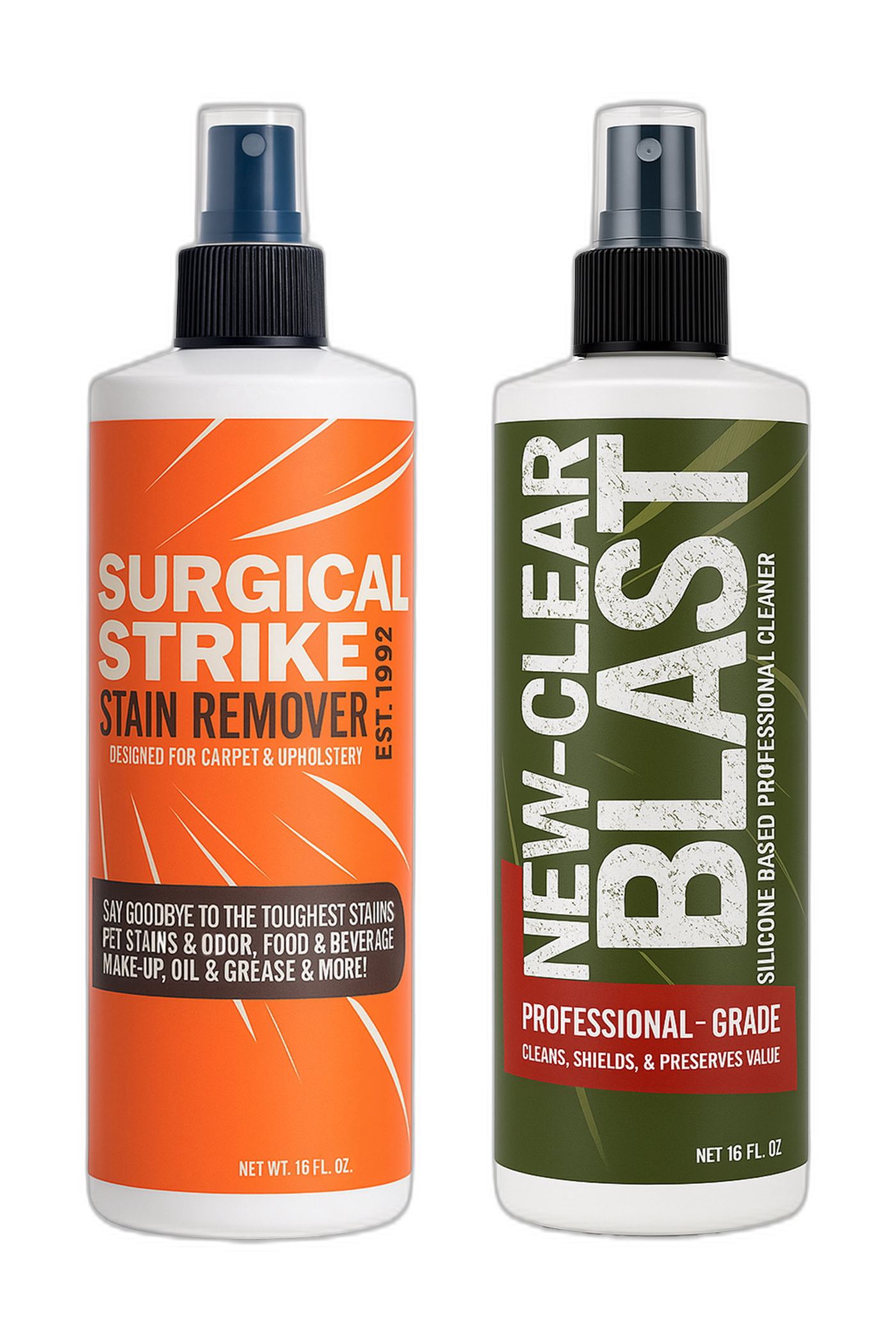
Two formulas. Serious range.
Use Surgical Strike for stains and odor, then New-Clear Blast to clean, shield and preserve hard surfaces.