Key Takeaways for Escalator and Moving Walkway Maintenance
Effective escalator and moving walkway maintenance depends on a structured and consistent approach. For facility managers and cleaning teams, focusing on key principles can make a significant difference in both appearance and operational reliability. A successful strategy addresses the unique design and high traffic these systems endure.
- Implement a zone-based cleaning approach. Address treads or pallets, risers, handrails, and landing areas as distinct zones. This ensures each part of the system receives the specific attention it requires for comprehensive coverage.
- Combine mechanical action with chemical solutions. Use profiled brushes or pads designed for grooved surfaces to mechanically agitate and loosen soil. This action, paired with a suitable cleaning agent and vacuum collection, is essential for removing deeply embedded tread grime (source).
- Pre-treat stubborn spots. For tough areas with beverage residue, grease, or oil deposits, pre-treat them with an appropriate detergent. Allowing for a controlled dwell time before machine cleaning helps break down the contaminants for easier removal (source).
- Prioritize a low-moisture cleaning method. To protect sensitive mechanical and electrical components, it is critical to prevent excess liquid from entering the equipment. A low-moisture or dry-cleaning approach is often recommended for these systems (source).
- Develop a dynamic cleaning schedule. Create a schedule that includes immediate spill response, routine cleaning based on traffic, and periodic deep cleaning. The frequency should be adjusted based on the specific soil load and usage patterns of the facility.
The Unique Cleaning Demands of Dynamic Transport Systems
Escalators and moving walkways are more than just floors in motion. Their design, which includes grooved treads, vertical risers, constantly moving handrails, and complex mechanical parts, presents cleaning challenges not found in static environments. The continuous movement and high foot traffic in areas like airports, shopping centers, and transit stations lead to a rapid accumulation of dirt, debris, and other soils (source).
The primary cleaning challenges include pervasive embedded grime in tread grooves, sticky spills from beverages, and scuff marks from footwear. Unlike flat flooring, these grooved surfaces trap dirt, making simple mopping or sweeping ineffective. A proper cleaning protocol must therefore go beyond general floor care, utilizing specialized techniques that account for the system's dynamic nature and various materials, from metal treads to rubber handrails.
Maintaining these systems is not just about aesthetics. Careful and consistent cleaning helps support the passenger experience and contributes to the operational longevity of the equipment (source). Protocols must be designed to handle a wide range of soil types, including tracked-in dirt, salt residue in winter, food and beverage spills, and even lubricant or oil deposits from the machinery itself.
Implementing a Staged Cleaning Protocol
An effective escalator cleaning protocol is not a one-size-fits-all plan. It should be staged to address different cleaning needs based on the type and severity of soil accumulation. This tiered approach helps maintenance teams allocate resources efficiently and keeps the equipment in optimal condition. A well-structured plan differentiates between immediate, routine, and deep-cleaning tasks.
Immediate cleaning involves rapid spill response and removing loose debris. Addressing spills promptly prevents liquids from seeping into mechanical components and stops sticky residues from attracting more dirt and becoming embedded in the treads (source). Routine cleaning, performed daily or weekly, targets the general soil accumulation from regular foot traffic. The frequency of routine cleaning should be determined by the facility's traffic levels; a busy airport will require more frequent attention than a suburban office building.
Deep cleaning is a more intensive process performed periodically, such as quarterly or semi-annually. This involves more thorough procedures, often using specialized escalator cleaning machines, to extract deeply embedded soil from treads and hard-to-reach areas. In some cases, deep cleaning may require coordination with maintenance technicians (source). The key is to create a dynamic cleaning plan that adapts to real-world conditions rather than a rigid, unchanging schedule.
Advanced Techniques for Tread and Pallet Cleaning
Cleaning the grooved treads and pallets of escalators and moving walkways requires a methodical approach that combines mechanical action, chemical application, and soil extraction. For the embedded grime that accumulates in these grooves, using profiled brushes or pads that match the tread pattern is highly effective. This mechanical agitation physically loosens the packed-in soil, preparing it for removal (source).
Many specialized escalator cleaning machines work by applying a cleaning solution, scrubbing the treads with these profiled brushes, and then using a powerful vacuum to collect the loosened debris and spent liquid simultaneously (source). This integrated process is critical for maintaining a low-moisture environment, which helps protect the internal components of the machinery from potential water damage (source).
For particularly stubborn spots like dried beverage spills or greasy deposits, a pre-treatment step can be beneficial. Applying a suitable detergent and allowing it to dwell for a controlled period helps dissolve the contaminant, making it easier for the machine to remove. To ensure complete coverage, cleaning machines may need to make several overlapping passes, especially if the machine's cleaning width is narrower than the escalator's full width. The final step of effective vacuum extraction is necessary to lift away the suspended soil and leave the treads clean.
Comprehensive Care for Risers, Handrails, and Adjacent Surfaces
While treads are a primary focus, a complete cleaning protocol must also address the other surfaces of an escalator system. Risers, handrails, glass or metal balustrades, and the landing plates at the top and bottom all require dedicated attention. These surfaces accumulate different types of soil, such as fingerprints, hand oils, smudges, and splash marks, which are not addressed by tread-cleaning machines (source).
Cleaning these varied surfaces requires careful methods to prevent cleaning solutions from dripping or spraying into the moving parts of the equipment. For handrails and balustrades, applying a cleaning solution to a cloth first, rather than directly onto the surface, provides better control and minimizes overspray. This method is also useful for wiping down the exterior housing and deck covers.
Selecting chemistries that are compatible with the different materials - rubber for handrails, glass or stainless steel for panels - is important for avoiding streaks, haze, or residue buildup. Regular cleaning of these complementary surfaces contributes significantly to the overall aesthetic appeal of the equipment and the perception of the facility (source). A clean handrail, clear glass, and smudge-free risers present a well-maintained appearance to every user.
Selecting the Right Chemistry for Soil Removal
The effectiveness of any escalator cleaning protocol depends heavily on choosing the right cleaning chemistry for the job. Product selection should be guided by the specific type of soil present and the material of the surface being cleaned. Using a product that is not well-suited for the task can be ineffective or, in some cases, leave behind residues that attract more dirt.
For heavy soils like grease, oil, and deeply embedded grime common on treads and in the internal pit area, a powerful degreaser is often necessary. A product like Surgical Strike is a degreaser, stain and odor remover designed to address these tough contaminants on compatible surfaces. For general cleaning on surfaces like glass balustrades, stainless steel panels, and risers, a multi-surface cleaner is a practical choice. A product such as New-Clear Blast can be used as a multi-surface cleaner with a streak-free finish.
Regardless of the product chosen, it is crucial to follow the manufacturer's label directions for dilution ratios, application methods, and recommended dwell times (source). Before applying any new chemical to a large area, always perform a small spot test on an inconspicuous section to confirm surface compatibility and check for any adverse reactions. This is particularly important for sensitive materials within modern Facilities (source).
Failure Modes and Operational Risks in Escalator Cleaning
Improper or inadequate cleaning can lead to several operational issues and risks that go beyond poor aesthetics. One of the most common problems is the buildup of residue from incomplete removal of grime, grease, and sticky spills. This buildup can affect the operational smoothness of the escalator treads as they cycle through the mechanism. Over time, debris accumulation in comb plate areas or where the steps transition into the landing can cause blockages or trip safety sensors, leading to shutdowns (source).
Another significant risk is moisture ingress. Using excessive water or liquid cleaning solutions can allow fluid to penetrate mechanical and electrical components. This can compromise lubricated parts like chains and bearings and create risks in electrical systems, potentially leading to costly repairs and extended downtime (source).
Furthermore, improper cleaning techniques can be counterproductive. If cleaning chemicals are not thoroughly removed, they can leave behind a sticky or oily residue that attracts new soil at an accelerated rate. This diminishes the appearance of the equipment quickly and necessitates more frequent cleaning cycles. Failure to address tough stains from spills or control odors in high-traffic areas can also negatively impact the passenger experience and the overall perception of the facility.
Mechanism-to-Outcome Map: Optimizing Cleaning Process
Understanding the direct link between a specific cleaning action and its result is key to optimizing any maintenance program. This mechanism-to-outcome relationship helps teams focus on the steps that deliver the most impact.
-
Mechanism: Pre-treatment with a suitable detergent and allowing adequate dwell time.
Outcome: This action helps dissolve and loosen tough, dried-on beverage residue and oily deposits, making them easier to remove from the surface during the main cleaning phase (source). -
Mechanism: Mechanical agitation using profiled brushes or pads that fit into the grooves of the treads.
Outcome: This physically releases embedded soil and packed-in grime from the intricate surfaces of treads and pallets, which cannot be removed by spraying or wiping alone (source). -
Mechanism: Immediate vacuum extraction following the agitation and solution application.
Outcome: This step removes the suspended soil and spent cleaning solution from the surface, preventing dirt from being redeposited and maintaining the low-moisture environment needed to protect internal components (source). -
Mechanism: Controlled application of cleaning solutions, such as applying cleaner to a cloth instead of spraying directly onto surfaces like handrails.
Outcome: This limits the amount of excess liquid, minimizing the risk of drips and overspray entering sensitive internal components of the equipment. -
Mechanism: Adhering to a consistent, routine cleaning schedule based on foot traffic.
Outcome: Regular cleaning prevents the heavy accumulation of soil, which reduces the labor and intensity required for deep cleaning operations and extends the periods between them.
Procurement and Operations Checklist for Escalator Cleaning
For facility and procurement managers, selecting the right tools and products is a critical step in establishing an effective escalator cleaning program. This checklist can guide the decision-making process to ensure the chosen solutions are both effective and appropriate for the equipment.
- Verify that the selected cleaning solutions are compatible with all escalator and moving walkway surface materials, including aluminum or steel treads, rubber handrails, and glass or synthetic panels (source).
- Confirm that the product instructions clearly specify the correct dilution ratios and application methods for different types of soil. Over-concentrating chemicals can leave residue, while over-diluting can reduce effectiveness (source).
- Ensure that any chosen cleaning tools, especially brushes and vacuum systems, are specifically designed to clean grooved treads and effectively collect debris without causing damage.
- Prioritize cleaning systems and chemicals that support a low-moisture profile to prevent water ingress and protect the internal mechanical and electrical components of the equipment.
- Seek solutions that help remove common soils like grease, grime, buildup, stains, and odors without leaving behind streaks or sticky residues. A comprehensive solution like the Power Pack, which combines a degreaser and a multi-surface cleaner, can provide versatility for various cleaning tasks.
Sources
- https://www.issa.com/articles/the-ups-of-escalator-cleaning/
- https://www.kaercher.com/us/en/commercial/know-how/cleaning-escalators-and-moving-walkways-c5516
- https://www.cibse.org/knowledge-research/knowledge-resources/engineering-guidance/cibse-top-tips/cibse-top-tips-4-escalators-and-moving-walks-2015/
- https://cmmonline.com/articles/escalator-cleaning
- https://www.karcherhire.co.uk/blog/how-do-escalator-cleaners-work/

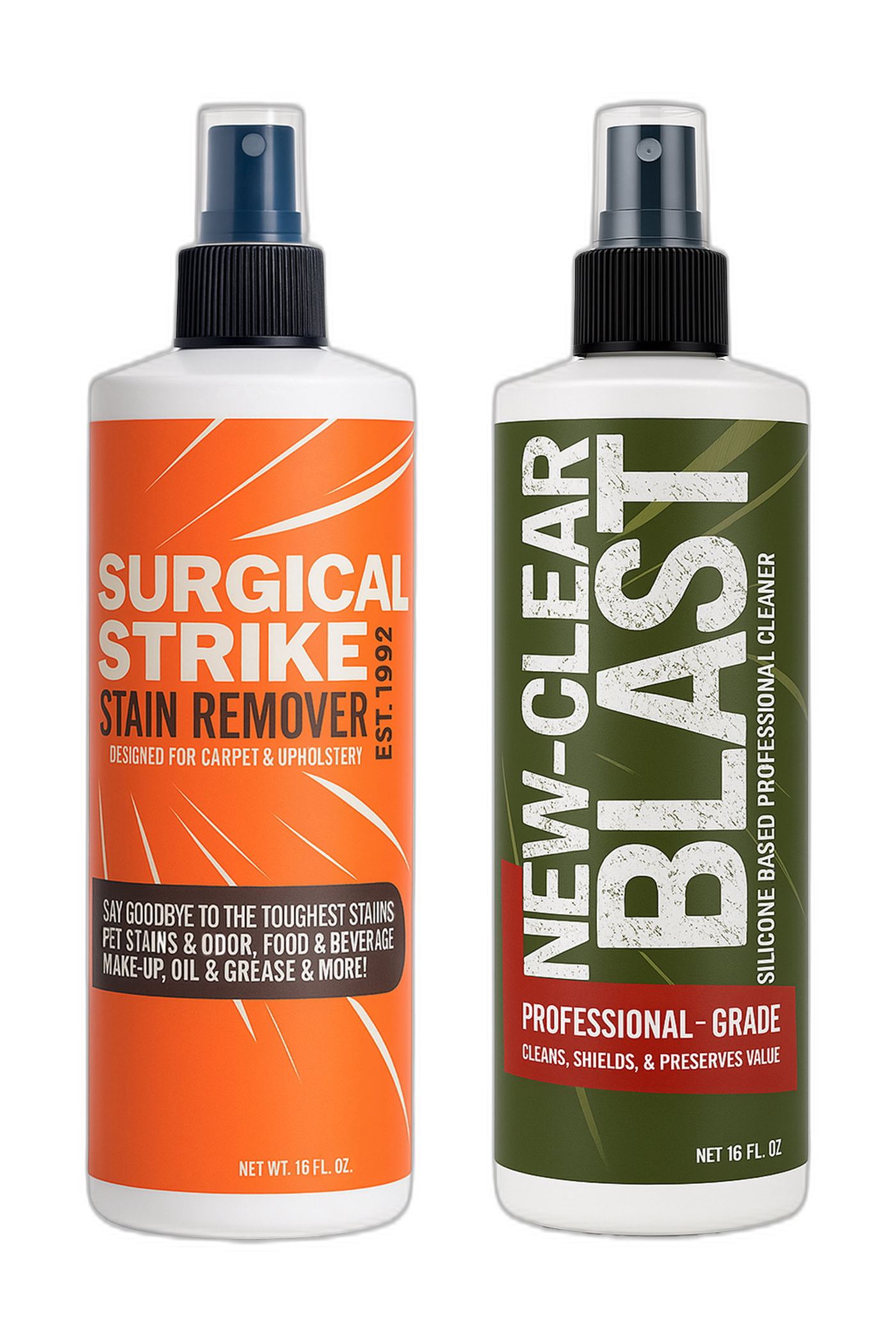
Two formulas. Serious range.
Use Surgical Strike for stains and odor, then New-Clear Blast to clean, shield and preserve hard surfaces.