Research Report: The Best Cleaners for Allergy Sufferers
This comprehensive analysis reveals a rapidly expanding market driven by health consciousness and environmental concerns. The hypoallergenic cleaning products sector is growing, with market research firms projecting steady expansion through the early 2030s. Consumer demand is primarily driven by rising prevalence of respiratory illnesses, skin allergies, and increased awareness of chemical sensitivities in traditional cleaning products. The broader market shows even stronger momentum, according to industry market reports.
Market Dynamics and Consumer Behavior Trends
The shift toward hypoallergenic cleaning products represents a fundamental change in consumer priorities, moving beyond simple effectiveness to encompass health, safety, and environmental responsibility. Market analysis indicates that sustainability has become the consumer packaged goods sector's newest consideration in 2025, alongside health-conscious consumer-driven trends and a shift toward e-commerce. This transformation reflects a broader cultural movement where consumers increasingly recognize allergies and sensitivities not as rare inconveniences but as common concerns requiring proactive management.
The demographic driving this change spans multiple generations, with particular emphasis from families with children, individuals with respiratory conditions like asthma, and environmentally conscious consumers. Research has linked frequent use of some conventional household cleaning chemicals with asthma symptoms and skin irritation, prompting consumers to seek alternatives. The demand is further amplified by growing awareness that even supposedly bio-based ingredients can contain contaminants that sensitive individuals cannot tolerate.
Health and Safety Considerations
The health implications of traditional cleaning products have become a central concern driving market growth. Conventional cleaners often contain volatile organic compounds (VOCs) that affect indoor air quality and can trigger respiratory issues, particularly problematic for individuals with asthma or chemical sensitivities. Hypoallergenic alternatives address these concerns by eliminating common irritants such as artificial fragrances, dyes, harsh chemicals, parabens, phthalates, and phosphates.
The benefits extend beyond immediate comfort to reducing ongoing exposure to common irritants. Hypoallergenic cleaning products help maintain better indoor air quality, which is especially crucial during winter months when homes are sealed against outdoor air. These products are specifically designed to reduce exposure to allergens such as dust mites and pet dander while providing effective cleaning power.
For vulnerable populations including children, elderly individuals, and those with compromised immune systems, hypoallergenic cleaners can help reduce exposure to common irritants. The products are formulated to be gentle on skin while maintaining cleaning effectiveness. Professional cleaning services and community spaces are increasingly adopting these products to accommodate diverse sensitivities among occupants.
Ingredient Innovation and Formulation Trends
The evolution of hypoallergenic cleaning products has been marked by significant advances in ingredient science and formulation technology. Plant-based ingredients have emerged as the foundation of effective hypoallergenic formulations, with manufacturers utilizing naturally derived surfactants such as alkyl glycosides from coconut and corn. These ingredients provide effective cleaning action while being formulated with sensitive skin and airways in mind.
Key ingredient categories showing promise include potassium cocoate and potassium citrate for gentle yet effective cleaning action, specially-formulated ethanol solvents sourced from renewable materials like corn, and natural ingredients that help remove mold stains and grime without harsh chemical residues. Essential oils are gaining prominence for their natural fragrance properties.
The formulation approach has shifted toward creating concentrated products that reduce packaging waste while maintaining effectiveness. These concentrates often use biodegradable formulas that break down naturally in the environment. CG Chemicals has focused on developing cleaning solutions that deliver strong cleaning performance.
Market Segmentation and Product Categories
The hypoallergenic cleaning products market demonstrates clear segmentation patterns based on application, formulation type, and distribution channels. By application, the market divides into family use, workplace applications, and specialized environments such as healthcare facilities and schools. Family use dominates the market share, driven by parents' concerns about exposing children to harsh chemicals and the desire to create more comfortable home environments.
Product format segmentation reveals interesting consumer preferences, with spray bottles maintaining dominance due to ease of use, while concentrates and refills are gaining traction due to environmental benefits and cost-effectiveness. Multi-purpose cleaners represent the largest category within hypoallergenic products, as consumers prefer versatile solutions that can address multiple cleaning needs without requiring extensive product inventories.
The scented versus unscented debate continues to shape product development, with unscented formulations generally preferred by individuals with severe sensitivities, while lightly scented products using natural essential oils appeal to consumers seeking pleasant fragrances without synthetic additives. This segmentation allows manufacturers to serve both ends of the sensitivity spectrum effectively.
Certification and Quality Assurance Standards
Third-party certification has become a critical differentiator in the hypoallergenic cleaning products market. The Asthma & Allergy Friendly® Certification Program, developed jointly by the Asthma and Allergy Foundation of America and Allergy Standards Limited, represents the gold standard for product validation. Products earning this certification undergo independent testing to confirm adherence to strict scientific standards, providing consumers with reliable assurance of product suitability.
The certification process evaluates multiple factors including ingredient safety, absence of common allergens, effectiveness in typical use conditions, and impact on indoor air quality. Products must meet all standards to earn the certification mark, creating a comprehensive quality threshold that goes beyond basic safety requirements. This rigorous approach has helped establish consumer trust and differentiate genuinely hypoallergenic products from those making unsubstantiated claims.
Regional Market Analysis and Geographic Trends
Geographic analysis reveals distinct regional patterns in hypoallergenic cleaning product adoption and preferences. North America and Europe currently lead the market, driven by high consumer awareness of allergies, strong regulatory frameworks supporting greener products, and established distribution networks for specialty cleaning products. These regions benefit from mature e-commerce infrastructure that facilitates access to niche products and specialized formulations.
The Asia-Pacific region demonstrates the strongest growth potential, fueled by increasing disposable incomes, rising awareness of health and wellness issues, and expanding urban populations concerned about indoor air quality. Countries like Japan and South Korea show particular interest in hypoallergenic products, reflecting cultural values that prioritize health and cleanliness.
Emerging markets in Latin America and the Middle East & Africa present promising opportunities, although current market penetration remains lower compared to developed regions. These markets are characterized by growing middle-class populations, increasing awareness of health issues, and expanding retail infrastructure that supports specialty product distribution.
Technology Integration and Smart Cleaning Solutions
The intersection of technology and hypoallergenic cleaning represents an emerging trend with significant growth potential. Smart cleaning devices and IoT-enabled solutions are beginning to incorporate hypoallergenic product compatibility, allowing users to optimize cleaning routines while maintaining sensitivity-friendly environments.
Air quality monitoring integration with cleaning product selection represents a particularly promising development. Smart home systems can now track indoor air quality metrics and recommend appropriate hypoallergenic cleaning products based on real-time environmental conditions and occupant sensitivities. This technological integration appeals to health-conscious consumers who want data-driven approaches to maintaining healthy indoor environments.
Automated dispensing systems for concentrated hypoallergenic cleaners are gaining traction in commercial applications, providing precise dosing that optimizes effectiveness while minimizing exposure to cleaning chemicals. These systems particularly benefit facilities serving sensitive populations, such as schools, healthcare facilities, and senior living communities.
Recommended Source Links and Descriptions
- Asthma and Allergy Foundation of America Certification Guide - Official certification standards and approved product listings
- Hypoallergenic All-Purpose Cleaner Market Analysis - Comprehensive market research and growth projections
- Green Cleaners Market Trends - Industry analysis and consumer preference data
- Eco-Friendly Cleaning Benefits - Industry overview
- Allergy-Proofing Home Guide - Practical implementation strategies for sensitive individuals
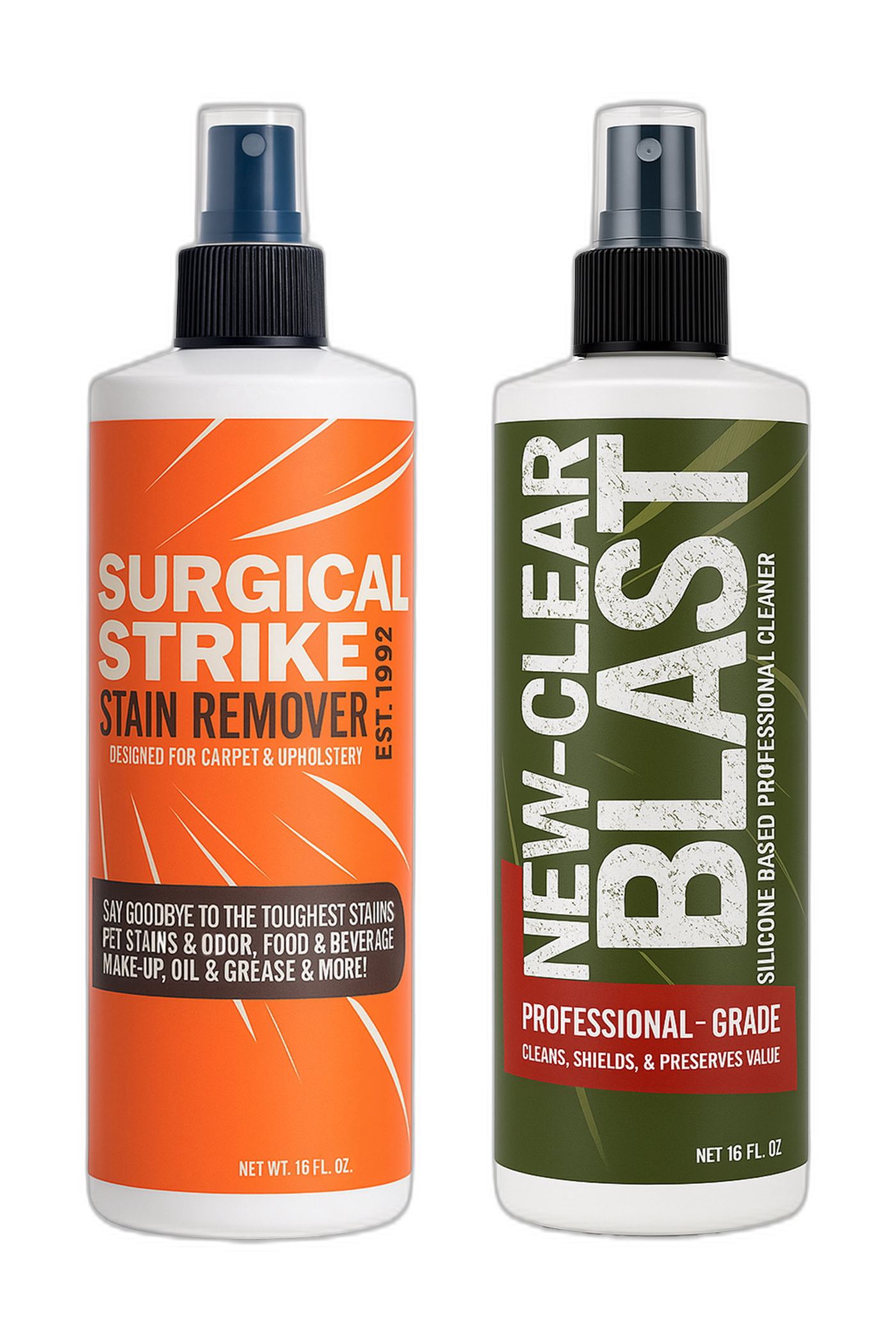
Two formulas. Serious range.
Use Surgical Strike for stains and odor, then New-Clear Blast to clean, shield and preserve hard surfaces.