High-touch surfaces in both residential and commercial settings require consistent attention to manage the accumulation of soil, residues, and general buildup. These surfaces, which are frequently handled by multiple people, are key areas in any maintenance plan. An effective cleaning strategy starts with choosing the right product and method for the specific surface material and the type of soil present.
Understanding the distinction between cleaning to remove soil and other maintenance steps is fundamental. The primary goal of cleaning is the removal of dirt, grease, and other unwanted matter from surfaces. This process is a critical prerequisite for any subsequent treatments or finishing work.
This guide provides practical strategies for facility operators, maintenance teams, and procurement professionals seeking direct, problem-solving approaches to surface care. We will cover how to identify key surfaces, select appropriate cleaners, and implement efficient cleaning protocols. For dependable solutions designed for high-use environments, CG Chemicals offers cleaning and surface-prep formulas to support your maintenance operations.
Key Takeaways for Effective Surface Maintenance
For consistent surface maintenance, a structured approach is essential. This involves using suitable products and methods that are compatible with the surface material to avoid damage and achieve the desired outcome. The primary objective is the removal of visible soil, grease, and residue. This step is a necessary preparation before any subsequent surface treatments are applied.
The cleaner you choose is a critical decision and should always align with the material of the surface being cleaned. For example, porous surfaces may require different solutions than non-porous ones. To help prevent overspray and protect sensitive equipment or surrounding areas, it is often better to apply cleaners directly to a cloth rather than spraying them onto the surface.
Safety and chemical compatibility are paramount. It is crucial to never combine incompatible cleaning chemicals, such as bleach and ammonia, as this can produce hazardous gases. Always follow product label directions, including instructions on dilution, application, and ventilation.
Identifying High-Touch Surfaces in Industrial and Domestic Settings
High-touch surfaces are defined as those that are frequently handled throughout the day, making them priority areas within a regular cleaning schedule. Identifying these surfaces is the first step in creating a targeted and efficient cleaning plan for any environment, from a private Home to a large industrial facility.
In residential settings, common high-touch surfaces include:
- Doorknobs and door handles
- Light switches
- Kitchen and bathroom countertops
- Faucets and sinks
- Appliance handles (refrigerator, microwave, oven)
- Remote controls and phones
In commercial, institutional, and industrial Facilities, the list expands to include shared equipment and common areas. Examples often include handrails, elevator buttons, control panels on machinery, shared desks and keyboards, conference tables, and restroom fixtures. Creating a formal checklist of these surfaces ensures that cleaning protocols are applied consistently and thoroughly.
The Fundamental Role of Cleaning for Surface Integrity
The primary function of routine cleaning is the physical removal of visible soil, dirt, grease, grime, and other organic matter from surfaces. This process is essential for maintaining the appearance and integrity of the surfaces themselves. Effective cleaning is also the foundational step that prepares surfaces for any subsequent maintenance, repair, or finishing tasks.
A clean substrate is necessary for many maintenance applications. Failure to properly remove surface soil can compromise the effectiveness of further treatments. For example, residues left behind can interfere with the adhesion of paints, coatings, or sealants, leading to premature failure of the application.
For tasks that involve heavy soils like grease, oil, or stubborn stains, a general-purpose cleaner may not be sufficient. In these cases, specialized cleaning agents are required to effectively break down and lift the soil. For this type of surface prep work, a product like Surgical Strike, a degreaser, stain and odor remover, can be used as part of the process to prepare the surface for the next step.
Selection Checklist: Choosing the Right Cleaner for Your Surface
Choosing the correct cleaning product is vital for both effectiveness and surface preservation. Using the wrong type of cleaner can be ineffective at best and damaging at worst. This checklist can guide the selection process for any application.
- Surface Compatibility: Always verify that the cleaning product is suitable for the material. Hard, non-porous surfaces like stainless steel have different requirements than soft surfaces like upholstery or sensitive electronics.
- Soil Type: Match the cleaner to the specific problem. Is it light dust, heavy grease and oil, food stains, or persistent odors? A degreaser is formulated for oily soils, while other cleaners are better for general grime.
- Application Method: Consider the most appropriate way to apply the solution. A ready-to-use spray might be convenient for small areas, while a concentrate for dilution may be more economical for large floors or equipment.
- Product Label Directions: Carefully read and follow all manufacturer instructions. This includes guidance on use, necessary ventilation, and any personal protective equipment (PPE) that may be required for safe handling.
For general multi-surface cleaning that also leaves a protective, streak-free finish, consider New-Clear Blast, a multi-surface cleaner and protector. For tough jobs involving grease and stains, Surgical Strike is designed to address difficult soils as part of a surface preparation workflow.
Optimizing Cleaning Processes for Efficiency and Results
To achieve consistent results, cleaning processes should be systematic. Start by removing any loose debris or heavy, gross soil from the surface with a dry cloth or brush. This preliminary step prevents the cleaner from becoming immediately saturated and allows it to work more effectively on the remaining soil.
When applying a liquid cleaning solution, spray it onto a cloth or sponge rather than directly onto the surface. This technique provides better control, prevents overspray onto unintended areas, and is especially important when working near electronics, electrical outlets, or in occupied spaces.
Work methodically from cleaner areas toward more heavily soiled areas. This prevents the transfer of soil from dirty sections to already cleaned sections. Allow the cleaning solution the appropriate contact time as specified on the product label to give the chemistry time to break down the soil. Afterward, wipe the surface clean with a fresh cloth and allow it to air dry completely. For operations with diverse cleaning needs, CG Chemicals offers the Power Pack, a bundle that combines New-Clear Blast and Surgical Strike to address a wide range of soils and surfaces.
Mitigating Operational Risks: Preventing Residue and Degradation
Improper cleaning practices can introduce operational risks, including the accumulation of chemical residues. These residues can make surfaces feel sticky, attract new soil more quickly, and detract from the overall appearance of the environment. Over time, this buildup can become difficult to remove.
Using cleaning solutions that are not compatible with the surface material can lead to significant damage. This may manifest as discoloration, corrosion, cracking, or other forms of degradation. Always check for material compatibility before using a new product, especially on sensitive materials like certain plastics, finished woods, or specialty metals.
Adhering to the manufacturer's instructions for dilution ratios and application methods is critical. Using a product that is too concentrated may leave residue or damage surfaces, while using a solution that is too diluted will likely result in suboptimal cleaning performance. Following label directions helps ensure both effectiveness and surface safety.
Mechanism to Outcome: How Cleaning Impacts Surface Condition
The effectiveness of cleaning is a result of both physical action and chemical assistance. The physical action of wiping, scrubbing, or mopping helps to dislodge and remove soil. This is combined with chemical detergents and surfactants in the cleaning solution that work to break down, lift, and suspend organic matter and other soils, allowing them to be wiped away easily. This combination results in a visibly clean surface.
Proper surface preparation through thorough cleaning is fundamental to the success of many subsequent tasks. For example, before applying a new coating or sealant, the substrate must be completely free of grease, oil, and grime. A clean surface supports better adhesion, which is critical for the longevity and performance of the finish.
Targeting specific types of soil with the appropriate chemistry leads to a better outcome. Using a degreaser for oils and greases, for instance, leverages chemistry specifically designed to emulsify these substances for more effective removal. Consistent and correct cleaning practices are a key part of maintaining the aesthetic and functional integrity of surfaces over their lifespan.
Compliance and Safety in Chemical Cleaning Applications
Safety is a primary consideration when handling and using cleaning chemicals. One of the most critical rules is to never mix different cleaning products, especially those containing bleach and ammonia. The combination can release toxic chloramine gas, which is hazardous to inhale. Always use products as intended and store them in their original containers.
Always read and adhere to the product label directions before use. The label provides essential information regarding proper application, required ventilation, and any necessary personal protective equipment (PPE), such as gloves or eye protection. It is also important to keep all cleaning products securely stored and out of the reach of children.
Many cleaning and maintenance products specify a required contact time on the label. This is the amount of time the surface must remain visibly wet with the solution for the product to work as intended. Following this directive is necessary to achieve the expected results, whether for simple cleaning or more intensive soil removal.
Implementing Robust Facility Cleaning Programs
For commercial and industrial Facilities, a structured cleaning program is essential for consistent maintenance and operational readiness. The first step is to develop a repeatable checklist that identifies all high-touch surfaces and specifies the frequency of cleaning for each. This ensures that no areas are overlooked and that standards are maintained consistently.
Regular training for cleaning staff is a cornerstone of a successful program. Training should cover proper product usage, correct application techniques for different surfaces, dilution procedures for concentrates, and all relevant safety protocols. Well-trained personnel are more efficient and are better equipped to handle cleaning challenges safely.
Cleaning efforts should be prioritized based on traffic and usage. High-traffic areas, shared equipment, and common touchpoints like door handles, light switches, and breakroom appliances require more frequent attention than low-traffic zones. By utilizing cleaning solutions formulated for commercial applications and confirming their compatibility with the diverse materials found within a facility, managers can support a reliable and effective maintenance program.
Sources
- https://www.cdc.gov/hygiene/about/when-and-how-to-clean-and-disinfect-a-facility.html
- https://www.cdc.gov/hygiene/about/when-and-how-to-clean-and-disinfect-your-home.html
- https://www.cdc.gov/hygiene/cleaning-disinfecting/index.html
- https://www.who.int/news-room/questions-and-answers/item/coronavirus-disease-covid-19-cleaning-and-disinfecting-surfaces-in-non-health-care-settings
- https://iris.who.int/bitstream/handle/10665/332096/WHO-2019-nCoV-Disinfection-2020.1-eng.pdf

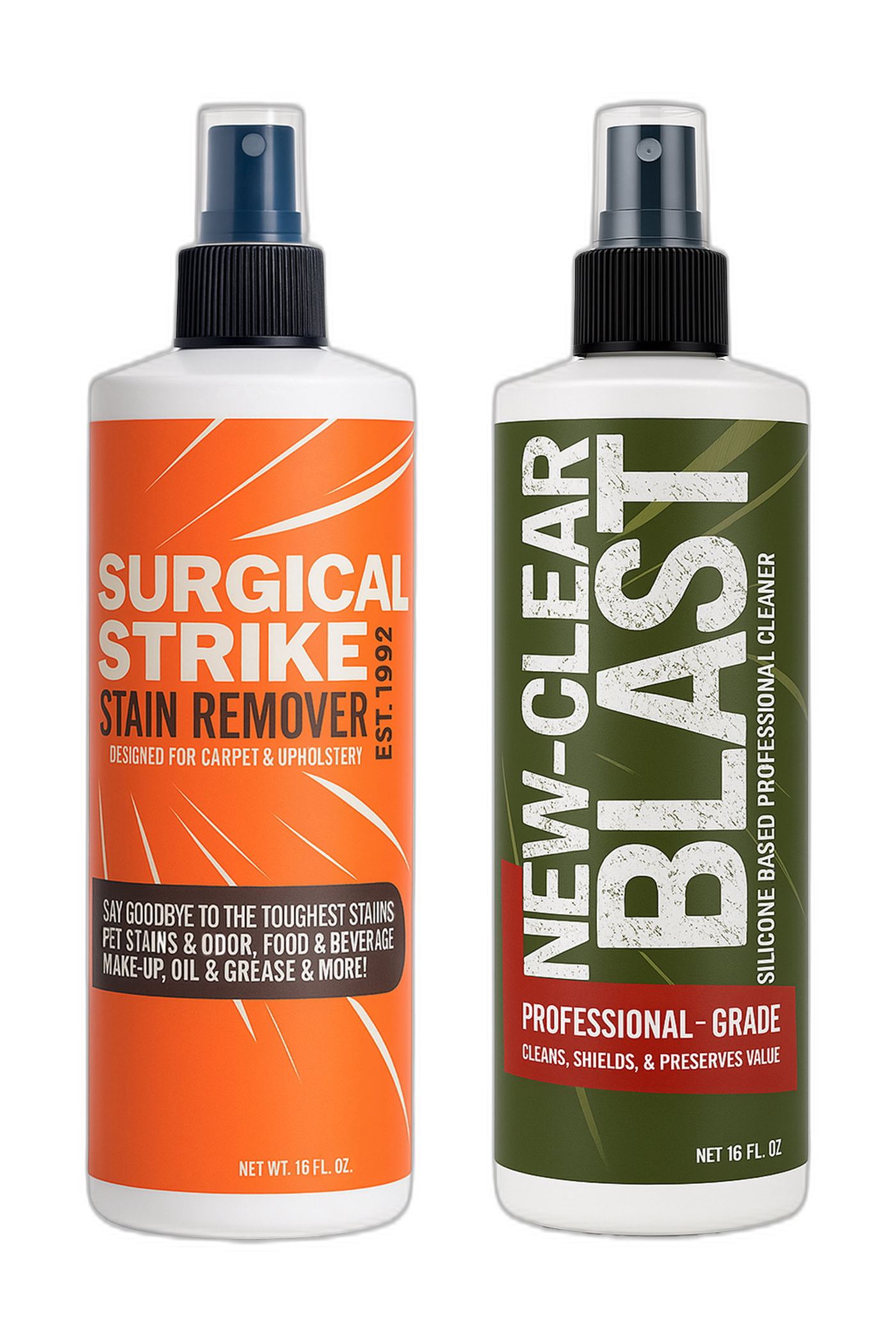
Two formulas. Serious range.
Use Surgical Strike for stains and odor, then New-Clear Blast to clean, shield and preserve hard surfaces.