For facility managers pursuing LEED Operations and Maintenance (O+M) certification for an existing building, the cleaning products and protocols used within the building are critical components. Navigating the requirements for the Green Cleaning credit involves more than just selecting products with 'eco-friendly' labels. It demands a systematic approach to procurement, documentation, and operational policies.
Key Takeaways for LEED Green Cleaning
Successfully aligning a cleaning program with LEED standards requires a focus on verifiable criteria rather than marketing language. Facility managers should prioritize documented qualifications and strict purchasing practices to meet the program's rigorous demands. Here are the essential points to consider:
- Focus on Documentation: LEED alignment for cleaning products depends on documented qualifications and purchasing practices, not just on marketing terms like 'eco-friendly'.
- Recognized Standards: Qualifying products must meet specific third-party standards. These include Green Seal and UL ECOLOGO, with the appropriate standard often depending on the product's specific category.
- Purchasing Threshold: To earn the cleaning products and materials option of the LEED O+M Green Cleaning credit, facilities must show that at least 75% of cleaning products and materials, by cost, comply with a referenced standard.
- Comprehensive Verification: Verification is a multi-step process. It includes confirming a product's current certification, ensuring it applies to the correct category, understanding dilution instructions, and integrating it into the facility's formal green-cleaning policy.
- Beyond Products: LEED compliance extends past product selection. It involves developing comprehensive cleaning policies, implementing personnel training programs, and optimizing the use of resources like water and energy.
Understanding LEED Green Cleaning Requirements for Commercial Facilities
LEED, which is administered by the U.S. Green Building Council (USGBC), is a globally recognized system for evaluating the sustainability of buildings. Its framework includes detailed criteria for operational practices, including cleaning and maintenance. In LEED v4, cleaning products had a standalone credit, Green Cleaning: Products and Materials. LEED v4.1 folded it into a single Green Cleaning credit, and LEED v5 O+M keeps it as one option of the Green Cleaning credit. It covers cleaning and degreasing products, floor care products, hand soaps, janitorial paper and other product types.
Achieving this LEED credit is not based on generalized claims. Terms such as 'eco-friendly,' 'natural,' or 'plant-based' are insufficient for compliance. Instead, eligibility hinges on verifiable, third-party certifications that confirm a product meets stringent standards.
Qualifying Cleaning Product Certifications for LEED
The USGBC recognizes a specific set of third-party standards to qualify cleaning products for LEED green-cleaning requirements. This system provides a clear pathway for facility managers to identify and procure compliant products without having to perform their own chemical analysis. Recognized standards include Green Seal GS-37 (general-purpose, bathroom, glass and carpet cleaners), Green Seal GS-40 (floor care), UL ECOLOGO 2792 (cleaning and degreasing compounds) and UL ECOLOGO 2759 (hard-surface cleaners), among others.
The acceptable standard can vary depending on the product's intended application. For example, the criteria for a general-purpose cleaner may differ from those for a specialized cleaning and degreasing compound or a hard-surface cleaner. It is the facility's responsibility to match the product's certification to its use category as defined by LEED.
When evaluating a potential product, managers must verify that its certification is current and applies to the exact formulation being purchased.
The Importance of Documented Procurement and Usage
Meeting LEED's green cleaning requirements goes beyond simply using certified products; it requires meticulous documentation of purchasing decisions. One way to earn the Green Cleaning credit is the rule that at least 75% of cleaning products and materials, measured by cost, must meet a referenced standard.
This threshold necessitates accurate and consistent record-keeping. Facilities must maintain detailed logs of all cleaning product purchases, including invoices, product specification sheets, and proof of certification. These records are essential for demonstrating compliance during the LEED review and certification process. Without this documentation, even a facility using 100% compliant products may fail to earn the credit.
A formal green-cleaning policy is required: it is a prerequisite in LEED v4 and v4.1 O+M, and part of the Operations Assessment and Policy prerequisite in LEED v5 O+M. This written policy must outline the facility's commitment to sustainable cleaning, specify the types of products to be purchased, and define the procedures for procurement.
Operational Strategies for LEED-Aligned Cleaning Programs
A successful LEED-aligned cleaning program integrates certified products with well-defined operational practices. The implementation phase is just as critical as product selection. This begins with developing written procedures for all cleaning personnel that detail proper product use, correct dilution ratios, and specific application methods for different surfaces and tasks.
Comprehensive training is another cornerstone of a green cleaning program. All cleaning staff, whether in-house or contracted, must be trained on the facility's green-cleaning protocols. This training should cover proper product handling, safety procedures, and the environmental goals of the program to ensure everyone understands their role in maintaining compliance.
Beyond product application, policies should address broader resource optimization. This includes strategies for minimizing water and energy consumption during cleaning activities, as well as procedures for appropriate waste management. Operational guidelines might also include conducting regular audits of cleaning practices and maintaining clear communication with building occupants about the facility's green cleaning initiatives, fostering a culture of sustainability.
Verification Checklist for LEED Green Cleaning Product Selection
To ensure cleaning products contribute to a successful LEED application, facility managers should follow a systematic verification process. This checklist helps confirm that each product selected meets the necessary criteria before purchase.
- Identify Product Details: Pinpoint the specific product name and SKU that will be purchased. Different formulations from the same brand may have different certifications.
- Confirm Certification: Identify the product's certification body (e.g., Green Seal, UL ECOLOGO). Obtain a copy of the current certificate or find the product on the certification body's official online database.
- Verify Product Category: Check that the product's certification is valid for its specific use category, such as a general-purpose cleaner, degreaser, or restroom cleaner. A certification for one category does not automatically apply to others.
- Review Usage Instructions: Examine the product's recommended dilution instructions. Proper dilution is key to both effective cleaning and resource efficiency, which are central tenets of green cleaning programs in commercial facilities.
- Maintain Purchase Records: Keep purchase invoices and calculate what share of cleaning product spending meets a referenced standard. This data is required to prove that the purchasing threshold for LEED credit has been met.
How Cleaning Practices Impact LEED Outcomes
For the products option, the credit point comes from documented purchasing: the share of cleaning spending that meets a referenced standard. Good application practice protects the program but does not earn points on its own.
Effective implementation is crucial. This includes ensuring the right product is used for the right task. For example, use a specialized degreaser for heavy grease buildup in a kitchen or manufacturing area, and a general-purpose cleaner for light soil elsewhere. This prevents overuse of stronger formulas.
Application methods and dilution accuracy also play a significant role. Even certified products, when used improperly, can lead to wasted resources, ineffective cleaning, and unnecessary costs, undermining the program's objectives.
Failure Modes in Achieving LEED Green Cleaning Compliance
Even with the best intentions, facilities can fall short of meeting LEED's green cleaning requirements. One of the most common failure modes is relying on generic 'eco-friendly' or 'green' marketing claims without verifying a product against the list of approved third-party certifications. This often leads to the purchase of ineligible products that do not contribute to the credit.
Inadequate documentation is another frequent point of failure. If a facility cannot produce clear, organized records of product purchases, costs, and certifications, it will be unable to prove it has met the purchasing threshold, regardless of its actual purchasing habits. Similarly, a lack of comprehensive training for cleaning personnel can lead to incorrect product dilution, overuse of chemicals, or improper cleaning techniques, which wastes resources and can compromise the program's integrity.
Finally, the absence of a formal, enforced green-cleaning policy creates inconsistency and makes it difficult to prove compliance. Without clear, written guidelines on acceptable certifications for each product category, procurement staff may inadvertently purchase non-compliant supplies, jeopardizing the facility's ability to earn the credit.
Choosing Effective Cleaning and Surface Preparation Solutions
Separate from the LEED credit, all facilities require cleaning and surface preparation solutions that are effective for daily maintenance and specialized tasks. The operational needs of high-use environments demand products that can handle tough soils. CG Chemicals offers practical cleaning solutions designed for a range of settings, including homes, vehicles, outdoor areas, facilities, and manufacturing environments.
For routine upkeep and preparing surfaces, products like New-Clear Blast serve as a multi-surface cleaner and protector. It is formulated to clean various materials while leaving behind a protective finish that aids in maintenance.
When dealing with heavy grease, grime, stains, or persistent odors, Surgical Strike is designed as a degreaser, stain and odor remover. This formula supports thorough cleaning in demanding situations, helping prepare surfaces for subsequent work or simply restoring them to a clean state. Both solutions are made in Elkhart, Indiana, with ingredients sourced from chemical suppliers in the USA. They contain no bleach or ammonia, offering practical options for general maintenance tasks.
Compliance and Policy Considerations for LEED Green Cleaning
Achieving and maintaining LEED compliance for green cleaning requires a holistic strategy that fully integrates product procurement with a comprehensive, facility-wide policy. This policy should be a living document that guides all aspects of the cleaning program, from purchasing to training and daily operations. It must cover cleaning methods, schedules, equipment use, and procedures for handling specific challenges like spills or high-traffic areas.
USGBC's Safety First pilot credits, introduced in 2020, are optional Innovation credits that add cleaning-policy guidance; they are separate from the Green Cleaning credit. This guidance emphasizes a documented approach to policies, procurement, and training.
Regular review and updates to the green-cleaning policy are necessary to ensure it remains aligned with evolving LEED standards and industry best practices. Critically, facilities must ensure that all cleaning personnel, including both in-house staff and third-party contractors, are fully aware of and adhere to the established policy. This consistency is essential for maintaining compliance and realizing the full benefits of a LEED-aligned cleaning program.
FAQ
Which LEED rating systems cover green cleaning?
LEED O+M for existing buildings. In LEED v4.1 O+M there is a required Green Cleaning Policy prerequisite and a Green Cleaning credit worth 1 point. In LEED v5 O+M the cleaning policy is part of the required Operations Assessment and Policy prerequisite, and Green Cleaning is a credit worth up to 2 points. LEED v5 BD+C (new construction) has no green cleaning credit.
What share of cleaning products must meet a standard?
At least 75% of cleaning products and materials, by cost, in LEED v4, v4.1 and v5. LEED v4.1 accepts a product inventory or total annual purchases. LEED v5 accepts a minimum of three months of purchases within the 12-month reporting period.
Which standards count?
For cleaning and degreasing products they include Green Seal GS-37 (general purpose, bathroom, glass and carpet cleaners), Green Seal GS-40 (floor care), Green Seal GS-52/53 (specialty cleaning products), UL ECOLOGO 2792 (cleaning and degreasing compounds) and UL ECOLOGO 2759 (hard-surface cleaners), among others. Hand soaps and janitorial paper have their own lists.
Can a certified cleaning contractor help?
Yes. In LEED v5 O+M, using a cleaning service certified under Green Seal GS-42 or ISSA CIMS earns 1 point. In LEED v4.1, a certified service is one way to meet the Green Cleaning Policy prerequisite.
Sources
- https://www.usgbc.org/credits/existing-buildings-interiors-existing-buildings/v41/eq130
- https://www.usgbc.org/node/2767387
- https://www.usgbc.org/sites/default/files/2026-03/LEED%20v5%20O%2BM%20Rating%20System_February%202026.pdf
- https://www.usgbc.org/sites/default/files/2025-10/LEED%20v5%20BD+C%20Rating%20System_November%202025_clean.pdf
- https://www.usgbc.org/credits/safety-first-137-v4
- https://www.usgbc.org/sites/default/files/2021-10/LEED-Safety-First-Getting-Started-Guide.pdf
- https://policylibrary.colostate.edu/attachments/780.Best%20Practices%20Document%20Green%20Cleaning.pdf
- https://www.uc.edu/content/dam/refresh/af-62/facilities-utilities/Green%20Cleaning%20Policy%202023.pdf
- https://cgchemicalsllc.com/pages/applications
- https://cgchemicalsllc.com/products/new-clear-blast
- https://cgchemicalsllc.com/products/surgical-strike

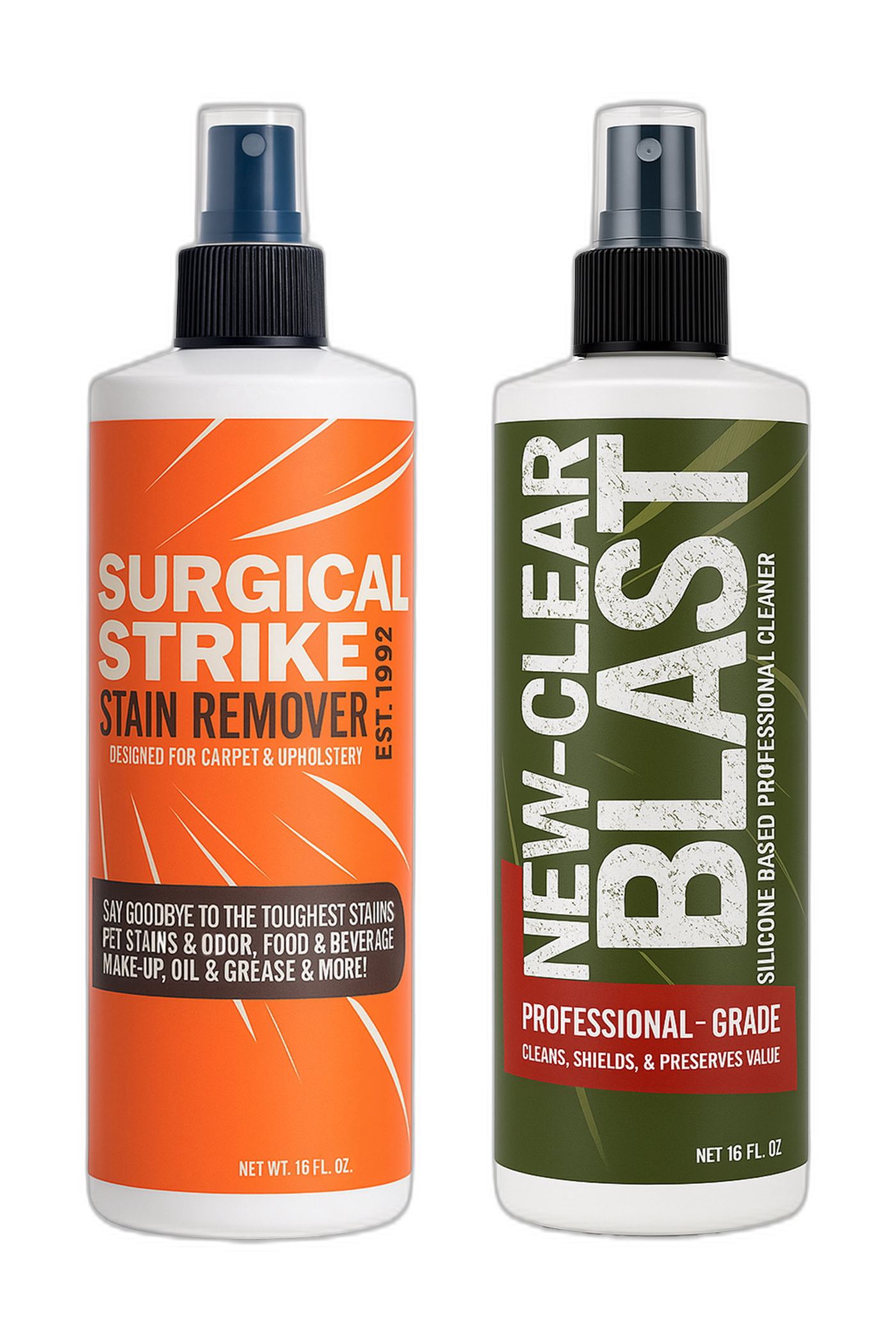
Two formulas. Serious range.
Use Surgical Strike for stains and odor, then New-Clear Blast to clean, shield and preserve hard surfaces.