Commercial and industrial refrigeration units present unique cleaning challenges that extend beyond general cold storage cleaning. Effective commercial refrigeration unit cleaning requires a focus on specific components where fat, oil, and grease (FOG) accumulate, biological growth can occur, and dust compromises efficiency. Properly addressing these issues is essential for maintaining food safety, supporting operational performance, and extending the longevity of critical equipment.
This guide details specialized cleaning considerations for the internal and external components of refrigeration equipment, including walk-in coolers, display cases, and compressor coils. A consistent cleaning protocol helps prepare surfaces, manage residues, and maintain the high standards required in food service and industrial environments.
Key Takeaways for Effective Refrigeration Cleaning
An effective cleaning program for refrigeration units is built on a structured and repeatable process. It requires more than just wiping down surfaces; it involves a controlled cleaning plan tailored to the equipment and its operational environment. Adherence to a clear protocol supports compliance and consistent results.
- Controlled Cleaning Process: A complete cleaning cycle includes several distinct steps: pre-cleaning to remove loose debris, applying a suitable chemical cleaner, and finishing with a thorough rinse according to your facility's protocols.
- Component-Specific Protocols: Different parts of a refrigeration unit demand different procedures. Food-contact interiors, delicate condenser coils, and high-moisture drain pans each have specific needs and sensitivities.
- Energy Efficiency and Longevity: Regularly cleaning condenser coils is directly linked to performance. Clean coils support efficient heat exchange, which assists with temperature control and reduces strain on the compressor, extending the equipment's operational life.
- Risk-Based Schedules: Cleaning frequency should be based on risk factors such as soil load, humidity, and operational demands, rather than a fixed calendar schedule.
Mechanism-to-Outcome Map: How Cleaning Impacts Performance
Understanding the direct relationship between cleaning actions and operational outcomes helps justify a consistent maintenance program. Each task is tied to a tangible result that affects efficiency, safety, and cost.
-
Mechanism: Accumulation of dust, grease, and FOG on condenser and evaporator coils. These contaminants act as insulators.
Outcome: Heat transfer is restricted, forcing the compressor to run longer and at higher pressures. This reduces cooling efficiency and increases energy consumption. -
Mechanism: Systematic removal of odor-causing residues from interior surfaces and drain pans.
Outcome: This practice supports odor control within the unit, preventing cross-contamination of stored products and ensuring a hygienic environment. -
Mechanism: Consistent adherence to a complete cleaning sequence as outlined by internal or regulatory standards.
Outcome: The process helps prevent the development of insanitary conditions that could lead to product adulteration and compromise food safety.
Failure Modes or Operational Risks
Neglecting targeted cleaning protocols can lead to predictable and costly operational failures. These risks extend beyond simple hygiene, affecting equipment integrity, energy costs, and food safety compliance.
- Increased Energy Consumption: When coils are insulated by a layer of dust, grease, or FOG, the refrigeration system must work harder to dissipate heat. This directly leads to higher energy consumption and can strain the compressor, risking premature equipment failure.
- Biological Growth and Odors: Persistent moisture combined with organic residues creates ideal conditions for biological growth, particularly in areas like drain pans, door gaskets, and fan guards. This can result in persistent, difficult-to-remove odors.
- Component Damage: Using improper cleaning chemicals or application methods can cause significant damage. Abrasive or corrosive cleaners can degrade delicate aluminum coil fins, damage protective coatings, or cause gaskets and wiring to become brittle.
- Compromised Food Safety: The most critical risk is the failure to maintain sanitary conditions. Inadequate cleaning can lead to product adulteration and create a direct threat to food quality and safety, potentially resulting in regulatory action.
Targeted Cleaning Protocols for Refrigeration Components
A comprehensive cleaning plan for Facilities with commercial refrigeration should be methodical, addressing each part of the unit according to its function and soil exposure. This component-specific approach ensures that all critical areas are properly maintained.
- Food-Contact Surfaces: All interior surfaces and equipment that may come into contact with food require frequent cleaning to prevent insanitary conditions. The protocol should follow a sequence of debris removal, rinsing, cleaner application, and a final rinse step.
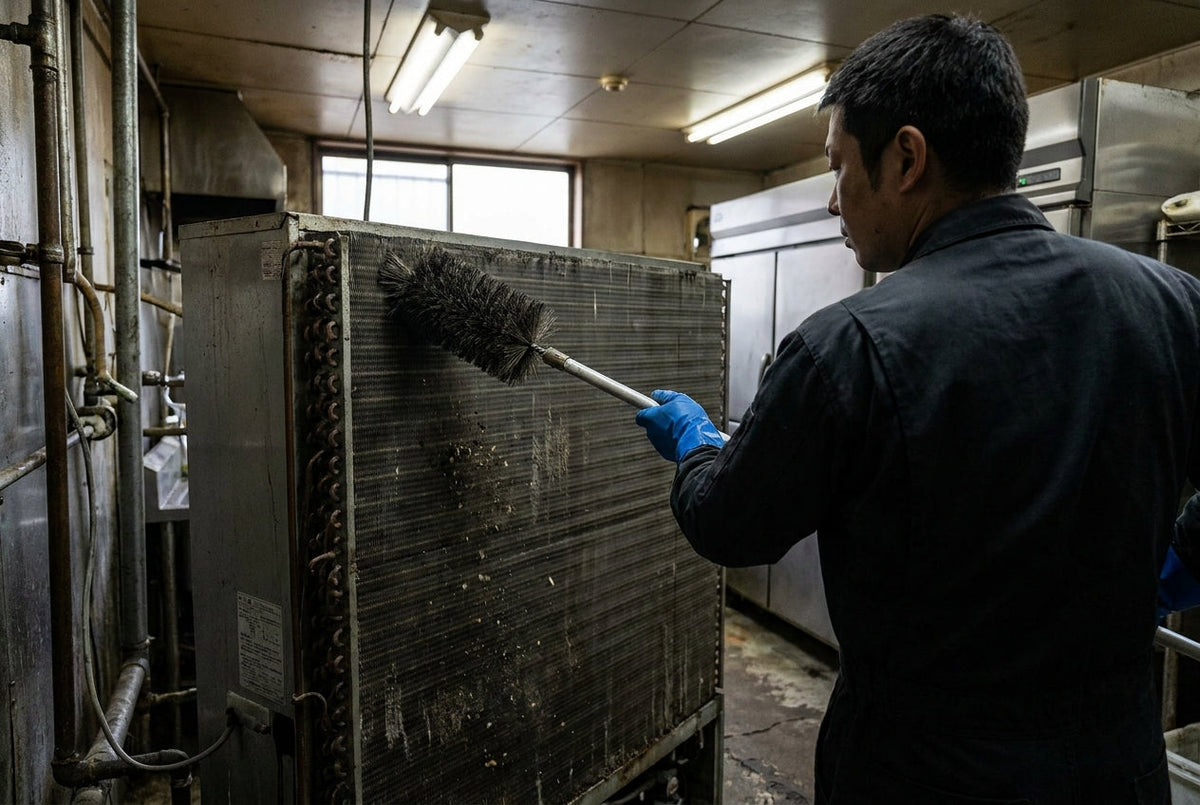
- Evaporator and Condenser Coils: These components are vital for heat exchange and require careful cleaning to remove dust, FOG, and other debris. Use non-damaging tools and appropriate cleaners to avoid bending the delicate fins.
- Drain Pans, Gaskets, and Guards: Areas prone to moisture and residue buildup, such as drain pans, door gaskets, and fan guards, must be cleaned regularly to prevent odors and biological growth. These are often overlooked but are critical control points for hygiene.
Selecting the Right Cleaning Chemistry
The effectiveness of any cleaning protocol depends heavily on the selection of appropriate chemical solutions. The choice must be based on the type of soil, the surface material, and the specific application environment to ensure both efficacy and safety.
For machine compartments and condenser coils where heavy grease, oil, and dust accumulate, an effective degreaser is necessary for surface preparation. Products like Surgical Strike, a degreaser, stain and odor remover, are formulated for such challenging soils. Conversely, interior food-contact surfaces demand cleaners compatible with food operations, followed by a thorough rinse as required by regulations.
Careful selection prevents damage to sensitive components like coated fins, aluminum, plastics, and rubber gaskets. Always confirm that the chosen chemistry will not corrode metals or degrade other materials. The right product helps remove soils effectively without introducing new risks from chemical incompatibility.
Regulatory, Safety, and Compliance Considerations
Cleaning commercial refrigeration units is not just an operational task; it is a regulatory requirement. Adherence to established standards is essential for compliance and operator safety.
Food safety guidelines mandate that all food-contact surfaces and equipment must be cleaned as frequently as needed to prevent insanitary conditions or product adulteration. This includes using established procedures for cleaning, such as correct dilutions, contact times, and potable water rinsing where required. Materials used in cold storage construction are also regulated, and are expected to be smooth, non-absorbent, and non-corroding to facilitate effective cleaning.
Operator safety is another critical consideration. Power to the refrigeration unit must always be disconnected before cleaning condenser coils or accessing other electrical components to prevent injury. Following proper safety protocols protects personnel and equipment alike.
Cleaning Program Selection Checklist
Developing a robust cleaning program involves asking the right questions to ensure all bases are covered. This checklist can help guide the selection and implementation of your refrigeration unit maintenance protocol.
- Is the chemical compatible? Does the cleaning agent match both the surface material (e.g., aluminum, stainless steel, plastic) and the specific soil type, such as heavy FOG or mineral deposits?
- Are procedures clearly defined? Does the program outline specific steps for debris removal, rinsing, and chemical application? Clear instructions prevent mistakes and ensure consistency.
- Are safety measures included? Does the protocol integrate essential safety steps, such as power isolation, protection of electrical components from moisture, and use with adequate ventilation?
- Is the schedule risk-based? Is the cleaning frequency determined by factors like soil load, humidity, and operational throughput, or is it an arbitrary date on a calendar?
- Is documentation supported? Does the program include logs for cleaning and inspection records? Documentation is key for compliance and continuous improvement.
Operations often face varied soils, which may require more than one solution. A bundled approach like the Power Pack can provide practical options for addressing different cleaning needs with a degreaser and a multi-surface cleaner.
Sustaining Efficiency and Operational Longevity
A proactive and consistent cleaning program is fundamental to sustaining the efficiency and longevity of commercial refrigeration equipment. Regularly scheduled maintenance is not a cost center but an investment in performance and reliability.
Clean condenser coils are better at transferring heat, which helps maintain consistent temperature control and reduces the load on the system. This can lead to significant energy savings, as efficient operation helps lower operational costs and contributes to a more sustainable facility.
By establishing risk-based cleaning intervals adjusted for factors like FOG exposure and humidity, businesses can optimize performance and prevent the premature wear and tear that leads to costly repairs. Proactive maintenance supports a more reliable and cost-effective refrigeration operation over the long term.
Sources
- https://www.fsis.usda.gov/inspection/compliance-guidance/sanitation-performance-standards-compliance-guide
- https://basc.pnnl.gov/diy-guides/clean-refrigerator-condenser-coils
- https://www.usda.gov/sites/default/files/guidance-documents/FSIS.%20A%20Sanitation%20Standard%20Operating%20Procedure%20Model.pdf
- https://www.eeca.govt.nz/for-businesses/energy-saving-technology/efficient-refrigeration-for-the-workplace/
- https://www.sce.com/sites/default/files/inline-files/25774_Refr+for+Grocery_v4_WCAG_0.pdf
- https://agriculture.az.gov/sites/default/files/406OfficialProcessing.pdf
- https://www.carbontrust.com/sites/default/files/documents/resource/public/Refrigeration-guide.pdf

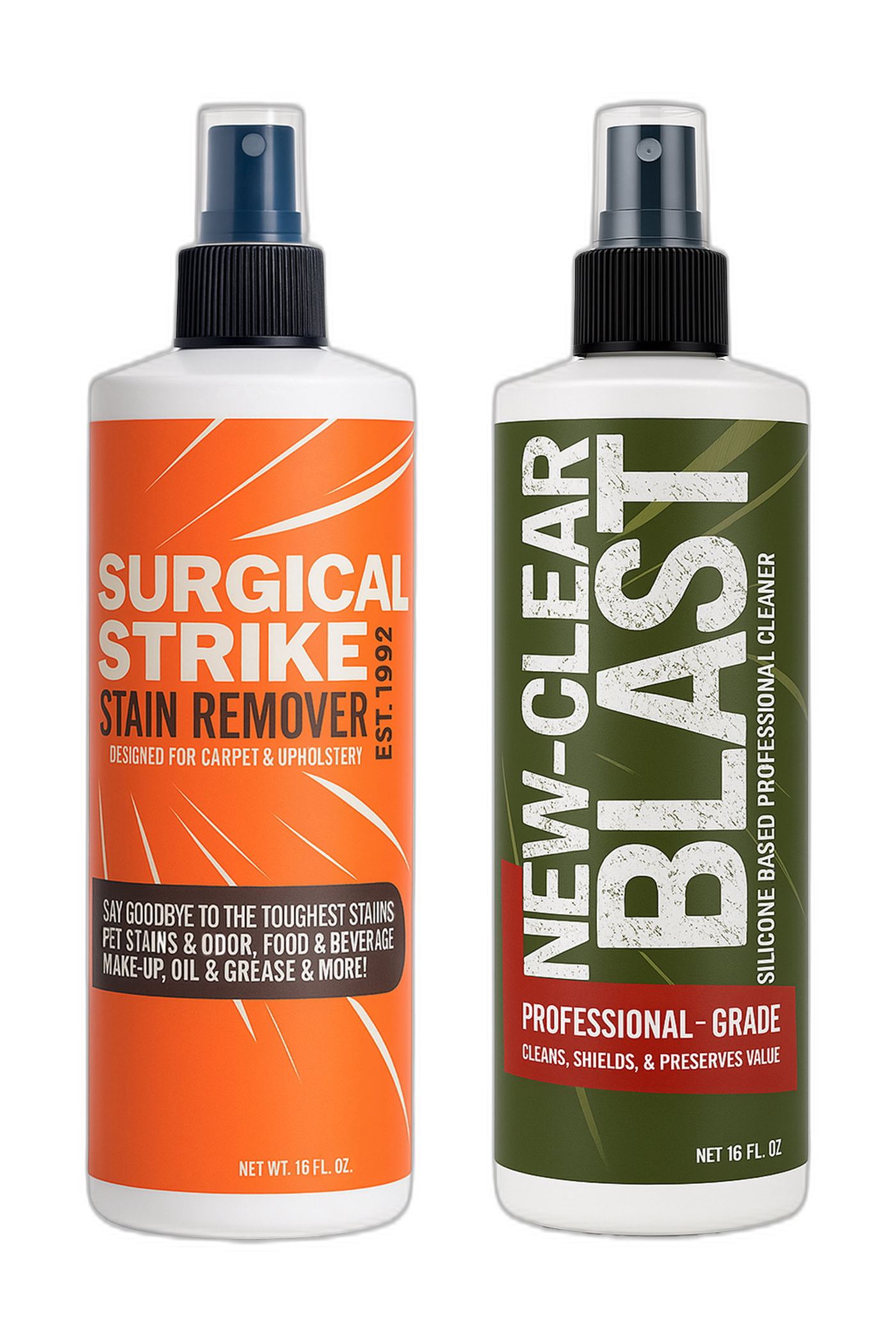
Two formulas. Serious range.
Use Surgical Strike for stains and odor, then New-Clear Blast to clean, shield and preserve hard surfaces.