Key Takeaways for Sustainable Maritime Cleaning
For maritime operators and procurement managers, adopting sustainable cleaning practices is a critical part of modern environmental, social, and governance (ESG) strategy. Understanding the primary benefits and requirements provides a clear path forward for implementation.
- Sustainable hull cleaning can reduce drag and support fuel efficiency.
- Eco-friendly cleaning products must comply with key regulations like MARPOL Annex 5 and the EPA's Vessel General Permit (VGP) to prevent harmful chemical runoff into marine environments.
- Biodegradable cleaners are formulated to meet or surpass regulatory criteria, help prevent corrosion, and support operational efficiency in various marine applications.
- Modern bleach-free cleaners have been shown to perform effectively for surface preparation tasks without compromising biodegradability, offering a viable alternative to traditional harsh chemicals.
Regulatory Framework for Maritime Cleaning
Adherence to a complex web of international and national regulations is not optional in the maritime industry. The International Maritime Organization (IMO) sets global standards, and its MARPOL regulations are central to managing vessel discharges and protecting the marine environment from pollution. . These comprehensive rules govern everything from oil and noxious liquids to garbage and air pollutants, establishing a baseline for responsible operation.
In the United States, the Environmental Protection Agency (EPA) enforces the Vessel General Permit (VGP). This permit outlines specific compliance requirements for discharges incidental to the normal operation of vessels in U.S. waters. It covers dozens of discharge types, including deck runoff, bilge water, and cleaning agent residues, setting strict limits and management practices. .
Following these guidelines helps operators avoid significant fines and legal penalties. Aligning cleaning practices with current and future IMO and EPA standards is a proactive approach to risk management and demonstrates a commitment to corporate responsibility. This includes the careful selection of cleaning products that comply with rules like MARPOL Annex 5 to prevent chemical runoff and protect our waterways.
Understanding Environmental Impacts of Traditional Maritime Cleaning Methods
A primary operational challenge in vessel maintenance is biofouling, which is the accumulation of marine organisms like algae, barnacles, and slime on a ship's hull. This unwanted growth increases hydrodynamic drag, forcing engines to work harder and significantly raising fuel consumption and associated emissions. . This inefficiency directly translates to higher operational costs and a larger environmental footprint.
Historically, the industry has often relied on powerful, and sometimes harsh, chemical cleaners to combat biofouling and other contamination. Unfortunately, these traditional products can lead to harmful chemical runoff containing biocides, heavy metals, and other pollutants. When these substances enter waterways, they can damage sensitive marine ecosystems, harm aquatic life, and persist in the environment for long periods. .
The environmental impact is multifaceted. It extends beyond direct chemical pollution to include the secondary effects of energy inefficiency caused by poorly maintained hulls. Ineffective or infrequent cleaning practices not only contribute to ongoing environmental degradation but also represent a missed opportunity for operational and financial optimization.
Benefits of Biodegradable Cleaning Solutions in Maritime Settings
Biodegradable cleaning solutions offer a practical and effective alternative to traditional harsh chemicals, reducing environmental impact by design. These formulations are engineered to break down naturally into simpler, harmless components like water and carbon dioxide when released into the environment. This process minimizes their effect on marine life and ecosystems, helping operators meet strict discharge regulations. .
Using biodegradable products also contributes to asset preservation. Formulations that avoid harsh acids and solvents can help prevent corrosion on metal surfaces, paint systems, and other materials common in marine settings. This careful approach to cleaning assists with maintenance by extending the functional life of vessels and shore-based equipment. .
Importantly, the switch to sustainable products does not require a sacrifice in performance. Independent studies and industry reports indicate that modern biodegradable cleaners are highly effective for removing grime, oil, and other contaminants. They perform comparably to traditional options for many surface preparation and maintenance tasks, meeting the demanding operational needs of the maritime industry. .
Mechanism-to-Outcome Map: How Sustainable Cleaning Improves Performance
The effectiveness of sustainable maritime cleaning solutions lies in their targeted chemistry and application methods. Biodegradable chemistries are specifically designed to break down contaminants like grease, oil, and organic buildup without leaving behind a persistent, harmful residue. Once their cleaning task is complete, these agents decompose, minimizing ecosystem exposure and helping operators meet discharge regulations. .
The direct mechanical outcome of this process, especially in hull maintenance, is the effective removal of biofouling. By eliminating the accumulated marine growth, sustainable cleaning methods directly reduce the hydrodynamic drag on a vessel's hull. This creates a smoother surface, allowing the ship to move through the water with less resistance.
This reduction in drag translates directly to measurable operational benefits. With less resistance, a vessel's engines do not need to work as hard to maintain speed, which supports improved fuel efficiency and lower greenhouse gas emissions. Over time, these fuel savings can represent a significant reduction in operational costs, making sustainable cleaning an economically sound practice. . The careful selection of cleaning agents also helps maintain surface integrity, preventing damage to anti-fouling systems and prolonging asset lifespan.
Methods and Technologies for Sustainable Hull Maintenance
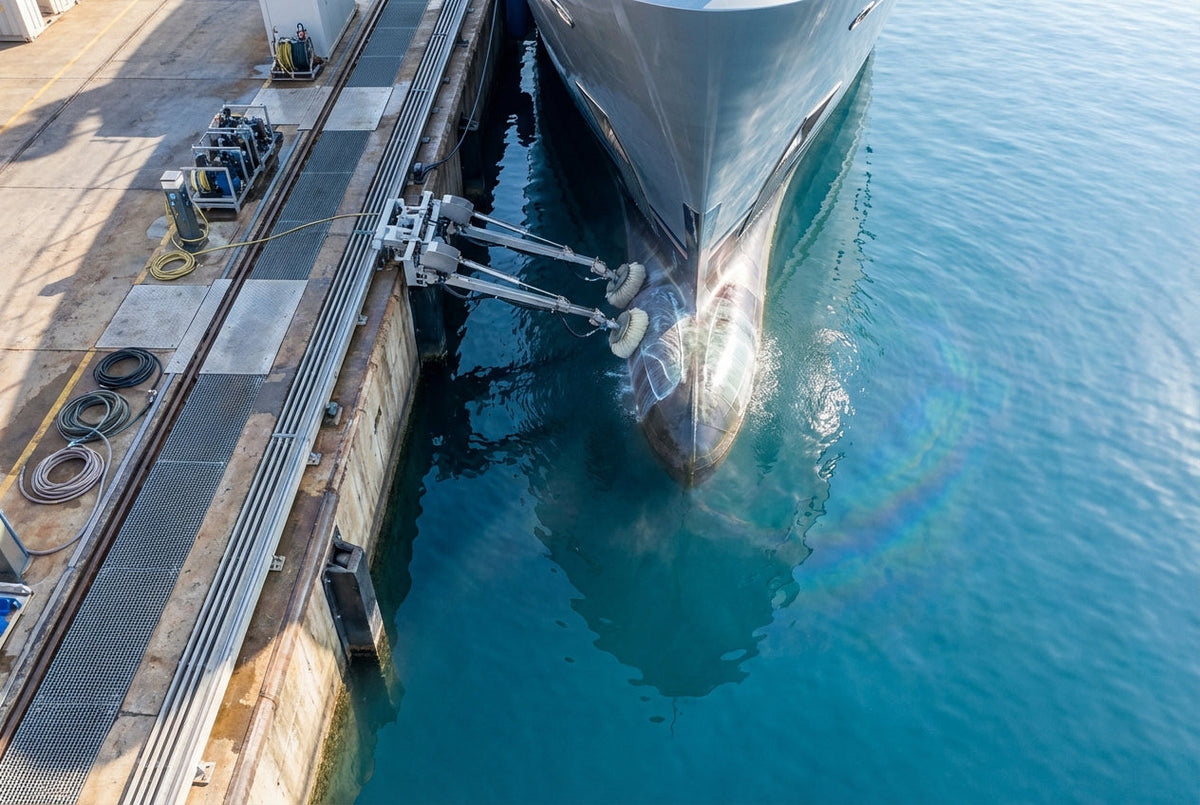
The maritime industry is adopting advanced technologies to make hull maintenance more efficient and environmentally friendly. For instance, advanced robotic cleaners can systematically clean a ship's hull, often while the vessel is in port. These systems can be paired with biodegradable solutions to remove biofouling without polluting the surrounding water. .
Alongside robotics, the development of specialized eco-friendly hull cleaners continues to advance. These products are formulated to dissolve and lift away biofouling and other residues effectively without damaging the vessel's surfaces or harming the marine environment. This ensures that maintenance activities support both vessel performance and regulatory compliance.
Sustainable underwater cleaning systems provide another layer of protection for both vessels and fixed maritime facilities like docks and pilings. These methods are often designed to be cost-effective, helping operators manage maintenance budgets while adhering to strict environmental standards. By keeping surfaces clean, these systems support operational readiness and preserve asset value. .
Selection Checklist for Eco-Conscious Cleaning Products
When procuring Cleaning and surface-prep solutions for maritime use, a systematic approach ensures both compliance and effectiveness. The first step is to prioritize products that explicitly state compliance with international regulations, such as MARPOL Annex 5, which governs the prevention of pollution by garbage from ships. .
For operations in U.S. waters, it is essential to verify that cleaning products meet the stringent discharge criteria set by the EPA's Vessel General Permit (VGP). This includes confirming that any chemicals used are permissible for discharge and are used according to the permit's requirements for dilution and application. .
Beyond regulatory checks, operators should look for formulations clearly described as biodegradable. This minimizes potential harm to marine ecosystems and aligns with broader sustainability goals. Finally, confirm that the selected cleaners are proven effective in removing the specific types of contaminants encountered in your operations, whether it is biofouling, grease, oil, or other industrial residues. .
Operational Efficiency through Sustainable Practices
The operational benefits of adopting sustainable cleaning practices start with fuel efficiency. A clean hull, free from the drag caused by biofouling, can lead to meaningful reductions in fuel consumption. For a large vessel or an entire fleet, this translates into lower fuel use and a smaller carbon footprint. .
Sustainable practices also support long-term asset management. By using less aggressive, biodegradable cleaners instead of harsh chemicals, operators can extend the lifespan of paint, seals, and other sensitive materials. This reduces the frequency of costly repairs and material degradation, lowering overall maintenance expenditures across the board.
Investing in cost-effective sustainable cleaning systems protects both mobile and stationary maritime facilities. These systems support continuous and efficient operations by minimizing downtime for cleaning and repairs. By aligning environmental responsibility with financial prudence, sustainable cleaning becomes a key part of a modern, efficient maritime strategy. .
Implementing Sustainable Cleaning in Maritime Operations
A successful transition to sustainable cleaning begins with clear, standardized protocols. These should be developed for all key areas, including vessels, port facilities, and any offshore cleaning tasks. Protocols should specify which eco-friendly solutions to use for different surfaces and soil levels, ensuring consistent and compliant application.
Maritime operations are diverse, from engine rooms to deck surfaces. Integrating specialized cleaning solutions designed for different marine manufacturing environments is key. For tough grease and oil, a degreaser like Surgical Strike may be appropriate for surface prep, while general cleaning and maintenance might use a multi-surface cleaner like New-Clear Blast.
Technology and products are only part of the solution. It is critical that all personnel are trained in the correct use, dilution, and disposal of biodegradable cleaners. Proper training maximizes effectiveness, ensures safety, and maintains regulatory compliance. .
Finally, sustainable cleaning is an ongoing process. Operators should regularly review and update their cleaning strategies to incorporate new technologies, improved products, and evolving regulations. This commitment to continuous improvement ensures that operations remain efficient, compliant, and environmentally responsible. .
Clean and prep surfaces with CG Chemicals
If you are dealing with buildup, residues, or tough soil before maintenance or finishing work, CG Chemicals offers practical cleaning solutions for high-use environments. Explore New-Clear Blast and Surgical Strike based on your surface and soil type.
Sources
- https://umsflorida.com/sustainable-hull-cleaning-methods-and-technologies-for-eco-conscious-boaters/
- https://www.epa.gov/npdes/vessel-general-permit-vgp
- https://www.imo.org/en/OurWork/Environment/Pages/MARPOL.aspx
- https://www.marinelogisticsmagazine.com/biodegradable-cleaners
- https://sailorsforthesea.org/boating-resources/non-toxic-cleaning-products/
- https://www.sustainable-ships.org/partners/subsea-industries
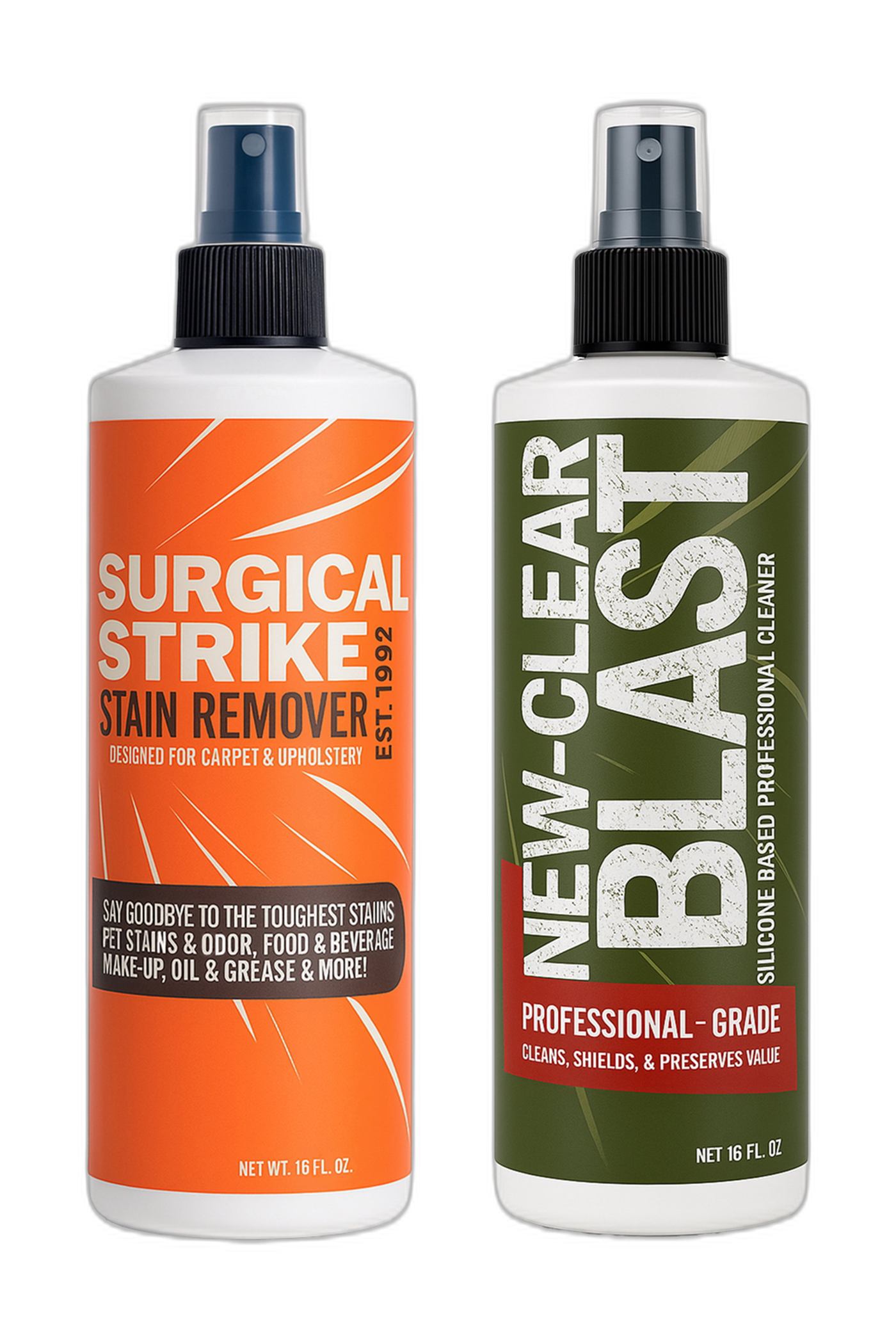
Two formulas. Serious range.
Use Surgical Strike for stains and odor, then New-Clear Blast to clean, shield and preserve hard surfaces.