Key Takeaways
For researchers and technicians, the integrity of every experiment begins with the cleanliness of their tools. This section summarizes the core principles of scientific glassware and lab consumable cleaning.
- Meticulous cleaning is essential for preventing residue-driven contamination that can alter experimental outcomes in scientific glassware and lab consumables.
- Ultra-pure rinsing and the complete removal of residues are critical steps to avoid distorting sensitive analytical and clinical results. Adherence to standardized methods helps ensure consistent preparation.
- Contamination control is a foundational part of laboratory quality assurance, directly supporting data integrity, research reproducibility, and patient safety in clinical settings.
The Critical Role of Precision Cleaning in Laboratory Environments
In sensitive laboratory settings, the accuracy and reproducibility of research findings depend on eliminating variables. One of the most significant yet often overlooked variables is contamination originating from improperly cleaned glassware and consumables. Meticulous cleaning is not just a preparatory step; it is a fundamental component of the scientific method itself, safeguarding against skewed data and failed experiments.
The quality of a cleaning protocol directly correlates with contamination risk. Every beaker, pipette, and vial should be treated as an integral part of the measurement system. Even minor failures or inconsistencies in the cleaning process can introduce contaminants that affect lab results, underscoring the necessity for validated and controlled protocols. This mindset is a cornerstone of effective laboratory quality assurance and contamination control programs.
Standardized approaches, such as those outlined by ASTM International, provide a framework for achieving the necessary level of cleanliness for chemical analysis. By following established guidelines, laboratories can create a repeatable process that minimizes the risk of residue and supports the integrity of their work.
Identifying Sources of Trace Contamination
The primary challenge in labware cleaning is the presence of unseen contaminants that can compromise experimental results. These can include detergent residue, ionic contamination from tap water, organic films, or carryover from previous samples. While invisible to the naked eye, these substances can introduce significant interference in sensitive analytical techniques like mass spectrometry or chromatography.
Trace amounts of unwanted materials can have a disproportionate effect on analytical or clinical measurements, leading to inaccurate readings, false positives, or misinterpreted data. In clinical diagnostics, these preanalytical errors can have serious consequences. Issues stemming from inadequate cleaning or handling compromise specimen integrity and can lead to incorrect diagnoses or treatment decisions.
Mechanism-to-Outcome Map: From Cleaning Protocol to Data Integrity
Understanding the link between specific cleaning actions and desired outcomes is key to developing an effective protocol. A well-designed system translates sound chemical and mechanical principles into reliable data.
- Mechanism: Controlled Wash Chemistry and Rinsing. Using a validated cleaning agent followed by a thorough, multi-stage rinsing process helps ensure the removal of both the initial soil and the detergent itself. The outcome is a reduction in trace contamination, which supports analytical sensitivity and prevents chemical interference in experiments.
- Mechanism: Ultra-Pure Rinsing. Final rinses with purified or deionized water are critical for eliminating residual detergents, ions, and organic matter left behind by previous steps. This directly protects sample integrity and is a key defense against preanalytical errors that originate from contaminated surfaces.
- Mechanism: Material Compatibility. Selecting cleaning agents and methods that do not damage the labware is essential. The outcome is the preservation of glassware and consumable integrity, preventing surface etching or the leaching of materials that could release contaminants and compromise future experiments.
Establishing Robust Cleaning Protocols for Labware
Formal, documented cleaning protocols are necessary to eliminate residues that could compromise experimental validity. These procedures transform cleaning from a routine task into a controlled process. A comprehensive protocol should detail every stage, from initial collection to final storage, ensuring consistency across all laboratory personnel and procedures.
A typical multi-stage protocol involves several distinct steps. It begins with the safe collection of used labware, followed by a pre-rinse to remove gross contamination. The core step is a detergent wash using a validated cleaning agent at a specified concentration and temperature. This is followed by a series of purified-water rinses to remove all traces of the detergent. Finally, labware is dried in a controlled environment and stored in a manner that prevents re-contamination before use.
Adherence to standardized methods provides a strong foundation for any lab's cleaning procedures. Standards such as ASTM E671 offer guidance on the preparation of laboratory glassware for chemical analysis, helping Facilities establish and validate their protocols. Integrating these standards supports procedural uniformity and contributes to the overall quality management system.
Failure Modes or Operational Risks in Labware Cleaning
Even with a protocol in place, operational risks can lead to cleaning failures. Common issues include the buildup of hard water scale if tap water is used improperly, or glass etching caused by incompatible, highly alkaline detergents. Inadequate drying or improper storage conditions can also reintroduce contaminants onto a clean surface, negating the entire process.
One of the most frequent failure points is improper rinsing. Insufficient rinsing can lead to detergent carryover, introducing a complex mixture of surfactants, chelating agents, and other chemicals into the next experiment. These residues can interfere with chemical reactions, inhibit cell growth in biological assays, or create false peaks in analytical readings.
Ultimately, these cleaning failures are a source of preanalytical error. Contamination and handling mistakes at the cleaning stage can compromise specimen integrity just as easily as errors during sample collection or transport. The result is a loss of confidence in the reliability of the data generated by the laboratory.
Regulatory, Safety, or Compliance Considerations for Lab Cleaning
In healthcare and clinical laboratories, cleaning protocols are not merely best practices; they are components of a larger quality management system subject to regulatory scrutiny. Formal, standards-based controls for cleaning, staff competence, and process traceability are essential for compliance and patient safety. For medical laboratories, the international standard ISO 15189 provides a framework for quality and competence, which includes managing all processes that can affect test results, including labware preparation.
Contamination control is a central theme in regulatory guidance. Authorities recognize that the preanalytical phase, which includes ensuring clean consumables, is a major source of laboratory errors. Guidance from bodies like the FDA on in-vitro diagnostics emphasizes process controls that ensure the reliability of test systems, and clean labware is a fundamental part of that system.
By implementing and documenting cleaning protocols based on recognized standards like ASTM E671, laboratories can demonstrate a commitment to quality and process control. This documentation is critical for audits, accreditation, and maintaining compliance within the broader regulatory landscape.
Selection Checklist for Cleaning Agents and Methods
Choosing the right cleaning agents and methods for high-use environments like laboratories requires a systematic approach. The goal is to find a solution that effectively removes contaminants without introducing new ones or damaging the labware.
- Material Compatibility: Verify that the cleaning agent will not cause damage, such as etching glass or degrading plastics. The long-term integrity of scientific glassware and consumables depends on using compatible solutions.
- Effectiveness: Assess the agent's ability to remove the target contaminants relevant to your work, whether they are organic, biological, or chemical residues. The choice of detergent should align with the type of soiling expected.
- Rinseability: Prioritize agents with excellent rinseability. The best cleaners are those that can be completely removed with a reasonable amount of purified water, preventing detergent carryover and ensuring an ultra-pure final surface.
- Safety: Consider the safety of both laboratory operators and the environment. The selected agents should align with the lab's established safety protocols. Always use with adequate ventilation and avoid contact with eyes and prolonged skin contact. Follow label directions.
Supporting Data Integrity and Research Reproducibility
Precision cleaning protocols are not an administrative burden but a foundational element for ensuring data integrity and the accuracy of research findings. When labware is verifiably clean, researchers can be more confident that their results reflect their experimental variables, not unknown contaminants. This level of control is fundamental to a well-managed laboratory quality assurance program.
Furthermore, rigorous contamination control directly supports research reproducibility, a core requirement in all scientific fields. By standardizing the cleaning process, laboratories eliminate a significant source of variability that can make experiments difficult to replicate. This consistency helps ensure that findings are robust and reliable.
Ultimately, implementing effective cleaning steps is a critical risk management strategy. It reduces the chance of reporting inaccurate results, repeating failed experiments, and wasting valuable resources. For laboratories, investing in a robust cleaning protocol is an investment in the quality and credibility of their work.
Clean and prep surfaces with CG Chemicals
For laboratories dealing with buildup, residues, or tough soil before critical analyses or routine maintenance, CG Chemicals offers practical cleaning solutions for high-use environments like yours. Explore New-Clear Blast and Surgical Strike based on your surface and soil type.
Sources
- https://www.ncbi.nlm.nih.gov/pmc/articles/PMC8900010/
- https://www.astm.org/Standards/E671.htm
- https://www.aacc.org/publications/cln/articles/2023/january/laboratory-quality-assurance-and-contamination-control
- https://www.cdc.gov/lab-quality/php/pre-analytic-error/index.html
- https://www.fda.gov/medical-devices/in-vitro-diagnostics/ivd-regulation-and-guidance-documents
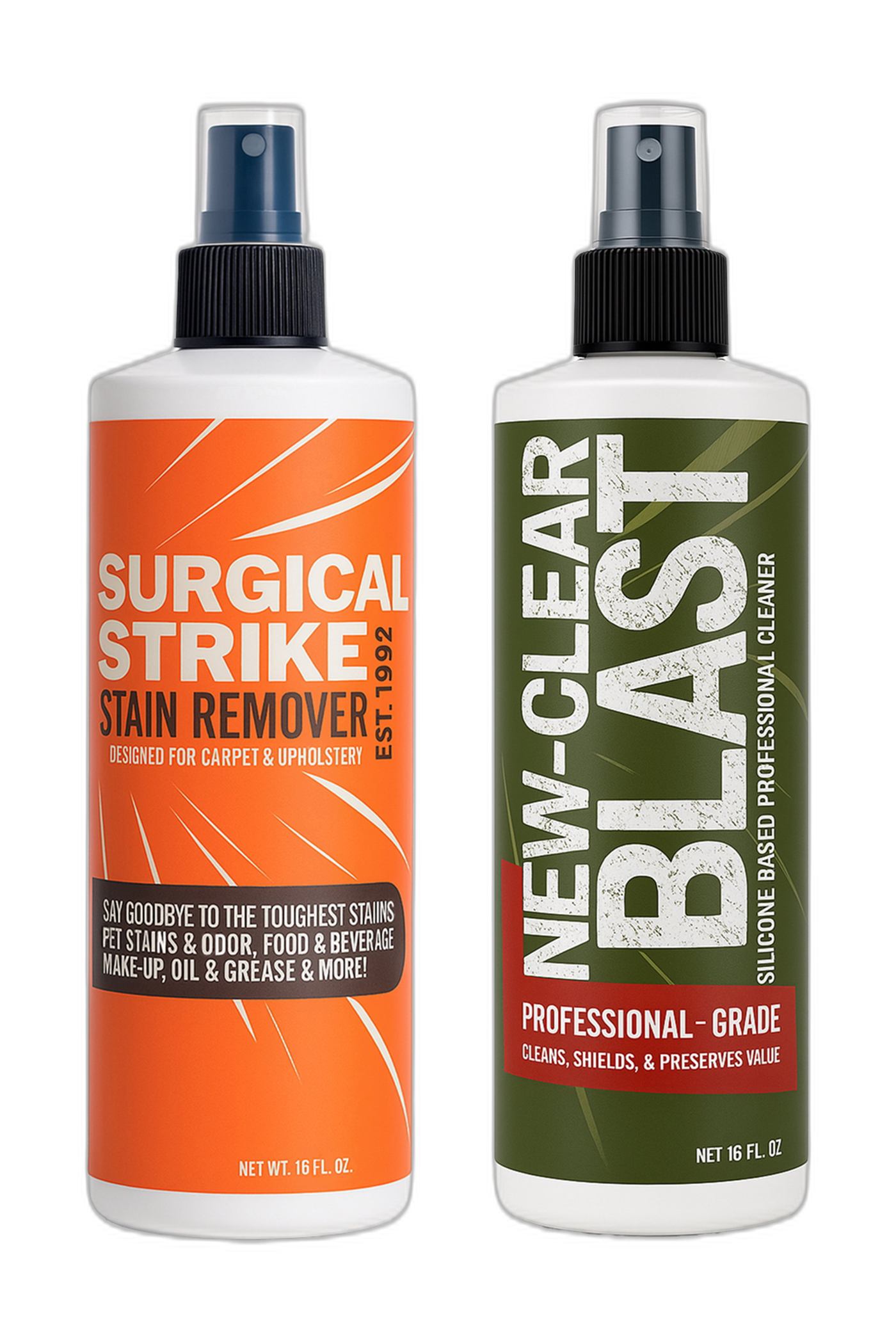
Two formulas. Serious range.
Use Surgical Strike for stains and odor, then New-Clear Blast to clean, shield and preserve hard surfaces.