Restaurant operators continuously seek effective cleaning and sanitizing methods that can reduce reliance on harsh chemicals while upholding high food safety standards. The goal is to maintain a hygienic environment that protects both customers and staff without introducing unnecessarily aggressive substances into food preparation areas. Modern alternatives are centered on verified sanitizing techniques, which include both non-chemical options like hot-water applications and the use of approved food-grade chemical solutions.
Regardless of the method chosen, a core principle of food safety remains consistent: effective cleaning must always precede sanitizing. Sanitizers are designed to reduce microorganisms on a clean surface, and their effectiveness is compromised by the presence of dirt, grease, or food residue. This foundational step of thorough cleaning is non-negotiable for achieving the microbial reduction necessary to maintain a safe food service operation.
Key Takeaways for Restaurant Operators
For facility managers and restaurant operators looking for alternatives to traditional cleaning methods for food safety, here are the essential points to keep in mind:
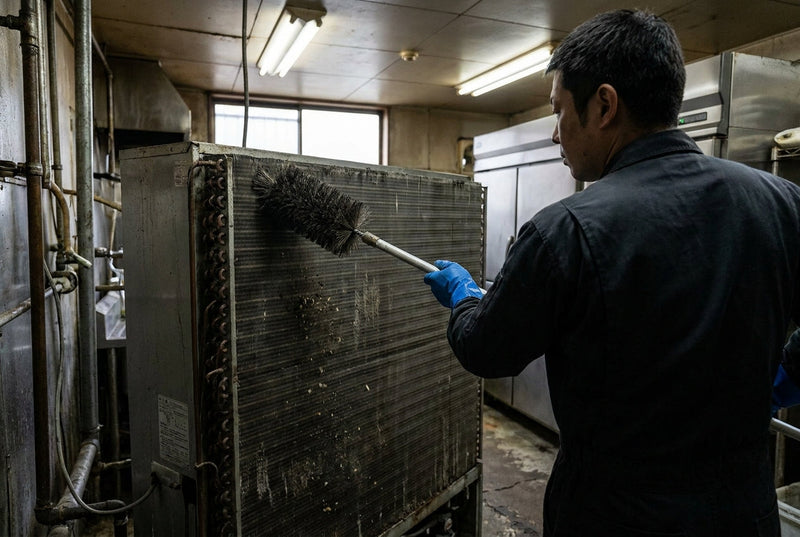
- Always perform thorough cleaning to remove soil, food particles, and grease before any sanitizing step. A surface that is not visibly clean cannot be effectively sanitized.
- Alternative methods, such as hot-water sanitizing, must meet specific criteria for temperature and contact time to achieve a verified reduction in microbial loads.
- Food-grade chemical sanitizers require precise application, including correct concentration, contact time, and water temperature, to be effective. Deviating from these parameters can render them useless or leave unwanted residues.
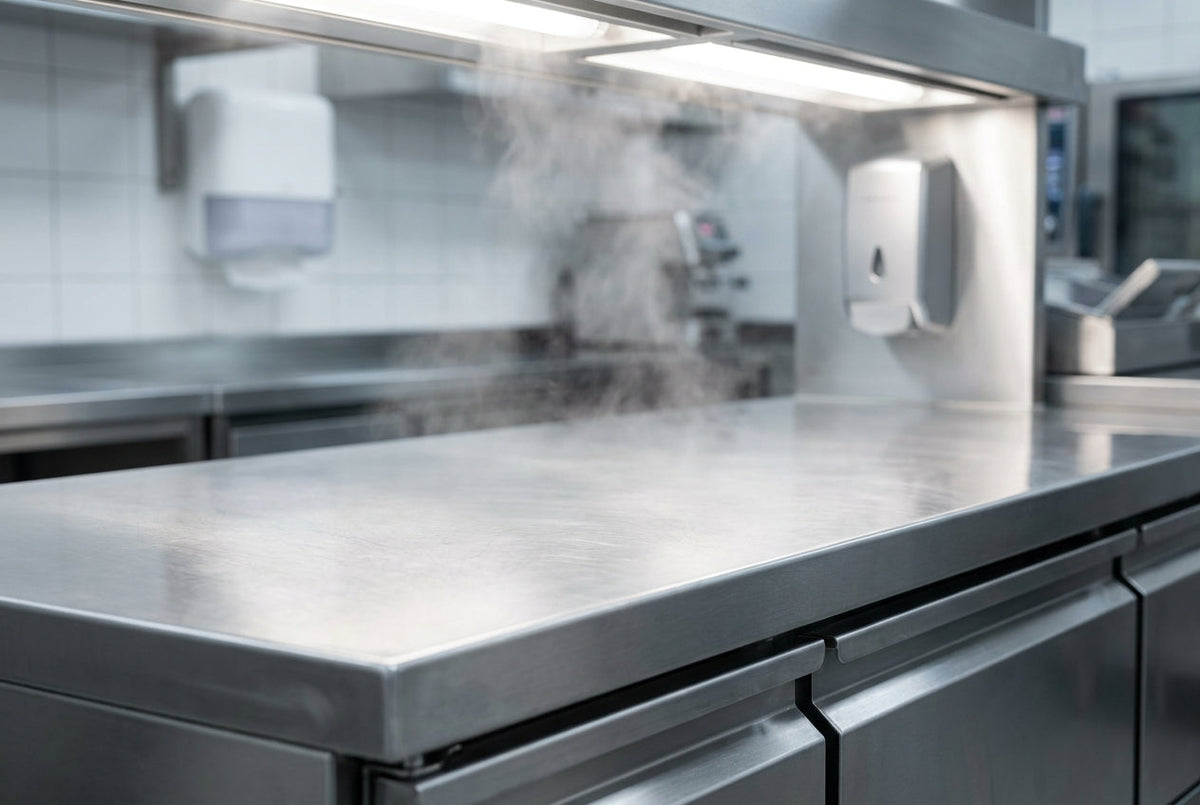
- Food-contact surfaces demand stricter adherence to cleaning and sanitizing protocols compared to non-food-contact areas like floors and walls. It is critical to differentiate between these surfaces and apply the appropriate procedures.
Cleaning vs. Sanitizing: A Critical Distinction
In the context of food safety, the terms "cleaning" and "sanitizing" are not interchangeable. Understanding the difference is fundamental to any effective hygiene program in a restaurant. Cleaning is the essential first step that involves removing visible soil, food particles, grease, and other debris from surfaces using detergent, water, and physical action.
Sanitizing, on the other hand, is the process that reduces the number of microorganisms on a clean surface to safe levels. This step is performed after a surface has been thoroughly washed and rinsed. Sanitizing can be achieved through either thermal (hot water) or chemical means.
Applying sanitizer to a surface that has not been properly cleaned is ineffective. The presence of organic matter like food soil or grease can inactivate the sanitizer, prevent it from reaching the surface, and create a biofilm that protects microorganisms. Therefore, a failure to remove all soil, grease, or even leftover detergent can significantly reduce the effectiveness of any subsequent sanitizing step.
Hot Water Sanitizing: A Non-Chemical Approach
For heat-tolerant items such as utensils, cutting boards, and certain types of equipment, sanitizing with very hot water is a practical and effective non-chemical alternative. This method relies on high temperatures to destroy microorganisms, avoiding the need for chemical agents on food-contact surfaces.
To be effective, this method requires strict control over temperature and time. The water must be maintained at 75°C (167°F) or hotter, and the items must be completely submerged for a minimum of two minutes. This specific combination ensures a sufficient thermal process to reduce microbial loads to a safe level. This approach is a legitimate alternative to chemical sanitizing in many jurisdictions, particularly for items that can be processed in a commercial dishwasher or a three-compartment sink setup where the final rinse bay is dedicated to hot water sanitizing.
Food-Grade Chemical Sanitiser Options
When hot water sanitizing is not practical, food-grade chemical sanitizers provide another alternative. These are distinct from harsh industrial cleaners and are approved for use on surfaces that come into contact with food. Common options include solutions based on alcohol, quaternary ammonium compounds (quats), and chlorine.
The effectiveness of these chemicals depends entirely on their correct use, particularly their concentration. For example, some regulatory guidance cites alcohol-based sanitizers as effective at a 70 to 80 percent concentration. Quaternary ammonium sanitizers often require a specific dilution, such as 200 to 220 parts per million (ppm) with a one-minute immersion time. Similarly, chlorine-based sanitizers are commonly guided for use at 50 to 100 ppm. These examples highlight the critical need for precise measurement and adherence to manufacturer instructions to ensure food safety.
Mechanism-to-Outcome Map: Ensuring Sanitizer Efficacy
Achieving consistent food safety relies on understanding how specific actions (mechanisms) lead to desired results (outcomes). A breakdown of these relationships helps operators implement and monitor effective sanitizing protocols.
-
Mechanism: Thorough Initial Cleaning
Outcome: Prepares surfaces for sanitizing by removing soil, grease, and organic matter. These substances can shield microorganisms or chemically inactivate sanitizers, so their removal is essential for the sanitizer to work. -
Mechanism: Correct Sanitiser Concentration
Outcome: Achieves the necessary microbial reduction. If the concentration is too low, the solution will not be effective. If it is too high, it can leave behind chemical residues that may be harmful or undesirable on food-contact surfaces. -
Mechanism: Adequate Contact Time
Outcome: Allows the sanitizing agent sufficient time to act on microorganisms. Required contact times can range from 7 to 30 seconds or more depending on the product, and the surface must remain wet for this entire duration. -
Mechanism: Proper Water Conditions and Temperature
Outcome: Supports optimal chemical performance. Factors like water hardness or incorrect temperatures can negatively impact the chemistry of some sanitizers, reducing their effectiveness.
Failure Modes and Operational Risks in Restaurant Sanitizing
Even with the right alternatives, operational errors can undermine food safety. Recognizing common failure modes is key to mitigating risks.
-
Failure Mode: Inadequate Pre-Cleaning
Operational Risk: Sanitizers cannot effectively reduce microbial loads when surfaces are still soiled with food residues or grease. This is one of the most common reasons for sanitizing failures, leading to an elevated risk of cross-contamination. -
Failure Mode: Incorrect Sanitiser Dilution
Operational Risk: Solutions that are too weak will not sanitize properly, creating a false sense of security and increasing contamination risks. Solutions that are too strong can leave behind unsafe chemical residues. -
Failure Mode: Insufficient Contact Time
Operational Risk: If a sanitizing solution is wiped away too quickly or evaporates before the required contact time is met, microorganisms may not be adequately destroyed. This can happen in busy environments where staff may rush the process. -
Failure Mode: Lack of Verification
Operational Risk: Without regular testing, such as using chemical test strips to check sanitizer concentrations, operators cannot confirm the ongoing effectiveness of their process. This lack of verification creates an unseen contamination risk that can persist until a problem arises.
Regulatory, Safety, and Compliance Considerations
Navigating the landscape of restaurant cleaning requires attention to regulations and safety protocols. Food-contact surfaces are subject to much stricter regulatory requirements than non-food-contact surfaces, demanding distinct and carefully managed cleaning and sanitizing procedures. Food safety standards mandate that food premises and equipment must be constructed and maintained in a way that allows for effective cleaning and, where necessary, sanitizing to prevent contamination.
When using any chemical solution, safety is paramount. Always adhere to the product label directions for use, dilution, and contact time. It is important to use with adequate ventilation, especially in enclosed spaces. Staff should take precautions to avoid contact with eyes and prolonged skin contact by using appropriate personal protective equipment. As with all chemical products, keep them out of reach of children.
Selection Checklist for Restaurant Cleaning Alternatives
Choosing the right cleaning and sanitizing methods involves a systematic evaluation of your specific operational needs. Use this checklist to guide your selection process:
- Evaluate the surface material: Can the surface or equipment tolerate high heat for hot-water sanitizing without being damaged? Metals and some polymers may be suitable, while others are not.
- Identify food-contact status: Clearly distinguish between food-contact surfaces (e.g., cutting boards, prep counters) and non-food-contact surfaces (e.g., floors, walls) to apply appropriate controls and avoid unnecessary chemical use.
- Consult local regulations: Verify the cleaning and sanitizing methods and chemicals approved by your local health department or regulatory body. Requirements can vary by jurisdiction.
- Confirm verification capabilities: Before implementing a chemical sanitizer, ensure you have the tools and training to accurately measure chemical concentrations (e.g., test strips) and maintain required contact times.
- Assess operational efficiency and safety: Choose methods that can be integrated smoothly into your daily workflows and minimize exposure risks for staff. The most effective protocol is one that is followed consistently.
Streamlining Restaurant Surface Preparation with CG Chemicals
Effective surface preparation is the critical first step before any further cleaning procedure can be successful, especially in demanding restaurant environments. Removing grease, food soils, and other buildup is essential for cleaners to reach and act on the surface underneath. CG Chemicals offers solutions that support this foundational cleaning stage.
For general-purpose cleaning, New-Clear Blast is a multi-surface cleaner that can be used to prepare a wide range of restaurant surfaces. It helps remove common soils, leaving a clean base for subsequent steps in your cleaning protocol.
For more challenging tasks, Surgical Strike, a degreaser, stain and odor remover, is designed to address tough buildup. It is suitable for use in kitchens, on equipment, and in other high-use areas where grease and stubborn residues accumulate. Using the right cleaner for the job simplifies the entire process and assists with maintenance protocols.
Sources
- https://www.health.wa.gov.au/articles/a_e/cleaning-and-sanitising-food-premises-and-food-equipment
- https://restaurant.org/education-and-resources/resource-library/national-food-safety-month-week-2-clean-and-sanitize-right/
- https://www.food.gov.uk/print/pdf/node/1389
- https://www.food-safety.com/articles/10638-surface-sanitation-in-retail-and-foodservice-establishments-gaps-in-terminology-and-regulations
- https://www.foodprotection.org/members/fpt-archive-articles/2025-05-cleaning-a-retail-and-foodservice-perspective/
- https://www.foodstandards.gov.au/sites/default/files/publications/SiteAssets/Pages/safefoodaustralia3rd16/Appendix%206%20-%20Cleaning%20and%20sanitising%20surfaces%20and%20utensils.pdf
- https://www.act.gov.au/business/food-safety-for-businesses/handling-preparing-and-storing-food/cleaning-and-sanitising-food-premises-and-equipment
- https://www.foodstandards.gov.au/sites/default/files/publications/SiteAssets/Pages/safefoodaustralia3rd16/Standard%203.2.3%20Food%20Premises%20and%20Equipment.pdf

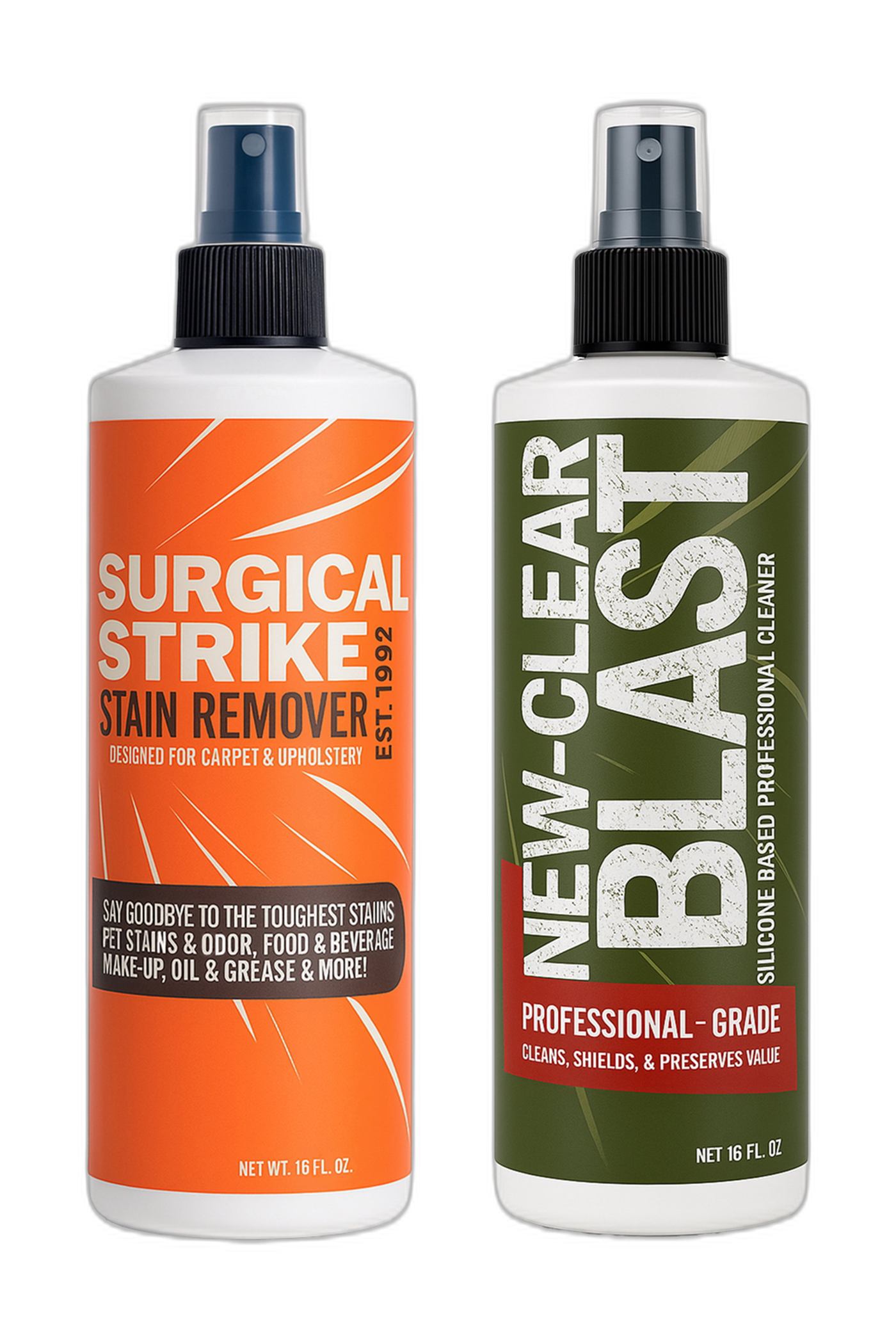
Two formulas. Serious range.
Use Surgical Strike for stains and odor, then New-Clear Blast to clean, shield and preserve hard surfaces.