Making informed decisions about the cleaning products you bring into your home or facility is more complex than just reading a label. Many products make broad environmental claims, but true sustainability involves a deeper look at ingredients, performance, packaging, and third-party verification. Understanding these factors is key to choosing a sustainable cleaner that is both effective and aligns with responsible environmental practices.
Key Takeaways
When selecting a cleaning product, navigating the options requires focusing on verified information rather than marketing language. Here are the essential points to consider:
- Prioritize ingredient transparency and proven performance over general green marketing claims when selecting a sustainable cleaner.
- The EPA Safer Choice label indicates products with rigorously screened ingredients, including dyes and fragrances.
- Effective sustainable cleaners also consider volatile organic compound (VOC) limits, pH levels, and environmentally friendly packaging.
- Modern criteria for sustainable cleaning products emphasize recycled content and PFAS restrictions in packaging.
- Choosing low VOC and cold-water cleaning formulations can help reduce environmental impact without sacrificing efficacy.
- To ensure product suitability, verify the cleaner on the EPA's official product list and confirm it matches your cleaning task.
What Defines a Truly Sustainable Cleaner?
A truly sustainable cleaner moves beyond vague environmental claims by combining verified ingredient safety with effective performance. The foundation of sustainability in this context is a rigorous screening process for every chemical component. This process evaluates potential ingredient hazards like persistence in the environment, bioaccumulation in organisms, and toxicity to aquatic life.
This scientific approach ensures that the product's formulation minimizes its environmental footprint. However, safety alone is not enough. For a cleaner to be considered a viable sustainable option, it must also perform its intended function effectively. A sustainable solution should deliver cleaning power comparable to conventional products, providing a practical alternative without compromising on results for your Home or business.
The Role of the EPA Safer Choice Label
The EPA Safer Choice label is a credible and reliable indicator for consumers and procurement managers seeking cleaning products with safer chemical ingredients. This program is not a simple self-declaration by a manufacturer; it involves a thorough review by the U.S. Environmental Protection Agency. EPA scientists evaluate every single ingredient in a product, including often-overlooked components like dyes and fragrances, to ensure they meet stringent human health and environmental criteria.
When you see the Safer Choice label, it signifies that the product's ingredients have been reviewed against EPA's human health and environmental criteria. Furthermore, the program also requires that labeled products perform comparably to their conventional counterparts. This dual focus on safety and performance makes the label a trustworthy resource for identifying products that are formulated with environmental responsibility in mind.
Beyond Ingredients: Packaging, VOCs, and Performance
A comprehensive approach to choosing a sustainable cleaner extends beyond the chemical formulation. Packaging, volatile organic compound (VOC) content, and pH levels are also critical factors. The EPA has recently strengthened its criteria for packaging, now placing a greater emphasis on the use of post-consumer recycled content, overall recyclability, and new restrictions on PFAS chemicals, often called "forever chemicals."
Volatile organic compounds are chemicals that can be released into the air during product use, potentially affecting indoor air quality. Products with low VOC content are preferable for better indoor air quality. Additionally, performance remains a key pillar of sustainability. Products seeking certification under greener standards must still meet established performance benchmarks for their specific cleaning category, ensuring they effectively tackle the intended soils and surfaces.
Practical Considerations for Greener Cleaning
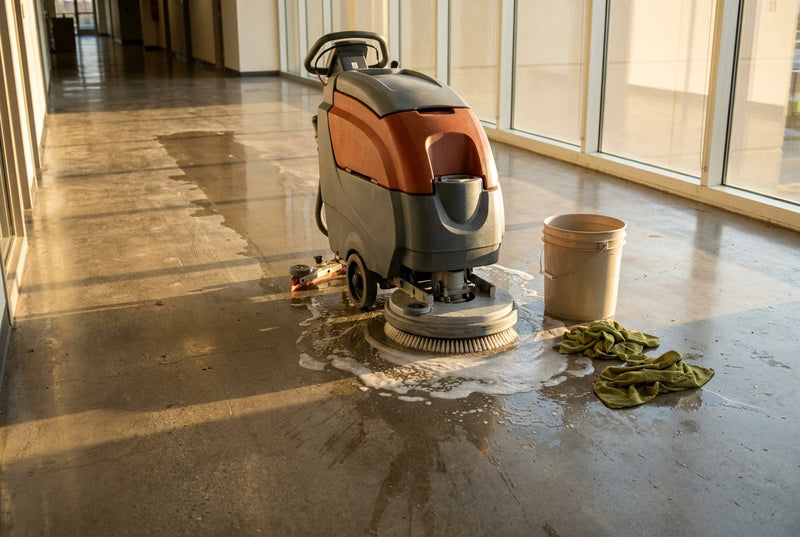
Beyond selecting the right product, how you use it can also contribute to a greener cleaning routine. One practical step is to choose cleaners designed for effective use with cold water. Heating water is an energy-intensive process, and using cold-water formulations can significantly reduce the energy consumption associated with cleaning tasks in both residential and commercial settings, such as large Facilities.
Another important consideration is the product's VOC content. Opting for low-VOC cleaning formulations helps support better indoor air quality by minimizing the release of airborne chemical compounds. These practical attributes, including cold-water efficacy and low-VOC profiles, allow users to reduce their environmental impact without needing to compromise on the cleanliness and maintenance of their spaces.
How to Verify Your Sustainable Cleaner: A Buyer's Checklist
To make a confident choice, use a systematic approach to evaluate products. This checklist can help you verify a cleaner's claims and suitability for your needs.
- Check for Third-Party Certifications: Look for credible, independent certifications like the EPA Safer Choice label on the product packaging.
- Verify the Product Online: Before purchasing, confirm that the product is officially listed on the EPA Safer Choice product search page. This step ensures the certification is current and valid.
- Confirm pH Suitability: Check if the product's pH level is appropriate for the surface you intend to clean, as defined by industry standards, to avoid potential damage.
- Assess Packaging: Examine the product's packaging for features like post-consumer recycled content, clear recyclability instructions, or options for concentrate refills that reduce waste.
- Align Performance with Your Needs: Ensure the cleaner’s stated capabilities match your specific requirements, whether it is for general-purpose cleaning, degreasing, or stain removal.
Avoiding Misleading "Green" Claims
The marketplace is full of products with vague claims like "natural," "green," or "eco-friendly" that lack clear, verifiable definitions. Be cautious of this type of marketing, often called "greenwashing," and always look for specific supporting evidence. True transparency is a key indicator of a responsibly formulated product. A lack of ingredient disclosure, especially for components like fragrances or dyes, can sometimes suggest less rigorous screening.
The most reliable way to cut through misleading language is to seek out independent, third-party verification. When a product lacks this type of validation, it may be a signal that deeper scrutiny is needed. For tougher jobs, a purpose-built solution like Surgical Strike, a degreaser, stain and odor remover, offers clear performance expectations without vague environmental promises.
Regulatory and Compliance Insights
Behind credible sustainability labels are robust regulatory frameworks that set specific thresholds for chemical hazards. The EPA Safer Choice Standard, for example, establishes clear criteria for evaluating every ingredient in a cleaning product. These standards restrict chemicals based on their potential for persistence in the environment, their tendency to bioaccumulate in living organisms, and their toxicity to aquatic life.
The criteria are highly specific. For instance, the standard disallows ingredients with acute aquatic toxicity values below 10 mg/L for any product intended for direct release into the environment. This helps protect waterways and aquatic ecosystems. Recent updates to the Safer Choice standard have further strengthened these protections by adding stronger measures for sustainable packaging and placing new restrictions on the inclusion of PFAS chemicals. These evolving regulations ensure that certified products represent current best practices in safer chemistry and environmental protection.
Sources
- https://www.epa.gov/saferchoice/learn-about-safer-choice-label
- https://www.epa.gov/newsreleases/epa-strengthens-safer-choice-standard-commercial-and-household-cleaning-products
- https://www.epa.gov/saferchoice
- https://www.epa.gov/saferchoice/standard
- https://www.nsf.org/sustainability/safer-chemistry/epa-safer-choice
- https://www.epa.gov/greenerproducts/identifying-greener-cleaning-products
- https://www.epa.gov/saferchoice/products

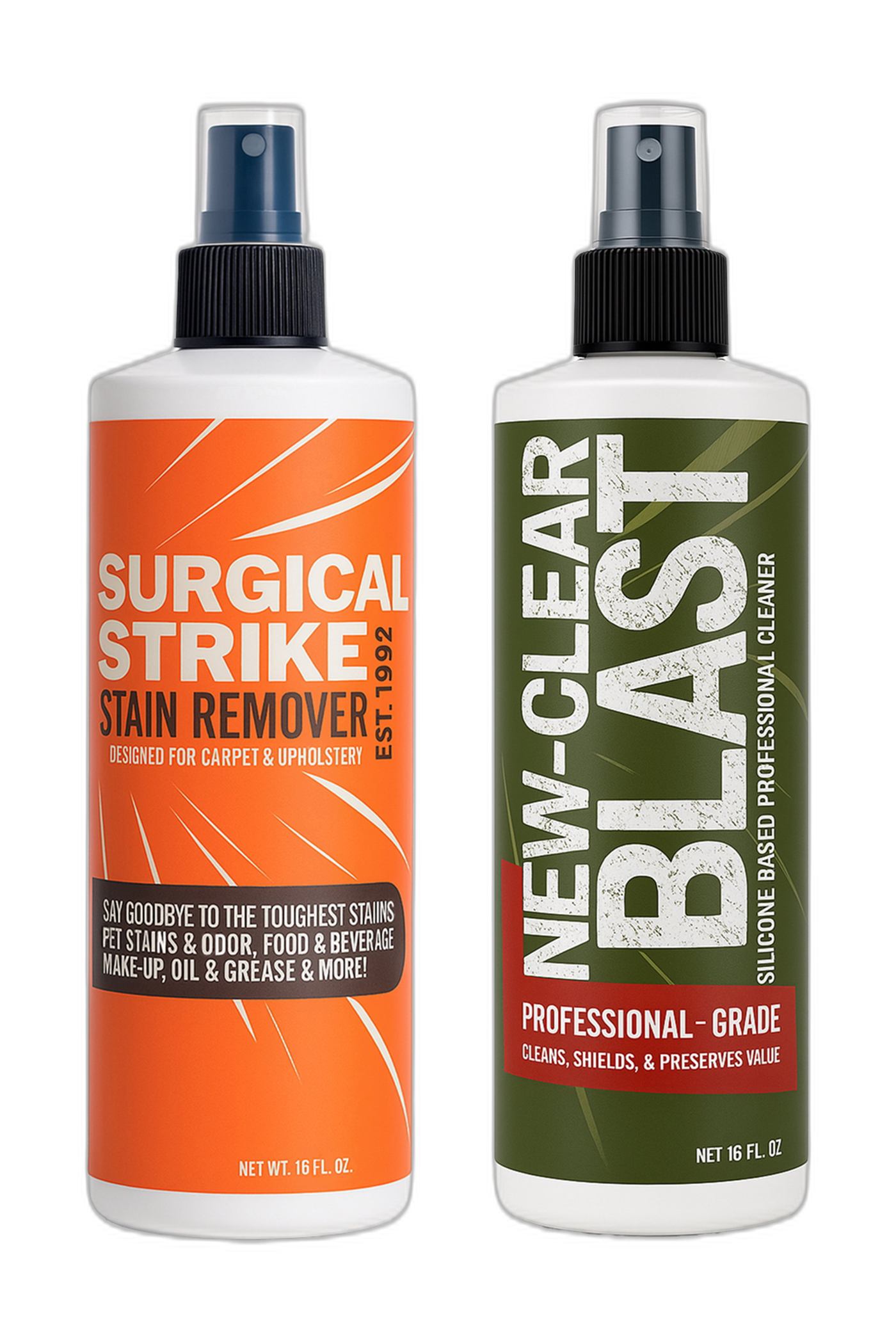
Two formulas. Serious range.
Use Surgical Strike for stains and odor, then New-Clear Blast to clean, shield and preserve hard surfaces.