In highly sensitive environments like pharmaceutical and semiconductor manufacturing, controlling contamination is not just a priority; it is the foundation of product quality, safety, and operational yield. While facility surfaces and equipment receive significant attention, the garments worn by personnel are a critical and often complex component of contamination control. This article details the stringent, multi-stage cleaning, sterilization, and packaging protocols required for cleanroom garments and reusable personal protective equipment (PPE). Understanding these processes is essential for maintaining barrier integrity and ensuring environmental purity.
The Critical Role of Cleanroom Garment Integrity
Cleanroom garments and reusable PPE serve as the primary barrier between personnel, the single largest source of contamination, and the controlled environment. These specialized apparel systems are designed to contain particles and microbes shed by humans, preventing them from compromising sensitive products and processes. The effectiveness of this barrier depends entirely on the garment's integrity, which must be maintained throughout its entire lifecycle.
Improper cleaning or using a garment beyond its validated lifespan can lead to significant issues. Fabric can degrade, seams can loosen, and the material's filtration efficiency can decline, resulting in increased particle shedding. Furthermore, inadequate washing protocols can leave behind chemical residues or fail to neutralize microbial contamination, turning the garment itself into a source of contamination.
Effective management requires a comprehensive approach that includes validated cleaning protocols, controlled packaging, and meticulous tracking of each garment's usage history. This ensures every piece of apparel entering the cleanroom meets the required standards for cleanliness and performance. While specialized garment processing is distinct, it exists within a broader facility maintenance strategy. Supporting the cleanliness of the overall industrial environment is a key part of a holistic approach to managing facility cleanliness. General purpose cleaning solutions like New-Clear Blast are used as part of surface preparation and maintenance routines in demanding work zones.
Key Takeaways for Purity Maintenance
Maintaining the purity of cleanroom garments involves a precise and validated system. For procurement managers and operations personnel, understanding the key requirements is essential for ensuring compliance and safety. The following points highlight the most critical aspects of a successful garment management program:
- Reusable cleanroom garments must undergo processing at regular, defined intervals. This cleaning must take place within an ISO 5 (Class 100) cleanroom laundry environment to effectively remove contaminants and neutralize potential hazards before the garment is reused.
- The selection of cleanroom clothing must balance multiple factors. Beyond particle retention, materials should be breathable and comfortable for the user while being durable and non-fragmenting to prevent the garment itself from shedding particles.
- Validation is non-negotiable. Cleaning processes must be validated to confirm their effectiveness. Particle shedding is measured using tests like the Helmke Drum or Body Box, while microbial contamination is checked with RODAC plates to ensure the garment maintains its barrier integrity.
- Garments have a defined lifespan, typically a validated cycle of one to five days. Using garments beyond this maximum safe use time introduces a significant risk of microbiological contamination into production areas.
- Post-cleaning packaging is a critical control point. This step must occur under ISO 5 conditions that are compatible with the cleanroom where the apparel will be worn, preventing any re-contamination before it is put into service.
- Implementing a tracking system, often using RFID technology, is crucial for managing the garment lifecycle. It allows facilities to monitor the number of washes for each item and ensures garments are retired before they exceed their validated lifespan and begin to fail.
Regulatory Frameworks for Cleanroom Garment Processing
The protocols for cleanroom garment processing are governed by established international standards to ensure consistency and reliability. The foundational regulatory framework is ISO 14644, specifically Part 5 (ISO 14644-5), which outlines the basic requirements for cleanroom operations. This standard provides guidance on everything from facility design to operational procedures, including the proper handling of reusable cleanroom clothing.
According to these standards, reusable cleanroom clothing must be processed at regular intervals to remove contamination and neutralize hazards before being reintroduced into controlled environments. This is a mandatory step to prevent the transfer of particles and microorganisms from the outside world into the clean production area. The frequency and methods of cleaning are determined by the classification of the cleanroom and the specific processes being conducted within it.
A critical stipulation is that the final treatment and packaging of cleanroom garments must be performed in conditions compatible with the cleanroom where they will be used. For most applications in sensitive Manufacturing sectors, this means processing occurs in an ISO 5 (Class 100) cleanroom laundry. For cleanrooms rated at ISO 8 and ISO 7, post-cleaning sterilization is generally not required; instead, garments are packaged immediately after drying to prevent any opportunity for re-contamination.
Maintaining Barrier Integrity: The Role of Validation Testing
Validation is the cornerstone of a reliable cleanroom garment program. It provides objective evidence that the cleaning processes are effective and that the garments continue to meet performance specifications after repeated use and laundering. Without rigorous testing, facilities are operating on assumptions, which can lead to catastrophic contamination events.
Particle shedding tests are a key component of this validation. Methods like the Helmke Drum Test tumble a garment in a controlled chamber to measure the number of particles released. The Body Box Test involves a person wearing the garment and performing a series of movements inside a test chamber to simulate real-world particle shedding. These tests quantify the garment's ability to contain particles generated by the wearer.
Equally important are microbial contamination tests. The most common methods include using Replicate Organism Detection and Counting (RODAC) plates, which are pressed against the garment surface to sample for viable microorganisms. Swab testing can also be used for specific areas. These tests confirm that the laundering and drying process successfully reduces the microbiological load to acceptable levels, ensuring the garments do not introduce harmful bacteria or fungi into the aseptic environment.
Lifecycle Management: Preventing Secondary Contamination
Every cleanroom garment has a finite, validated lifecycle. Depending on the material, construction, and cleanroom classification, this is typically between one to five days of use before requiring reprocessing. This lifecycle is determined through risk analysis and extensive testing to identify the point at which the garment's performance begins to degrade. Adhering to this schedule is essential for preventing contamination.
Exceeding the maximum safe use time significantly increases the risk of microbiological contamination in production areas. Over time and with repeated wear, garments accumulate contaminants and the fabric's barrier properties can be compromised. This makes lifecycle management a critical concern for all types of controlled Facilities.
To manage this effectively, many facilities use RFID tracking technology. An RFID chip embedded in each garment allows for automated tracking of every wash cycle it undergoes. This system provides a reliable way to monitor a garment's history and ensures it is removed from service before it exceeds its validated lifespan. This proactive approach prevents particle shedding from aged fabrics and maintains the integrity of the entire cleanroom apparel system.
Finally, proper storage after cleaning is the last line of defense against secondary contamination. Once cleaned, dried, and folded in a controlled environment, garments must be sealed in clean packaging. These sealed containers protect the apparel from environmental exposure during transport and storage, ensuring they remain in a pristine state until they are opened in the gowning area.
Failure Modes and Operational Risks in Garment Processing
A breakdown in any part of the garment processing system can compromise the entire controlled environment. Understanding common failure modes is key to mitigating operational risks. Key vulnerabilities include:
- Failure to Adhere to Lifecycles: Using garments beyond their validated number of wash cycles is a primary cause of failure. As fabrics wear, they begin to shed more particles, directly undermining their purpose.
- Improper Packaging or Storage: A perfectly cleaned garment can be re-contaminated if it is not packaged correctly or if the packaging is damaged during transport or storage. This completely negates the resources spent on the cleaning process.
- Use of Non-Validated Cleaning Agents: The chemistries used for cleaning must be validated for both efficacy and material compatibility. The wrong detergent can leave residues, degrade fabric fibers, or fail to remove specific types of contaminants.
- Lack of Detailed SOPs: Inconsistent practices resulting from a lack of clear, enforced Standard Operating Procedures (SOPs) for garment handling, gowning, and de-gowning can lead to widespread contaminant transmission.
Mechanism-to-Outcome Map: From Cleaning Protocol to Purity
Achieving garment purity is the result of several interconnected mechanisms working together. Each step in the process directly contributes to the final outcome of a clean, reliable barrier garment.
- Specialized Detergents: Formulations are designed to be powerful enough to remove oils, particulates, and biological contaminants while being gentle enough not to damage the synthetic fibers of the garment. They are also formulated to rinse completely, leaving behind minimal residue that could later become airborne particles.
- Controlled Environment Laundering: Processing garments inside an ISO 5 (Class 100) cleanroom laundry is fundamental. This ensures that the air quality and surfaces within the laundry do not introduce more contaminants than the washing process removes.
- Filtered Drying Systems: Garments are dried with HEPA-filtered air. This critical step prevents clean, wet garments from being re-contaminated by ambient airborne particles during the drying phase, preserving the low particle counts achieved during washing.
- Strict Hand Hygiene: Before handling garments or entering the cleanroom, personnel must follow rigorous handwashing protocols, often a minimum 30-second wash with soap and water. This is a foundational step in the gowning procedure that reduces the initial microbial load and prevents contamination during the gowning process itself.
Selection Checklist for Cleanroom Garments and Processing
When selecting a cleanroom garment supplier or processing service, a systematic approach is necessary. Use this checklist to evaluate potential partners and ensure they meet the stringent requirements for maintaining purity:
- Evaluate Garment Materials: Assess materials for key performance indicators, including breathability and comfort for operators, as well as non-fragmentation properties to prevent secondary contamination from the garment itself.
- Confirm Processing Environment: Ensure any processing facility operates under ISO 5 (Class 100) cleanroom laundry conditions for all washing, drying, folding, and packaging stages.
- Require Particle Shedding Test Results: Ask for documented validation data from tests like the Helmke Drum or Body Box to verify the garment's particle retention capabilities over its lifecycle.
- Verify Microbial Contamination Testing: Confirm that microbial tests, such as RODAC plate sampling, are performed regularly and that the results consistently meet the required cleanliness standards for your cleanroom classification.
- Implement Lifecycle Tracking: Ensure the service provider uses a robust system, such as RFID tracking, to monitor the number of wash cycles for each garment and to enforce replacement before validated lifespans are exceeded.
Regulatory, Safety, and Compliance Considerations
A compliant cleanroom garment program is built on a foundation of regulatory adherence and continuous quality assurance. Strict adherence to ISO 14644-5 is the starting point, establishing the operational protocols for everything from material selection to final packaging. This standard provides the framework for building a defensible and effective garment management system.
All cleaning agents and the protocols in which they are used must be fully validated. This validation must prove their efficacy in removing expected contaminants without damaging the garment's integrity or leaving behind harmful residues. This is a data-driven process that provides confidence in the system's reliability.
Standard Operating Procedures (SOPs) for all cleanroom operations, especially those involving garment handling and gowning, must be detailed, clear, and readily available to all personnel. To be effective, these documents should be in the native language of the operators to prevent misunderstandings that could lead to contaminant transmission. Regular training and reinforcement of these procedures are critical for success.
Finally, continuous improvement is achieved through regular auditing and quality assurance measures. These activities confirm that garment cleanliness standards are being met, that protocols are being followed, and that the entire program remains in compliance with all relevant regulatory requirements. This ongoing vigilance is necessary to maintain the state of control required in sensitive environments.
Clean and prep surfaces with CG Chemicals
If you are dealing with buildup, residues, or tough soil before maintenance or finishing work, CG Chemicals offers practical cleaning solutions for high-use environments. Explore New-Clear Blast and Surgical Strike based on your surface and soil type.
Use with adequate ventilation. Avoid contact with eyes and prolonged skin contact. Keep out of reach of children. Follow label directions.
Sources
- https://www.14644.dk/cleanroom-clothing-and-personal-protective-equipment-an-in-depth-guide
- https://cleanroomtechnology.com/clothing-and-hygiene-of-cleanroom-personnel-of-iso-8-and-iso-7-classes-205814
- https://lindstromgroup.com/in/articles/what-are-the-standards-for-cleanroom-laundry/
- https://www.linkedin.com/pulse/clothing-hygiene-cleanroom-personnel-iso-8-7-classes-amol-suryawanshi
- https://www.iso.org/obp/ui/en/#
- https://nhiso.com/wp-content/uploads/2018/06/ISO-14644-5-2004.pdf
- https://www.cleanroom-industries.com/index.php/resources/basic-cleanroom-protocols/403
- https://blog.gotopac.com/2018/01/26/cleanroom-cleaning-procedure-contamination-control-iso-14644-1-protocol/
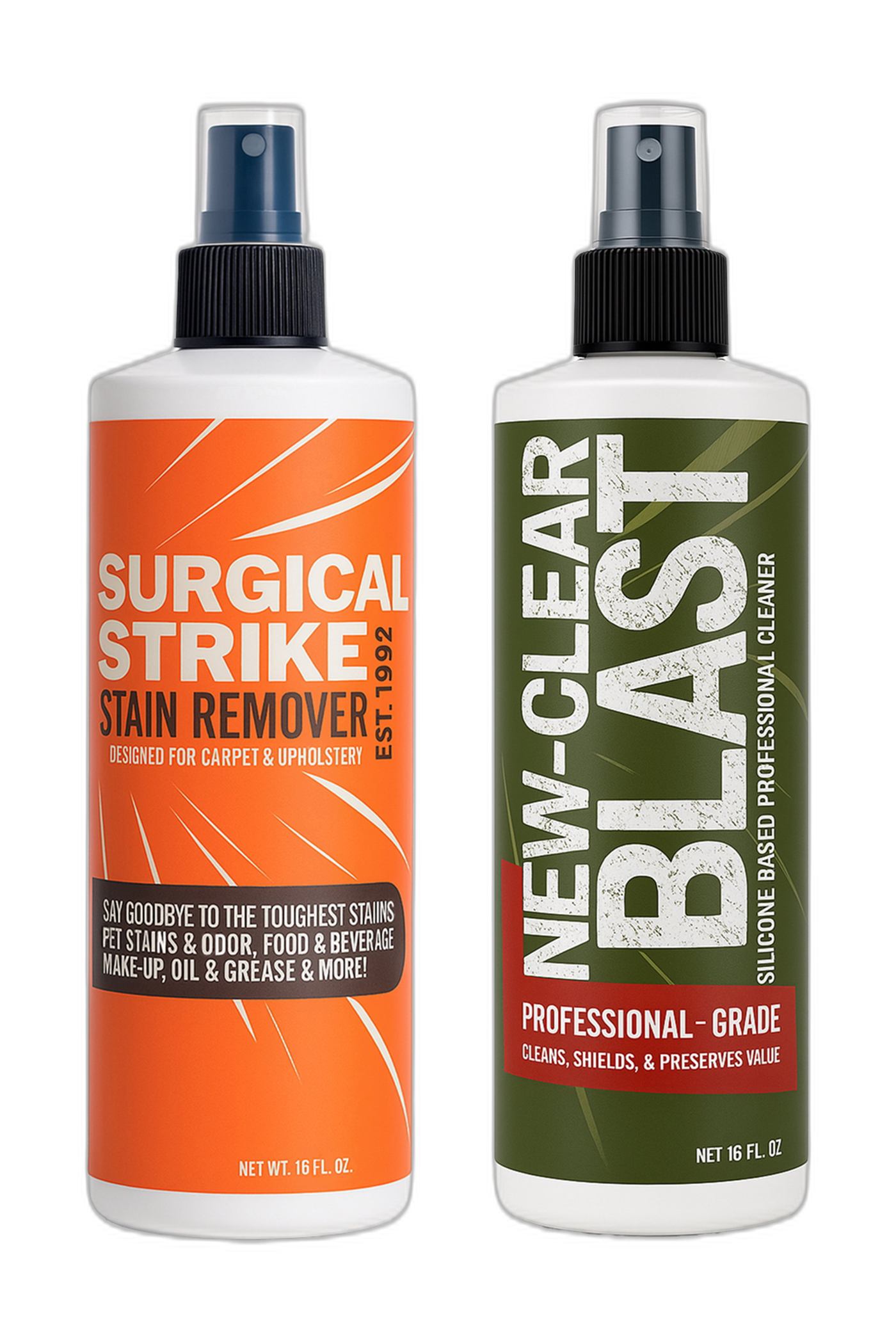
Two formulas. Serious range.
Use Surgical Strike for stains and odor, then New-Clear Blast to clean, shield and preserve hard surfaces.