How Low-Fume Cleaning Transforms Indoor Air Quality in 2025
As we move further into 2025, the connection between our cleaning habits and indoor air quality becomes clearer than ever. Conventional cleaning products often emit volatile organic compounds (VOCs), harmful chemicals linked to respiratory issues, headaches, and long-term organ damage. In fact, research indicates that indoor air is often five times more polluted than outdoor air. The good news? By switching to VOC-free cleaners, you can significantly enhance the quality of the air you breathe inside your home or workplace.
Rising Demand for Plant-Based Cleaners
Consumer preferences are evolving rapidly, with a notable shift toward natural, plant-based, and bleach-free cleaning products. By 2025, these eco-friendly options are expected to dominate the cleaning supplies market. According to studies, low-VOC cleaners reduce VOC emissions and contribute to better indoor air quality.
Understanding the Health Risks of VOCs
The health implications of VOCs cannot be overstated. Common household cleaners, even those marketed as “green,” frequently emit harmful compounds. Research has shown that VOC exposure is linked to various health risks, including asthma exacerbation and other chronic respiratory issues. To mitigate these risks, consumers should pay particular attention to fragrance-free options, which tend to emit lower levels of VOCs.
Eco-Certification and Transparency
In response to rising consumer awareness, there's an increasing demand for products that feature credible eco-labels, such as Safer Choice or Green Seal. These certifications are vital in helping consumers make informed decisions regarding the safety and effectiveness of their cleaning products. Being transparent about the contents and effects of cleaning materials fosters trust and makes it easier to choose options that protect air quality.
Smart Air Purification
To further improve air quality, integrating air purifiers equipped with activated carbon filters can effectively trap and remove VOCs from the air. This combination of low-fume cleaning and air purification helps reduce indoor pollution.
DIY Approaches and Reusable Solutions
Taking a DIY approach to cleaning can be a game changer. Simple ingredients like vinegar and baking soda can serve as effective cleaning agents, minimizing the need for harsh chemicals. Additionally, using reusable containers for homemade cleaning solutions not only cuts down on waste but also helps maintain better indoor air quality. This approach aligns perfectly with the sustainability trends expected to gain traction in 2025.
Conclusion: The Path Forward
Switching to bleach-free, VOC-free cleaning is not just an environmental choice; it’s an indoor air quality priority. As we move toward a future where indoor air quality is increasingly recognized as a crucial health factor, adopting VOC-free cleaning solutions can help reduce indoor VOCs for you and others. By understanding the risks associated with traditional cleaning products and embracing lower-fume alternatives, you can ensure a cleaner, fresher indoor environment.
Explore our cleaning solutions here.
References
- 1: HomeCourt - Cleaners and Indoor Air Quality
- 3: Initial - How to Keep Your Indoor Air VOC-Free
- 5: CBS News - VOCs in Cleaning Products
- 10: American Lung Association - VOCs in Cleaning Products
- 12: WHO - Indoor Air Quality Guidelines
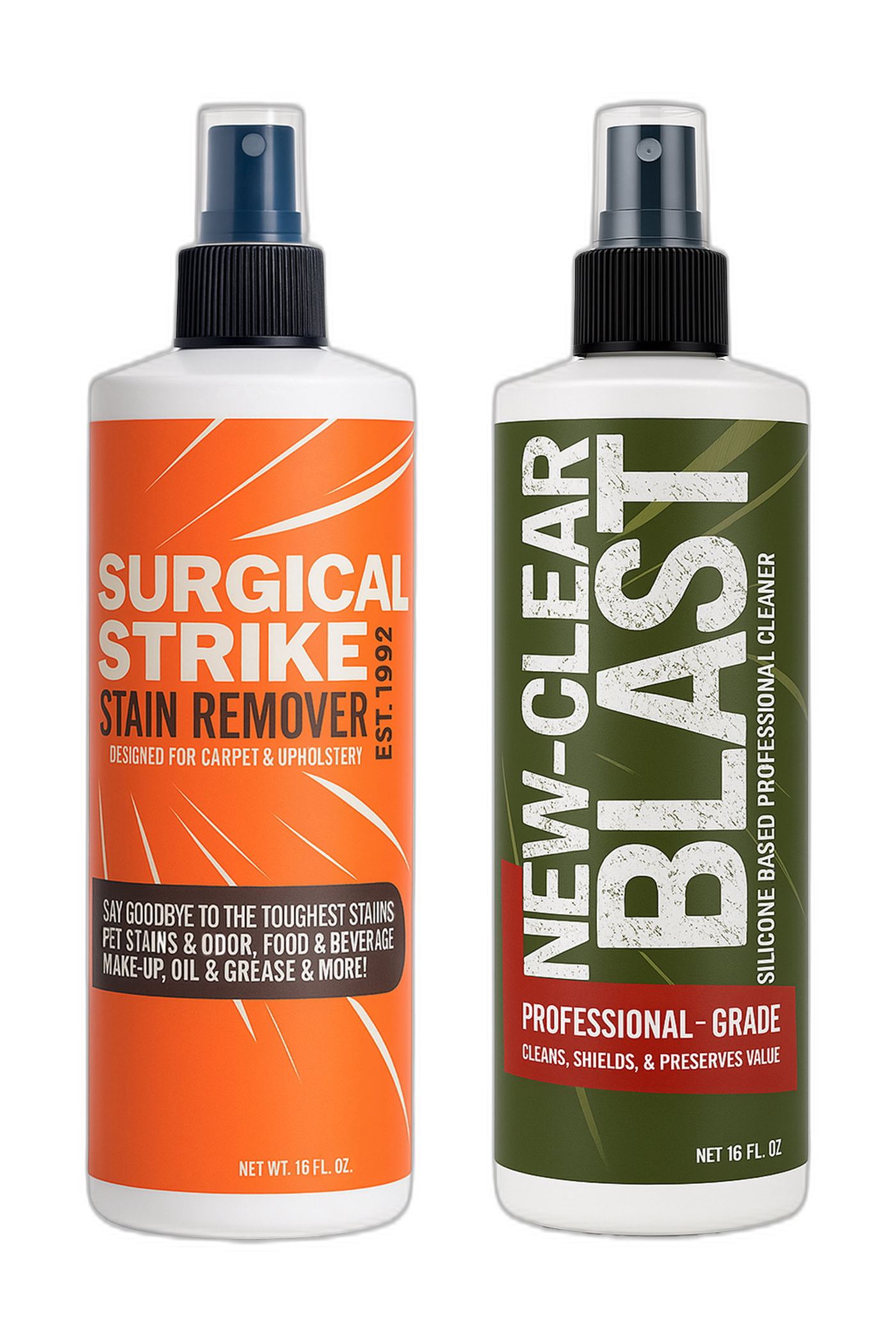
Two formulas. Serious range.
Use Surgical Strike for stains and odor, then New-Clear Blast to clean, shield and preserve hard surfaces.