Managing the cleanliness and operational readiness of stadiums and large-scale event venues presents a unique set of challenges. Between concerts, sporting events, and conferences, the window for cleaning is often extremely narrow. An effective strategy must balance speed, appearance, cost-efficiency, and environmental responsibility. For operators of these high-traffic facilities, implementing sustainable cleaning programs is not just an environmental goal but a core component of operational excellence and maintaining a positive fan experience. This guide from CG Chemicals LLC outlines practical strategies for achieving these objectives.
Key Takeaways
- Venue cleaning requires rapid turnaround protocols for multi-surface areas, supported by efficient staff and resource management.
- Sustainable cleaning strategies balance chemical reduction, targeted cleaning procedures, and robust waste diversion programs to help manage costs and environmental impact.
- Product selection should prioritize verifiable criteria, such as products that meet EPA Safer Choice ingredient standards, rather than relying on generic green labels.
- Visible cleanliness and effective odor control are critical for public health compliance and contribute directly to a positive and comfortable fan experience.
- Implementing smart waste infrastructure can support better material separation and provide data-driven insights to reduce landfill waste.
The Operational Challenge of Large Venue Cleaning
Stadiums and arenas are complex environments, hosting tens of thousands of people in a single event. The primary operational challenge is the rapid turnover required to restore these vast spaces between events, often in less than 24 hours. This process involves cleaning and sanitizing countless surfaces under immense time pressure, from seating bowls and concourses to restrooms and food service areas.
The core difficulty lies in managing multi-surface environments with a limited time frame and staff. A successful cleaning program must account for a wide range of materials, including concrete, plastic seating, glass, stainless steel, tile, and carpet. Each surface has specific soil types and cleaning requirements that must be addressed efficiently to ensure the venue is safe and presentable for the next crowd.
Effective planning is therefore essential. A detailed operational plan accounts for these diverse materials and anticipates the types of soils, from spilled beverages and food waste to general grime in high-traffic zones. This preparation helps ensure that crews are equipped with the appropriate tools and Cleaning and surface-prep solutions to work effectively and safely.
Implementing Sustainable Cleaning Programs
A sustainable cleaning program in a large venue is a multi-faceted approach that integrates responsible product selection, efficient processes, and comprehensive waste management. The goal is to reduce environmental impact while lowering long-term operating costs. This is often achieved through a combination of chemical reduction, targeted cleaning where it is needed most, and diverting waste from landfills.
Resource-efficient operations extend beyond the cleaning chemicals themselves. Key practices include waste prevention at the source, establishing robust recycling and composting programs, and engaging in responsible procurement for all consumables. Green cleaning practices are not just about the products used but also about optimizing workflows to reduce water and energy consumption.
Achieving a balance is crucial for success. Facility managers must pair the right product choice with optimized workflows and surface-specific methods. This ensures that sanitation and appearance standards are consistently met without overuse of resources. By aligning these elements, venues can create a cleaning program that is both effective and environmentally responsible.
Strategic Product Selection for Environmental Responsibility
Choosing environmentally responsible cleaning products requires looking beyond marketing claims. Instead of assuming all products labeled 'green' are equally safe or effective, managers should prioritize products whose ingredient profiles are verified by a third-party standard. This approach helps ensure that sustainability goals are met without compromising cleaning performance.
A useful resource for this is the EPA's Safer Choice program. The Safer Choice label helps consumers and procurement professionals identify products with chemical ingredients that are safer for human health and the environment. Products that meet the Safer Choice Standard have undergone a rigorous EPA review, offering a reliable benchmark for responsible purchasing.
Furthermore, strategic selection involves matching the cleaning solution to the specific task. Using products designed for certain soil types and surfaces optimizes performance, reduces the amount of product needed, and minimizes waste. This targeted approach supports both sustainability and budgetary goals by ensuring resources are used effectively.
Optimizing Cleaning Workflows and Technologies
In a large venue, workflow is everything. Cleaning plans must be structured around the principle of rapid turnaround. This means prioritizing critical areas like restrooms, high-traffic concourses, and seating areas to ensure they are addressed first and most thoroughly. Establishing clear zones and task sequences for cleaning crews is fundamental to meeting tight deadlines.
Modern technologies can play a significant role in enhancing efficiency. For example, smart waste systems equipped with sensors can signal when bins are full, optimizing collection routes and preventing overflows. These systems can also provide valuable data on waste generation patterns, helping managers refine their diversion and reduction strategies over time.
Efficiency is also gained by equipping staff with the right tools for the job. Using appropriate equipment like auto-scrubbers for large floor areas or high-pressure washers for outdoor spaces allows teams to cover more ground in less time. Combined with logical task sequencing, this approach helps ensure that no effort is wasted during the critical cleaning window.
Comprehensive Waste Management and Diversion
For high-traffic venues, advanced waste management is a cornerstone of sustainability. Effective strategies focus on improving separation at the point of disposal, creating an efficient collection process, and using data to track waste streams. Clearly labeled bins for trash, recycling, and compost are the first step, but they must be supported by a logistical system that preserves the integrity of each stream.
Many venues are adopting zero-waste initiatives as a practical framework for reducing landfill disposal. This approach prioritizes reducing waste at the source, reusing materials whenever possible, and maximizing recycling and composting rates. It requires a coordinated effort across operations, from concessions to guest services, to minimize the materials that enter the facility in the first place.
This aligns with GSA sustainability guidance, which emphasizes waste prevention, recycling, and responsible purchasing as integrated parts of operational sustainability. By focusing on the entire lifecycle of materials used within the venue, managers can make significant strides in reducing their environmental footprint and associated disposal costs.
Maintaining Public Health and Enhancing Fan Experience
The goals of public health and fan experience are deeply intertwined. A visibly clean and well-maintained venue provides attendees with a sense of comfort and safety, which is fundamental to a positive experience. Venue managers must align their cleaning procedures with public health expectations, ensuring that sanitation is not just a behind-the-scenes task but a visible commitment.
Factors like visible cleanliness, effective odor control, and well-maintained surfaces in all public areas contribute significantly to attendee comfort and overall perception of the venue. A sticky floor, an overflowing trash can, or an unpleasant odor can detract from an otherwise enjoyable event.
Among the most critical areas are restrooms and high-touch surfaces. Consistent and thorough restroom sanitation is non-negotiable in any high-traffic setting. Likewise, regularly cleaning surfaces such as door handles, railings, elevator buttons, and concession counters is a key practice for maintaining a hygienic environment for thousands of guests.
Mechanism-to-Outcome Map
- Mechanism: Strategic cleaning product selection and responsible procurement based on verifiable criteria. Outcome:The use of products with lower-hazard chemical profiles, a reduced environmental impact, and optimized cleaning efficacy for specific tasks.
- Mechanism: Implementation of rapid turnaround cleaning protocols and workflow optimization. Outcome: Swift and thorough restoration of venue spaces between events, which minimizes downtime and helps maintain public health standards.
- Mechanism: Advanced waste diversion through smart infrastructure and zero-waste initiatives. Outcome: Significantly reduced landfill volume, increased recycling and composting rates, and improved overall resource efficiency.
Failure Modes or Operational Risks
- Risk: Inadequate or slow cleaning during the rapid turnaround window between events. Outcome: This can lead to compromised public health, a negative fan experience, poor reviews, and potential non-compliance with health codes for the venue.
- Risk: Misjudging 'green' cleaning products or using unvetted solutions based on marketing claims alone. Outcome: Suboptimal cleaning performance may result, potentially leading to increased chemical usage to compensate, and a failure to meet true sustainability objectives.
- Risk: Inefficient waste management systems with poor separation and collection processes. Outcome: This can cause increased operational costs from high disposal fees, low waste diversion rates, and a larger, more negative environmental impact for the facility.
Regulatory, Safety, or Compliance Considerations
When selecting cleaning chemicals, venue managers can use the EPA's Safer Choice criteria as a benchmark to help identify products whose ingredients meet its human health and environmental criteria. This provides a clear, science-based standard for procurement that goes beyond simple marketing language.
For a broader operational framework, the GSA's sustainability guidance for conference and meeting spaces offers valuable principles. It emphasizes a holistic approach that includes waste prevention, maximizing recycling, and responsible purchasing, all of which are directly applicable to large event venues.
Beyond regulations, implementing chemical safety best practices is paramount. This includes ensuring staff use products with adequate ventilation, avoid contact with eyes and prolonged skin contact, and always follow label directions precisely. It is also critical to ensure all cleaning products are stored properly and kept out of reach of children or unauthorized personnel.
Selection Checklist for Venue Managers
- Evaluate cleaning products against EPA Safer Choice criteria to select solutions with safer chemical ingredients.
- Assess existing cleaning workflows for their capability to handle rapid turnarounds and their efficacy across multiple surface types.
- Implement or enhance waste diversion programs that feature clear segregation points for recycling, composting, and landfill-bound waste.
- Consider investing in smart waste infrastructure to improve collection efficiency and gain data-driven insights into waste generation.
- Ensure all cleaning protocols explicitly address high-traffic touchpoints and are designed to maintain a high standard of visible cleanliness to support a positive fan experience.
Clean and prep surfaces with CG Chemicals
If you are dealing with buildup, residues, or tough soil before maintenance or finishing work, CG Chemicals offers practical cleaning solutions for high-use environments. Explore New-Clear Blast and Surgical Strike based on your surface and soil type.
Sources
- https://www.cleanfax.com/commercial-cleaning/stadium-cleaning-how-to-tackle-massive-facilities/
- https://www.cleanlink.com/hs/article/Green-Cleaning-Best-Practices-For-Venues--20300
- https://www.epa.gov/saferchoice/safer-choice-standard
- https://www.gsa.gov/government-traveller/travel-resources/conference-and-meeting-space-resources/conference-and-meeting-space-sustainability-guidance
- https://www.smartcitiesworld.net/news/news/the-future-of-smart-stadium-management-and-what-it-means-for-waste-5415
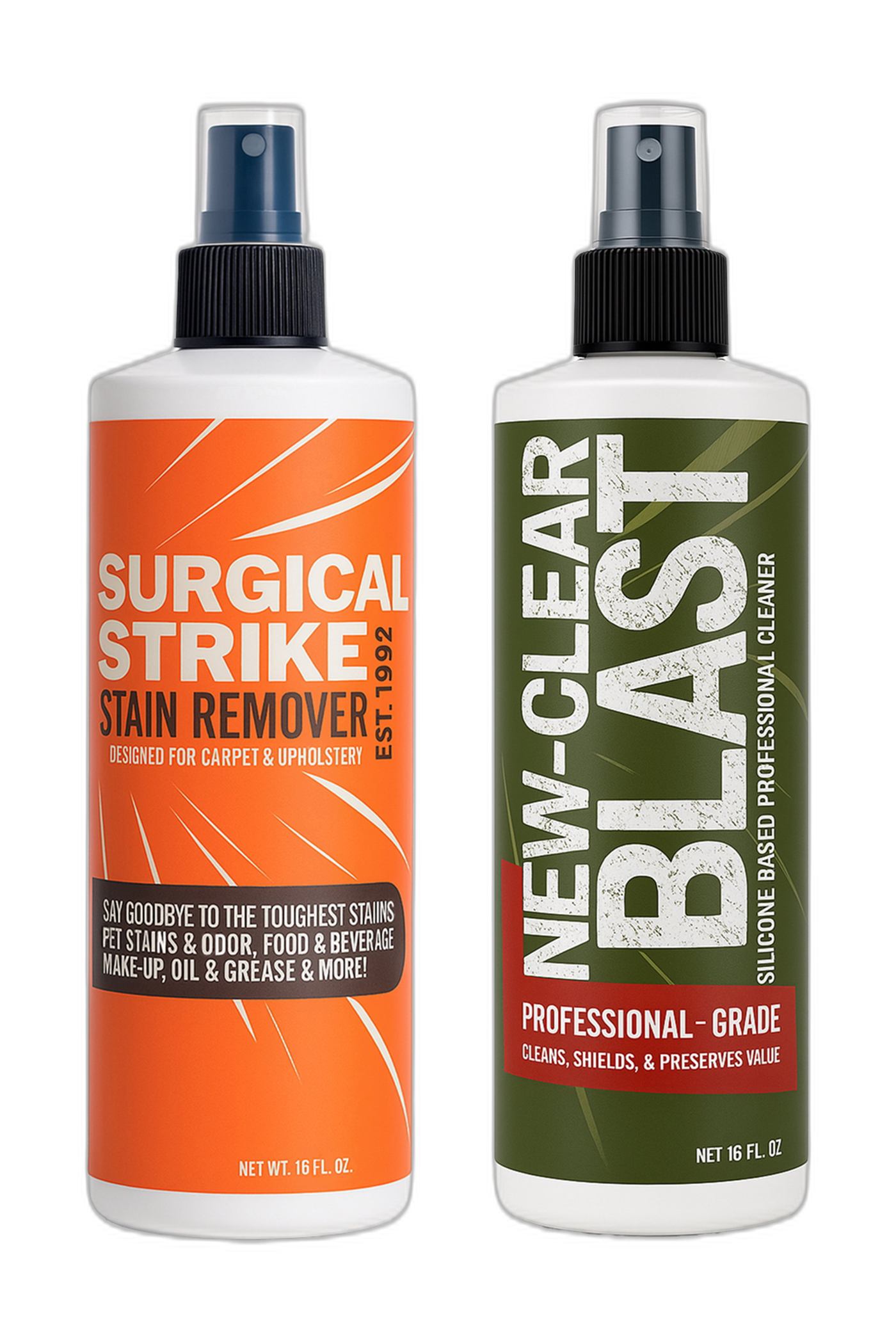
Two formulas. Serious range.
Use Surgical Strike for stains and odor, then New-Clear Blast to clean, shield and preserve hard surfaces.