In senior living and assisted care facilities, cleaning is more than just maintaining appearances; it is a critical component of resident care and infection prevention. These environments require specialized cleaning protocols that address the unique vulnerabilities of residents, from chemical sensitivities to heightened infection risks. Implementing a structured, gentle, yet effective hygiene program helps protect resident health, ensures dignity, and supports a safe living space for everyone.
Key Takeaways
- Cleaning in senior living facilities must be a routine, facility-wide infection prevention process, not a one-off task.
- Written policies should detail cleaning frequency for resident rooms, shared bathrooms, common areas, reusable equipment, and outbreak procedures.
- High-touch surfaces require consistent attention, and visibly soiled areas need immediate cleaning.
- Selected products should include EPA-registered disinfectants matched to specific pathogens and used with verified contact times.
- Effective cleaning programs are measurable through audits and direct observation to identify and correct missed steps.
- Chemistries should be gentle and non-irritating due to resident vulnerability to infection and chemical sensitivities.
- Odor control and bio-soil removal are essential operational priorities for comfort, dignity, and infection prevention.
- Cleaning protocols must integrate with staff training and surveillance data for comprehensive infection control.
Establishing Structured Cleaning Protocols in Senior Living
Effective hygiene in senior living communities starts with establishing structured, facility-wide cleaning protocols. These are not merely suggestions but documented policies that staff are trained on and expected to apply consistently. A comprehensive written plan is the foundation of a successful program, detailing the frequency and methods for cleaning every area, from individual resident rooms to common spaces and shared bathrooms.
Routine environmental cleaning is a core component of any infection prevention strategy in long-term care settings. Rather than reacting to issues as they arise, proactive and scheduled cleaning helps maintain a baseline level of hygiene that reduces the risk of transmission. These protocols should clearly define procedures for daily cleaning routines and outline specific responses to incidents like spills or contamination, ensuring a consistent and effective approach across all shifts and personnel. This level of detail is critical for maintaining high standards in these specialized Facilities.
Targeted Cleaning for Resident Rooms, Common Areas, and High-Touch Surfaces
A successful cleaning protocol must differentiate between various areas of a facility based on use and risk. Resident rooms, shared bathrooms, dining halls, and common activity spaces all demand routine daily cleaning and disinfection to manage the constant introduction of contaminants. Regular cleaning schedules for these areas support consistent hygiene and contribute to a more comfortable and safe living environment for residents.
Within these spaces, high-touch surfaces represent a significant pathway for pathogen transmission and require focused attention. Items such as handrails, bed rails, call buttons, doorknobs, light switches, and bathroom fixtures must be cleaned and disinfected frequently throughout the day. Furthermore, protocols should mandate that any visibly soiled surfaces are cleaned immediately, rather than waiting for the next scheduled cycle. This rapid response is critical to minimizing resident exposure to potential contaminants and maintaining the integrity of the hygiene program.
Managing Bio-Soils and Odor Effectively
In long-term care facilities, managing odors and removing bio-stains are critical operational priorities that directly impact resident dignity and well-being. These environments blend daily living with clinical care, which can lead to a rapid accumulation of organic contamination on surfaces in dining areas, shared bathrooms, and living spaces. Effective grime and odor control are essential for creating a comfortable and respectful home for residents.
Proper cleaning protocols must prioritize the removal of bio-soils, which are organic materials like food, bodily fluids, and other residues. These soils can shield surfaces from cleaning agents, rendering them less effective. Therefore, a two-step process of cleaning before further treatment is a fundamental principle of environmental cleanliness. For challenging situations involving tough grime or odors, a specialized solution like Surgical Strike, a degreaser, stain and odor remover, can be used as part of the preparation process to remove soils before final treatment.
Selecting Appropriate Cleaning Chemistries for Sensitive Environments
Choosing the right cleaning chemistries is a delicate balance in senior living facilities. Products must be effective enough to manage hygiene risks while being gentle enough to avoid irritating residents, who may have medical vulnerabilities or sensitivities to harsh chemicals. When disinfection is required, the selected products should be EPA-registered and chosen to target pathogens relevant to long-term care settings.
It is crucial that staff are trained to follow the manufacturer's specified contact time for any product, as this is the required duration for the chemical to act on surfaces. Rushing this step can significantly reduce a product's effectiveness. For routine maintenance in high-traffic areas, multi-surface solutions can be a practical choice. A product such as New-Clear Blast can serve as a multi-surface cleaner for general cleaning needs. For facilities seeking a comprehensive approach, the Power Pack (Bundle) combines solutions for both heavy-duty and general cleaning tasks.
Operational Risks and Ensuring Program Accountability
A cleaning program is only as effective as its implementation. To ensure consistency and identify areas for correction, cleaning programs should be measurable. Accountability can be established through regular audits, direct observation of staff practices, or other objective methods designed to catch and correct missed steps or deviations from protocol. Without a formal auditing process, environmental cleaning practices can become inconsistent, creating potential gaps in hygiene.
Inadequate staff training on cleaning protocols, product usage, and safety procedures presents a significant risk to program effectiveness. Connecting the facility’s cleaning efforts to broader surveillance and quality control initiatives helps prevent process failures. By tracking data and providing ongoing training, facilities can build a culture of accountability and continuous preparation.
Mechanism-to-Outcome: How Cleaning Processes Drive Hygiene
Effective hygiene is the direct result of well-executed cleaning mechanisms. The first critical mechanism is pre-cleaning to remove bio-soils. This step ensures that disinfectants can make direct contact with surfaces, a necessary condition for them to work properly. This leads to the outcome of a properly prepared surface ready for disinfection.
Another key mechanism is the correct application of EPA-registered disinfectants, which includes strictly following the required contact times. This process is designed to reduce the pathogen load on surfaces, directly contributing to the outcome of a lower risk of infection spread. Finally, choosing gentle, low-irritation chemistries is a mechanism to achieve necessary hygiene standards without the negative outcome of compromising resident health through exposure to harsh chemicals. These interconnected processes ensure that cleaning efforts translate into a safer environment for everyone.
Regulatory Adherence and Safety Considerations
Senior living facilities operate within a framework of regulatory and safety guidelines designed to protect vulnerable residents. Adherence to infection prevention and control guidance from public health organizations like the Centers for Disease Control and Prevention (CDC) is crucial for compliance and resident safety. A key regulatory requirement is the use of EPA-registered products whenever a facility needs to make specific antimicrobial claims about disinfection.
Beyond regulatory adherence, resident safety must be the primary guide for product selection. This means prioritizing chemistries that minimize the risk of irritation or adverse reactions. Standard safety protocols, such as using products with adequate ventilation, avoiding direct contact with eyes and prolonged skin contact, keeping all cleaning agents out of the reach of children and residents, and following label directions are essential operational considerations that must be integrated into all training and procedures.
Cleaning Solution Selection Checklist
When evaluating cleaning products for a senior care environment, facility managers should consider several key questions to ensure the chosen solutions align with their operational and resident safety goals:
- Does the product support effective removal of bio-soils and tough odors?
- Is the chemistry suitable for the specific surfaces found in senior living environments?
- Does the product's required contact time align with operational workflows and safety protocols?
- Is the product designed to be low-irritation for residents with known sensitivities?
- Can environmental services staff be easily and effectively trained to use the product correctly and consistently?
- Does the solution integrate into a comprehensive infection prevention program?
Sources
- https://www.cdc.gov/long-term-care-facilities/hcp/training/index.html
- https://www.cambridge.org/core/journals/infection-control-and-hospital-epidemiology/article/multisociety-guideline-for-infection-prevention-and-control-in-nursing-homes/88B28E99CD7FDB3668DDAE9C3D2184A0
- https://www.cdc.gov/long-term-care-facilities/about/index.html
- https://clri-ltc.ca/resource/evs/
- https://www.cjic.ca/spring-2024/387-a-summary-of-reported-infection-prevention-and-control-assessments-conducted-in-long-term-care-and-retirement-homes-during-covid-19-pandemic-in-ontario-canada
- https://www.cdc.gov/nhsn/ltc/index.html

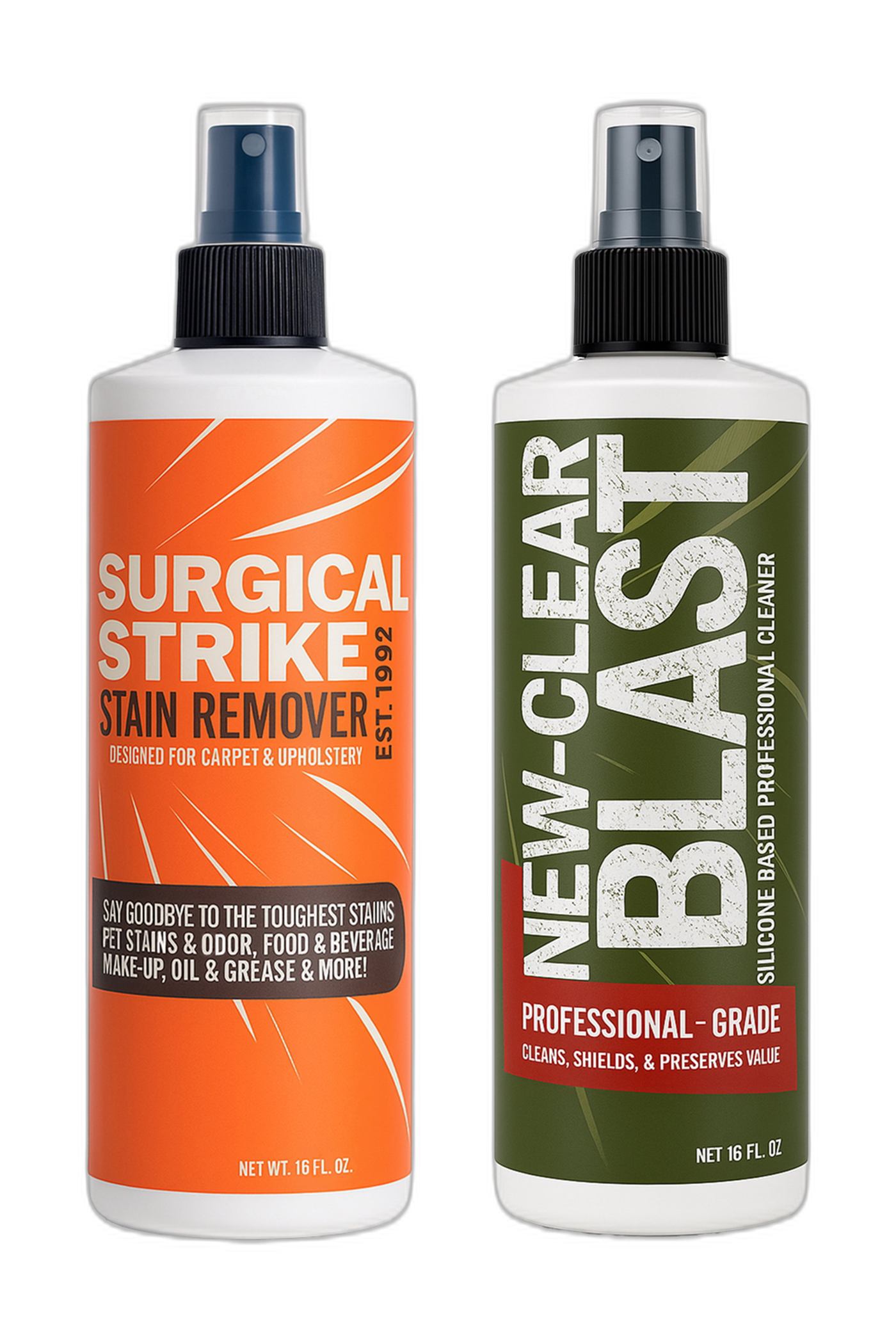
Two formulas. Serious range.
Use Surgical Strike for stains and odor, then New-Clear Blast to clean, shield and preserve hard surfaces.