Key Takeaways
- Fresh household bleach and certain commercial disinfectants are efficient reagents for DNA decontamination of laboratory surfaces, outperforming ethanol and isopropanol.
- Forensic cleaning requires a three-zone protocol (operations, transition, clear) to effectively manage contamination risks at a scene.
- Porous materials like carpet and upholstery must be removed and destroyed rather than cleaned during crime scene remediation to fully eliminate biohazards.
- Single-use tools and frequent glove changes are mandatory practices to prevent the secondary transfer and cross-contamination of DNA evidence.
- Validated cleaning agents and dedicated equipment are essential for effective DNA decontamination in critical areas such as evidence drying rooms and cabinets.
- Forensic restoration sites typically operate under Risk Level 3, necessitating full microporous suits, dual nitrile gloves, and respiratory protection to ensure worker safety.
The Unique Demands of Forensic Cleaning for Evidence Integrity
In forensic science, cleaning and decontamination protocols carry a weight far beyond general hygiene. The primary objective is to preserve the integrity of evidence, a task where standard laboratory or medical cleaning methods often fall short. The unique risk of DNA cross-contamination means that even microscopic residues can compromise an entire investigation.
Maintaining the safety of personnel and the validity of investigations depends on rigorous contamination control practices. These protocols must address a diverse range of biological and chemical hazards, from DNA and bloodborne pathogens to potent chemical residues left behind at a scene. Every step, from initial entry to final verification, is designed to prevent the introduction of foreign material and the transfer of evidence between samples or locations.
Safeguarding Evidence: DNA Decontamination Protocols
Effective DNA decontamination is a critical pillar of forensic integrity. Preventing cross-sample contamination is non-negotiable, as it can invalidate results and compromise legal proceedings. Research has shown that reagents like fresh household bleach and specific commercial disinfectants are highly efficient for removing DNA from laboratory surfaces, making them a cornerstone of cleaning protocols.
In contrast, commonly used cleaners like ethanol and isopropanol only remove partial DNA, rendering them insufficient for complete decontamination in sensitive forensic contexts. To further mitigate risks, mandatory best practices include the strict use of single-use tools and frequent changes of gloves. These simple but vital measures are key to preventing the secondary transfer of trace evidence and preserving the purity of each sample collected.
Failure Modes or Operational Risks: Compromising Forensic Integrity
The stakes in forensic cleaning are incredibly high, and operational failures can have irreversible consequences. Incomplete DNA removal stands out as a significant risk, as it can lead directly to cross-contamination and the potential invalidation of crucial evidence. Similarly, failing to properly remove and destroy porous materials like carpets and furniture can leave behind undetectable biohazards, posing long-term health risks.
Personnel safety is another critical area where failures can occur. Inadequate personal protective equipment (PPE) creates direct exposure risks for cleaning personnel to bloodborne pathogens and hazardous chemical residues, a violation of fundamental safety standards. Using general cleaning agents instead of validated, purpose-specific ones can result in ineffective decontamination, leaving behind unseen contaminants that compromise both evidence and the safety of all Facilities and personnel involved.
Implementing Contamination Control Zones and Practices
A structured approach to scene management is essential for preventing contamination. Forensic cleaning protocols typically employ a three-zone system to control movement and exposure. This includes a contaminated operations zone where work is performed, a transition zone for de-gowning and equipment management, and a clear zone for safe egress.
This structured control extends to specific equipment and areas. For example, evidence drying rooms and cabinets must be thoroughly cleaned between each use with dedicated equipment and validated agents to ensure complete DNA decontamination. A standard protocol for tools involves cleaning and sanitizing with a 10-percent household bleach and water mixture between evidence collections, a simple step that helps maintain the integrity of each item processed.
Mechanism-to-Outcome Map: Forensic Cleaning Efficacy
The effectiveness of forensic cleaning is based on a clear relationship between specific actions and their intended outcomes. Understanding these connections helps ensure protocols are followed correctly and achieve their goals.
- Mechanism: Application of validated cleaning agents like bleach or certain commercial disinfectants. Outcome: Achieves effective DNA decontamination from surfaces.
- Mechanism: Implementation of a three-zone protocol (operations, transition, clear). Outcome: Minimizes cross-contamination pathways within crime scenes and laboratories.
- Mechanism: Consistent use of single-use tools and frequent glove changes. Outcome: Prevents secondary transfer and maintains the integrity of trace evidence.
- Mechanism: Load reduction via HEPA vacuuming and removal of porous materials. Outcome: Significantly reduces the biological and chemical contaminant burden before final disinfection.
Addressing Biohazard and Chemical Residues with Specialized Techniques
Biohazard and chemical remediation require specialized techniques that go beyond surface wiping. Porous materials such as carpet, drapes, and untreated wood absorb contaminants and cannot be reliably decontaminated. As a result, standard procedure dictates these items must be collected, packaged, and destroyed as hazardous waste rather than attempting to clean them.
For chemical residues like tear gas, a top-to-bottom workflow is recommended, as the heavy particles settle downward over time. This initial 'load reduction' phase is crucial for removing gross amounts of biological and chemical residues before the final, detailed cleaning process begins. When dealing with difficult grime or residues, products like Surgical Strike can be used as part of a comprehensive cleaning protocol to help prepare surfaces.
Selection Checklist: Choosing Cleaning Solutions for Forensic Environments
Choosing the right cleaning solutions is vital for maintaining the strict standards of forensic environments. The selection process should be guided by efficacy, safety, and compatibility.
- Ensure Surface Compatibility: Confirm that cleaning agents are compatible with the variety of surfaces found in forensic settings, from stainless steel lab equipment to different materials encountered at a crime scene, including Special surfaces. For general cleaning and surface preparation, solutions like New-Clear Blast are designed for use on multiple surface types.
- Align with Safety Protocols: Choose cleaning solutions that align with established safety protocols and regulatory guidelines for hazardous material handling and personnel exposure.
Regulatory, Safety, and Compliance Considerations
Forensic cleaning is governed by strict regulatory and safety standards to protect both personnel and the public. Compliance with the OSHA Bloodborne Pathogens Standard is mandatory for any personnel engaged in biohazard cleanup, as it dictates requirements for PPE, exposure control plans, and training.
Most forensic restoration sites are classified as Risk Level 3 environments, which requires the use of advanced PPE. This includes full microporous suits, dual layers of nitrile gloves, and appropriate respiratory protection to prevent inhalation or skin contact with hazardous materials. Adequate ventilation is another critical control, especially when working with chemical cleaning agents, to protect workers from harmful fumes. All cleaning and disposal procedures must be executed in alignment with local, state, and federal regulations for hazardous waste.
Verifying Cleanliness and Decontamination Standards
Cleaning is not complete until it has been verified. In forensic remediation, ATP (adenosine triphosphate) testing is a standard protocol used to confirm the efficacy of disinfectant application and measure the overall level of cleanliness after work is finished. ATP is an energy molecule found in all living cells, so its absence indicates a surface is free of biological matter.
The target for ATP readings after a forensic cleaning is typically in the single digits or zero, which signifies a thoroughly decontaminated surface. This verification is the final step in the remediation process. Maintaining meticulous documentation of all cleaning protocols, products used, and verification results is a final, vital step for ensuring the integrity and defensibility of the entire investigative process.
Prepare and Maintain Forensic Environments with CG Chemicals
For rigorous surface preparation and ongoing maintenance in forensic laboratories and crime scenes, effective cleaning solutions are essential. CG Chemicals offers practical cleaning solutions designed to support the demanding requirements of high-use environments. Explore New-Clear Blast and Surgical Strike to address your specific cleaning and residue removal needs.
Sources
- https://pmc.ncbi.nlm.nih.gov/articles/PMC11306349/
- https://cleanfax.com/insight-on-forensic-restoration/
- https://kaivac.com/clean-academy/biohazard-cleaning-how-to-clean-crime-scenes-meth-labs-and-more
- https://biomedres.us/pdfs/BJSTR.MS.ID.009223.pdf
- https://www.ojp.gov/pdffiles1/nij/178280.pdf
- https://www.osha.gov/bloodborne-pathogens
- https://assets.publishing.service.gov.uk/media/65362ef6e839fd000d867325/FSR-GUI-0016_DNA_contamination_controls_-_incident_scenes.pdf
- https://adacounty.id.gov/sheriff/wp-content/uploads/sites/2/2018/10/Crime-Scene-Analytical-Method-V.-3.0.pdf
- https://www.wsp.wa.gov/forensics/docs/crimelab/manuals/technical/csrt/CSRT_Technical_Procedures_Manual_Revision_21.pdf
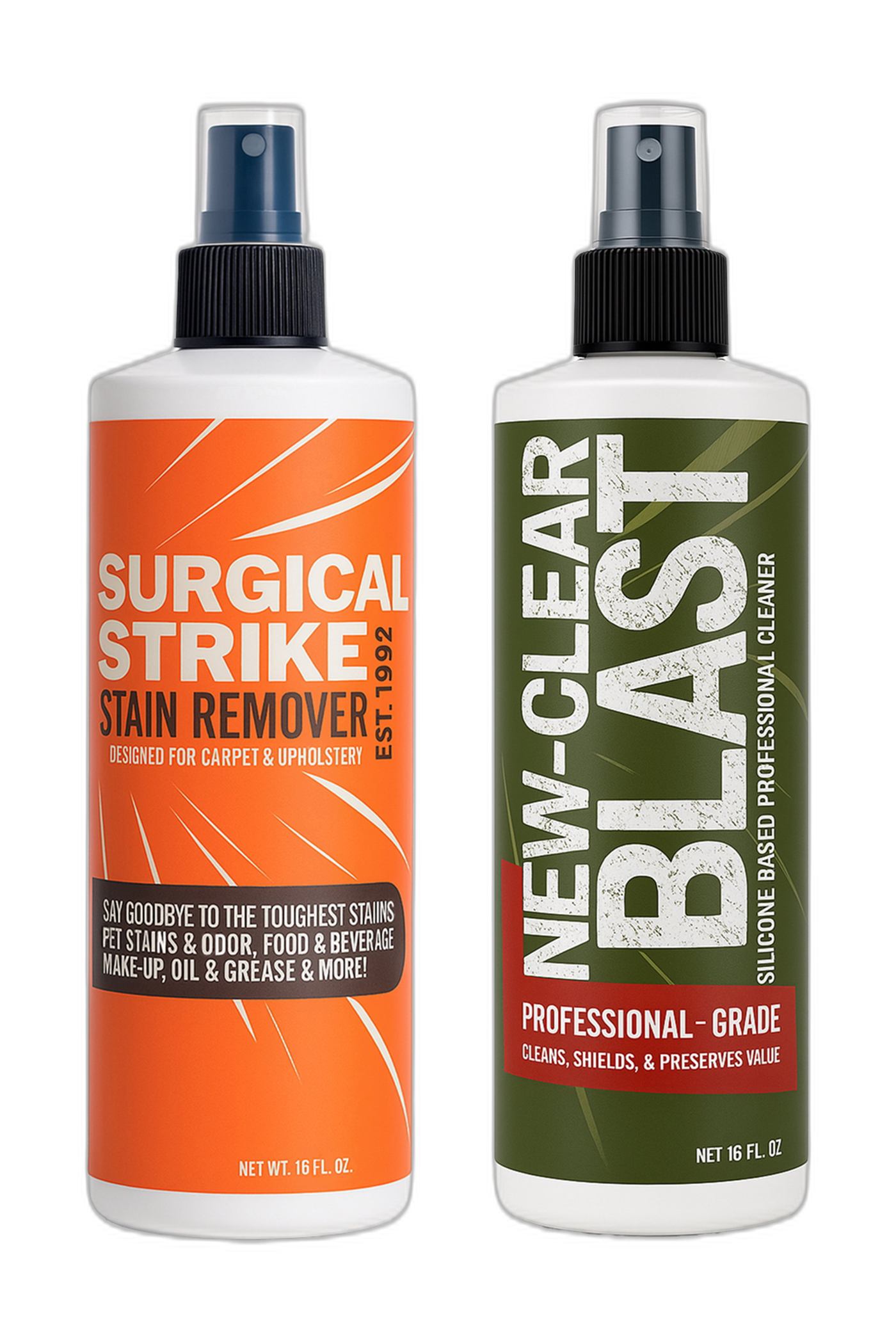
Two formulas. Serious range.
Use Surgical Strike for stains and odor, then New-Clear Blast to clean, shield and preserve hard surfaces.