Sterile Processing Departments (SPDs) are the operational core of patient safety within hospitals and surgical centers. The effectiveness of every sterilization process depends directly on the quality of the initial cleaning and decontamination protocols. Without meticulous adherence to established standards, the risk of healthcare-associated infections (HAIs) increases, compromising patient outcomes. This guide explores the advanced cleaning protocols, environmental controls, and verification methods essential for modern SPDs operating in demanding healthcare Facilities.
Key Takeaways for SPD Cleaning Protocols
Successfully managing a Sterile Processing Department requires a deep understanding of multiple interconnected factors. From the physical environment to the verification of cleaning efficacy, each element plays a critical role in the final outcome of sterility assurance. Key principles include:
- Environmental Integrity: Decontamination areas must maintain strict environmental controls, with temperatures set between 60-65°F, relative humidity from 30-60%, and a minimum of 10 air exchanges per hour to manage bioburden and protect personnel.
- Prerequisite for Sterilization: The success of any sterilization method is contingent upon the thoroughness of the preceding cleaning phase. Reducing bioburden through meticulous cleaning, correct instrument preparation, and using appropriate sterilization parameters are foundational steps.
- Objective Verification: Recent updates to the AAMI ST79 standard emphasize the integration of advanced cleaning verification tools. Technologies like ATP bioluminescence and protein tests provide objective data to confirm that environmental surfaces and instruments are adequately clean.
- Dual Compliance: For proper reprocessing of any reusable medical device, personnel must adhere to both the comprehensive guidelines in ANSI/AAMI ST79 and the specific Manufacturer's Instructions for Use (IFU) for each device.
Environmental Controls for Sterile Processing Departments
The physical environment of an SPD is an active component in infection control. The decontamination area, where used instruments are first handled, demands the most stringent conditions to manage microbial load and safeguard staff. AAMI standards specify temperatures between 60°F and 65°F (16°C to 18°C) and a relative humidity range of 30% to 60%. These parameters are complemented by a negative-pressure airflow system with at least 10 air exchanges per hour, which helps contain airborne contaminants within the area.
Equally important are the environmental controls for sterile storage areas. Here, the goal is to protect cleaned and sterilized items from recontamination. These zones require a positive-pressure airflow with a minimum of four air changes per hour. The recommended temperature is between 68°F and 73°F, with a relative humidity maintained between 30% and 60%. Across all SPD areas, proper air circulation is vital, and the use of portable or fixed fans is prohibited as they can disturb and redistribute contaminants onto sterile surfaces and equipment.
The Interdependent Phases of Sterilization Efficacy
Achieving instrument sterility is not a single event but a multi-stage process where each phase is dependent on the success of the previous one. The entire chain of efficacy begins with the most critical step: the thorough cleaning and reduction of bioburden from used instruments. Any organic material, soil, or biofilm left on a device can act as a shield, preventing sterilants from reaching and eliminating microorganisms.
Following cleaning, the subsequent phases are item preparation, selection of sterilization parameters, and maintenance of sterility. Proper preparation involves the correct assembly and packaging of instruments to allow for sterilant penetration and to protect them from contamination after the cycle is complete. Selecting the right sterilization method and parameters, such as time, temperature, and sterilant concentration, is dictated by the instrument's material and design. Finally, rigorous sterility controls must be maintained throughout handling, transport, and storage to ensure the instrument remains sterile until the point of use.
Cleaning Verification Tools and Protocol Auditing
Historically, the effectiveness of cleaning was judged by visual inspection alone. However, this subjective method cannot detect microscopic residues. Recognizing this gap, recent amendments to the AAMI ST79 standard endorse the use of advanced cleaning verification tools to objectively assess the decontamination process. These tools provide measurable data on the cleanliness of both environmental surfaces and the instruments themselves.
Technologies such as protein tests, ultraviolet light markers, and ATP bioluminescence assays are now integral to a robust quality assurance program. ATP bioluminescence, for example, can detect residual organic matter in seconds, providing immediate feedback on cleaning efficacy. By using these tools, SPDs can validate that their established protocols are consistently effective. This data-driven approach, combined with regular protocol audits and detailed housekeeping checklists, helps to maintain compliance and supports patient safety.
Addressing Operational Risks in SPD Cleaning
Several operational risks can undermine the effectiveness of SPD cleaning protocols and jeopardize patient safety. Proactively identifying and mitigating these challenges is essential for maintaining high standards of care. Common risks include:
- Inadequate Cleaning: Failure to remove all bioburden from instruments before sterilization is a primary risk. Residual soil can inhibit the sterilant's action, leading to sterilization failure and creating a potential for patient infection.
- Non-Adherence to IFU: Every reusable medical device is accompanied by a Manufacturer's Instructions for Use (IFU), which details the validated cleaning and sterilization process. Deviating from these instructions can result in ineffective reprocessing, damage to the instrument, and non-compliance with regulatory standards.
- Environmental Deficiencies: Failures in maintaining specified temperature, humidity, and air exchange rates in decontamination and sterile storage areas create opportunities for contamination and compromise the integrity of sterile packs.
- Human Factors: Persistent operational challenges, such as staffing shortages and incomplete training, can directly impact the consistent and correct application of critical cleaning protocols. These factors introduce variability and increase the likelihood of process errors.
Mechanism-to-Outcome: From Cleaning to Sterility Assurance
Understanding the direct link between specific actions and their outcomes is fundamental to building a reliable sterile processing program. Each step in the workflow is a mechanism designed to achieve a specific patient safety outcome.
- Mechanism: Thorough pre-sterilization cleaning, including degreasing and removing stains and residues, to reduce instrument bioburden. Outcome: This ensures effective sterilization by removing organic debris that can shield pathogens from the sterilant.
- Mechanism: Strict environmental controls for temperature, humidity, and air exchanges in all SPD areas. Outcome: This prevents environmental contamination and preserves the integrity of sterile supplies and packaging, minimizing risks of recontamination.
- Mechanism: Consistent application of advanced cleaning verification tools like ATP bioluminescence and protein tests. Outcome: This provides objective, measurable data to confirm cleaning adequacy, which helps catch improperly reprocessed instruments before reuse.
- Mechanism: Rigorous adherence to AAMI ST79 standards and device-specific Manufacturer's Instructions for Use (IFU). Outcome: This establishes a validated and repeatable reprocessing protocol, leading to a high probability of sterility assurance and supporting patient safety.
Regulatory Adherence and Manufacturer Guidelines
The framework for sterile processing is built upon a foundation of standards and regulations. The primary governing document in the United States is ANSI/AAMI ST79, Comprehensive guide to steam sterilization and sterility assurance in health care facilities. This standard provides the essential requirements for all aspects of device reprocessing.
Alongside AAMI ST79, facilities must strictly follow the Manufacturer's Instructions for Use (IFU) for every reusable medical device. These two documents work in tandem to ensure successful reprocessing. The Centers for Disease Control and Prevention (CDC) also provides overarching federal guidance on disinfection and sterilization that complements the detailed technical specifications from AAMI. To continuously monitor process efficacy, AAMI guidelines recommend that biological testing of steam sterilizers occur at least weekly, and preferably daily, with every load containing an implantable device requiring a biological indicator.
SPD Protocol Selection Checklist
Developing and maintaining effective SPD protocols requires continuous attention to detail. This checklist can serve as a guide for reviewing and strengthening your department's procedures.
- Verify Cleaning Agent Compatibility: Confirm that all cleaning agents are compatible with the instrument materials and meet the specifications detailed in each device's IFU.
- Audit Environmental Controls: Ensure that temperature, humidity, and air change rates consistently comply with AAMI ST79 standards for both decontamination and sterile storage areas. [Source: https://envigilance.com/compliance/aami-st79-sterilization/, https://www.dsidirect.com/best-practices-for-aami-st79-compliant-sterile-storage-2026/]
- Implement Cleaning Verification: Integrate and regularly use objective cleaning verification tools, such as ATP bioluminescence and protein tests, to measure the adequacy of your cleaning processes.
- Document Sterilizer Testing: Establish and follow clear, documented protocols for the biological testing of sterilizers, adhering to at least weekly schedules and ensuring all loads with implantable devices are monitored.
- Validate Staff Competency: Confirm that all staff training programs cover both general AAMI guidelines and the specific IFUs for every device reprocessed. Validate knowledge with regular competency assessments.
Clean and prep surfaces with CG Chemicals
If you are dealing with buildup, residues, or tough soil before maintenance or finishing work, CG Chemicals offers practical cleaning solutions for high-use environments. Explore New-Clear Blast and Surgical Strike based on your surface and soil type.
Sources
- https://envigilance.com/compliance/aami-st79-sterilization/
- https://array.aami.org/doi/full/10.2345/i0899-8205-40-4-325.1
- https://ortoday.com/staying-current-with-aami-st79/
- https://www.aami.org/standards/standards-products/ansiaami-st79
- https://www.dsidirect.com/best-practices-for-aami-st79-compliant-sterile-storage-2026/
- https://www.hpnonline.com/sterile-processing/article/21272713/ensuring-sterility-for-reusable-surgical-instruments
- https://www.infectioncontroltoday.com/view/aami-revises-steam-sterilization-standard
- https://www.hpnonline.com/sterile-processing/article/21268307/spd-challenges-2023-and-beyond
- https://www.cdc.gov/infectioncontrol/pdf/guidelines/disinfection-guidelines-H.pdf
- https://www.periopleader.com/wp-content/uploads/pdfx/ORMVol22No12AAMIbibleSteamSterilization.pdf
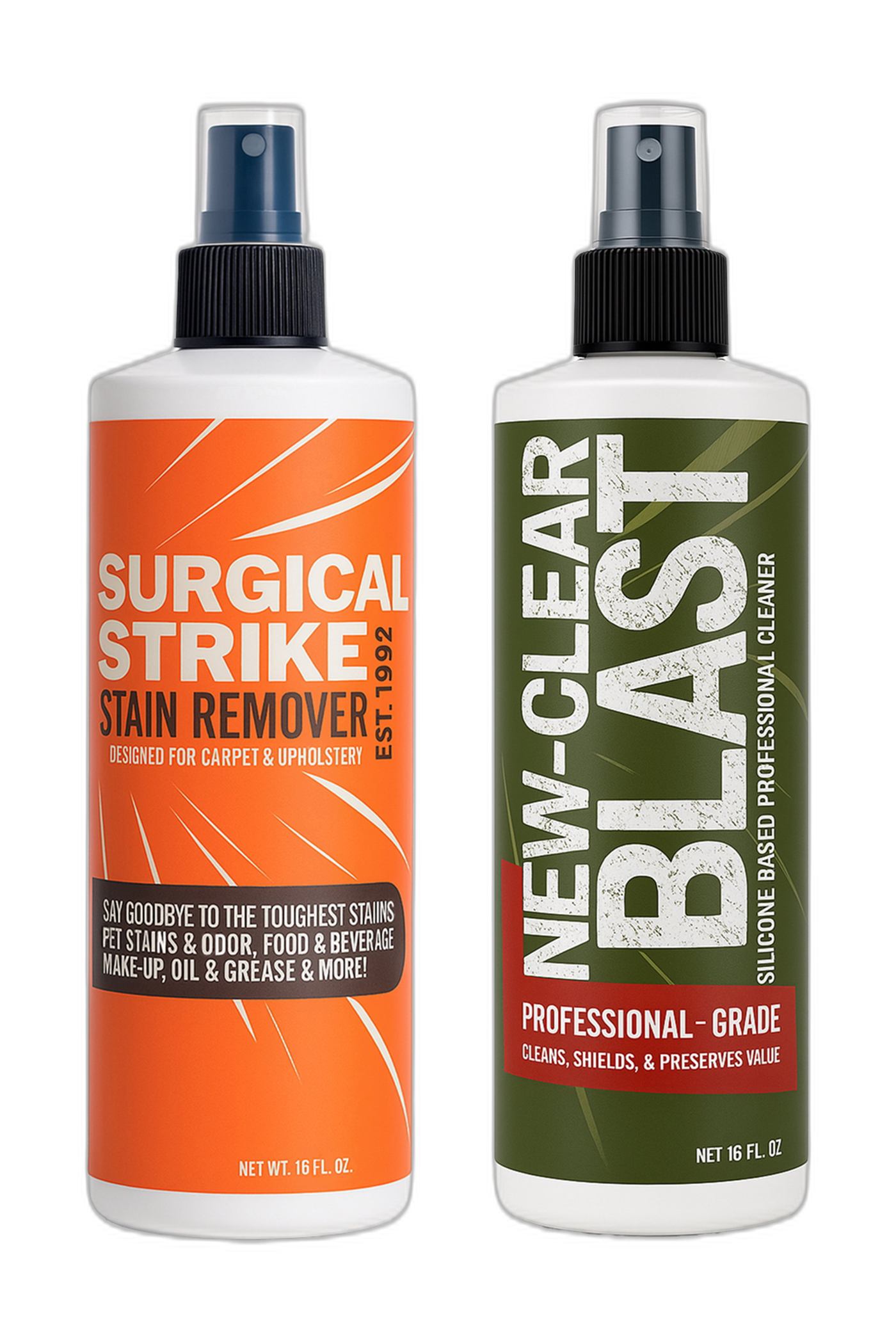
Two formulas. Serious range.
Use Surgical Strike for stains and odor, then New-Clear Blast to clean, shield and preserve hard surfaces.