Key Takeaways
- Harsh cleaning chemicals can contribute to water, air, and soil pollution. Eco-friendly alternatives help reduce this environmental impact with biodegradable formulas and low volatile organic compound (VOC) content.
- Non-toxic cleaners avoid endocrine disruptors like phthalates and quats, which can pose health risks, instead using ingredients like food-safe acids to maintain hygiene in high-traffic public areas.
- Sustainable cleaning protocols are associated with better indoor air quality, which can support a more positive passenger experience in airports and transit centers by controlling odors and reducing respiratory irritants.
- Switching to non-toxic solutions in facilities can assist with cost management through more efficient cleaning and waste reduction, all while meeting established hygiene standards.
The Imperative for Sustainable Cleaning in Transportation Hubs
Airports and public transportation centers are unique environments characterized by constant high-traffic flow and the need for rigorous, around-the-clock cleaning protocols. These hubs serve millions of people, making hygiene and safety top priorities for operational success and public confidence. Maintaining cleanliness across vast areas, from restrooms and waiting areas to terminals and vehicles, presents a significant logistical challenge.
The reliance on traditional, harsh cleaning chemicals in these settings can have unintended consequences. Many conventional cleaners contain compounds that, when disposed of, contribute to water, air, and soil pollution. This runoff can impact local ecosystems and overall environmental health. As global transportation infrastructures move toward greener operations, re-evaluating cleaning practices is a critical step in aligning with broader sustainability goals.
Adopting sustainable cleaning practices is more than an environmental choice; it is a strategic decision that reflects a commitment to passenger and employee well-being. Global initiatives from organizations like the Airport Council International encourage airports to integrate sustainability into their operations. This shift addresses growing public awareness and demand for healthier, eco-conscious public spaces.
Furthermore, research highlights potential health concerns associated with some conventional chemical ingredients. Of the thousands of synthetic chemicals in commercial use, over 1,000 may have endocrine-disrupting properties, underscoring the importance of selecting safer alternatives for widespread use in public facilities.
Elevating Passenger Experience and Health Safety
The cleanliness of a facility directly impacts passenger perception and satisfaction. According to the Airport Council International, approximately 80% of airports report that their sustainability initiatives, which often include green cleaning programs, are associated with an improved overall passenger experience. A visibly clean and odor-free environment creates a welcoming atmosphere and fosters a sense of safety and care.
Eco-friendly cleaning practices contribute to better indoor air quality by reducing the presence of volatile organic compounds (VOCs), which are common in many traditional cleaning agents. Lower VOC levels mean fewer airborne irritants, which is particularly beneficial for travelers with respiratory sensitivities and for the staff who work in these environments daily. Effective odor management, achieved without heavy fragrances or masking agents, further supports a more pleasant transit experience.
Reducing routine chemical exposure is a fundamental aspect of health and safety for both the public and the cleaning workforce. By implementing cleaning protocols that utilize non-toxic solutions, facility managers can mitigate risks associated with skin, eye, and respiratory irritation. This proactive approach to occupational health demonstrates a commitment to staff welfare.
In high-traffic travel hubs, maintaining effective sanitation and hygiene standards is essential for public health. The goal is to prevent the spread of germs without introducing unnecessary chemical hazards. Sustainable cleaning solutions are designed to address soils and contaminants effectively, helping to maintain hygiene standards and build public confidence in the safety of transit systems.
Reducing Environmental Footprint with Eco-Friendly Solutions
A key feature of many eco-friendly cleaners is their biodegradability. Biodegradable products are formulated to break down into simpler, non-harmful components through natural processes. This characteristic significantly minimizes the accumulation of persistent chemical residues in wastewater systems, soil, and local waterways, reducing the long-term ecological impact of daily cleaning operations.
Products formulated to be free of VOCs offer a direct path to reducing indoor air pollution. VOCs can evaporate at room temperature and contribute to poor air quality, which may lead to respiratory irritation for occupants. By selecting VOC-free options, facility managers help create a healthier indoor environment for travelers and employees alike, without compromising cleaning performance.
Choosing sustainable cleaning solutions is an integral part of broader corporate responsibility and environmental stewardship goals. These choices support initiatives aimed at creating cleaner air and water systems far beyond the facility's walls. For airports and transit agencies, this alignment reinforces a public commitment to sustainable practices and responsible operations.
Mitigating Health Risks and Operational Failures
Some traditional cleaning chemicals contain compounds classified as endocrine disruptors, such as certain phthalates and quaternary ammonium compounds (quats). These substances can interfere with the body's hormonal systems and have been linked to various health concerns. Opting for cleaners free from these compounds is a critical step in creating healthier public spaces.
The health risks are particularly pronounced for janitorial staff who face daily, prolonged exposure to cleaning agents. Studies have shown that asthma rates can be nearly 50% higher among janitorial workers compared to other professions, highlighting the occupational hazards associated with inhaling fumes from certain toxic cleaners.
Beyond direct health risks, inadequate cleaning protocols or reliance on ineffective products can lead to operational failures. Poor indoor air quality, persistent chemical odors, and visibly soiled surfaces can detract from the passenger experience and undermine confidence in a facility's management. Unmet hygiene standards can damage an organization's reputation and operational integrity. This is especially true in transit hubs, where public perception is closely tied to cleanliness and safety.
Operational Efficiency and Cost Management Through Sustainable Cleaning
Transitioning to sustainable cleaning solutions can offer practical benefits for budget management. Many modern, non-toxic concentrates are formulated for efficiency, allowing for effective cleaning with less product. This, combined with simplified training and reduced need for extensive personal protective equipment (PPE), can lead to cost savings in material use and labor.
Well-designed sustainable cleaning protocols can also streamline operations. By consolidating the number of products needed for various tasks, facilities can simplify inventory management, reduce storage space requirements, and make the cleaning process more straightforward for staff. This operational simplicity can lead to greater consistency and efficiency across large and complex facilities.
Investing in an eco-friendly cleaning program is a long-term strategy for responsible budget management. It contributes to a healthier work environment, which can be a factor in reducing costs related to employee health issues. Furthermore, using less aggressive chemicals can help with the longevity of surfaces and assets, delaying costly replacements. A public commitment to sustainability also supports a positive public image, which can foster passenger trust and loyalty.
Mechanism-to-Outcome: Non-Toxic Cleaning in Practice
Non-toxic cleaners function by using thoughtfully selected ingredients that are effective on dirt and grime without relying on harsh chemicals. Many of these solutions are built on biodegradable formulations, which are designed to break down safely in the environment after use, preventing the accumulation of harmful residues in ecosystems.
The absence of VOCs is another key mechanism. VOC-free compositions ensure that the cleaning process itself does not become a source of indoor air pollution. This directly contributes to better air quality, making spaces more comfortable for occupants and safer for maintenance staff who work with the products frequently.
Many effective non-toxic solutions leverage ingredients like food-safe acids or other naturally derived components. These agents are capable of breaking down soils, mineral deposits, and odors without the need for aggressive, high-pH or low-pH chemicals. Their action is targeted and effective, providing a reliable alternative for maintaining hygiene in demanding environments.
By intentionally avoiding endocrine disruptors, these cleaners help prevent interference with biological systems. This approach safeguards the health of people who frequent the facilities and protects aquatic life and broader ecosystems from the effects of chemical runoff.
Selecting Sustainable Cleaning Solutions
When sourcing cleaning products for transportation hubs, facility managers should consider several key factors to ensure they meet sustainability, performance, and safety goals. A systematic approach can help in making informed decisions. Consider the following criteria:
- Environmental Impact: Prioritize products that are clearly labeled as biodegradable and VOC-free. This ensures that the solutions will have a minimal impact on the environment and indoor air quality.
- Performance in High-Traffic Areas: Choose solutions proven to be effective for the types of soils commonly found in airports and transit centers, such as grease, grime, and heavy foot traffic residue. The product must meet the rigorous demands of a high-use environment.
- Health and Safety Profile: Look for cleaners that explicitly state they are non-toxic and free from known endocrine disruptors. Review safety data sheets (SDS) to confirm the absence of harsh chemicals and ensure the product is safe for both users and the public.
- Overall Cost-Efficiency: Evaluate the total cost of use, not just the price per gallon. Consider factors like product concentration, application efficiency, reduced need for PPE, and potential savings from a healthier workforce and better-preserved assets.
CG Chemicals: Practical Cleaning for Transportation Facilities
CG Chemicals offers cleaning and surface-prep solutions that are designed to support sustainable maintenance practices in high-use Facilities. Our products are developed for tough cleaning challenges found in transportation hubs, helping staff prepare surfaces and maintain a clean environment for passengers.
For broad, multi-surface cleaning tasks, New-Clear Blast is a versatile solution that helps remove grime and buildup. It is also used as part of surface preparation work where a clean substrate is required.
When addressing specific challenges like degreasing, tough stains, or odor control, Surgical Strike offers targeted action. It is formulated to break down difficult residues on a variety of surfaces commonly found in terminals, restrooms, and maintenance areas.
These solutions assist facilities in maintaining hygiene standards and preparing surfaces without introducing harsh chemicals. They are practical tools for teams dedicated to upholding a clean, safe, and welcoming environment for both passengers and staff.
Clean and prep surfaces with CG Chemicals
If you are dealing with buildup, residues, or tough contamination before maintenance or finishing work, CG Chemicals offers practical cleaning solutions for high-use environments. Explore New-Clear Blast and Surgical Strike based on your surface and soil type.
Use with adequate ventilation. Avoid contact with eyes and prolonged skin contact. Keep out of reach of children. Follow label directions.
Sources
- https://cgchemicalsllc.com/blogs/articles/environmental-impact-cleaning-chemicals
- https://cgchemicalsllc.com/blogs/articles/the-hidden-threat-endocrine-disruptors-in-household-cleaners
- https://www.apta.com/research-technical-resources/sustainability/
- https://www.greenlodgingnews.com/articles/sustainable-cleaning-high-traffic-travel-2025
- https://aci.aero/about-aci/what-we-do/sustainability/
- https://cgchemicalsllc.com/blogs/articles/cleaners-in-healthcare-facilities
- https://cgchemicalsllc.com/blogs/articles/schools-cleaning-with-toxins
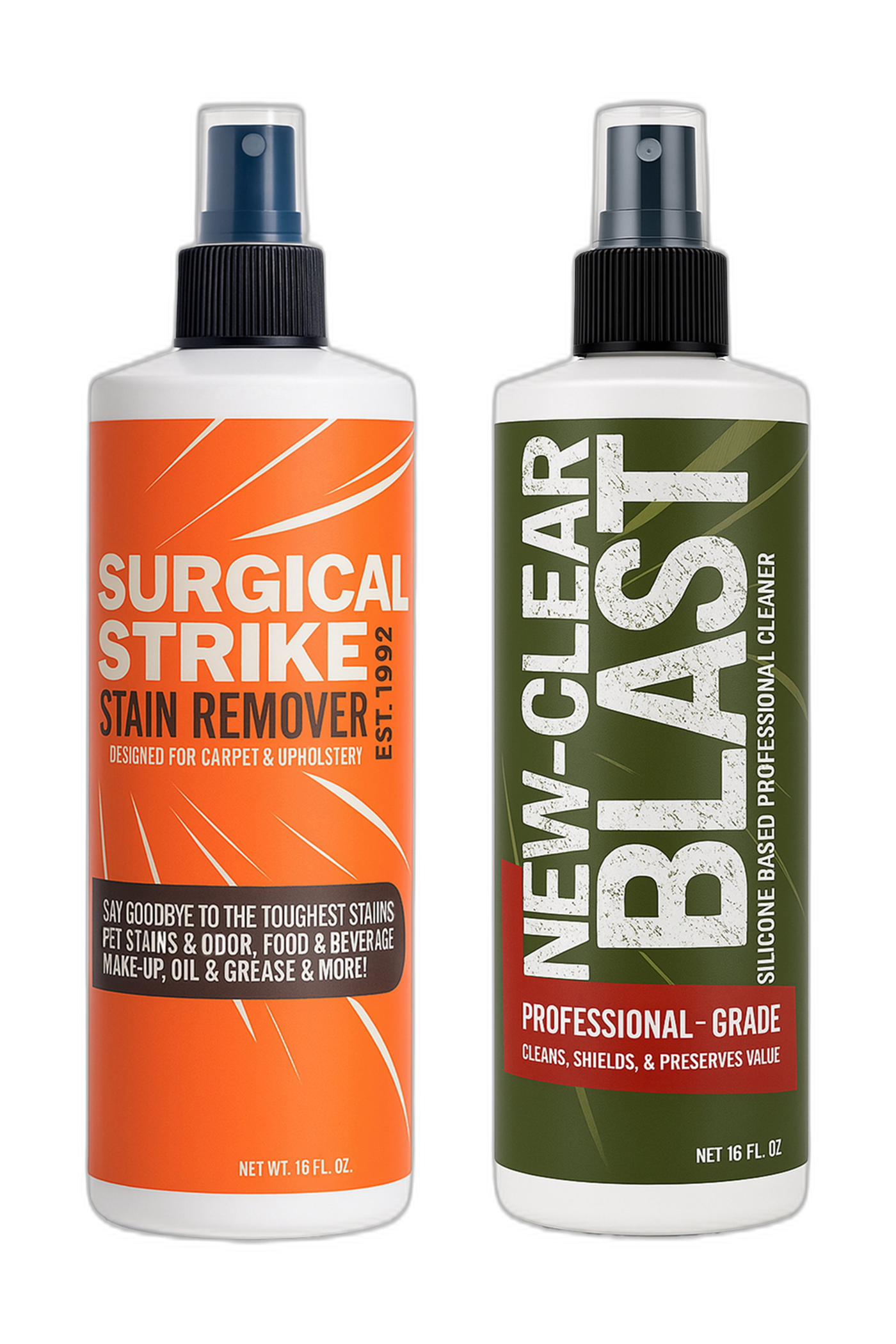
Two formulas. Serious range.
Use Surgical Strike for stains and odor, then New-Clear Blast to clean, shield and preserve hard surfaces.