Key Takeaways
- Cleaning protocols for space habitats must be adapted for microgravity, focusing on wipes, no-rinse formulations, and vacuum-assisted systems to manage debris without the use of traditional liquid washes.
- Space agencies like NASA manage habitat hygiene by setting numeric microbial limits for air, surfaces, and water, treating contamination control as a critical operational priority.
- In closed-loop systems, cleaning chemistries must be effective while remaining safe for the crew and compatible with sensitive materials, avoiding risks from residue, vapor, or adverse chemical reactions.
- Routine cleaning schedules are vital for mission success, as crew activity and ventilation systems can spread microbial contamination and particulate matter throughout the habitat.
- Proper management of waste, odors, and moisture is fundamental to space hygiene, requiring solutions that prevent free-floating liquids and contain contaminants safely.
The Extreme Engineering of Space Hygiene
Maintaining a clean and habitable environment in space or isolated research stations presents unparalleled engineering and chemical challenges. Unlike terrestrial aerospace cleaning, space hygiene protocols must be designed for a closed-loop system where resources are scarce, and crew health is paramount. Every aspect of cleaning must account for microgravity, which dictates how particles, liquids, and vapors behave.
These specialized protocols are essential for protecting critical life support systems, maintaining air and water quality, and ensuring the continued functionality of scientific equipment. On the International Space Station, for example, astronauts dedicate approximately three hours every Saturday to cleaning surfaces and crevices, a testament to the operational importance of hygiene.
In such a confined environment, every input has a potential impact. The chemistry of a cleaning wipe, the vapor it emits, and any residue it leaves behind must be carefully evaluated for its effect on the crew, the recycled air and water, and the sensitive hardware that sustains the mission.
Microgravity's Impact on Cleaning Protocols
In the absence of gravity, traditional cleaning methods are not viable. Spraying a liquid cleaner and wiping it down would result in free-floating droplets that could contaminate equipment or be inhaled by the crew. Consequently, cleaning protocols in microgravity rely heavily on pre-moistened wipes, no-rinse formulas, and vacuums equipped with specialized heads to capture debris.
Personal hygiene follows similar principles, with astronauts using sponge baths and no-rinse shampoos to conserve water and contain waste. All liquids, from wash water to perspiration, must be carefully managed to prevent them from damaging electronics or creating environments where microbes could thrive.
Dust, crumbs, and other small particles do not settle on the floor but instead float freely, posing a significant risk. These particles can be inhaled or migrate into ventilation systems and sensitive equipment, potentially causing malfunctions. This makes routine vacuuming and surface wiping a critical task for maintaining both crew health and habitat functionality. Public agency guidance consistently reinforces the use of wipes and no-rinse products for both personal and habitat hygiene.
Chemistry Selection for Closed-Loop Systems
The selection of cleaning chemistries for space habitats is a highly rigorous process governed by the demands of a closed-loop life support system. A primary requirement is that cleaning products be non-off-gassing, meaning they do not release volatile organic compounds (VOCs) that could contaminate the recycled air, harm the crew, or interfere with scientific experiments. Air quality is continuously monitored, and any introduced chemical must not disrupt its delicate balance.
Material compatibility is equally critical. Cleaning solutions must not corrode, weaken, or otherwise degrade the vast array of materials used in a spacecraft, including metals, polymers, seals, and electronics. NASA's White Sands Test Facility conducts extensive materials compatibility testing, exposing materials to various fluids to identify any degradation or potential for hazardous pressure increases in sealed systems.
Furthermore, residue control is essential. Any film left behind by a cleaner could become a nutrient source for microorganisms or interfere with the function of buttons, switches, and optical sensors. For these reasons, formulations must be effective cleaners that leave behind minimal to no residue, mitigating risks to both hardware and the microbial environment.
Monitoring and Controlling Microbial Contamination
In a closed environment like a space station, microbial contamination is not just a cleanliness issue; it is an operational risk that must be actively managed. NASA establishes explicit numeric limits for microbial levels in the air, on surfaces, and in potable water to provide a quantifiable measure of habitat hygiene. For instance, in-flight limits may specify thresholds such as 1000 Colony Forming Units per cubic meter (CFU/m3) for airborne bacteria and 10,000 CFU per 100 square centimeters for surface bacteria.
Adherence to these standards is monitored through a regular sampling program. When contamination levels are detected approaching or exceeding the limits, it triggers a heightened cleaning response. This data-driven approach makes routine cleaning a measurable and non-negotiable operational requirement.
Contamination control strategies focus on preventing the spread of microbes, debris, and chemical residues across the habitat. This is achieved through a combination of scheduled cleaning, effective filtration in ventilation systems, and careful management of waste. By treating the entire station as an interconnected system, mission planners can work to keep microbial growth and floating contaminants in check.
Failure Modes and Operational Risks in Space Habitats
Failure to maintain strict hygiene protocols in a space habitat can lead to significant operational risks. Uncontrolled microbial growth is a primary concern, as biofilms can degrade materials, and pathogens can pose a direct threat to astronaut health. Microbes can spread rapidly via shared surfaces, crew activity, and the habitat's airflow systems.
The use of incompatible cleaning chemicals presents another failure mode. A cleaner that is not tested for material compatibility could cause degradation of seals, plastics, or wire insulation, compromising the integrity of critical systems. Residues left by improper cleaning agents can accumulate, interfering with equipment and potentially becoming a food source for microbial growth, exacerbating contamination issues.
Poorly selected cleaners can also introduce volatile organic compounds (VOCs) into the closed atmosphere, degrading air quality and creating health risks for the crew. Finally, any uncontrolled moisture or free-floating liquids can short-circuit electronics and create ideal breeding grounds for mold and bacteria, posing a direct threat to mission hardware and crew well-being.
Mechanism-to-Outcome Map: From Protocols to Pristine Environments
The success of space habitat hygiene relies on a clear cause-and-effect relationship between established protocols and desired outcomes. Each mechanism is designed to produce a specific result that contributes to a safe, functional environment. For instance, the implementation of microgravity-adapted tools like pre-moistened wipes and specialized vacuums directly prevents the contamination caused by free-floating debris and liquids.
The careful selection of non-off-gassing and material-compatible chemistries serves as the primary mechanism for maintaining clean air and preserving hardware integrity. This prevents the degradation of materials and protects the crew from harmful vapors. By adhering to strict, routine cleaning schedules, crews actively minimize microbial proliferation on surfaces and within the air circulation system, keeping bio-loads below established safety thresholds.
Ultimately, the consistent application of these protocols leads to measurable outcomes: a reduced microbial load, stable air quality, and extended equipment lifespan. These factors are not just about cleanliness; they are foundational to crew health and overall mission success in demanding high-use environments.
Regulatory and Compliance Standards for Spaceflight Hygiene
Hygiene in space is not left to chance; it is governed by detailed regulatory and compliance standards. NASA's technical briefs and standards documents outline specific microbiology requirements for spaceflight, establishing acceptable limits for bacteria, fungi, and other contaminants in the air, water, and on surfaces. These standards provide clear, data-driven targets for hygiene management.
Compliance with these standards is mandatory, as it is directly linked to astronaut health and the prevention of bio-corrosion or degradation of critical life support and research systems. Cleaning protocols are therefore integral to the operational requirements for maintaining a habitable and functional long-duration space environment.
A key compliance step is the rigorous material compatibility testing required for any chemical introduced into the habitat. This process ensures that cleaning agents, disinfectants, and other solutions do not pose a hidden risk to system integrity or crew safety. By setting explicit numerical thresholds for contaminants, space agencies create a framework for regulatory oversight and ensure that hygiene is treated with the same seriousness as any other aspect of spacecraft engineering.
Selection Checklist for Advanced Cleaning Solutions
Selecting an appropriate cleaning solution for a closed-loop or critical environment involves a multi-faceted evaluation. The following checklist outlines key criteria based on the principles of spaceflight hygiene:
- Confirm Material Compatibility: The solution must be verified as compatible with all relevant materials, including metals, polymers, elastomers, and sensitive coatings, to prevent any form of degradation.
- Verify Non-Off-Gassing Properties: Ensure the chemistry does not release harmful or reactive vapors that could compromise air quality standards or affect sensitive optical and electronic components.
- Evaluate Efficacy: The product must be effective against common microbial contaminants found in the environment, helping to maintain bio-loads within established numeric limits.
- Prioritize Low-Residue Formulations: Select no-rinse or low-residue products suitable for applications where resource use is minimal and surface buildup is unacceptable. This is especially important for microgravity conditions.
- Assess Application Method: The solution should be easy to apply in its intended environment, favoring wipe-based applications and contained waste disposal to manage liquids and soiled materials safely.
Applying Space-Grade Principles to Earth-Based Facilities
The demanding principles developed for space habitats offer valuable lessons for managing sensitive and resource-limited environments on Earth. The core tenets of material safety, contamination control, and resource conservation are directly applicable to terrestrial operations where reliability is paramount.
Critical Facilities, such as cleanrooms, remote research stations, and certain Manufacturing environments, can benefit from adopting a similar focus on quantifiable microbial control and low-volatility cleaning solutions. Prioritizing cleaners that do not compromise air quality or equipment integrity is crucial in any confined or sensitive space.
Lessons learned in managing closed-loop water and waste systems in space can inform more sustainable practices on Earth, particularly in isolated or high-cost operating areas. By applying a systematic approach to cleaning, which includes routine schedules and data-driven verification, terrestrial facilities can achieve a higher degree of operational hygiene and safety.
Clean and prep surfaces with CG Chemicals
If you are dealing with buildup, residues, or tough contamination before maintenance or finishing work, CG Chemicals offers practical cleaning solutions for high-use environments. Explore New-Clear Blast and Surgical Strike based on your surface and soil type.
Sources
- https://www.nasa.gov/wp-content/uploads/2025/05/ochmo-tb-046-microbiology-rev-a.pdf?emrc=6958346217688
- https://www.nasa.gov/wp-content/uploads/2024/05/microbiology-in-space-overview.pdf?emrc=418cec?emrc=418cec
- https://www.nasa.gov/centers-and-facilities/white-sands/materials-compatibility/
- https://www.esa.int/Science_Exploration/Human_and_Robotic_Exploration/Business/Weightless_washcloths_and_floating_showers
- https://www.jpl.nasa.gov/news/nasa-keeps-a-close-eye-on-tiny-stowaways/
- https://www.asc-csa.gc.ca/eng/astronauts/living-in-space/personal-hygiene-in-space.asp
- https://www.esa.int/kids/en/Multimedia/Videos/Paxi_on_the_ISS/Hygiene_in_Space
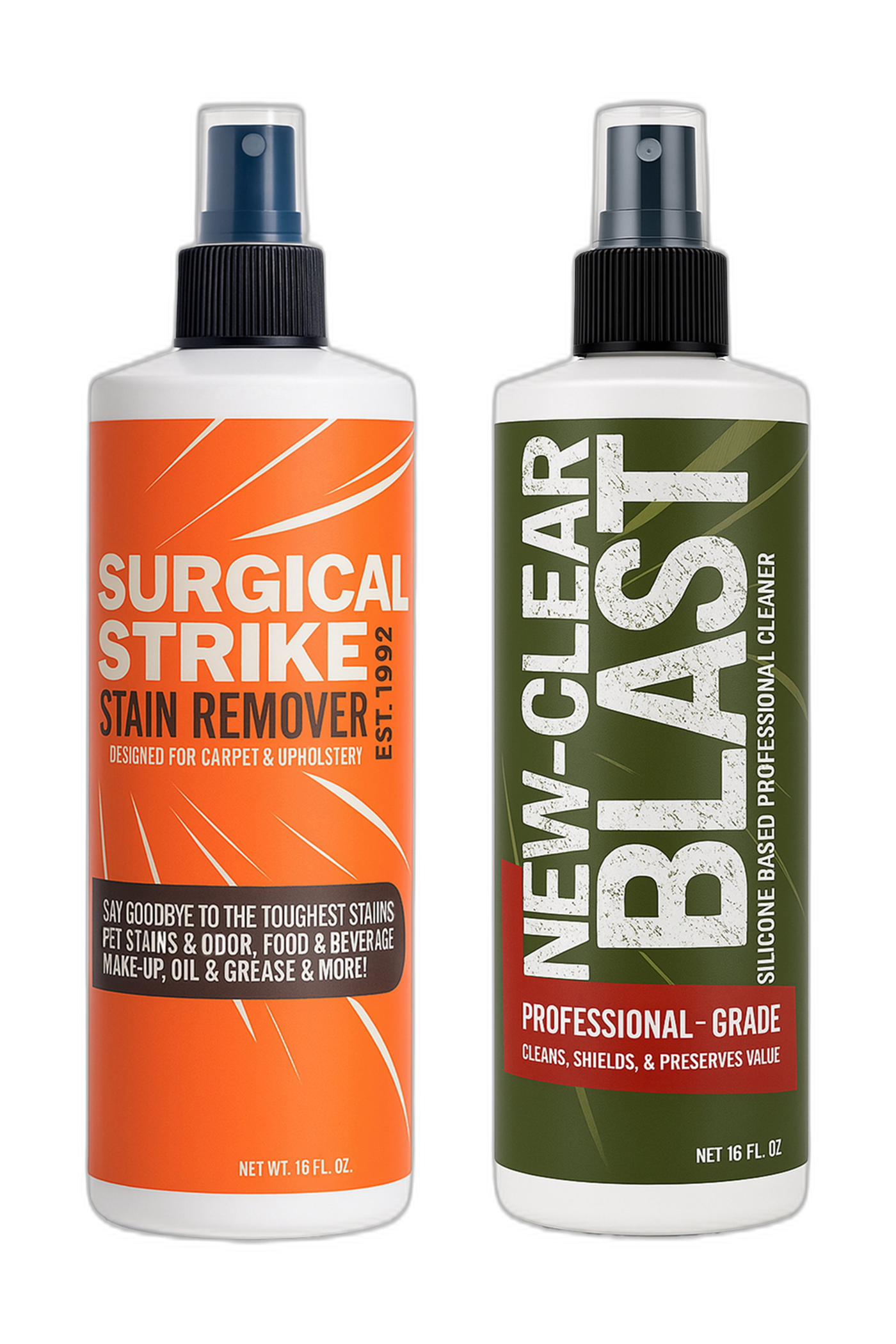
Two formulas. Serious range.
Use Surgical Strike for stains and odor, then New-Clear Blast to clean, shield and preserve hard surfaces.