Introduction: The Imperative of Precision Cleaning in Automotive Manufacturing
In high-volume automotive production, the quality of a vehicle's finish is paramount. The cleanliness of paint booths and assembly areas is not a matter of simple housekeeping; it is a critical contamination control process that directly impacts final product quality. Airborne dust, paint overspray, and residual compounds can settle on surfaces, leading to costly defects, rework, and potential rejection of components.
Maintaining a meticulously clean environment is essential for operational efficiency. The accumulation of residues can compromise equipment performance, reduce airflow in paint booths, and create safety hazards. A systematic approach to cleaning helps extend the life of valuable equipment, reduces operational downtime, and supports consistent output in demanding manufacturing settings. By implementing precise cleaning protocols, facilities can protect their investment and uphold stringent quality standards.
Key Takeaways for Automotive Cleaning
For plant managers and maintenance teams overseeing automotive paint and assembly lines, a structured cleaning strategy is fundamental to success. Key practices include:
- Preventing Contamination: Consistent paint booth cleaning is the first line of defense against finish defects. It helps maintain proper airflow and supports operational uptime.
- Managing Overspray: Paint overspray should be removed promptly from all surfaces. If left to harden, it becomes more difficult to clean and can increase fire risks.
- Establishing a Cadence: In high-throughput environments, daily or per-shift cleaning of walls, floors, filters, and hoses is a recognized best practice to prevent accumulation.
- Choosing Compatible Chemistries: Cleaning solutions must be selected based on their compatibility with safety requirements for hazardous locations, including flash point and ventilation needs.
- Protecting Final Fit: Assembly area cleaning protocols must effectively address sealants, adhesives, lubricants, and industrial grime to protect the integrity of the final product.
Controlling Contamination in Automotive Paint Booths
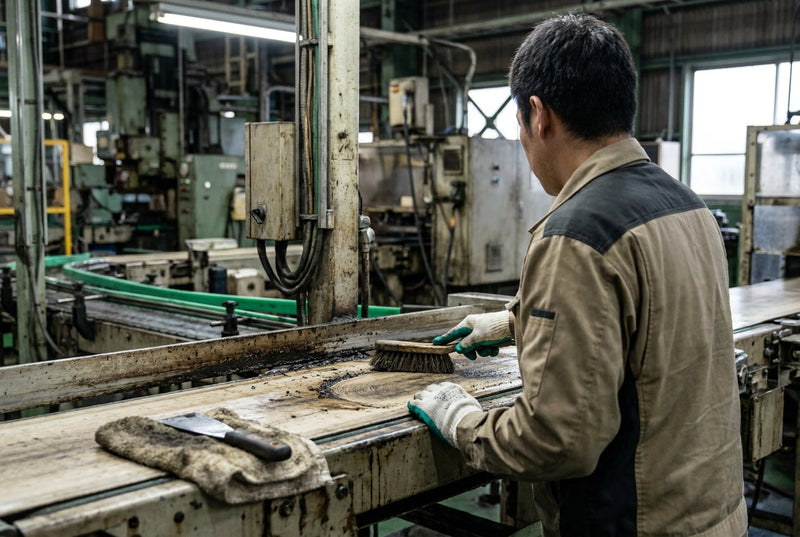
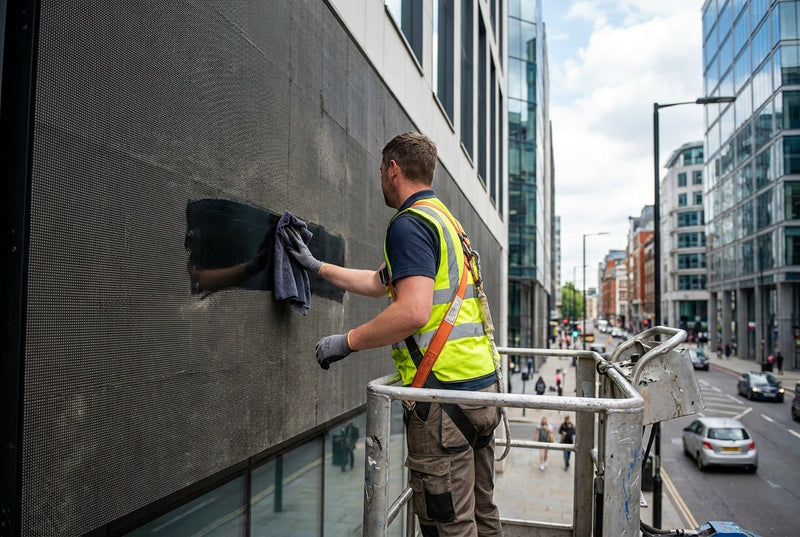
The primary goal in a paint booth is to control airborne particulates and prevent overspray from contaminating freshly painted surfaces. This requires diligent and regular cleaning of every surface, including floors, walls, ceilings, hoses, and light fixtures. Removing overspray before it hardens is far more efficient than dealing with cured paint buildup. For high-volume automotive manufacturing, this often translates to daily or even shift-based cleaning schedules.
A critical component of contamination control is filter maintenance. Exhaust filters trap paint particulates and must be changed regularly to maintain proper airflow and booth performance. Rather than waiting for visible signs of failure, a proactive replacement schedule based on operating hours or a fixed interval, such as every three to four weeks, is advisable. Neglecting filter maintenance can lead to particulates being recirculated into the painting environment, causing surface defects.
Cleaning Protocols for Booth Surfaces and Equipment
Effective cleaning protocols involve more than just filter changes. In high-throughput operations, walls, windows, and hoses should be rinsed daily to prevent the accumulation of paint residue that can flake off and cause defects. To simplify this process, many facilities use protective floor coverings and peelable barrier coats on walls, which trap overspray and can be easily removed and replaced, reducing the time and labor required for manual scrubbing.
Automated equipment, including robots and spray applicators, also requires regular cleaning to ensure consistent performance and prevent the transfer of contaminants to vehicle bodies. The use of low-VOC barrier coats and tacky surface coatings can further help manage airborne particulates and overspray, capturing dust and other contaminants before they can settle on a painted surface. These measures are part of a comprehensive strategy to reduce maintenance efforts and support quality.
Addressing Residues in Automotive Assembly Areas
Beyond the paint booth, the final assembly area presents its own unique cleaning challenges. The focus shifts from paint overspray to residues like lubricants, adhesives, sealants, and general industrial grime. Maintaining hygiene in these zones is crucial to prevent the transfer of these contaminants onto freshly painted parts or final-fit components, which could compromise surface integrity or adhesion.
Cleaning protocols for assembly areas should target floors, tools, and work surfaces where these residues can accumulate. For tough buildup like grease or adhesives, using an appropriate degreaser, stain and odor remover as part of the cleaning regimen helps prepare surfaces. For instance, a formula like Surgical Strike can be used to address these specific types of industrial soils. Regular cleaning in these zones is a proactive measure that helps maintain finish quality and prevent defects from appearing downstream in the production process.
Failure Modes and Operational Risks from Inadequate Cleaning
Neglecting cleaning protocols in paint and assembly areas introduces significant operational risks. The most immediate consequence is an increase in paint finish defects caused by uncontrolled dust and overspray, which leads to costly rework, delays, and potential part rejection. These defects directly impact production targets and profitability.
Beyond surface quality, residue buildup in paint booths can severely impede airflow, affecting spray quality and creating an inconsistent finish. This buildup also increases the risk of fire, posing a serious safety hazard. Similarly, failing to replace filters on schedule reduces booth efficiency and compromises air quality for workers. In assembly areas, contaminants can interfere with the proper adhesion of sealants and trim, potentially impacting the long-term integrity and safety of the vehicle.
Mechanism-to-Outcome Map: Cleaning Practices and Finish Quality
Understanding the direct link between specific cleaning actions and production outcomes helps justify the investment in a rigorous maintenance program. The relationship is straightforward:
-
Mechanism: Regular overspray removal.
Outcome: This practice prevents the formation of hardened buildup that can flake off and cause defects. It also reduces fire risk and creates a safer work environment.
-
Mechanism: Consistent filter replacement.
Outcome: Maintaining clean filters ensures optimal airflow, which is critical for preventing airborne contamination and achieving a smooth, even paint application.
-
Mechanism: Dedicated assembly area cleaning.
Outcome: By eliminating transfer contaminants like grease and adhesives, facilities support the proper function of sealants and preserve the final fit and finish quality of the vehicle.
Regulatory, Safety, and Compliance Considerations
The selection and use of cleaning solutions in automotive paint environments are governed by strict safety and regulatory standards. Cleaning chemistries must be chosen carefully for their compatibility with hazardous locations. A key consideration is the flash point of any solvent used; only those with a flash point above 100°F are typically advised for use inside a paint booth to minimize fire risk.
Proper safety procedures must always be followed during cleaning operations. This includes ensuring adequate ventilation to disperse fumes and requiring appropriate personal protective equipment (PPE) for personnel. Furthermore, facilities must adhere to all local and federal regulations regarding the handling and disposal of waste materials, which include used cleaning solutions, paint residues, and contaminated filters, to ensure full compliance and protect the environment.
Cleaning Solution Selection Checklist for Automotive Environments
Choosing the right cleaning solution is a critical decision that impacts efficiency, safety, and final quality. Before procuring a cleaning agent, maintenance managers should evaluate it against the following criteria:
- Surface Compatibility: Is the solution safe and effective for all relevant surfaces, such as painted booth walls, metal equipment, robotic components, and various floor coverings?
- Soil Type: Does the chemistry effectively address the specific type of soil, whether it is wet or cured paint overspray, sealants, adhesives, lubricants, or general industrial grime? For general grime, a multi-surface cleaner like New-Clear Blast can be an effective choice, while tougher residues may require a specialized degreaser.
- Safety Profile: Does the solution meet safety requirements for the environment? Consider its flash point, VOC content, and any specific ventilation or PPE needed for its use.
- Residue and Contamination: Does the cleaner remove soils effectively without leaving behind a new film or residue that could interfere with subsequent painting or assembly processes? The goal is to clean, not to introduce new contaminants.
Conclusion: Enhancing Efficiency and Quality with Targeted Cleaning
A proactive and targeted approach to cleaning is a high-leverage activity in any automotive manufacturing facility. By implementing advanced cleaning protocols for paint booths and assembly areas, plants can achieve a measurable reduction in finish defects, which in turn minimizes the need for costly rework and lowers material waste. This directly contributes to higher first-pass yields and greater profitability.
Furthermore, consistent maintenance supports operational uptime by extending equipment lifespan and preventing failures caused by residue accumulation. A clean environment is also a safer environment, reducing risks such as fire and ensuring better air quality for employees. By addressing the specialized cleaning needs of these critical production zones, facilities can achieve more consistent product quality and maintain a competitive edge.
Sources
- https://www.3m.com/3M/en_US/collision-repair-us/resources/collision-articles/the-3-main-factors-that-may-cause-dirty-paint-jobs/
- https://info.otcindustrial.com/industry-news/paint-booth-cleaning-procedures-that-reduce-defects-and-downtime
- https://www.pfonline.com/articles/how-to-keep-your-paint-booth-in-peak-condition
- https://www.hanover.com/businesses/business-customer-resources/hanover-risk-solutions/spray-booth-maintenance
- https://globalfinishing.com/wp-content/uploads/2020/09/Dry_Filter_Service_and_Ops_Manual.pdf
- https://p2infohouse.org/ref/03/02542.pdf
- https://globalfinishing.com/wp-content/uploads/2023/11/Auto-Refinish-Booths-Service-and-Maintenance-Manual.pdf
- https://www.paint.org/coatings-tech/article/2023/10/24/paint-booth-cleaning-and-maintenance-tips
- https://www.globalfinishing.com/2020/06/05/how-to-maximize-your-paint-booth-cycles/
- https://www.paint-booths.com/blog/paint-booth-maintenance-how-to-clean-your-booth/

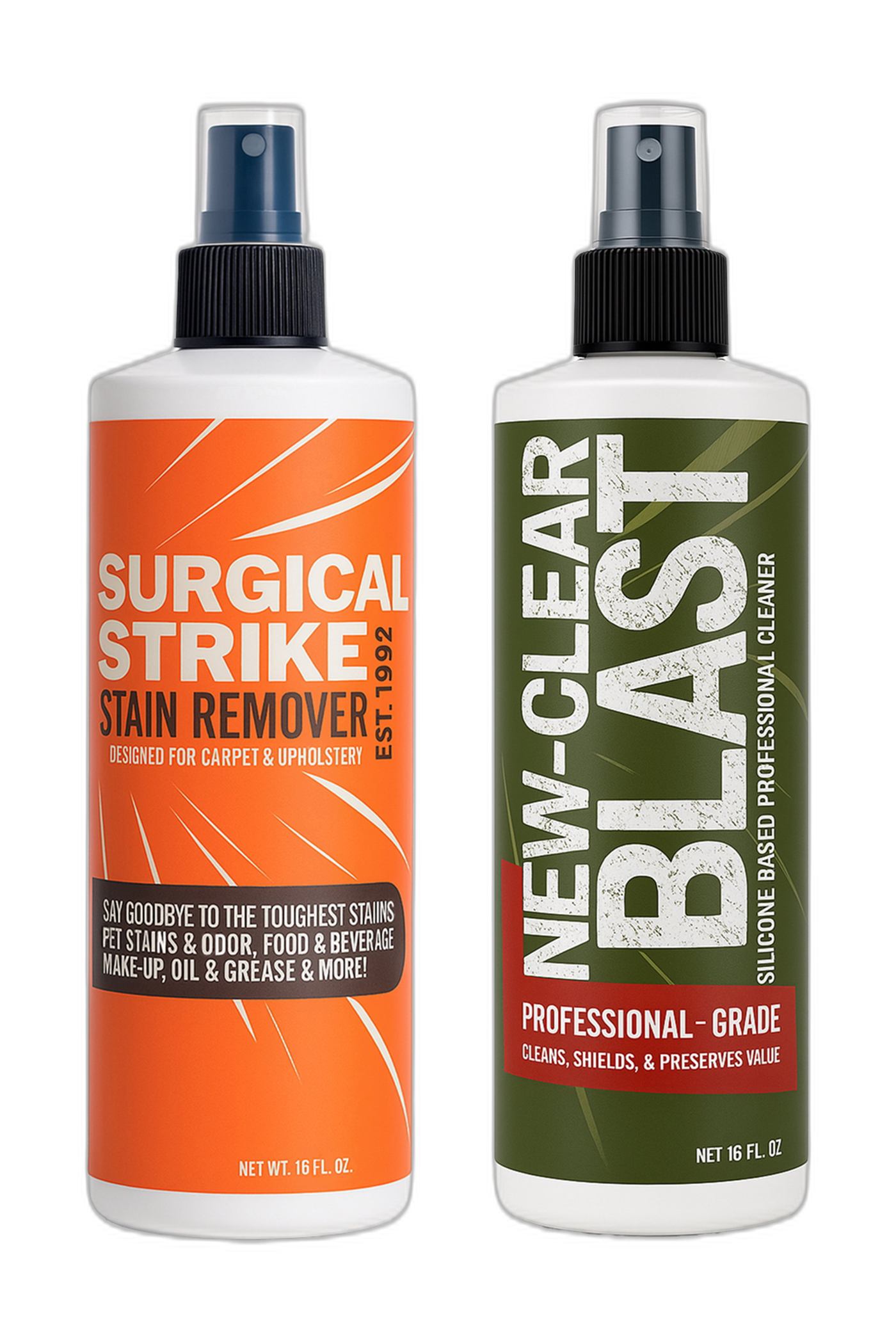
Two formulas. Serious range.
Use Surgical Strike for stains and odor, then New-Clear Blast to clean, shield and preserve hard surfaces.