Key Takeaways
For professional musicians, audio engineers, and collectors, maintaining the integrity of high-value equipment is paramount. The approach to cleaning is fundamentally different from general maintenance, prioritizing preservation and performance. Here are the core principles to guide the process:
- Cleaning high-value instruments and audio gear prioritizes prevention and minimal intervention over aggressive restoration.
- Cleaning methods must be material-specific to avoid altering the finish, fit, alignment, texture, or sonic performance of the item.
- Thorough documentation, including examination notes and visual records before and after cleaning, is an essential part of responsible care.
- Appropriate cleaning helps maintain sound quality, longevity, and collector value by mitigating deterioration.
- A clear distinction must be made between routine user maintenance and professional intervention, especially for vintage or fragile components.
The Imperative of Precision Cleaning for High-End Musical Instruments and Audio Gear
High-value musical instruments and audio equipment are more than just objects; they are precision tools where material composition, surface finish, and structural integrity directly influence performance. Specialized cleaning protocols are required because of their delicate construction and function-critical nature. The stakes are high, as improper cleaning can lead to irreversible consequences.
Mistakes can cause sonic degradation, such as a change in a guitar's resonance or unwanted noise in an audio console's signal path. Material damage, including stripped lacquer, corroded metal, or warped wood, can permanently alter an instrument's playability and appearance. These issues not only affect function but can also significantly diminish an item's aesthetic and collector value.
Therefore, all cleaning decisions must prioritize the preservation of the asset's original state and functional integrity. The primary objective is to maintain sound quality and playability while extending the lifespan of these valuable items through careful, documented maintenance practices.
Core Principles for Safe Asset Preservation
The foundation of responsible care for high-end instruments and gear is a philosophy rooted in conservation science. This approach emphasizes preventive action and minimal intervention, ensuring that any cleaning activity supports long-term preservation rather than causing unintended harm.
A preventive cleaning philosophy involves actions that reduce the chance of damage or deterioration before it occurs. This includes proper storage, handling, and environmental controls that minimize the accumulation of harmful contaminants. When cleaning is necessary, it should be minimally interventive, focusing only on removing surface contaminants without altering the original material or structure of the item.
Professional guidance from conservation organizations underscores the importance of preserving an object as intact as possible. Every intervention, including seemingly minor cleaning, should be approached with caution and documented within a comprehensive preservation framework. This ensures that the asset's history, integrity, and performance are respected throughout its lifespan.
Material Compatibility and Non-Invasive Techniques
The effectiveness and safety of cleaning hinge on understanding the materials involved. High-end instruments and audio gear are complex assemblies of wood, brass, lacquer, various platings, and sensitive electronic components. Each material requires a distinct approach to avoid damage.
Cleaning methods must be chosen based on the exact material and surface being treated. Techniques should avoid abrasion, moisture intrusion, and the introduction of chemical residues that can alter an item's finish, fit, or alignment. The chemistry of any cleaning agent must be fully compatible with delicate finishes, aged adhesives, and electrical components to prevent degradation.
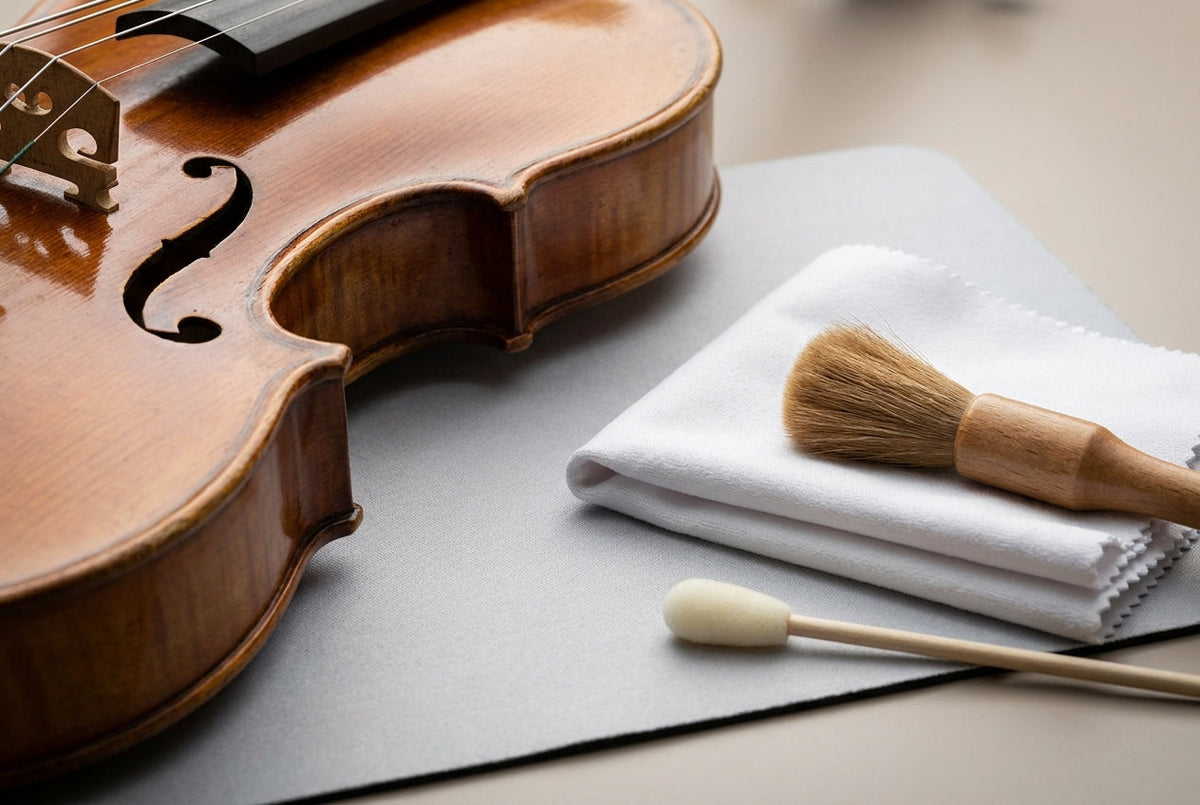
A credible approach distinguishes between routine user maintenance, like wiping down a guitar after use, and more intensive, material-specific interventions best left to professionals. Choosing the right cleaning solution for the right task is a critical part of maintaining these assets, which is why a comprehensive Applications list can help guide maintenance decisions.
Documentation as a Standard Practice
For valuable and historically significant instruments and audio equipment, cleaning should be treated as a formal intervention, not a casual task. A core component of this professional approach is thorough before-and-after documentation to create a clear record of the asset's condition and the work performed.
This documentation process should include detailed examination notes, a clear description of the cleaning methods and materials used, and high-quality visual records. These records help track any changes over time and provide a valuable history for future owners or conservators. According to ethical conservation guidance, permanent records and reports are a standard part of responsible treatment.
Digital photography is a recognized and accessible method for documenting the condition of an object before, during, and after any cleaning or treatment. This practice is aligned with guidelines that emphasize creating and maintaining accurate, complete, and permanent records for all conservation activities.
Selection Checklist for Effective and Safe Cleaning
Before beginning any cleaning process on a high-value instrument or piece of audio equipment, a systematic assessment is crucial. This checklist helps ensure that the chosen method is both effective and safe for the specific asset.
- Assess Material Composition: Identify every material involved, including wood, metal, plastics, and electronic circuit boards.
- Identify the Finish: Determine the type of finish or coating present (e.g., nitrocellulose lacquer, polyurethane, shellac, plating) and evaluate its current condition.
- Analyze Contamination: Determine the nature of the soil, such as dust, grime, body oils, tarnish, or other residues.
- Verify Compatibility: Confirm that the selected cleaning agent will not cause an adverse reaction with any surface, adhesive, or component it may contact.
- Define the Goal: Consider the required level of cleanliness and whether it is intended to support acoustic, electrical, or mechanical performance.
Failure Modes and Operational Risks in Instrument Cleaning
When cleaning protocols are not carefully considered, the risks of damage are significant. Understanding potential failure modes can help prevent irreversible harm to valuable instruments and equipment. These risks highlight the importance of material compatibility and using the least aggressive method possible.
Common failure modes include:
- Finish Alteration: Incompatible cleaning agents can dissolve, cloud, or alter the texture and appearance of delicate finishes like lacquer or French polish.
- Moisture Intrusion: Improper application techniques can allow moisture to seep into joints, wood, or electronics, causing swelling, corrosion, or short circuits.
- Residue Buildup: Some cleaners leave behind films that can affect mechanical functions, alter electrical conductivity, or attract new contaminants.
- Abrasion and Material Loss: Aggressive mechanical cleaning can cause scratches, remove original material, or damage delicate parts and inlays.
- Performance Impact: Any change to an instrument's surface properties or an electronic device's internal components can directly impact its acoustic or electrical performance.
Mechanism to Outcome: Cleaning's Impact on Performance and Longevity
Thoughtful cleaning is not merely cosmetic; it directly supports the performance and longevity of musical instruments and audio gear. By removing harmful contaminants, proper maintenance helps preserve the physical properties that are critical to an asset's function and value.
For example, effective cleaning supports the preservation of acoustic resonance in wood instruments or ensures proper airflow in wind instruments by removing buildup. In audio equipment, carefully removing oxidation and residues from electrical contacts can restore signal integrity and reduce unwanted noise. This type of work is often done in professional recording studios and other Facilities where performance is critical.
Furthermore, preventing buildup on moving parts like keys, valves, and faders ensures smooth mechanical operation and extends their functional life. Regular cleaning helps mitigate environmental risks like corrosion or microbial growth, contributing to long-term asset health. By maintaining original surfaces and materials, careful cleaning protects both functional performance and collector value, adhering to the conservation principle of preserving cultural property.
Practical Cleaning Approaches for Diverse Instrument Types
Different instruments require unique care protocols based on their construction and materials. Industry resources provide practical guidance, emphasizing the need for instrument-specific cleaning and hygiene routines. For example, the care for a brass instrument is vastly different from that of a vintage acoustic guitar or a modern synthesizer.
It is essential to distinguish routine user maintenance, such as wiping down a string instrument after each use, from professional-level intervention needed for fragile items or deep cleaning. Protocols should always be adapted based on the instrument's age, construction, and sensitivity to different chemistries or mechanical actions.
For electronic audio equipment, special attention must be paid to avoiding moisture and ensuring any cleaning agent is compatible with sensitive circuitry. For general surface prep and cleaning on non-porous surfaces found in workshops or studios, a solution like New-Clear Blast, a multi-surface cleaner, can be used as part of a maintenance routine for workbenches, tool casings, and exterior equipment panels.
Ethical and Safety Considerations for Cleaning Agents
The selection and use of cleaning agents for high-value items must be guided by ethical and safety principles. Conservation ethics emphasize preventive measures and the responsibility to limit damage or deterioration when choosing any treatment. Professional practice requires a careful evaluation of the effects a cleaning agent will have on an object's materials before application.
Beyond the safety of the asset, personal safety is also critical. Always use cleaning agents with adequate ventilation to minimize exposure to vapors. It is recommended to avoid contact with eyes and prolonged skin contact, often by using appropriate personal protective equipment like gloves and safety glasses.
Finally, all cleaning products should be stored properly and kept out of reach of children. Always follow the manufacturer's label directions for safe application, storage, and disposal to ensure a responsible and safe working environment.

Sources
- https://www.culturalheritage.org/viewdocument/aic-code-of-ethics-and-translations
- https://www.namm.org/instrument-cleaning-resources
- https://www.culturalheritage.org/docs/default-source/resources/governance/organizational-documents/commentaries-to-the-guidelines.pdf?sfvrsn=bb886e43_20
- https://www.doi.gov/sites/default/files/migrated/museum/policy/upload/mphi-c.pdf
- https://ecommons.cornell.edu/entities/publication/a4211ac5-f947-4b29-8de1-7e66c02c24d8
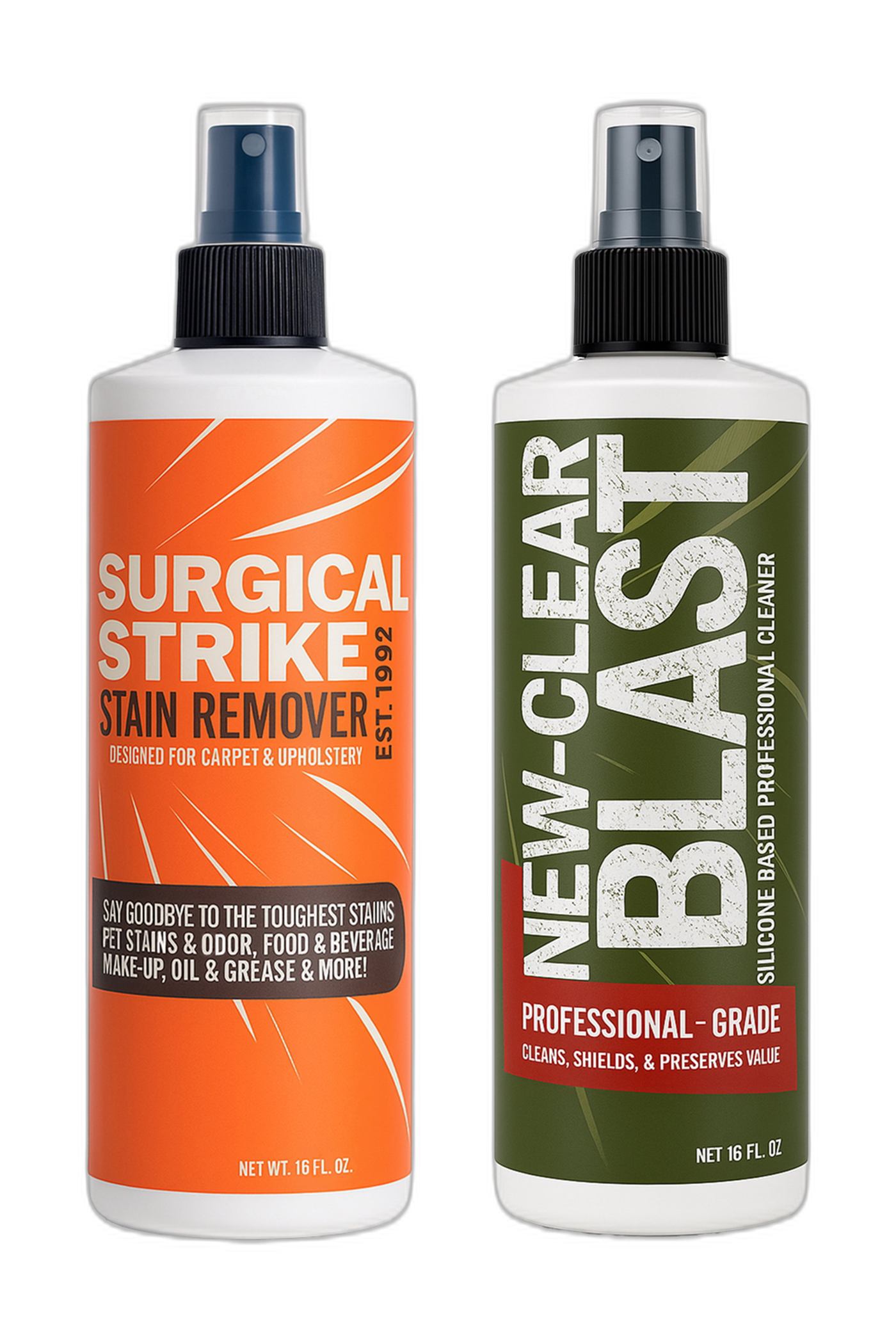
Two formulas. Serious range.
Use Surgical Strike for stains and odor, then New-Clear Blast to clean, shield and preserve hard surfaces.