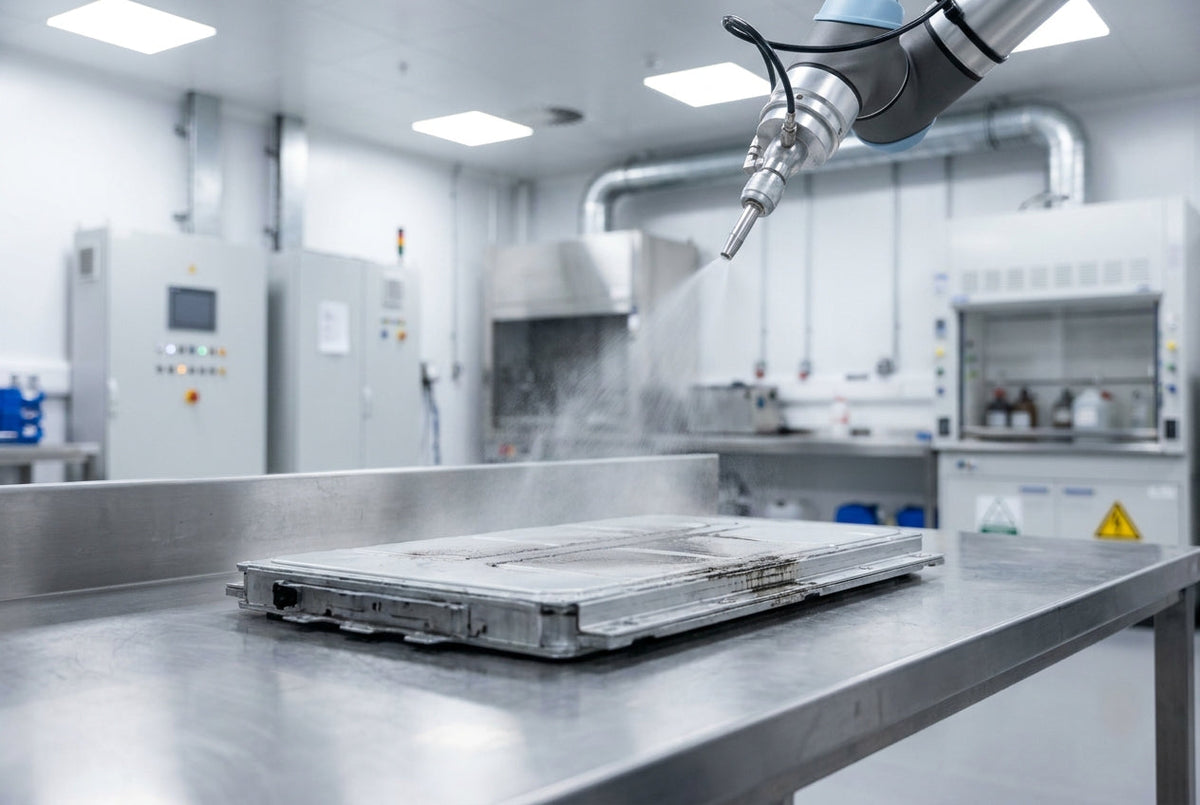
Introduction: The Critical Role of Advanced Cleaning in EV Battery Recycling
The growing circular economy for electric vehicles (EVs) places a spotlight on the operational complexities of battery recycling. End-of-life lithium-ion batteries present hazardous material handling challenges that go far beyond routine industrial cleaning. These batteries are often managed as hazardous waste due to their potential for ignitability or reactivity, demanding specialized cleaning and maintenance programs within recycling facilities.
Effective cleaning protocols are not just about housekeeping. They are fundamental to containing spills, controlling the spread of hazardous contaminants, and ensuring the safety of waste handling processes from receiving to material recovery. A well-designed cleaning strategy is an essential component of operational safety, environmental compliance, and the overall efficiency of the recycling stream.
Key Takeaways for Battery Recycling Operations
For managers and safety officers in EV battery recycling facilities, establishing a robust cleaning program is a non-negotiable part of risk management. Key operational considerations include:
- Due to their ignitable and reactive properties, end-of-life lithium-ion batteries are frequently regulated as hazardous waste. This status necessitates stringent containment and spill control measures as part of any cleaning protocol.
- Cleaning methods must be designed to reduce human exposure to damaged cells, electrolyte residue, and contaminated dust or paste. This aligns with a growing industry emphasis on automation and strict operational protocols to protect workers.
- The risk of thermal runaway and fire is a central hazard in battery recycling. Thorough cleaning and housekeeping are vital for ignition prevention by removing conductive debris, managing residues, and maintaining a clean environment.
- The EPA's guidance on universal waste management for many business-handled lithium batteries can influence the choice of cleaning chemistries to ensure waste accumulation and transport remain compliant.
- Process efficiency and the purity of recovered materials depend on preventing cross-contamination between different battery chemistries and process areas. Dedicated cleaning protocols are essential to achieving this.
Failure Modes and Operational Risks in EV Battery Recycling
The environment inside an EV battery recycling facility is dynamic, with multiple points where operational risks can arise. Lithium-ion batteries have the potential to cause fires during transportation or at recycling facilities, often driven by thermal runaway events in damaged or improperly handled cells.
Damaged cells and the resulting electrolyte residue create conditions for ignitable or reactive hazardous waste, which requires robust containment strategies. Furthermore, cross-contamination between different battery chemistries or process streams can compromise the value of recovered materials and introduce unforeseen safety hazards.
Beyond fire risks, worker exposure to electrolyte, heavy metals like cobalt and nickel, or contaminated dust from damaged batteries poses significant health risks. A comprehensive cleaning plan is a critical administrative control for protecting employee health.
Mechanism-to-Outcome Map for Effective Cleaning in Battery Recycling
Understanding how contamination behaves is key to designing an effective cleaning program. The link between cleaning mechanisms and safety outcomes is direct.
- Contamination Pathways: Electrolyte spills, battery paste, and conductive debris can spread quickly through facilities via equipment, footwear, and air currents. This spread increases fire risk and can reduce the purity of recovered materials.
- Material Interactions: Residual electrolytes or metal dust can corrode processing equipment and create reactive surfaces. Cleaning chemistries must be chosen to address these specific interactions without causing further damage.
- Process Controls: The use of automation and controlled storage areas helps minimize human exposure and allows for more precise cleaning applications. These controls directly contribute to safer operational outcomes.
- Surface Conditions: Properly cleaned surfaces reduce adhesion points for new contaminants and prevent the buildup of hazardous residues. This is crucial for maintaining process efficiency and preventing conditions that could lead to thermal events.
Key Contaminants and Critical Cleaning Zones
Identifying Primary Residues
The primary contaminants of concern in these specialized manufacturing environments include electrolyte residue, conductive battery dust, heavy metal-bearing paste from crushed cells, and 'black mass' carryover into unintended areas. Effective cleaning protocols must be capable of neutralizing or containing these varied residues while minimizing worker exposure.
Targeting High-Risk Areas
While general facility cleanliness is important, certain zones require heightened attention. Critical areas for targeted cleaning include receiving and sorting areas, battery disassembly stations, shredding and separation equipment, material storage areas, and maintenance platforms. Implementing dedicated segregation and controlled storage practices is also necessary to prevent cross-contamination between damaged batteries, processed materials, and final recovered products.
Regulatory, Safety, and Compliance Considerations
Hazardous Waste Management
Under EPA regulations, most end-of-life lithium-ion batteries are classified as ignitable (D001) and reactive (D003) hazardous wastes. This classification dictates strict handling, storage, and disposal requirements that must be integrated into all operational procedures, including cleaning.
Universal Waste Guidelines
To streamline management, the EPA recommends that businesses handle used lithium batteries under federal universal waste regulations. This framework requires specific accumulation, labeling, and handling procedures designed to prevent releases to the environment. Cleaning processes must be compatible with these guidelines.
Worker Safety Protocols
Cleaning practices must incorporate robust worker safety controls. These include ensuring adequate ventilation, requiring appropriate personal protective equipment (PPE), and prohibiting practices like manual dry-sweeping of contaminated powders, which can aerosolize hazardous materials. The industry trend toward automation and reduced manual intervention is heavily emphasized as a way to improve safety in battery recycling operations, which extends to the selection of cleaning systems and chemistries.
Selection Checklist for EV Battery Recycling Cleaning Solutions
When selecting cleaning solutions for high-use environments like battery recycling facilities, operators should use a checklist based on performance and safety criteria. Consider whether a solution such as Surgical Strike, a degreaser, stain and odor remover, is needed for heavy residues or if New-Clear Blast, a multi-surface cleaner, is more appropriate for general maintenance.
- Residue Neutralization: Does the cleaning solution effectively manage or neutralize electrolyte and other reactive residues to mitigate operational risks?
- Material Compatibility: Is the chemistry compatible with critical equipment surfaces, preventing corrosion, pitting, or degradation over time?
- Worker Safety: Does the solution support reduced human exposure, ideally through application methods that are automated or require low contact?
- Environmental Compliance: Does the cleaning process and its waste stream facilitate compliant hazardous or universal waste collection and disposal?
- Process Efficiency: Can the solution help prevent cross-contamination and support the consistent recovery of high-quality materials?
Enhancing Efficiency and Material Recovery Through Strategic Cleaning
Strategic cleaning is not a cost center; it is an investment in operational efficiency and safety. Advanced cleaning processes are vital for preventing cross-contamination between different battery chemistries (e.g., LFP, NMC, NCA) and their respective process streams, ensuring the purity of recovered metals.
Clean equipment and work zones support more efficient sorting, disassembly, and handling of black mass, which in turn helps maximize the recovery of valuable materials like lithium, cobalt, and nickel. Furthermore, regular and appropriate cleaning helps reduce equipment downtime by preventing corrosion and buildup from reactive electrolyte residues.
By controlling contaminants at their source, specialized cleaning contributes to safer operational environments and helps sustain the integrity of the circular economy model for EV batteries. This approach protects workers, assets, and the value of the materials being recovered.
Sources
- https://www.epa.gov/hw/lithium-ion-battery-recycling
- https://rcrapublic.epa.gov/files/14957.pdf
- https://iris.polito.it/retrieve/e4fcafc8-325c-4f51-a086-d8ea13347531/Bruno%20and%20Fiore%202025.pdf
- https://www.sciencedirect.com/science/article/pii/S037877532301138X
- https://www.epa.gov/recycle/frequent-questions-lithium-ion-batteries
- https://www.circular-energy-storage.com/blog/lithium-ion-battery-recycling-safety
- https://www.epa.gov/hw/lithium-ion-battery-recycling-frequently-asked-questions

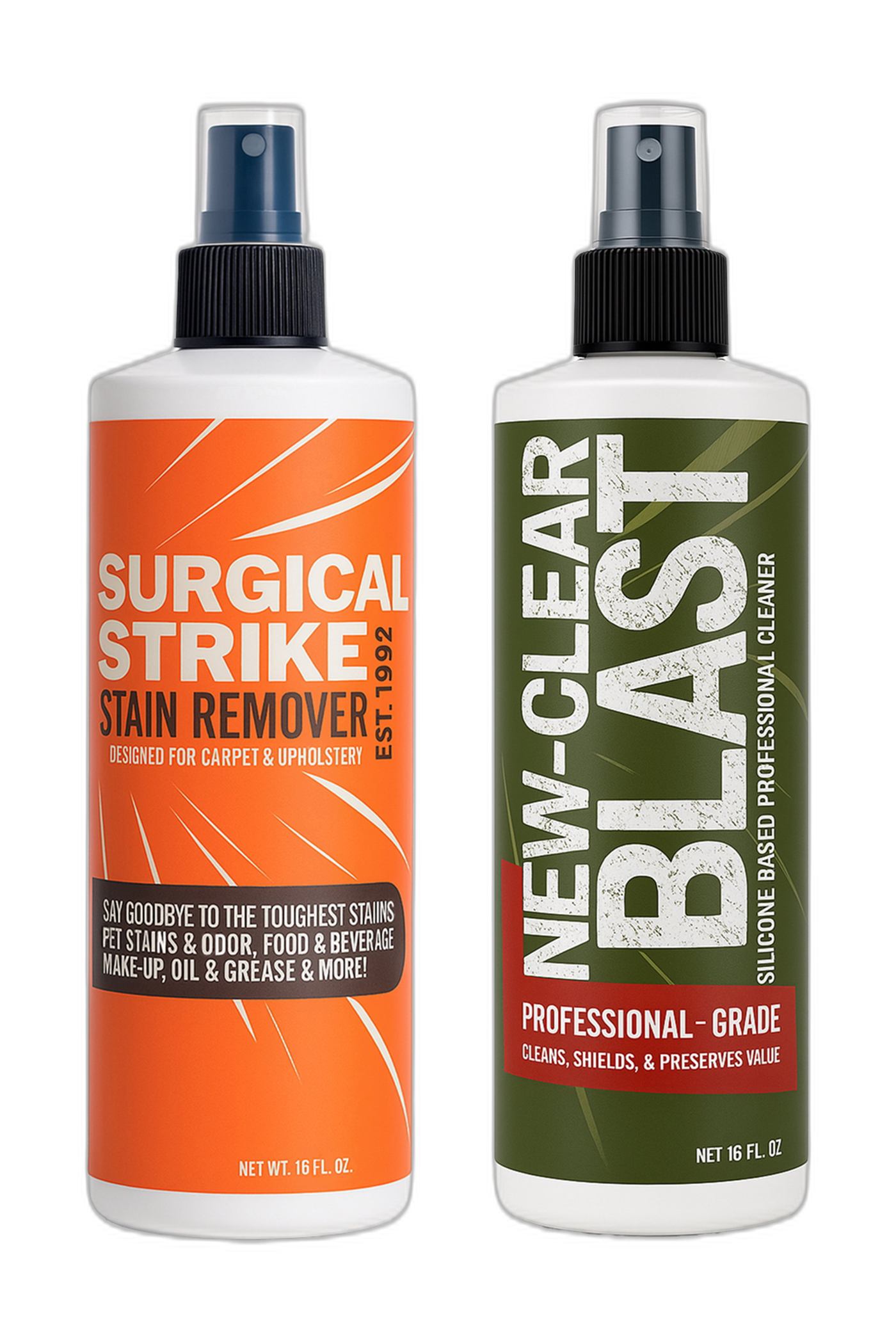
Two formulas. Serious range.
Use Surgical Strike for stains and odor, then New-Clear Blast to clean, shield and preserve hard surfaces.