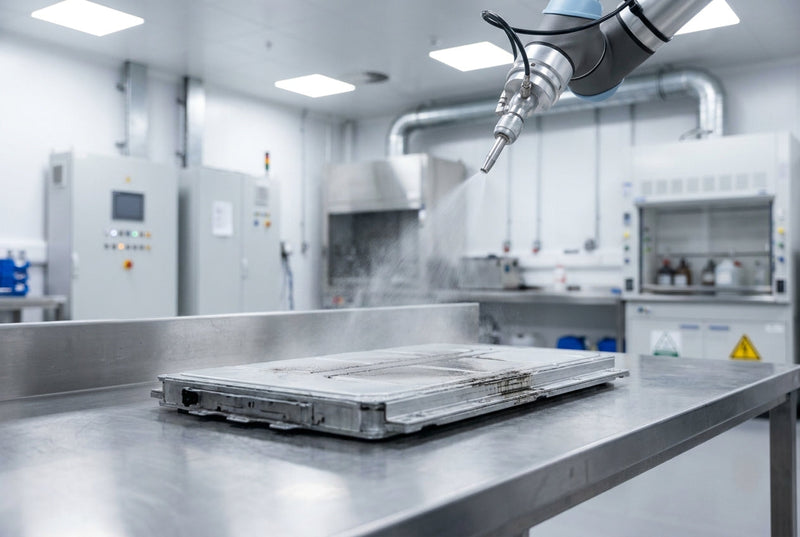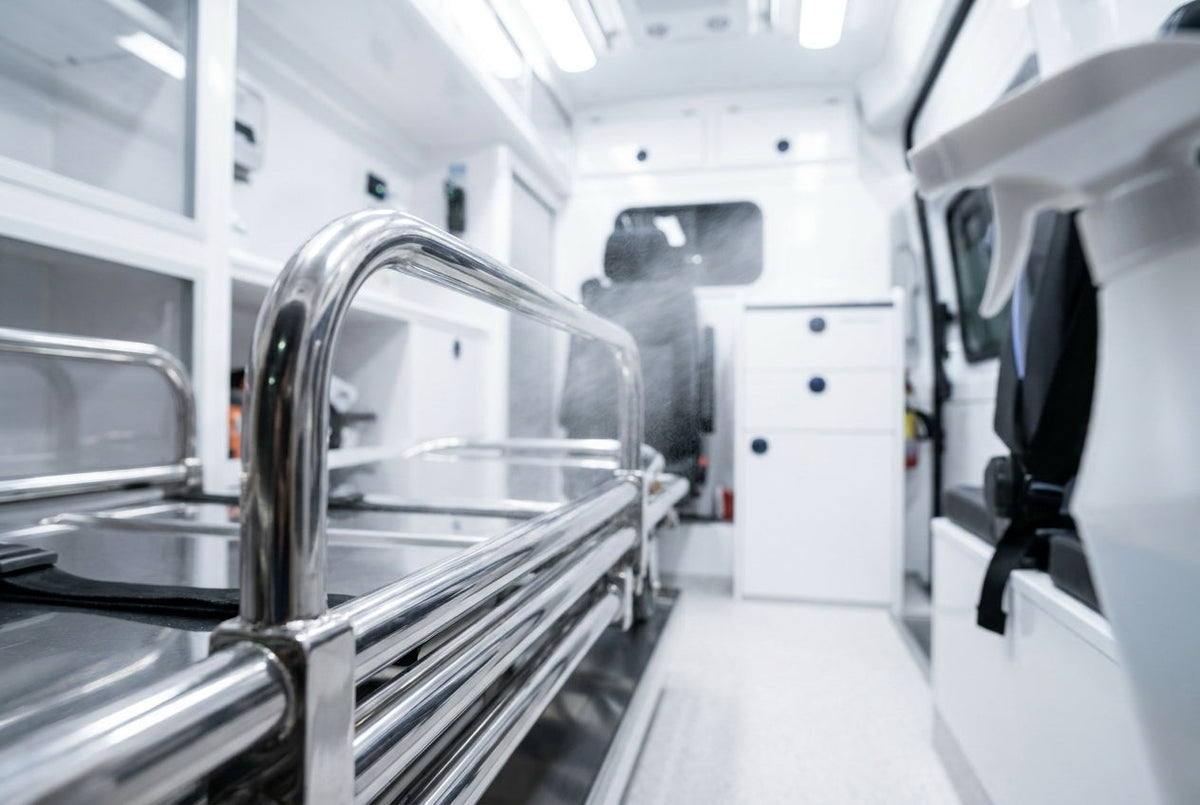
Emergency medical services (EMS) and law enforcement vehicles operate in unpredictable environments, frequently encountering biohazards, chemical residues, and other contaminants. A standardized, effective protocol for emergency vehicle cleaning decontamination is not just a matter of hygiene; it is a critical component of operational readiness and personnel safety. This article details the advanced cleaning strategies required to manage contamination risks, protect first responders and the public, and ensure vehicles are returned to service swiftly and safely.
Key Takeaways
- Emergency response vehicles require targeted cleaning protocols that address high-touch surfaces in patient care and transport areas, going beyond simple visible soil removal.
- The use of EPA-registered hospital disinfectants is essential for effective decontamination, and personnel must follow label instructions for contact time to ensure efficacy.
- Cleaning personnel must use appropriate personal protective equipment (PPE) and follow safe work practices when handling potential biohazards to minimize exposure risks.
- Cleaning strategies should differentiate between vehicle compartments, such as driver and patient areas, which have varying contamination levels and ventilation challenges.
- Standardized, rapid-turnaround procedures are critical for maintaining operational readiness, ensuring vehicles are consistently and quickly prepared for the next call.
- Law enforcement transport vehicles, like ambulances, require the same level of hygiene discipline, especially when transporting individuals or handling contaminated evidence.
Understanding the Contamination Challenge in First Response Vehicles
Ambulances, police cars, and other first response vehicles are routinely exposed to a wide range of contaminants, including bloodborne pathogens, biohazards, and unknown chemical residues. Without rigorous and consistent cleaning protocols, these contaminants can pose a significant risk of transmission between patients, first responders, and the public. The challenge is compounded by the complex interiors of these vehicles, where high-contact surfaces can harbor pathogens if not properly addressed.
Inconsistent or inadequate cleaning presents a direct operational problem. A single contaminated call can take a vehicle out of service for an extended period, disrupting response capabilities. High-contact surfaces like railings, door handles, and equipment controls accumulate contaminants and require specific, targeted cleaning, not just a general floor wash. Establishing a clear, repeatable process helps manage these risks and supports the health of personnel and the communities they serve.
Targeted Cleaning for High-Contact Surfaces
Effective decontamination hinges on focusing efforts where they matter most: high-contact surfaces. In an ambulance, this includes stretchers, railings, door handles, control panels, and any medical equipment used during transport. These areas are far more likely to harbor contaminants than a vehicle's floor or ceiling. Protocols should mandate that these surfaces are thoroughly cleaned and disinfected after any transport where contamination is suspected or confirmed.
A strategy that prioritizes high-touch zones over general wash-downs is more efficient and effective at removing grime, buildup, and potential pathogens. Regular, targeted cleaning not only addresses immediate contamination but also contributes to the overall hygiene of the vehicle. This approach helps create a safer environment for every occupant, from patients to the first responders providing critical care. By concentrating on these critical points, agencies can better manage cross-contamination risks and maintain vehicle readiness.
Selecting Effective Cleaning and Disinfection Agents
Choosing the right products is fundamental to a compliant and effective decontamination program. For surfaces potentially contaminated with blood or other bodily fluids, OSHA standards specify the use of appropriate disinfectants. This includes EPA-registered tuberculocidal disinfectants, diluted bleach solutions, or EPA-registered products proven effective against HIV and HBV. It is critical to select EPA-registered hospital disinfectants and to follow all label directions for concentration and contact time.
Contact time, the duration a disinfectant must remain wet on a surface to work, is a non-negotiable part of the process. Failing to adhere to the specified contact time can render the disinfection process ineffective. The cleaning process often starts with removing physical debris and soils before a disinfectant is applied. Pre-cleaning solutions that help remove tough grime and buildup prepare the surface for proper disinfection. Products like Surgical Strike, a degreaser, stain and odor remover, can be used as part of a multi-step protocol to prepare heavily soiled surfaces for subsequent disinfection.
Prioritizing Operator Safety: PPE and Protocols
Protecting the personnel who clean and decontaminate emergency vehicles is as important as the cleaning process itself. Workers should always wear appropriate Personal Protective Equipment (PPE), especially when there is a risk of exposure to body fluids. Standard PPE for these tasks includes disposable gowns, gloves, and eye or face protection to prevent splashes. Adherence to these protocols is mandated by safety regulations and is a cornerstone of any effective vehicle hygiene program.
Beyond PPE, safe work practices are essential to reduce exposure to both bloodborne pathogens and the cleaning chemicals used. This includes ensuring adequate ventilation in the cleaning area and following proper procedures for handling and disposing of contaminated materials and used PPE. Comprehensive training on these protocols ensures that every team member understands the risks and knows how to mitigate them, making worker safety a central component of the entire decontamination workflow.
Streamlining Compartmental Cleaning for Operational Readiness
Emergency response vehicles are not monolithic spaces; they contain distinct compartments with different functions and contamination risks. An ambulance, for example, has a driver cab and a separate patient care area, while a law enforcement vehicle may have a detention section. Effective cleaning protocols must address the unique needs of each compartment. The driver compartment may require routine cleaning for general hygiene, while the patient or detention areas demand rigorous decontamination after specific calls.
Controlling the spread of airborne contaminants is another key consideration. Whenever possible, using non-recirculated air and maintaining separation between the driver and passenger spaces can help reduce exposure risks during transport. Importantly, law enforcement vehicles used for transport require the same core hygiene discipline as ambulances, as the potential for exposure to pathogens is similar. By tailoring cleaning procedures to each compartment, agencies can improve both efficiency and safety.
Rapid Turnaround and Sustaining Operational Readiness
In emergency services, time is a critical resource. Vehicles taken out of service for decontamination must be returned to operational status as quickly and safely as possible. This need for rapid turnaround underscores the importance of standardized operating procedures (SOPs) for cleaning and disinfection. SOPs ensure that every cleaning task is performed consistently and efficiently, eliminating guesswork and reducing vehicle downtime.
Documented, repeatable protocols are the backbone of a reliable decontamination program. They ensure that every vehicle meets the same standard of cleanliness before returning to the field, which is essential for maintaining continuous operational capacity. When procedures are standardized, training new personnel becomes simpler, and quality control is easier to maintain. This systematic approach helps prevent delays and ensures that a clean, ready fleet is always available to respond to the next call.
Regulatory, Safety, and Compliance Considerations
A compliant emergency vehicle cleaning program must be built on a foundation of established regulatory standards. The primary framework in the United States is OSHA's Bloodborne Pathogens Standard, which outlines requirements for protecting workers from exposure to blood and other potentially infectious materials. This includes mandates for PPE, safe work practices, and the use of appropriate disinfectants on contaminated surfaces.
The Centers for Disease Control and Prevention (CDC) provides authoritative guidance on disinfection and sterilization principles, offering detailed recommendations for healthcare and emergency settings. This guidance covers topics like selecting appropriate disinfectants and ensuring correct contact times for various pathogens. Finally, adherence to the instructions on EPA-registered product labels is not just a best practice; it is a key component of any compliant protocol. Following directions for concentration and application ensures the product performs as intended.
Selection Checklist for Emergency Vehicle Cleaning Solutions
When selecting cleaning and disinfection agents for emergency vehicles and related facilities, procurement managers and operational leaders should consider several key factors to ensure both efficacy and practicality.
- Regulatory Status: Confirm the product is an EPA-registered hospital disinfectant suitable for the intended application.
- Contact Time: Verify that the required contact time is practical for a rapid-turnaround environment. A shorter contact time can significantly speed up the decontamination process.
- Material Compatibility: Assess the solution’s compatibility with the various materials found in vehicle interiors, such as plastics, metals, and upholstery, to prevent damage or residue buildup over time.
- Cleaning Efficacy: Ensure the product helps remove common soils like grime, stains, and odors without compromising surface integrity, preparing the surface for disinfection.
- Ease of Use: Consider the product's application and rinsing requirements. A solution that is easy to apply and requires minimal post-application steps supports an efficient and repeatable cleaning process.
Failure Modes and Operational Risks in Vehicle Cleaning
Deviating from established cleaning protocols introduces significant risks that can compromise safety and operational readiness. Understanding these potential failure modes is the first step toward preventing them.
- Risk: Incomplete Pathogen Deactivation. This occurs if disinfectants are not used according to the specified contact time or at the correct concentration. The consequence is an ongoing risk of pathogen transmission to subsequent patients or responders.
- Risk: Personnel Exposure. Cleaning personnel face direct exposure to bloodborne pathogens or hazardous chemicals if proper PPE protocols are not strictly followed. This can lead to illness or injury.
- Risk: Cross-Contamination. If cleaning focuses only on visible soil and neglects high-touch surfaces, contaminants can accumulate and spread. This increases the potential for cross-contamination between calls.
- Risk: Operational Delays. Without standardized operating procedures, cleaning quality becomes inconsistent, and the time required to return a vehicle to service can increase. This directly impacts an agency’s ability to respond to emergencies.
Sources
- https://www.cdc.gov/viral-hemorrhagic-fevers/hcp/emergency-guidance/ems-911.html
- https://www.cdc.gov/infection-control/hcp/disinfection-and-sterilization/index.html
- https://www.cdc.gov/niosh/topics/ems/cleaning.html
- https://www.osha.gov/laws-regs/standardinterpretations/1993-02-01-0
- https://stacks.cdc.gov/view/cdc/85744/cdc_85744_DS1.pdf
- https://www.osha.gov/coronavirus/control-prevention/emergency-response
- https://www.afscme.org/covid-19/downloadable-asset/AFSCME-Facts-Law-Enforcement-1.pdf
- https://repository.netecweb.org/items/show/1800
- https://stacks.cdc.gov/view/cdc/156115
- https://www.usfa.fema.gov/downloads/pdf/publications/fa_335.pdf

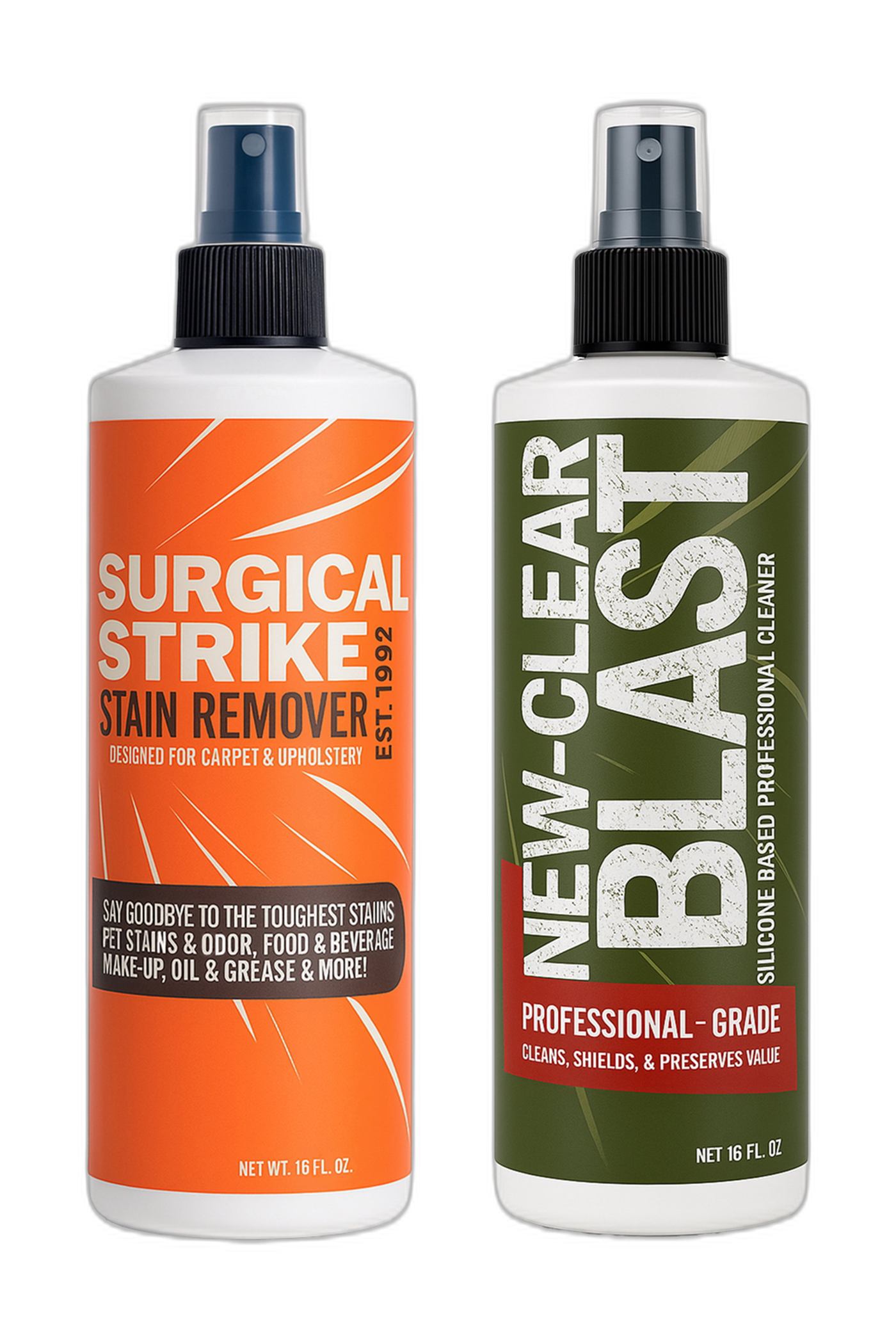
Two formulas. Serious range.
Use Surgical Strike for stains and odor, then New-Clear Blast to clean, shield and preserve hard surfaces.