The aftermath of a fire presents a complex cleaning challenge that extends far beyond visible damage. Lingering soot, pervasive smoke odors, and hidden contaminants can compromise structural integrity and pose significant health risks. For restoration professionals and property owners, a methodical approach to post-fire remediation is not just recommended, it is essential for restoring the property to a safe, pre-loss condition. This guide outlines advanced protocols for effective soot and odor removal, focusing on the chemistries and techniques that support a successful restoration project.
Key Takeaways for Post-Fire Restoration
Successfully navigating post-fire cleanup requires a specialized understanding of the contaminants involved and the standards governing their removal. Unlike general cleaning, fire restoration is a multi-faceted discipline focused on safety, source removal, and verification. It is a process where simply masking an odor is a sign of incomplete work.
- Structured Approach is Crucial: Restoration must follow a defined process of assessment, source removal, odor management, and detailed documentation. This methodical approach ensures no step is missed.
- Contamination Beyond Surfaces: Soot and odor-causing particulates infiltrate building systems, including HVAC, insulation, and wall cavities. Effective remediation plans must address these hidden areas.
- Safe Re-occupancy is the Goal: The primary objective is to make the environment safe for occupants. This is achieved through the thorough physical removal of contaminants and active management of indoor air quality, not temporary fixes.
- Chemistry and Process Matter: Modern restoration matches the cleaning chemistry and application method to the specific type of fire residue and the materials affected. This targeted approach prevents secondary damage and supports effective cleaning.
- Industry Standards Provide a Benchmark: The ANSI/IICRC S700 Standard for Fire and Smoke Damage Restoration is the authoritative guide for executing and evaluating restoration projects, ensuring a consistent standard of care.
Establishing a Structured Post-Fire Restoration Process
A successful restoration project relies on a disciplined, multi-stage workflow. The process begins with a comprehensive assessment to determine the extent of fire, smoke, and soot damage, which helps define the project's scope and boundaries. This initial phase is critical for developing an effective Restoration Work Plan, a document that outlines the specific methods, sequence of tasks, and documentation requirements for the entire project.
This structured approach ensures that every action is deliberate and recorded. The industry benchmark for these practices is the ANSI/IICRC S700 Standard for Fire and Smoke Damage Restoration. This standard provides a procedural framework for professionals, covering everything from initial inspection to post-remediation evaluation.
According to the IICRC, the standard offers guidelines for assessing fire residues and odors that affect buildings, HVAC systems, and their contents. Following this framework helps contractors execute a thorough and verifiable cleanup, which is fundamental to returning a property to a safe and healthy condition for its occupants.
Targeted Soot Removal Techniques
Soot is a complex mixture of particulates that can be oily, dry, or a combination of both, depending on what burned. Effective soot removal is based on the principle of source removal, which means physically eliminating the contamination from every affected surface. Attempting to seal or paint over soot is ineffective, as the particles and associated odors will eventually migrate through the new finish. The first step is always physical removal.
According to the EPA, ventilation is a primary measure for tackling smoke-affected properties. Introducing fresh air helps displace airborne contaminants while cleaning is underway. This should be paired with detergent-based cleaning to break down and lift soot from surfaces. The selection of cleaning chemistry is critical; the agent must be compatible with the material being cleaned and effective against the specific type of soot present.
Specialized methods and chemistries are often required. For example, porous materials like wood and drywall may need different treatments than non-porous surfaces like metal and glass. Persistent staining after initial cleaning indicates that soot particles may be deeply embedded. Addressing these areas is crucial for preventing long-term discoloration and the encapsulation of odors within the material.
Advanced Odor Management Strategies
Smoke odor is one of the most persistent and challenging aspects of fire restoration. The microscopic particles that cause the odor can penetrate deep into porous materials, making them difficult to remove. Simple air fresheners and masking agents are insufficient because they do not eliminate the source of the smell. True odor management involves identifying and neutralizing the odorous compounds embedded in affected materials, surfaces, and building systems.
The process starts with thorough cleaning and soot removal, as any remaining residue will continue to release odors. Once the source is removed, specialized deodorization techniques may be necessary. The selection of an advanced remediation method should be based on the type of contamination, the compatibility of the technique with the materials present, and the overall scope of the project.
Proper odor management is a critical step in reaching a successful post-restoration evaluation. A project is not complete until the odor is gone, not just covered up. This requires a comprehensive approach that may involve various technologies and processes to ensure all odor-causing particulates are neutralized, from structural components to contents and HVAC systems.
Addressing HVAC and Indoor Air Quality
During a fire, HVAC and air conveyance systems can act as conduits, spreading soot, smoke, and odors throughout a property. If these systems are not addressed, they can re-contaminate cleaned areas as soon as the system is activated. Therefore, a comprehensive remediation plan must extend beyond visible surfaces to include the inspection and cleaning of all mechanical systems.
The U.S. Environmental Protection Agency (EPA) advises that maintaining healthy indoor air quality (IAQ) is a key objective of post-fire cleaning and is essential before re-occupancy. Cleaning HVAC systems is a direct and necessary step toward this goal. This process involves cleaning ductwork, coils, blowers, and replacing filters to remove trapped contaminants.
Thoroughly addressing the HVAC system helps reduce the circulation of airborne particulates and eliminates a significant source of persistent odors. The ANSI/IICRC S700 standard reinforces this, providing specific guidance for assessing and decontaminating HVAC systems as an integral part of the restoration process. Neglecting this step often leads to project failure and call-backs.
Mechanism-to-Outcome Map: Cleaning for Restoration
Effective post-fire restoration relies on a few core mechanisms that directly lead to successful outcomes. Understanding how these actions contribute to the end goal of safe re-occupancy is key for any restoration professional.
- Source Removal: The physical process of lifting and extracting soot and other residues is the foundation of restoration. This action prevents the re-deposition of contaminants and mitigates long-term odor issues, directly supporting a safe indoor environment.
- Detergent Action: Using appropriate cleaning solutions with effective surfactants is critical. These chemistries help break down and emulsify oily soot and other soils, making them easier to rinse away from various surfaces. Products like Surgical Strike, a degreaser, stain and odor remover, are formulated to assist with this type of heavy-duty cleaning. For general surface cleaning, a multi-surface cleaner like New-Clear Blast can be used as part of the process.
- Ventilation: Constantly introducing fresh air and exhausting contaminated air is a simple but powerful tool. It reduces the concentration of airborne particulates and helps dissipate the volatile organic compounds (VOCs) that contribute to smoke odor.
- Chemistry Selection: No single cleaner works for everything. Success depends on matching the cleaning agent's properties, such as pH and solvency, to the specific type of residue and the substrate being cleaned. This ensures effective cleaning without causing secondary damage like etching or discoloration.
Failure Modes or Operational Risks in Post-Fire Cleaning
Even with a plan, operational risks can compromise a restoration project. Understanding these potential failure modes is essential for prevention and quality control. One of the most common failures is inadequate source removal. If soot and residues are not completely eliminated, they can become trapped under new paint or finishes, leading to persistent, embedded odors and ongoing indoor air quality concerns.
Improper chemistry selection presents another significant risk. Using a cleaner that is too aggressive or incompatible with a surface can cause irreversible secondary damage, such as permanent staining, discoloration, or even structural compromise to delicate materials. This highlights the need for careful testing and material identification before large-scale application.
Failing to decontaminate HVAC and air conveyance systems is a critical oversight. These systems will simply recirculate trapped odors and fine particulates, re-contaminating the entire property and undermining all other cleaning efforts. Finally, relying on masking agents instead of true odor elimination is a recipe for failure. While they may provide temporary relief, the original odors will return once the masking agent dissipates, indicating an incomplete and unsuccessful restoration.
Regulatory, Safety, and Compliance Considerations
Professional fire and smoke restoration is guided by industry standards and safety regulations designed to protect both workers and future occupants. The ANSI/IICRC S700 Standard for Fire and Smoke Damage Restoration is the primary document that serves as an industry benchmark. It outlines contractor qualifications, administrative procedures, and criteria for post-restoration evaluation, establishing a recognized standard of care.
In addition, the U.S. Environmental Protection Agency (EPA) provides public guidance on cleaning up after a fire. This guidance focuses on reducing indoor contamination and protecting indoor air quality, particularly as residents prepare for re-occupancy. These recommendations often align with and support the more detailed procedures found in industry standards.
Safety protocols are non-negotiable. Restoration work often involves exposure to hazardous particulates and chemicals. The use of appropriate personal protective equipment (PPE) and ensuring adequate ventilation are essential safety measures. Proper documentation, including a detailed Restoration Work Plan, not only guides the project but also demonstrates compliance with industry standards and helps manage client expectations.
Selection Checklist for Cleaning Solutions
Choosing the right cleaning solutions is fundamental to a successful restoration project. The wrong product can be ineffective or, worse, cause additional damage. This checklist provides a framework for selecting appropriate chemistries for the job, whether in residential settings or commercial Facilities.
- Confirm Material Compatibility: Always verify that the cleaning solution is safe for the specific material being treated. Porous surfaces like wood, non-porous surfaces like metal, and textiles all have different chemical tolerances. Test in an inconspicuous area first.
- Evaluate Soot Removal Effectiveness: The solution must be capable of breaking down and lifting the type of soot present, whether it is dry and powdery or thick and oily. Look for products with strong surfactant and solvent properties.
- Assess Odor Neutralizing Ability: An effective cleaning solution should do more than just clean the surface. It should help penetrate materials to neutralize embedded odors at their source rather than simply masking them.
- Review Safety and Environmental Data: Examine the product's safety data sheet (SDS) for critical information. This includes requirements for ventilation, personal protective equipment (PPE), and any environmental considerations during use and disposal.
- Prioritize Source Removal Support: The primary goal is to physically remove contaminants. Select solutions that are designed to be part of a comprehensive source removal strategy, leaving behind a clean, residue-free surface ready for any subsequent steps.

Sources
- https://www.epa.gov/indoor-air-quality-iaq/smoke-and-soot-damage-cleaning-after-fire-and-maintaining-healthy-indoor-air
- https://iicrc.org/s700/
- https://iicrc.org/wp-content/uploads/2025/01/IICRC-S700-Published-Press-Release_2025.pdf
- https://www.prnewswire.com/news-releases/iicrc-guidelines-identify-new-standard-of-care-for-fire-and-smoke-restoration-302525639.html
- https://www.epa.vic.gov.au/sites/default/files/epa/publications/home-clean-up-after-fire-1711.pdf
- https://www.iaqradio.com/blogs/746.pdf
- https://www.candrmagazine.com/ansi-iicrc-s700-2025-standard-for-professional-fire-and-smoke-damage-restoration/
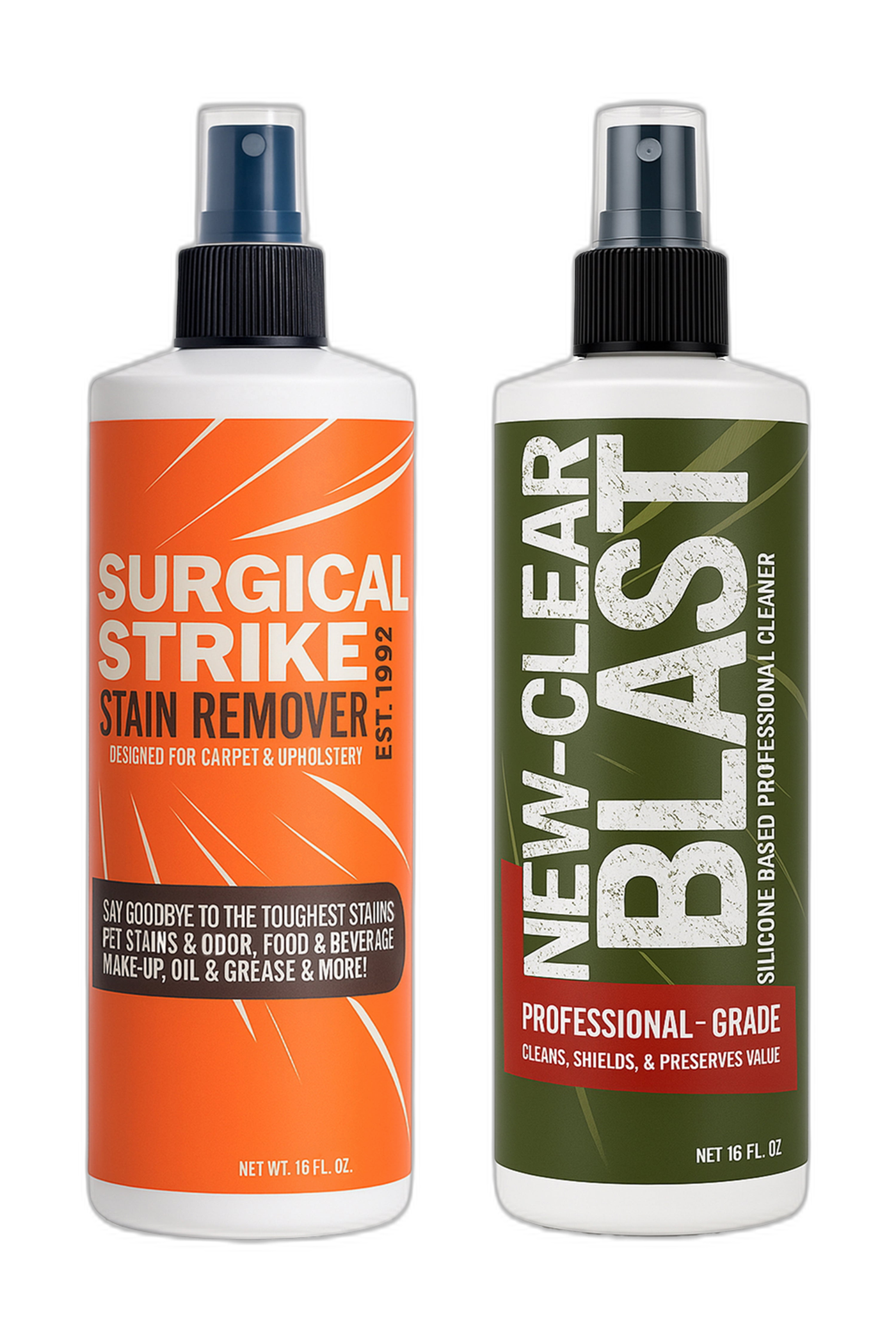
Two formulas. Serious range.
Use Surgical Strike for stains and odor, then New-Clear Blast to clean, shield and preserve hard surfaces.