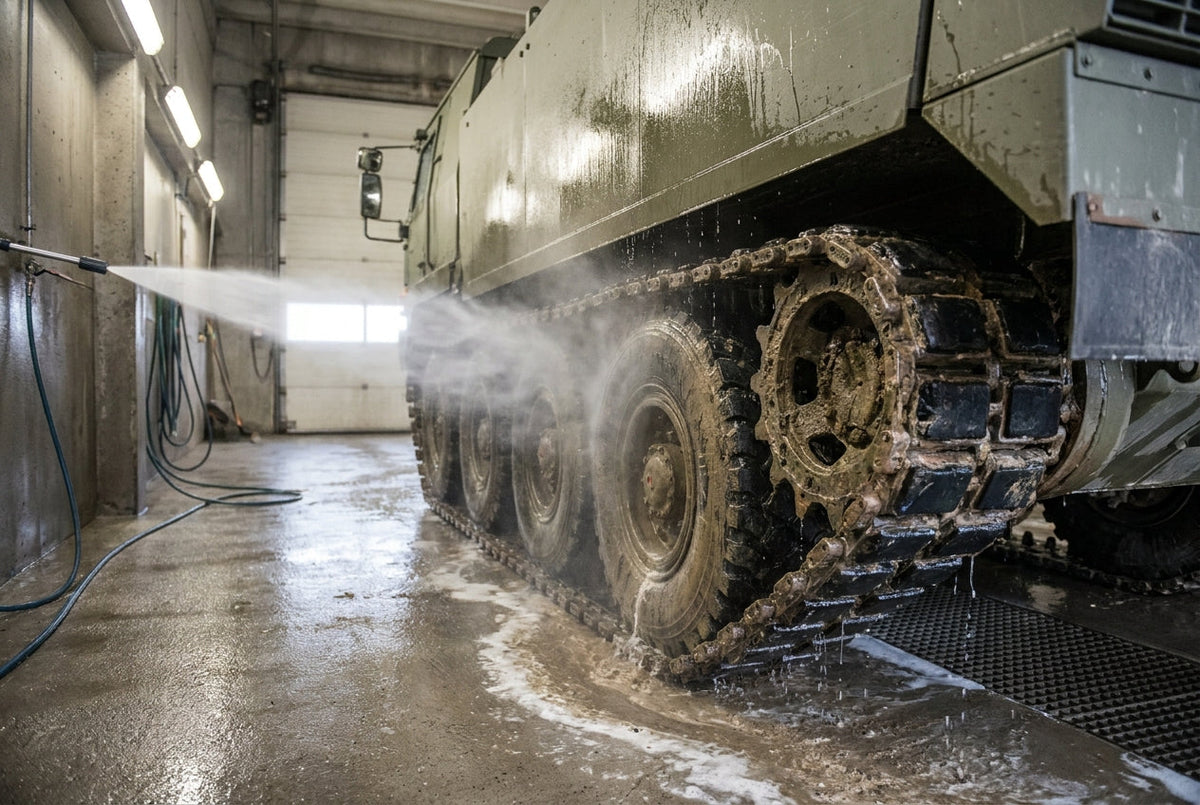
Key Takeaways: Cleaning Military Assets
Maintaining military assets involves strict cleaning protocols that are essential for operational readiness, safety, and regulatory compliance. The key considerations for personnel involved in these maintenance operations include:
- Cleaning military vehicles goes beyond aesthetics; it directly impacts readiness, facilitates critical inspections, assists with corrosion control, and ensures safe operation of equipment.
- Cleaning protocols are diverse and depend heavily on the facility and the specific asset. Operations often require designated wash facilities or approved wash racks, and in certain zones, cleaning may be limited to potable water only, with detergents explicitly forbidden.
- Robust environmental controls are crucial because wash water containing fuels, oils, and other debris can create significant stormwater and contamination risks if not managed correctly.
- Careless or improper application of high-pressure or steam cleaning can damage sensitive components, especially within engine compartments where electrical systems and seals are vulnerable.
- The selection of cleaners must account for material compatibility and corrosion prevention to maintain the long-term integrity of high-value assets.
- Military maintenance guidance often specifies biodegradable or approved detergents, but their use is strictly controlled by location and runoff regulations to prevent environmental harm.
The Unique Demands of Military Asset Cleaning
The cleaning of military vehicles and ground support equipment is a specialized task driven by operational necessity, not just cosmetic standards. These assets are deployed in extreme environments where they accumulate a complex mixture of specialized lubricants, heavy mud, combat residues, and various environmental contaminants. Unlike civilian cleaning, these soils can be chemically aggressive and difficult to remove.
Effective cleaning is critical for mission capability because it removes surface obstructions that can hide serious defects, cracks, or leaks that would otherwise go unnoticed during inspections. This process directly supports materiel readiness by ensuring that equipment is in a constant state of preparedness. Furthermore, military cleaning operations must adhere to strict base-specific environmental and operational regulations that govern everything from water usage to chemical runoff, a level of oversight not typically found in commercial automotive cleaning.
Cleaning for Operational Readiness and Material Integrity
Timely and thorough cleaning of military vehicles is a foundational element of maintenance that directly supports materiel readiness. When equipment is clean, components are accessible for detailed inspection and repair, allowing technicians to identify and address potential issues before they escalate into mission-critical failures.
Removing accumulated mud, dirt, and chemical residues prevents the buildup that can interfere with the function of moving parts, such as tracks, suspension systems, and weapon mounts. This precision cleaning also serves as a primary method of corrosion control, protecting expensive assets from degradation and extending their operational service life. Additionally, using proper cleaning methods is essential for maintaining the integrity of specialized finishes, such as Chemical Agent Resistant Coating (CARC), which provides critical protection for both the equipment and its operators.
Selecting Compatible Cleaning Chemistries
The selection of cleaning chemistries for military equipment must be a deliberate process that prioritizes compatibility with a wide range of materials, including specialized metals, advanced composites, and sensitive coatings. Addressing galvanic compatibility is particularly important when cleaning different electrically conductive materials in close contact, as an improper cleaner can accelerate corrosion.
While military guidelines often recommend or require the use of biodegradable detergents, their application is strictly managed. Use is typically confined to designated wash areas with advanced runoff controls to prevent environmental contamination. Careful chemistry selection helps ensure that cleaning processes do not compromise existing protective finishes, paint systems, or sensitive electronic components, thereby preserving the asset's intended defensive and operational capabilities.
Regulatory, Safety, and Environmental Compliance
Military installations operate under specific and stringent environmental regulations that dictate how equipment cleaning is performed. These rules often require that all washing activities occur in designated Tactical Vehicle Wash Facilities or on approved wash racks designed to capture and treat wastewater.
Wash water, if not managed correctly, can become a significant source of stormwater contamination, carrying dissolved fuels, oils, heavy metals, and other residues into the surrounding environment. To mitigate these risks, personnel are required to employ best management practices (BMPs) such as using drip pans to catch leaks, having spill kits readily available, and minimizing water usage. In motor pool areas that lack approved wash racks, cleaning may be restricted to dry methods like brooms or the use of potable water only, with detergents strictly unauthorized to prevent uncontrolled environmental discharge.
Failure Modes and Operational Risks from Inadequate Cleaning
Inadequate cleaning procedures create multiple operational risks and can lead to mission failure. When corrosive contaminants like salt, mud, and chemicals are allowed to remain on surfaces, they accelerate material degradation and corrosion, weakening structural components and shortening the asset's lifespan.
Accumulated grime can also obscure critical mechanical faults, such as fluid leaks or stress fractures, hindering pre-operational checks and potentially leading to catastrophic equipment failures during deployment. Moreover, improper cleaning techniques, like the indiscriminate use of high-pressure washing, can inflict direct damage on sensitive components, including electrical systems, seals, and sensors. The failure to manage wash water and residues effectively creates environmental contamination liabilities, which can result in costly cleanup operations and regulatory penalties.
Mechanism-to-Outcome Map: Cleaning Processes and Asset Performance
Understanding the direct link between specific cleaning actions and their outcomes is vital for maintaining high standards of military readiness and compliance. Adhering to established processes helps protect assets, personnel, and the environment.
- Mechanism: Use of approved, biodegradable detergents in controlled facilities. Outcome: This practice supports minimized environmental impact, compliance with stormwater BMPs, and effective removal of organic soils without producing hazardous runoff.
- Mechanism: Strict avoidance of high-pressure or steam cleaning on engines and engine compartments. Outcome: This precaution helps prevent damage to sensitive electrical components, gaskets, seals, and other systems vulnerable to moisture intrusion and high force.
- Mechanism: Adherence to material compatibility standards during cleaner selection. Outcome: Following these standards reduces the risk of accelerated corrosion, galvanic reactions, and degradation of specialized coatings like CARC.
- Mechanism: Pre-screening vehicles for leaks before washing in designated areas. Outcome: This step prevents hazardous material contamination in wash facilities and ensures compliance with environmental regulations that often prohibit washing leaking equipment.
A Practical Selection Checklist for Military Base Operations
Selecting the right cleaning solution for military applications requires a systematic approach. Logistics and maintenance officers should consider the following factors to ensure compliance, safety, and effectiveness.
- Compatibility: Is the cleaning solution confirmed to be compatible with specific military materials and coatings, including CARC, to avoid damage or premature degradation?
- Effectiveness: Does the product have the ability to effectively remove specialized lubricants, heavy mud, combat residues, and other common environmental contaminants found in operational theaters?
- Environmental Compliance: Does the cleaner meet base-specific environmental regulations, including any biodegradability requirements and restrictions for use in designated wash areas?
- Safety Profile: Does the solution come with clear safety guidelines for personnel? Always follow label directions, use with adequate ventilation, and avoid prolonged contact with skin or eyes.
- Operational Integration: How does the cleaning solution fit into existing maintenance protocols, equipment, and facility limitations, such as approved wash racks or potable water-only zones?
Partnering for Effective Maintenance and Surface Preparation
For demanding cleaning tasks in military environments, effective solutions are required to address heavy buildup, specialized lubricants, and persistent residues. Military bases are complex Facilities that manage large fleets of specialized Vehicles, and cleaning processes are a critical first step in preparing surfaces for inspection, maintenance, or subsequent protective applications.
The maintenance environments for this equipment share many characteristics with heavy equipment and parts cleaning in Manufacturing. CG Chemicals offers solutions designed for high-use environments that can help remove grime, buildup, stains, and odors as part of a comprehensive maintenance plan. Depending on your specific requirements, consider using products like New-Clear Blast, a multi-surface cleaner that also helps protect surfaces, for general cleaning tasks. For more targeted applications, Surgical Strike is a degreaser, stain and odor remover that assists with difficult soils.
Sources
- https://www.defense.gov/News/Transcripts/Transcript/Article/3218572/deputy-assistant-secretary-of-defense-for-materiel-readiness-mitchell-rosario-a/
- https://home.army.mil/cavazos/application/files/4216/3274/3371/FH_Reg_200-1_10_Oct_21.pdf
- https://static.e-publishing.af.mil/production/1/af_a4/publication/dafi24-302/dafi24-302.pdf
- https://www.catpumps.com/military-vehicle-wash
- https://corrdesa.com/wp-content/uploads/2024/04/MIL-STD-889D-2021-Release.pdf
- https://www.mcbhawaii.marines.mil/Portals/114/WebDocuments/IEL/Environmental/StormWaterProgram/Maintenance%20BMP%20Field%20Manual%20and%20Fact%20Sheets.pdf
- https://www.denix.osd.mil/environmental-cleanup/denix/cleanup-resources/military-equipment-and-vehicles/index.html
- https://cgchemicalsllc.com/products/new-clear-blast
- https://cgchemicalsllc.com/products/surgical-strike

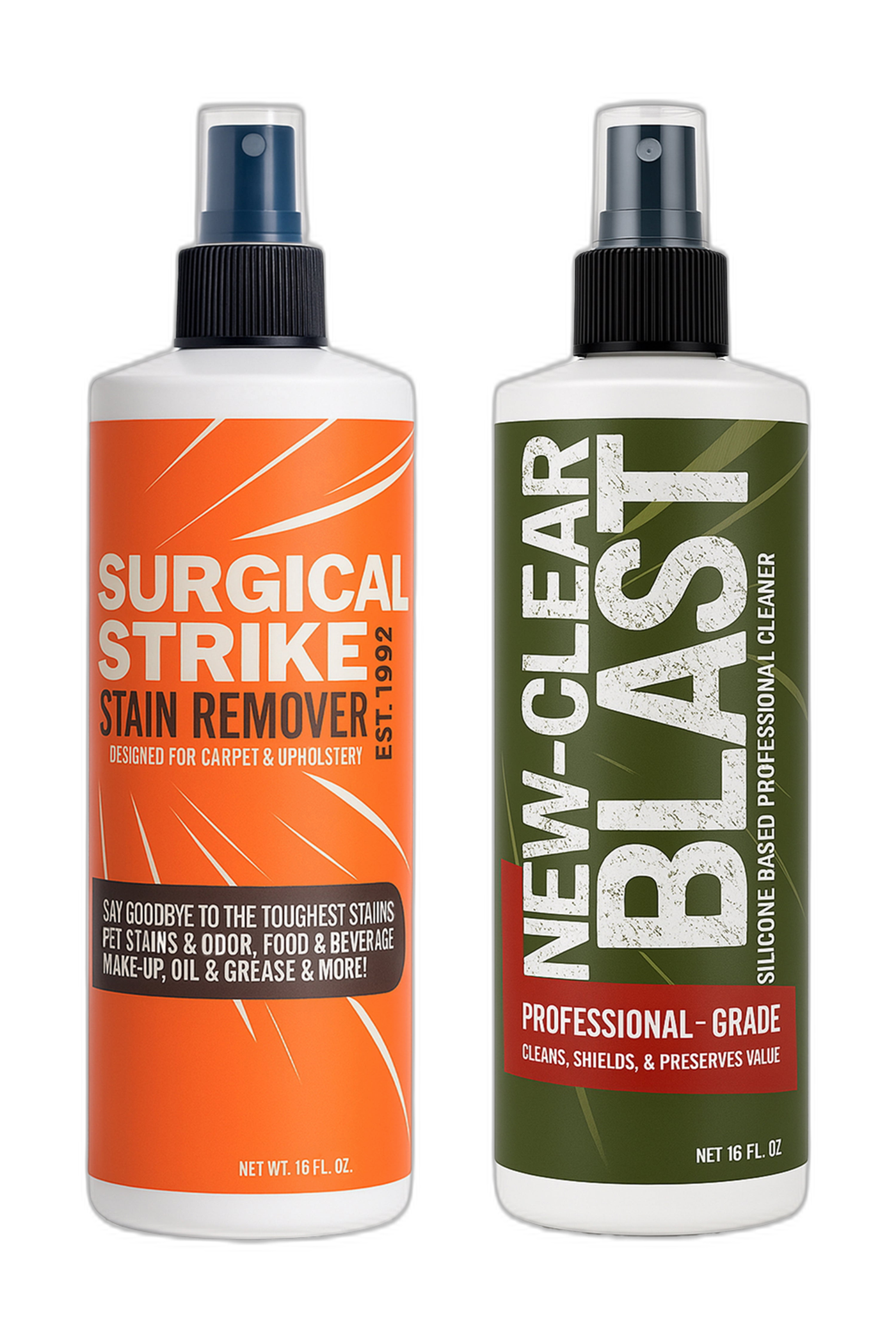
Two formulas. Serious range.
Use Surgical Strike for stains and odor, then New-Clear Blast to clean, shield and preserve hard surfaces.