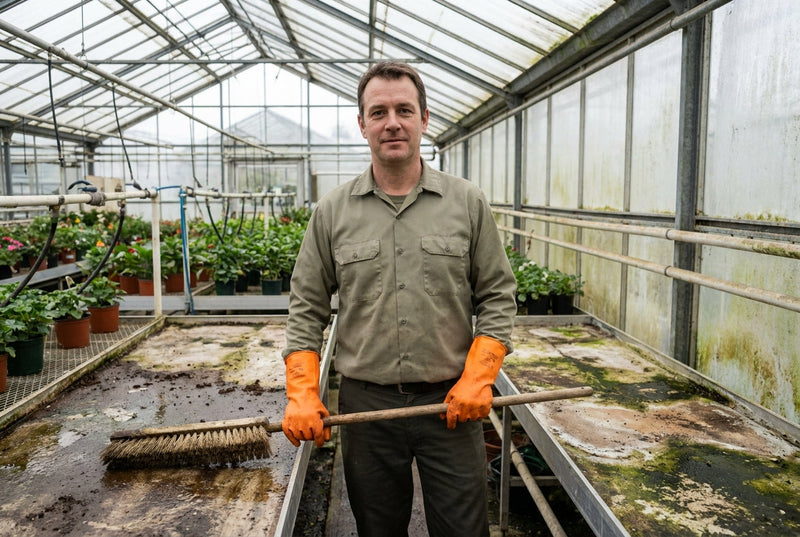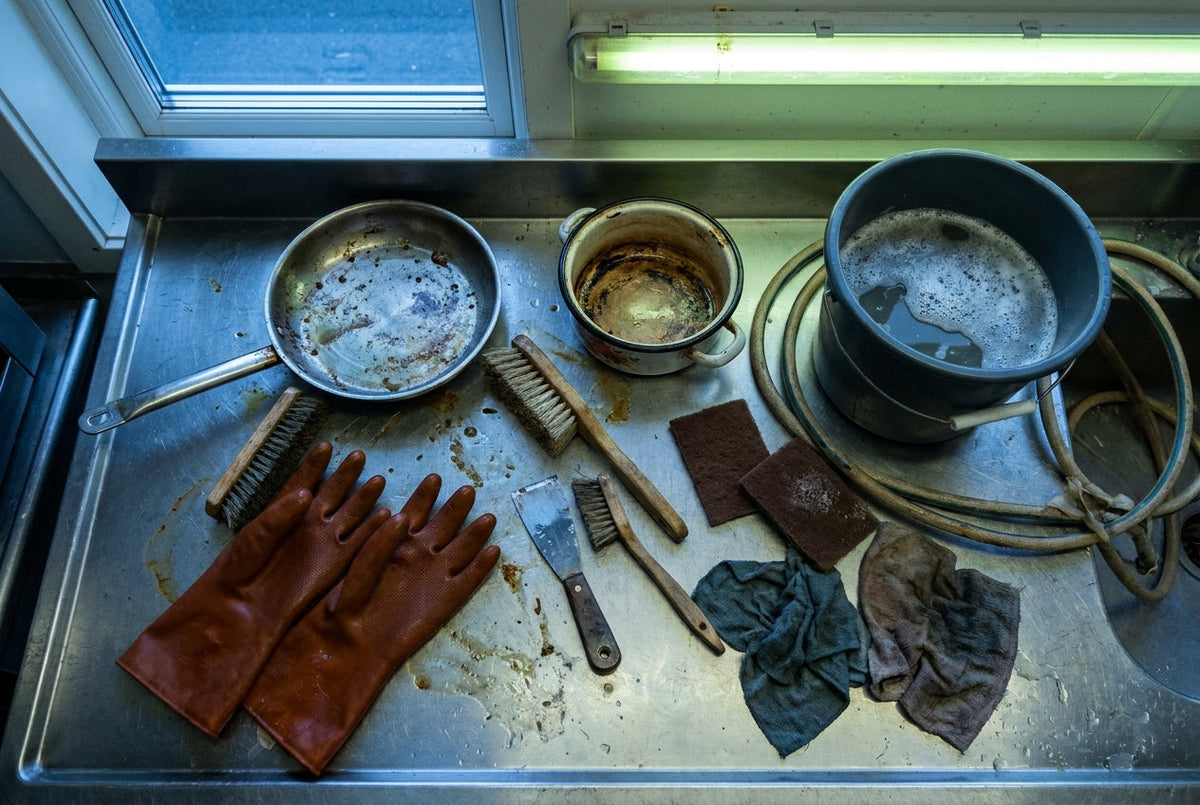
In the high-paced environment of a commercial kitchen, the cleanliness of small wares and prep tools is foundational to food safety, quality, and operational efficiency. While automated dishwashing systems handle standard items, the manual cleaning of pots, pans, cutting boards, and specialized utensils presents a persistent challenge. Baked-on food, caramelized sugars, and heavy grease demand specific protocols and effective cleaning chemistries. This article details practical, advanced methods for commercial kitchen small wares cleaning to help maintain hygiene standards and prolong the life of essential kitchen assets.
Key Takeaways
Effective cleaning in a commercial food service setting relies on a structured approach that separates cleaning from sanitizing and tailors the method to the task at hand.
- Manual cleaning protocols should be specifically chosen based on the utensil's material, its design, and the type of soil that needs to be removed.
- A thorough pre-cleaning step is essential for effective soil removal. This includes scraping away gross food debris and, when applicable, disassembling components to expose all surfaces to the cleaning solution.
- Food-contact surfaces and utensils must be cleaned at specific intervals, including before use with different types of raw animal foods, when switching from preparing raw to ready-to-eat foods, and any time contamination may have occurred.
- Sanitizing is a separate and distinct step from cleaning. It is performed after a surface has been thoroughly cleaned and rinsed, and its purpose is to reduce the number of microorganisms to safe levels.
The Challenge of Commercial Kitchen Small Wares
Commercial kitchens are demanding environments that produce a constant accumulation of tough soils on essential equipment. Small wares like pots, pans, cutting boards, knives, and specialized prep tools are particularly susceptible to buildup that can compromise food safety. These items often feature complex shapes, seams, handles, and textured surfaces where food residue, grease, and microorganisms can collect.
Baked-on food, burnt residues from high-heat cooking, and polymerized grease create layers of soil that standard washing may not penetrate. If not properly removed, this buildup can affect food quality, lead to cross-contamination, and shorten the functional lifespan of expensive kitchen tools. Developing effective manual cleaning protocols is therefore not just a matter of compliance but a critical operational practice for any food service business. This focus on manual washing addresses the items that require more intensive, hands-on attention than what automated systems can provide.
Foundational Steps for Effective Manual Warewashing
A successful manual warewashing program begins long before the item is submerged in a cleaning solution. The process starts with diligent pre-cleaning. Staff should first scrape or rinse away large, loose food particles and other surface soil. This initial step prevents the wash water from becoming quickly saturated with debris, which would reduce the cleaning solution's effectiveness.
For more complex utensils and equipment, disassembly is a key part of the preparation. Taking apart components ensures that the cleaning solution can reach internal surfaces, threads, and joints where food matter can become trapped. Once pre-cleaned, the items are ready for the washing stage, which is designed to lift and suspend stubborn residues like grease and baked-on food. Selecting the right tools, such as non-abrasive brushes and pads that match the soil type and surface material, is also important to assist with soil removal without causing damage.
Mechanism-to-Outcome Map: Matching Chemistry to Soil Types
The efficiency of any cleaning process depends on selecting a chemical agent whose mechanism is suited for the specific soil present. Not all cleaners are created equal, and understanding their function is key to achieving consistent results. Soils can be broadly categorized as organic (fats, oils, proteins) or inorganic (minerals, rust).
For the organic soils common in kitchens, such as grease, baked-on food, and protein residues, alkaline cleaners are highly effective. Their chemical action breaks down fats and oils into soluble substances that can be washed away. Many detergents also contain wetting agents and emulsifiers, which help the solution penetrate and disperse oily soils, suspending them in the wash water to prevent redeposition. In contrast, acid cleaners are formulated to tackle inorganic soils like hard water scale and mineral deposits. Abrasive cleaners provide mechanical action to scrub away very stubborn soils, but care must be taken to ensure they do not damage the surface of the utensil.
Selection Checklist: Choosing the Right Cleaning Solution
With a variety of cleaning chemistries available, kitchen managers in facilities and restaurants must make informed choices. Using a systematic approach helps ensure that the selected product is both effective for the soil and appropriate for the item being cleaned. A checklist can guide this decision-making process.
- Assess the Soil Type: First, identify the primary soil. Is it heavy grease, burnt-on proteins, caramelized sugar, or an inorganic mineral scale? This will determine whether an alkaline, acid, or other type of cleaner is needed.
- Confirm Material Compatibility: Consider the material of the small ware or prep tool. Aluminum, stainless steel, plastic, and wood all react differently to various chemicals and abrasives. An incompatible cleaner can cause corrosion, pitting, or degradation.
- Evaluate Tool Geometry: Pay attention to the physical design of the item. Tools with seams, hinges, grooves, or other hard-to-reach areas require a cleaning solution that can flow into and work effectively in tight spaces.
- Follow Manufacturer Directions: Follow the label directions for dilution, water temperature and contact time.
- Use the Least Aggressive Method: Start with the mildest cleaning approach that effectively removes the soil. This helps protect the integrity and finish of the kitchen tool, contributing to its longevity.
Addressing Specific Soil Types on Small Wares
Commercial pots, pans, and baking sheets are constantly subjected to high heat, which can cause food residues and oils to carbonize and bond firmly to the surface. These heavy soils require a robust cleaning approach. A powerful degreaser is critical for breaking down polymerized fats and lifting burnt residues that resist standard detergents. The chemical action helps to soften and dissolve these stubborn layers, allowing them to be removed with mechanical action from a brush or pad.
For many degreasing tasks across manufacturing environments and kitchens, a citrus terpene blend can also be an effective option. These formulas are used for their ability to cut through grease and oily residues. For tough, baked-on stains and odors, a targeted Surgical Strike degreaser, stain and odor remover can be applied directly to the problem area. Following the product's directions for application and contact time supports the breakdown of the most difficult soils, preparing the surface for a final rinse.
Regulatory, Safety, or Compliance Considerations for Kitchen Tools
The U.S. Food and Drug Administration (FDA) provides specific guidelines for cleaning and sanitizing in its Food Code, which serves as a model for state and local health jurisdictions. A core requirement is that all food-contact surfaces and utensils must be sanitized after they are cleaned and rinsed, and before they are used. Cleaning removes visible soil, but sanitizing reduces the presence of microorganisms to a safe level.
The FDA Food Code also specifies the frequency of cleaning. Surfaces must be cleaned between uses with different types of raw animal foods (like beef and fish), when switching from raw food preparation to ready-to-eat foods, and any time contamination is suspected. For utensils and surfaces in continuous use with time and temperature control for safety (TCS) foods, cleaning is generally required at least every four hours, though some exceptions apply based on temperature. When using any cleaning chemical, it is important to use it with adequate ventilation, avoid contact with eyes and prolonged skin contact, keep it out of reach of children, and always follow the label directions.
Failure Modes and Operational Risks in Small Wares Cleaning
When cleaning protocols for small wares are inadequate, several operational risks emerge. The most significant is the potential for cross-contact or cross-contamination, where food residues or microorganisms are transferred from one surface to another, which can pose a serious food safety hazard.
Failure to thoroughly clean complex items with grooves, joints, handles, and detachable parts can leave behind persistent food soil. This residue can harden over time, making future cleaning more difficult and creating an environment where biofilms can develop. These biofilms are communities of microorganisms that are highly resistant to removal and can compromise the hygiene of the entire operation. Furthermore, using overly aggressive cleaning methods, such as highly abrasive pads or incompatible chemicals on delicate surfaces, can damage the integrity of kitchen assets. This can lead to premature wear, corrosion, and the creation of scratches or pits that harbor more soil, ultimately shortening the useful life of valuable equipment.
Sources
- https://www.foodprotection.org/members/fpt-archive-articles/2025-05-cleaning-a-retail-and-foodservice-perspective/
- https://www.fda.gov/media/164194/download
- https://www.fda.gov/media/184685/download

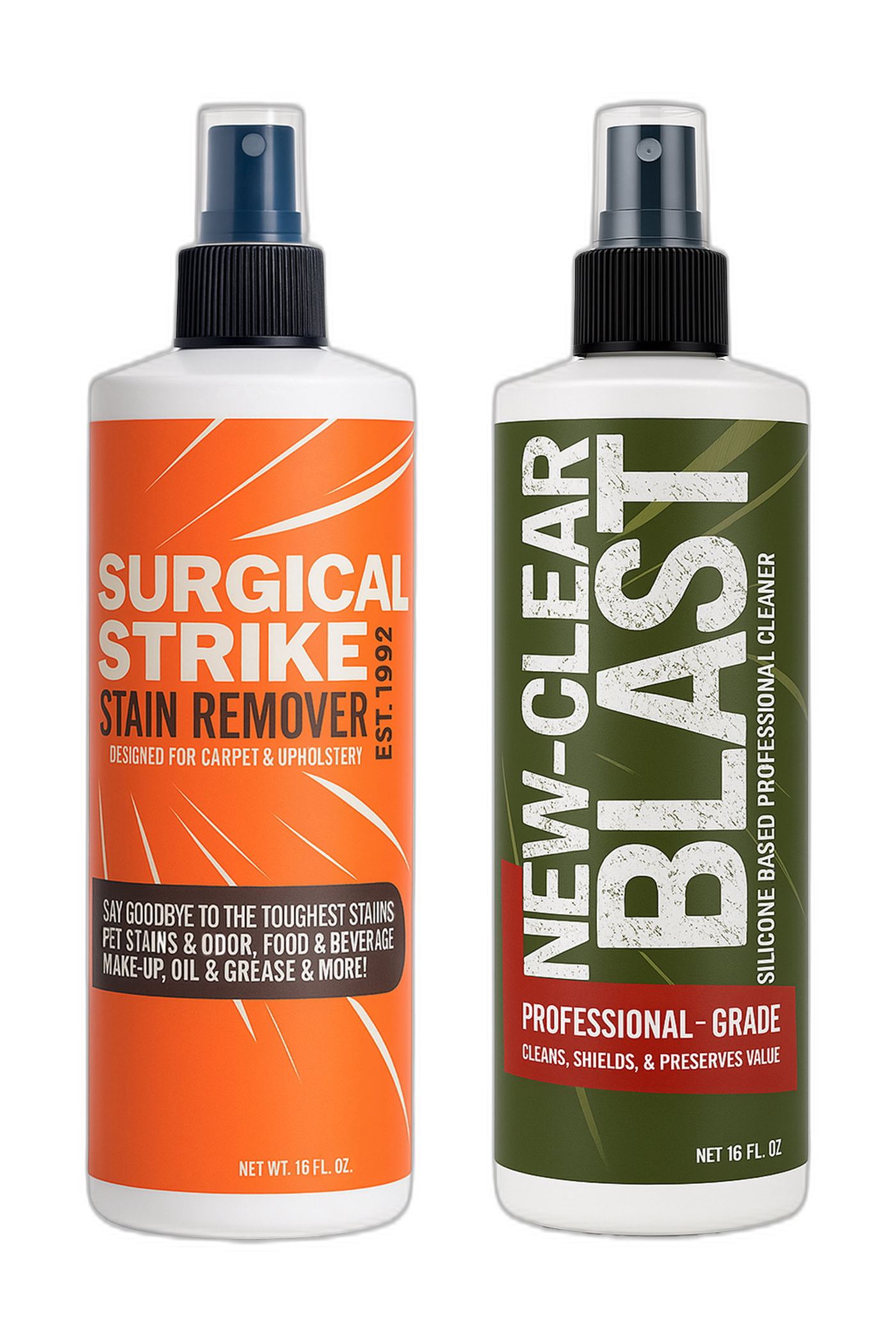
Two formulas. Serious range.
Use Surgical Strike for stains and odor, then New-Clear Blast to clean, shield and preserve hard surfaces.