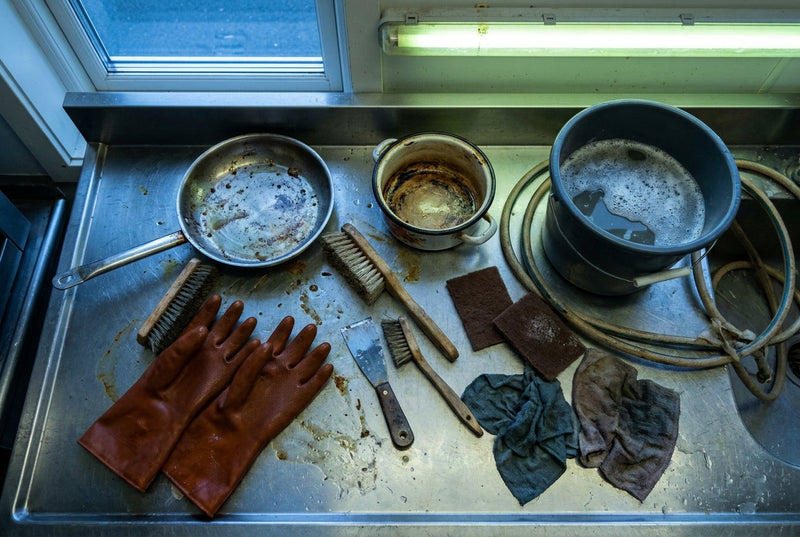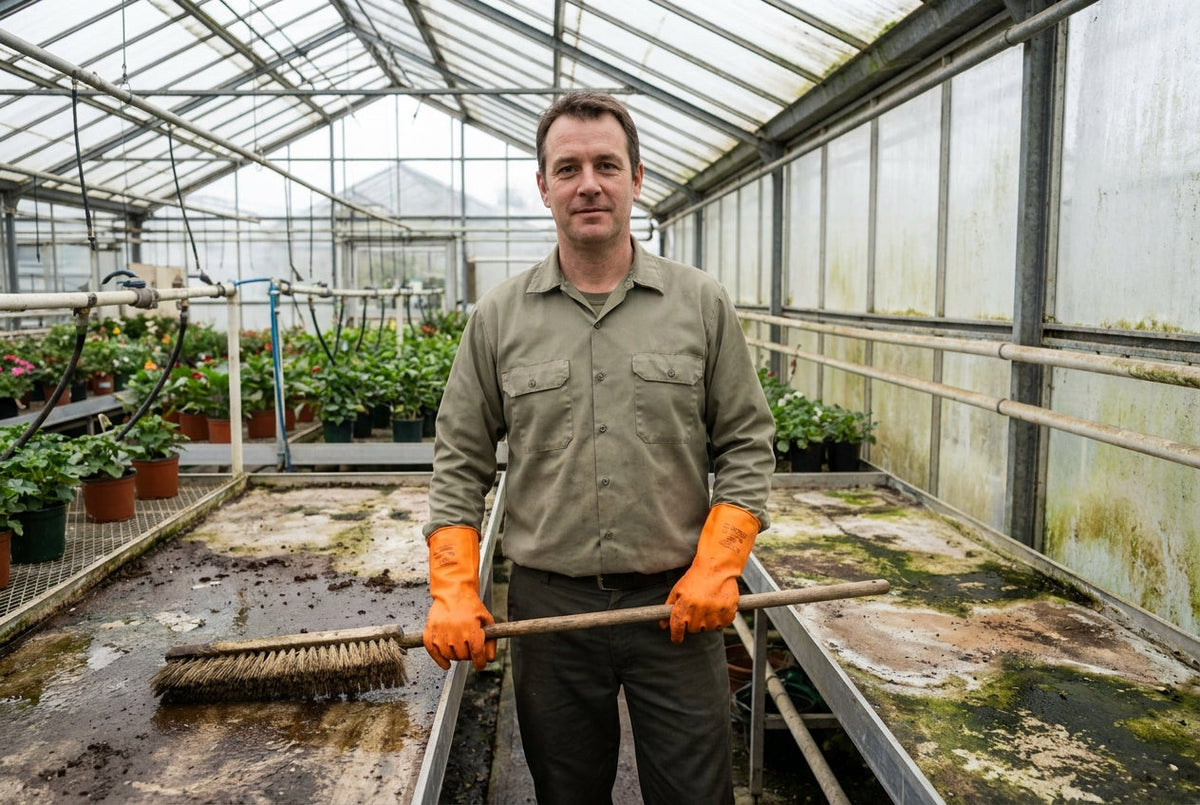
Commercial greenhouses and plant nurseries are high-use environments where organic matter, mineral deposits, and soil residues constantly accumulate. Effective cleaning protocols are not just about appearance but are fundamental to operational hygiene, supporting plant health and facility maintenance. This guide outlines practical strategies for commercial greenhouse cleaning, focusing on removing specific contaminants from floors, benches, equipment exteriors, and structural elements.
Key Takeaways for Effective Greenhouse Cleaning
For facility managers and operators, maintaining a clean environment requires a systematic approach. The following points summarize the core principles of an effective greenhouse cleaning program:
- Prioritize the physical removal of all loose plant material, soil, and organic debris before applying any liquid cleaning solutions to ensure they work as intended.
- Establish routine cleaning schedules for high-contact and high-traffic areas, including floors, benches, potting tables, and tools, paying special attention to these areas during crop turnover.
- Select cleaning methods and solutions that are appropriate for the specific residues you need to remove, such as soil buildup, algae, or mineral deposits, while also considering surface compatibility.
- Practice good water management by preventing standing water and ensuring proper drainage. This is a critical step in maintaining long-term hygiene and minimizing conditions for algae growth.
- Always consider how cleaning agents may interact with various surfaces, including metal, plastics, and glazing, to avoid unintended corrosion, discoloration, or damage.
The Foundational Cleaning Sequence: Residue-First Approach
An effective cleaning process in a greenhouse always starts with a dry-cleaning phase. The primary step should be the physical removal of loose plant material, discarded growing media, and accumulated soil from all surfaces. This preliminary work is crucial because organic residues and heavy soil buildup can significantly reduce the effectiveness of any liquid cleaning solutions applied later.
Focus areas for this initial debris removal must include floors, walkways, benches, and especially hard-to-reach spots like the areas under benches, which can harbor persistent residues. By dry sweeping, scraping, and collecting solid materials first, you expose the underlying surface to the cleaning agents. This residue-first approach allows cleaners to work directly on the adhered grime, nutrient films, and other contaminants rather than being absorbed by loose debris.
This method lets cleaning solutions and water contact the adhered residue directly, preparing surfaces for a more thorough wash-down. A comprehensive initial sweep is a non-negotiable step in any professional greenhouse hygiene protocol.
Targeting Common Contaminants: Soil, Algae, and Mineral Deposits
Greenhouse environments are prone to a diverse mix of residues, each requiring a targeted approach. Common contaminants include packed soil, plant debris, algae, leftover nutrient films, and hard water or fertilizer-based mineral deposits. Simply using one type of cleaner for every job may leave some residue types poorly addressed. Effective cleaning means matching the solution to the specific residue.
For general grime, soil, and organic buildup on floors, benches, and equipment, a versatile, heavy-duty cleaner can be highly effective for surface preparation. Algae, which thrives in damp, well-lit areas, is another common issue. Managing algae involves not only its physical removal but also addressing the underlying moisture problems that allow it to grow.
Mineral deposits, often appearing as a white or chalky film from irrigation water, can be more stubborn. These may require a specific cleaning approach to loosen or dissolve them without damaging the underlying surface. For operations facing a mix of these challenges, using a combination of products like the Power Pack, which includes a degreaser and a multi-surface cleaner, offers a versatile approach to address various soil types across the facility.
Cleaning Protocols for Specific Greenhouse Areas
A comprehensive cleaning plan divides the greenhouse into functional zones, each with its own protocol. Different surfaces and equipment require specific methods and frequencies for cleaning.
Floors and Drains
Greenhouse floors, whether concrete, gravel, or covered, are subjected to constant traffic and buildup of soil and plant debris. Routine sweeping should be followed by washing or mopping to manage this accumulation. Drains must be kept clear of debris to ensure proper water flow and prevent standing water, a key factor in hygiene management.
Benches, Potting Tables, and Shelves
All production surfaces, including benches, potting tables, and shelves, need thorough cleaning, especially between crop cycles. These surfaces can harbor soil and organic residues that need to be removed. Cleaning under-bench areas is just as important as cleaning the tops, as this is a primary area for residue to collect.
Structural Elements and Glazing-Adjacent Surfaces
The structural components of a greenhouse, including support posts, walls, and glazing surfaces, should also be part of the cleaning schedule. It is important to consider the material compatibility of any cleaning solution used on these elements to prevent corrosion of metals or damage to polycarbonate or glass panels. These large-scale cleaning tasks are often part of the maintenance of commercial Facilities and contribute to overall operational integrity.
Failure Modes or Operational Risks from Inadequate Cleaning
Neglecting a consistent and thorough cleaning schedule in a commercial greenhouse can lead to several operational risks. These issues can affect plant health, facility longevity, and day-to-day hygiene conditions.
- Shielding of Contaminants: Accumulated organic residues and soil can act as a physical barrier, protecting undesirable microorganisms from subsequent cleaning and treatment efforts.
- Conducive Environments for Growth: Standing water and poor drainage create ideal conditions for algae growth on floors and other surfaces, complicating routine cleaning and creating slippery, unsafe conditions.
- Material Degradation: Using cleaning chemistries that are incompatible with the surface can lead to corrosion or discoloration of metal benches, tools, and equipment exteriors, shortening their operational lifespan.
- Heavier Buildup Over Time: Unremoved soil and plant debris can adhere strongly to surfaces over time, requiring more intensive physical removal and stronger solutions later.
- Compromised Hygiene: Overlooking areas like under benches and along walls allows for the long-term persistence of residues, which can impact the overall standard of operational hygiene.
Cleaning Actions and What They Address
These pairings connect a cleaning action to the residue or surface condition it is meant to address in a greenhouse.
-
Action: Complete physical removal of bulk plant material, soil, and organic debris before wet cleaning.
Addresses: Loose debris that would otherwise sit between the cleaner and adhered grime, so liquid cleaners contact the surface film directly. -
Action: Consistent application of an appropriate cleaning chemistry for the soil type.
Addresses: Grease, stains, odors, nutrient film, and general grime on floors, benches, and equipment. A product like Surgical Strike is a degreaser, stain and odor remover used for such tasks. -
Action: Implementation of effective water management and drainage systems.
Addresses: Standing water and damp zones that favor algae on floors and other surfaces, which complicates routine wash-downs. -
Action: Consideration of surface compatibility when selecting cleaning products.
Addresses: Risk of corrosion, discoloration, or degradation on metals, plastics, and structural coatings from mismatched chemistry. -
Action: Integrating routine cleaning as a standard operating procedure.
Addresses: Adhered soil and debris on a regular schedule, rather than allowing buildup to harden between infrequent deep cleans.
Regulatory, Safety, or Compliance Considerations
While this article focuses on cleaning, it is important to operate within a broader framework of plant health management. Authoritative sources like the USDA Animal and Plant Health Inspection Service emphasize the inspection and isolation of incoming plant material as a key component of a comprehensive hygiene strategy. Similarly, nursery hygiene protocols often mandate the removal of weeds and visibly diseased plant material as part of an integrated management approach.
From a practical safety standpoint, equipment should always be cleaned before it is moved between different production areas to help prevent the transfer of soil and residues. When using any cleaning product, it is critical to follow all label directions for proper use. Use with adequate ventilation. Avoid contact with eyes and prolonged skin contact. As with any chemical product, keep out of reach of children.
Selection Checklist for Greenhouse Cleaning Solutions
Choosing the right cleaning products matters for matching chemistry to the residues present. When evaluating solutions for your commercial greenhouse or nursery, consider the following criteria:
- Versatility: Look for products designed to work on a range of common greenhouse residues, including soil, plant sap, grime, grease, and mineral buildup. A versatile cleaner can address several residue types on the same surfaces.
- Surface Compatibility: Verify that the cleaners are suitable for the materials in your facility. This includes galvanized steel benches, aluminum, plastics, concrete, and glazing, ensuring no corrosion or damage will occur.
- Application Method: Consider solutions that are practical for your operation. Products that can be applied via spraying, foaming, wiping, or mopping provide flexibility for cleaning different surfaces and areas, from large floors to detailed equipment.
- Residue Removal Power: Select products formulated to lift and suspend tough, adhered buildup, stains, and odors. This makes rinsing or wiping away contaminants easier and more complete. You can explore our Applications list to see how different solutions can be matched to various soils and surfaces.
- Ease of Use: Opt for formulas that support straightforward application and clean-up procedures in a high-use environment.
Sources
- https://www.umass.edu/agriculture-food-environment/greenhouse-floriculture/greenhouse-best-management-practices-bmp-manual/disease-management
- https://ucanr.edu/sites/default/files/2025-07/Effective%20Cleaning%20Practices%20to%20Prevent%20Plant%20Diseases%20in%20Greenhouses_Feb%202025.pdf
- https://www.greencastonline.com/techarticle.aspx?gcaid=230061
- https://www.extension.purdue.edu/extmedia/ho/ho-250-w.pdf
- https://www.aphis.usda.gov/plant_health/plant_pest_info/ppq_quarantine_manual_guidance
- https://www.fs.usda.gov/rm/pubs_series/wo/wo_ah680/wo_ah680_005_012.pdf

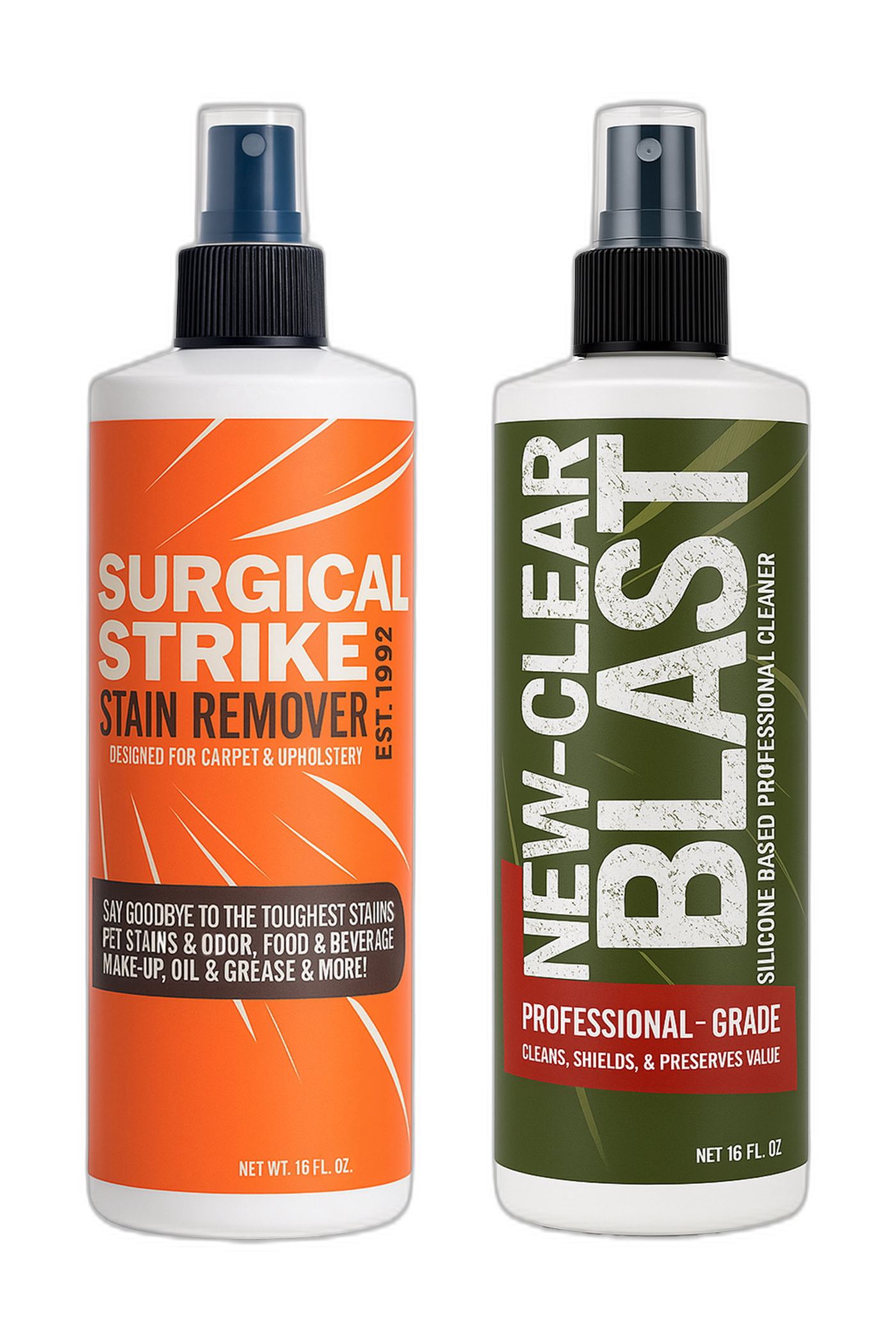
Two formulas. Serious range.
Use Surgical Strike for stains and odor, then New-Clear Blast to clean, shield and preserve hard surfaces.