Commercial car wash cleaning starts with separating the jobs: oily road film on equipment, soap and wax buildup on bay surfaces, mineral deposits around water outlets, and collected grit in drains. A maintenance plan gives each job a method, an owner, and a record of what was done. This guide covers equipment exteriors and bay housekeeping, with product selection tied to the surface and the equipment manufacturer's instructions.
Start with a bay inspection
Walk the bay before choosing a cleaner. Record where deposits occur and what they look like. Note greasy film near moving equipment, chalky deposits around water outlets, visible buildup on walls, and grit near collection points. Photographs taken from the same position can help the next shift compare conditions.
- List each surface, including its coating, seals, and nearby electrical components.
- Check the equipment manual for permitted cleaning methods and maintenance intervals.
- Assign separate tasks for surface cleaning, mechanical servicing, and wastewater-system servicing.
- Choose inspection intervals around actual traffic, weather, and the manufacturer's maintenance schedule.
Treat a blocked nozzle or a damaged brush as a maintenance item to investigate, rather than a reason to apply more cleaner. Record the observation and refer it to the person responsible for that equipment.
Match the cleaning method to the deposit
For oily film on a compatible hard surface, select a degreasing product whose label covers the task. For everyday grime on bay walls and equipment housings, choose a multi-surface cleaner suited to the material. Identify mineral deposits separately and use the equipment manufacturer's recommended treatment for that deposit and surface.
Read the label before setting dilution, application method, or contact time. Test a small, inconspicuous area first. Use the specified method to remove loosened soil, including rinsing where directed, and inspect the surface after it dries. Follow the product's handling instructions and the equipment manual throughout the task.
Keep cleaning tools organized by task. A brush used at a grit collection point belongs in a different task group from a cloth used on a sign or control housing. Replace or clean tools when they become loaded with soil.
Build a repeatable equipment-cleaning record
Use a short record for each cleaning task: location, deposit, product, label-directed dilution, method, date, and observed result. Include any surface change or unresolved buildup. The purpose is to give the next operator enough detail to repeat the method or flag a problem for review.
For brushes, applicators, and nozzles, follow the manufacturer's servicing instructions. Schedule access to these components through the site's equipment shutdown procedure. Keep surface housekeeping and adjustments to the wash system as distinct entries in the maintenance log.
Keep wash-water collection in the plan
The International Carwash Association's study of wash-water effluent and solid waste documents oil, grease, and suspended solids in car wash operations. It also describes collection and pretreatment equipment such as oil-water separators. These findings explain why a bay-cleaning plan should include the path taken by loosened soil and rinse water. [1]
Confirm the wash-water collection route with the facility manager. Plan grit removal and separator or reclaim-system servicing around the equipment supplier's instructions and the site's discharge arrangements. Ask the local water authority about site-specific discharge requirements before changing cleaning chemistry or disposal methods.
Keep a separate service record for drains, collection tanks, filters, and reclaim equipment. Note visible accumulation, restricted flow, service dates, and the contractor or employee responsible. Review recurring buildup with the equipment supplier rather than changing a treatment process by guesswork.
Retail products for routine surface cleaning
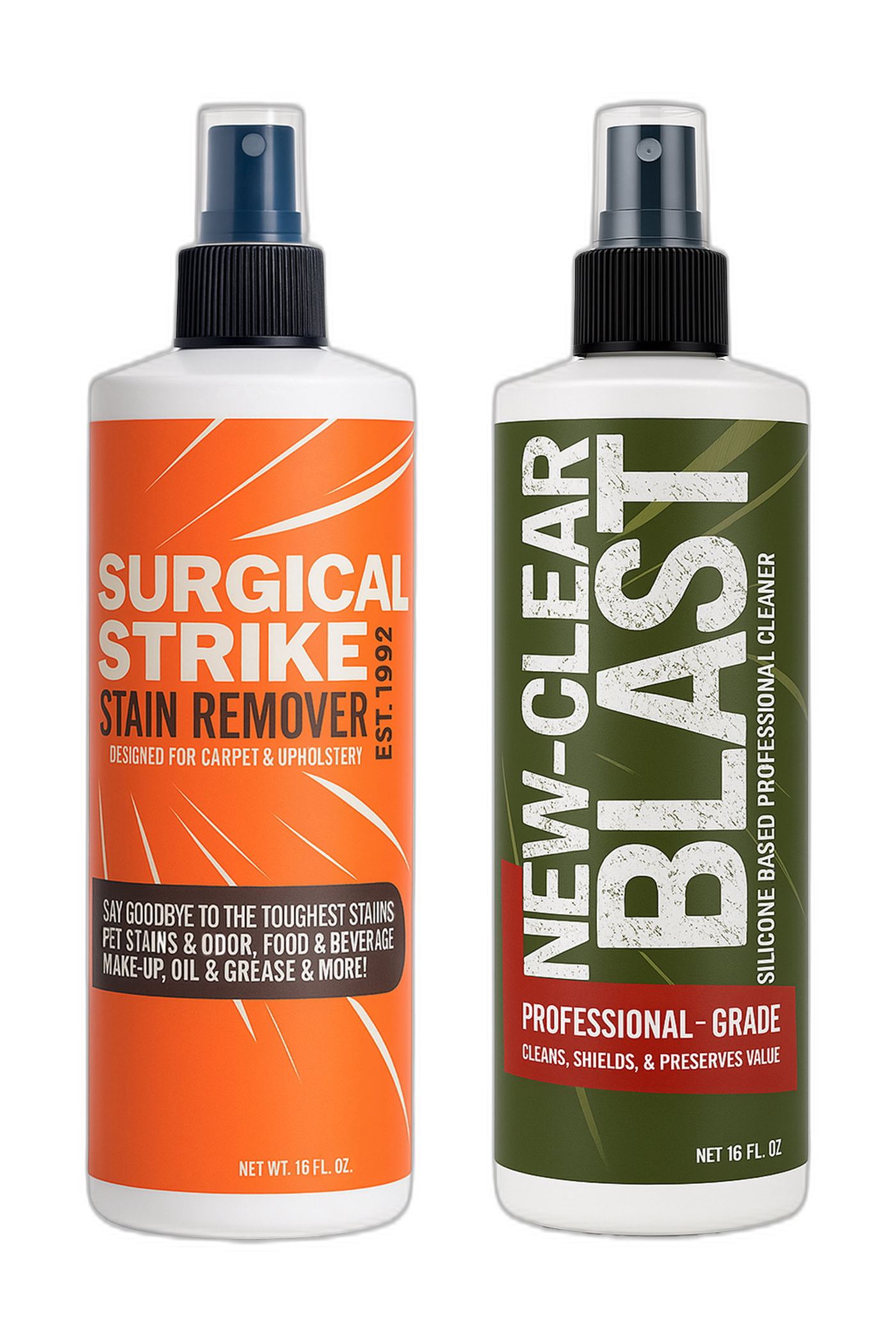
CG Chemicals offers Surgical Strike for grease, stains and odors, and New-Clear Blast for multi-surface cleaning. Select a product by its label and the surface manufacturer's directions, then test the intended application before adding it to the maintenance routine. [2, 3]
For a purchasing review, list the surfaces, soils, application methods, and package quantities your team uses. Keep the cleaning result and any material observations in the task record so purchasing decisions are based on the work actually performed.
Sources
- International Carwash Association: Water Effluent and Solid Waste Characteristics in Professional Car Washes (industry study; background on wastewater and collected solids).
- CG Chemicals: Surgical Strike product information.
- CG Chemicals: New-Clear Blast product information.
Plan your routine surface-cleaning supplies
Power Pack: the degreaser/stain/odor remover and the multi-surface cleaner, together. Surgical Strike for grease, stains and odors; New-Clear Blast for multi-surface cleaning, both jobs, one box.
Veteran-owned and made in Elkhart, Indiana.
Discuss bulk quantities for your maintenance program or see Power Pack.
Two formulas. Serious range.
Use Surgical Strike for stains and odor, then New-Clear Blast to clean, shield and preserve hard surfaces.