In the automotive industry, cleanliness is a critical factor for performance, safety, and final finish quality. However, the chemicals used to achieve this cleanliness can have a significant, and often hidden, impact on component longevity. Selecting an incompatible or overly aggressive cleaning agent can lead to premature material degradation, compromising the integrity of parts and surfaces. This article examines the complex relationship between cleaning chemicals and automotive materials, providing guidance for making informed decisions that support long-term component life.
Key Takeaways for Automotive Decision-Makers
Making strategic choices about cleaning chemicals is essential for protecting asset value and operational reliability. Key considerations include the chemical's interaction with materials, its residue profile, and alignment with industry standards. Below are critical points for those managing automotive maintenance and manufacturing processes.
- Selecting cleaning chemicals directly impacts component longevity. Formulations can potentially degrade sensitive coatings, plastics, elastomers, and metals over time.
- Effective residue control and complete rinseability are crucial. Any leftover chemical agents can cause ongoing surface attack long after the initial cleaning process is complete.
- Cleaning chemistry must align with OEM-approved materials and finishes. This ensures compatibility and helps avoid unintended damage to engineered surfaces.
- Lower-hazard chemical formulations can reduce worker exposure and environmental burden. However, their performance must be verified for the specific application to ensure they meet cleaning requirements without causing harm.
- Staying informed with recent engineering research helps ensure cleaning practices are current, especially as new automotive materials and coatings are introduced.
Failure Modes: Understanding Component Degradation from Incompatible Cleaners
The service life of an automotive component can be significantly shortened by exposure to incompatible cleaning chemicals. This degradation is not always immediate but can manifest over time as a result of repeated exposure. Aggressive chemical formulations can attack the structural integrity of materials, leading to costly failures and safety concerns.
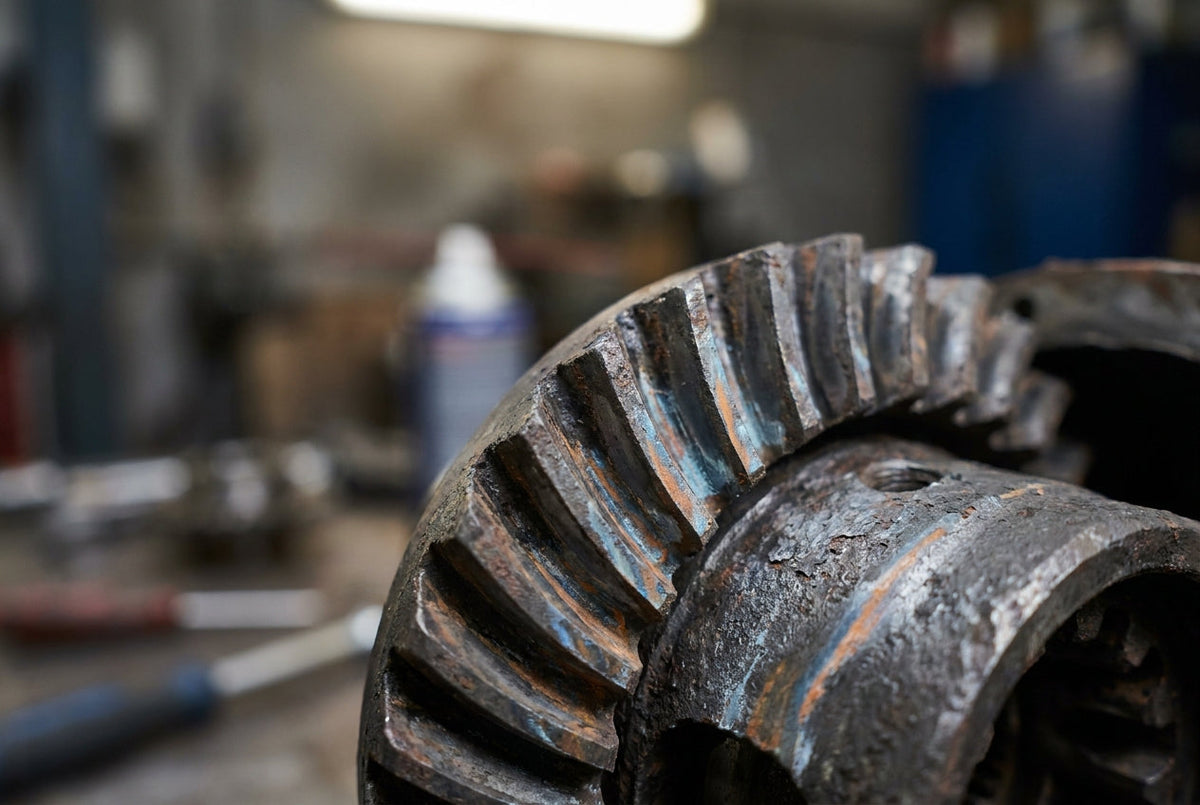
The damage can appear in various forms depending on the material. For plastics and elastomers, this may include swelling, cracking, or increased brittleness. For metals, it could be accelerated corrosion or etching of the surface. On coated surfaces, incompatible cleaners can cause a loss of adhesion, discoloration, or a breakdown of the protective layer, leaving the substrate vulnerable.
A primary cause of this damage is the chemical interaction between the cleaner and the material itself. Even after a part appears clean, residues left behind from the cleaning agent can continue to interact with the surface. These residues can become trapped in microscopic pores or crevices, leading to progressive material degradation that may not be detected until a component fails.
Mechanism-to-Outcome: How Cleaning Chemistry Interacts with Materials
The outcome of a cleaning process depends on the chemical compatibility between the cleaning agent and the component's materials. Several factors determine how a cleaner will interact with a substrate. The pH level is a primary consideration; highly acidic or highly alkaline solutions can be corrosive to certain metals and may damage sensitive coatings.
The type of solvent and surfactant in the formulation also plays a critical role. Some solvents that are effective at removing grease can also soften or dissolve plastics and elastomers. The concentration of the cleaner, its application temperature, and the duration of contact (dwell time) all influence the extent of the chemical reaction.
Furthermore, improper rinsing is a common point of failure. If a cleaning solution is not thoroughly rinsed away, active chemical residues remain on the surface. These residues can continue to degrade the material or interfere with subsequent processes, such as the application of a new coating. Complete removal of the cleaning agent is just as important as the removal of the initial soil.
Regulatory and Safety Considerations in Chemical Selection
Beyond performance, the selection of cleaning chemicals involves important safety and regulatory considerations. Choosing products with safer chemistry profiles can help reduce the environmental impact of maintenance operations and minimize worker exposure to hazardous substances. This approach aligns with a growing emphasis on sustainability and corporate responsibility within the automotive sector.
Programs like the EPA's Safer Choice help identify products formulated with ingredients that meet specific criteria for safer chemistry without sacrificing performance. While a product's presence on such a list is a useful indicator, it is still vital to validate its performance for the specific contamination and materials in question. The goal is to find a balance where the cleaner is effective against the target soil but inert toward the component substrate.
Prioritizing products designed with user and environmental safety in mind supports overall operational compliance. It can reduce risks associated with chemical handling, storage, and disposal. When selecting a cleaner, always review the Safety Data Sheet (SDS) and ensure it is suitable for the work environment. Remember to follow label directions, use with adequate ventilation, and keep products out of reach of children.
Adhering to OEM Standards and Material Compatibility
Modern vehicles use a wide array of advanced materials, including specialized alloys, composites, and multi-layer coating systems. These surfaces are engineered with specific performance characteristics and exposure assumptions. Therefore, the selection of cleaning agents for automotive components must be done with careful consideration of Original Equipment Manufacturer (OEM) standards.
OEMs often provide lists of approved cleaners or specify the types of chemical formulations that are compatible with their components and finishes. Deviating from these recommendations can lead to damage that may not be covered under warranty. A single, universal cleaner is rarely suitable for all parts of a vehicle, as the materials can vary significantly from the engine bay to the interior trim.
Industry standards like SAE J1315 offer a framework for evaluating the performance and material compatibility of automotive cleaning agents. Adhering to such standards helps ensure that a chosen cleaning product will not compromise the integrity of the component it is intended to clean. This validation is a critical step in any preventative maintenance program.
The Critical Role of Residue Control and Rinseability
One of the most overlooked aspects of component cleaning is the management of chemical residues. After a surface is cleaned, any leftover cleaning agents, including surfactants, solvents, or salts, can continue to attack and damage surfaces. This is a form of latent damage that can compromise a component's long-term reliability.
Poor rinseability is a primary contributor to persistent residue. If a cleaner is difficult to wash away completely, it leaves behind a film that can accelerate corrosion, especially in the presence of moisture. This residue can also interfere with subsequent processes, such as the adhesion of a new coating, paint, or sealant, leading to premature failure of the finish.
An effective cleaning process is a two-step operation: first, the removal of soils and contaminants, and second, the complete removal of the cleaning solution itself. When evaluating cleaning products, assessing their rinseability is just as important as assessing their cleaning power. Controlling residue is a key factor in protecting the long-term material integrity of automotive parts.
Selecting the Right Cleaning Chemical for Longevity: A Checklist
To protect component longevity, a systematic approach to selecting cleaning chemicals is necessary. This checklist provides a framework for making informed decisions that balance cleaning effectiveness with material preservation.
- Verify Chemical Compatibility: Confirm that the cleaner is compatible with the specific substrate of the automotive component and any applied coatings or finishes.
- Confirm OEM Alignment: Ensure the cleaning product meets or aligns with OEM standards and recommendations for the vehicle or specific part being serviced.
- Assess Residue and Rinseability: Evaluate the cleaner's residue profile. It should allow for complete and easy rinsing from the component surface to prevent latent damage.
- Consider Safety and Environmental Impact: Review the product's safety data and environmental profile to ensure it is suitable for the work environment and aligns with compliance goals.
- Consult Technical Literature: Stay informed about compatibility with new materials by consulting recent publications from sources like Automotive Engineering.
CG Chemicals for Automotive Surface Maintenance
CG Chemicals provides practical cleaning and surface preparation solutions designed to support the service life of automotive components. Our products are developed for various applications in high-use environments, assisting with maintenance tasks where cleanliness is important.
New-Clear Blast is formulated for multi-surface cleaning, assisting with the removal of various soils as part of a regular maintenance schedule. For more specific challenges, Surgical Strike offers degreasing and stain removal capabilities. Our solutions are developed to support routine upkeep and important surface preparation tasks, helping ensure components are clean before further work or continued operation.
Clean and prep surfaces with CG Chemicals
If you are dealing with buildup, residues, or tough soil before maintenance or finishing work, CG Chemicals offers practical cleaning solutions for high-use environments. Explore New-Clear Blast and Surgical Strike based on your surface and soil type.
Sources
- https://www.dupont.com/products/automotive-coatings.html
- https://www.sae.org/standards/content/j1315_202008/
- https://www.epa.gov/saferchoice
- https://www.sae.org/publications/technical-papers/
- https://www.automotiveengineering.sae.org/
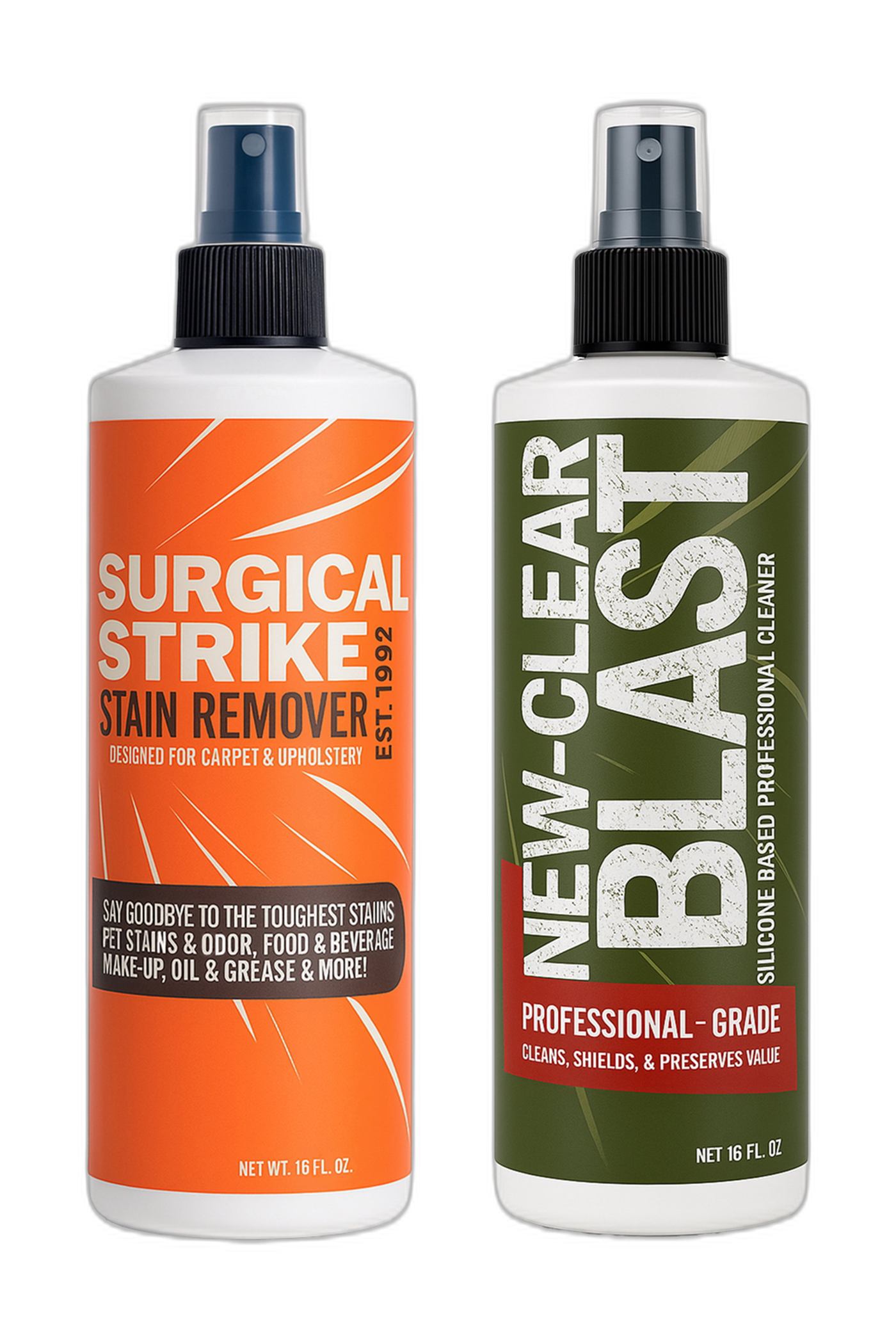
Two formulas. Serious range.
Use Surgical Strike for stains and odor, then New-Clear Blast to clean, shield and preserve hard surfaces.