Key Takeaways for Industrial Concrete Cleaning
Maintaining industrial concrete surfaces requires a clear understanding of the right cleaning agents and methods for specific challenges. This summary provides essential points for facility managers and maintenance teams to consider when developing their concrete care strategy.
- Acidic cleaners are effective for removing efflorescence and other mineral deposits by dissolving calcium buildup. It is important to dilute these cleaners and pre-wet the surface to prevent damage.
- Alkaline degreasers are specifically formulated to break down stubborn oil, grease, and tire marks commonly found on warehouse and manufacturing floors.
- Using surfactants in cleaning solutions helps by reducing water's surface tension, allowing the cleaner to penetrate concrete pores more deeply to loosen embedded grime.
- Pressure washing, when paired with appropriate detergents, can significantly assist with cleaning general grime and stains. However, low pressure should be used on masonry to avoid etching the surface.
- Preventive maintenance, such as regular sweeping and vacuuming, is a critical first step to reduce dust and abrasive buildup, which helps extend the operational life of floors in high-traffic industrial areas.
Understanding Common Industrial Concrete Challenges
Industrial concrete floors are subjected to demanding conditions that lead to specific types of contamination. In manufacturing environments, machinery often leaks oil and grease, creating slick, hazardous stains that require specialized degreasing solutions to break down. These hydrocarbon-based soils can penetrate the porous surface of concrete, making them difficult to remove with general-purpose cleaners.
High-traffic zones in warehouses and logistics centers frequently accumulate tire marks from forklifts and other vehicles. These marks can be challenging to lift without specific chemical agents designed to dissolve rubber residues. Another common issue is efflorescence, which appears as a white, powdery residue on the surface. This is caused by salt and mineral deposits migrating to the surface with water and requires acidic cleaning methods for effective removal. These distinct challenges, along with general grime from daily operations, necessitate a targeted approach to cleaning to maintain both safety and appearance.
Mechanism-to-Outcome Map: Chemical Cleaning Principles
Understanding how different chemical cleaners work is key to selecting the right solution. Acidic cleaners function by reacting with and dissolving mineral deposits like calcium carbonate, which is the primary component of efflorescence. This chemical reaction breaks down the deposits, allowing them to be rinsed away.
Alkaline degreasers operate on a different principle. They are formulated to break down the hydrocarbon bonds found in oils, greases, and tire marks. This process, known as saponification, turns the greasy contaminants into a soap-like substance that can be easily washed away with water. For biological stains, enzymatic cleaners use specific enzymes to break down organic compounds into smaller, water-soluble components for simple removal. Finally, surfactants are additives that reduce the surface tension of water, allowing cleaning solutions to penetrate deeper into the pores of the concrete to lift out embedded dirt and grime that would otherwise be unreachable.
Selecting Chemical Solutions by Stain Type
Choosing the right chemical cleaner is dependent on the type of stain you are addressing. A targeted approach helps prepare surfaces effectively without causing damage.
Addressing Efflorescence and Mineral Deposits
For the removal of efflorescence, acidic cleaners are the standard choice. These products dissolve the calcium and salt deposits that create the white, powdery stain. To prevent damage to the concrete itself, it is crucial to pre-wet the surface with water before applying the diluted acidic solution. This helps ensure the acid reacts with the deposits on the surface rather than the cement paste within the concrete.
Tackling Oil, Grease, and Tire Marks
Oil, grease, and tire marks are best managed with alkaline cleaners or degreasers. These solutions are formulated to break down hydrocarbon-based stains. For operations dealing with persistent buildup from machinery or vehicles, a product like Surgical Strike can be used as part of a regular maintenance plan to help remove these tough residues.
Managing Organic Stains
Enzymatic cleaners are often recommended because they digest the biological matter causing the stain without using harsh chemicals. When preparing a surface for a new finish or performing general maintenance, a multi-surface cleaner such as New-Clear Blast can assist with removing general grime and buildup. Always follow label directions for any cleaning product to ensure proper dilution and application.
Effective Cleaning Techniques and Equipment
Beyond chemical selection, the equipment and techniques used play a significant role in the outcome of industrial concrete cleaning. Pressure washing is a common method for removing general grime and tough stains, especially when combined with suitable detergents. The high pressure helps to dislodge contaminants from the surface, making the cleaning process more efficient.
However, pressure levels must be managed carefully. When cleaning concrete masonry or more delicate surfaces, it is important to use low pressure during rinsing to prevent surface etching or damage. For embedded grease and oil, steam cleaning is another effective technique. It can be applied at pressures between 10 and 80 psi to heat and loosen soils. A critical preparatory step for any chemical application is pre-wetting the concrete surface with water at a low pressure (30 to 50 psi) to help protect the concrete matrix from aggressive chemical absorption.
Failure Modes or Operational Risks in Concrete Maintenance
Improper concrete maintenance can lead to significant operational risks and costly damage. One of the most common failure modes is surface etching caused by the incorrect application or over-concentration of chemical cleaners, particularly acidic ones. This can permanently damage the concrete's finish and integrity. Neglecting regular maintenance in high-traffic industrial floors can also allow small cracks to develop into larger structural problems, compromising the safety and stability of the surface.
In busy facilities, the accumulation of oil, grease, and other spills creates serious slip hazards, posing a direct threat to employee safety. Furthermore, incomplete rinsing of cleaning agents is a frequent oversight. Leftover residue can attract new dirt more quickly or interfere with the adhesion of subsequent floor coatings or sealers, leading to premature failure of the finish.
Regulatory, Safety, and Compliance Considerations
When handling industrial concrete cleaning solutions, safety and compliance are paramount. It is essential to ensure that all cleaning activities are performed with adequate ventilation to minimize the risk of inhaling chemical fumes. Proper airflow protects workers and helps maintain a safe operational environment.
Personnel should always use appropriate personal protective equipment (PPE). Avoiding direct contact with eyes and prolonged skin contact is a standard precaution when working with any industrial-grade cleaning agent. For facility-wide safety, all cleaning chemicals must be stored securely and kept out of reach of children. Adherence to all label directions for dilution, application, and safety measures is not just a best practice; it is necessary for ensuring compliant and safe operations.
Proactive Maintenance Strategies for Industrial Floors
A proactive approach to maintenance is the most effective way to preserve the condition and extend the life of industrial concrete floors. Simple, regular tasks like daily sweeping and vacuuming can significantly reduce the buildup of abrasive dust and debris that wears down surfaces over time, especially in heavy-use manufacturing areas.
Implementing a consistent cleaning and inspection schedule helps prevent small issues from becoming major expenses. Promptly addressing spills and stains as they occur reduces the likelihood of them setting and causing permanent damage, which also helps maintain a safer work environment. This kind of routine care supports the long-term structural integrity of the concrete, which is fundamental to operational efficiency and overall facility safety.
Concrete Cleaning Solution Selection Checklist
Choosing the correct industrial concrete cleaning solution requires a methodical approach. Before beginning any cleaning project, use this checklist to ensure you have considered the key variables for a successful outcome.
- Identify the Stain Type: The first step is to correctly identify the contaminant. Is it oil, grease, efflorescence, organic matter, or general grime? The nature of the stain will determine whether an acidic, alkaline, or enzymatic cleaner is most appropriate.
- Assess Concrete Condition: Consider the age, porosity, and current condition of the concrete. Older or more porous concrete may be more susceptible to damage from harsh chemicals and might require a gentler approach or different dilution ratios.
- Review Safety Protocols: Always review the safety data sheet (SDS) and label for any cleaning solution. Determine the required personal protective equipment (PPE), such as gloves and eye protection, and ensure proper ventilation is in place before starting.
- Evaluate Environmental Impact: Consider the environmental regulations that apply to your facility. If you operate under strict compliance requirements, evaluate the cleaner's composition and disposal guidelines to ensure it meets your organization's standards.
Clean and prep surfaces with CG Chemicals
If you are dealing with buildup, residues, or tough soil before maintenance or finishing work, CG Chemicals offers practical cleaning solutions for high-use environments. Explore New-Clear Blast and Surgical Strike based on your surface and soil type.
Sources
- https://www.masonryandhardscapes.org/resource/tek-08-04a/
- https://brodychemical.com/collections/concrete
- https://www.nationwideconcreting.co.uk/news/the-ultimate-guide-to-cleaning-and-maintaining-industrial-concrete-flooring
- https://xtremepolishingsystems.com/blogs/decorative-concrete-and-epoxy-blog/concrete-cleaning-solutions-for-stubborn-stains
- https://www.a1concrete.com/concrete-repair-learning-center/concrete-cleaning-guide
- https://www.cement.org/guidance/maintenance
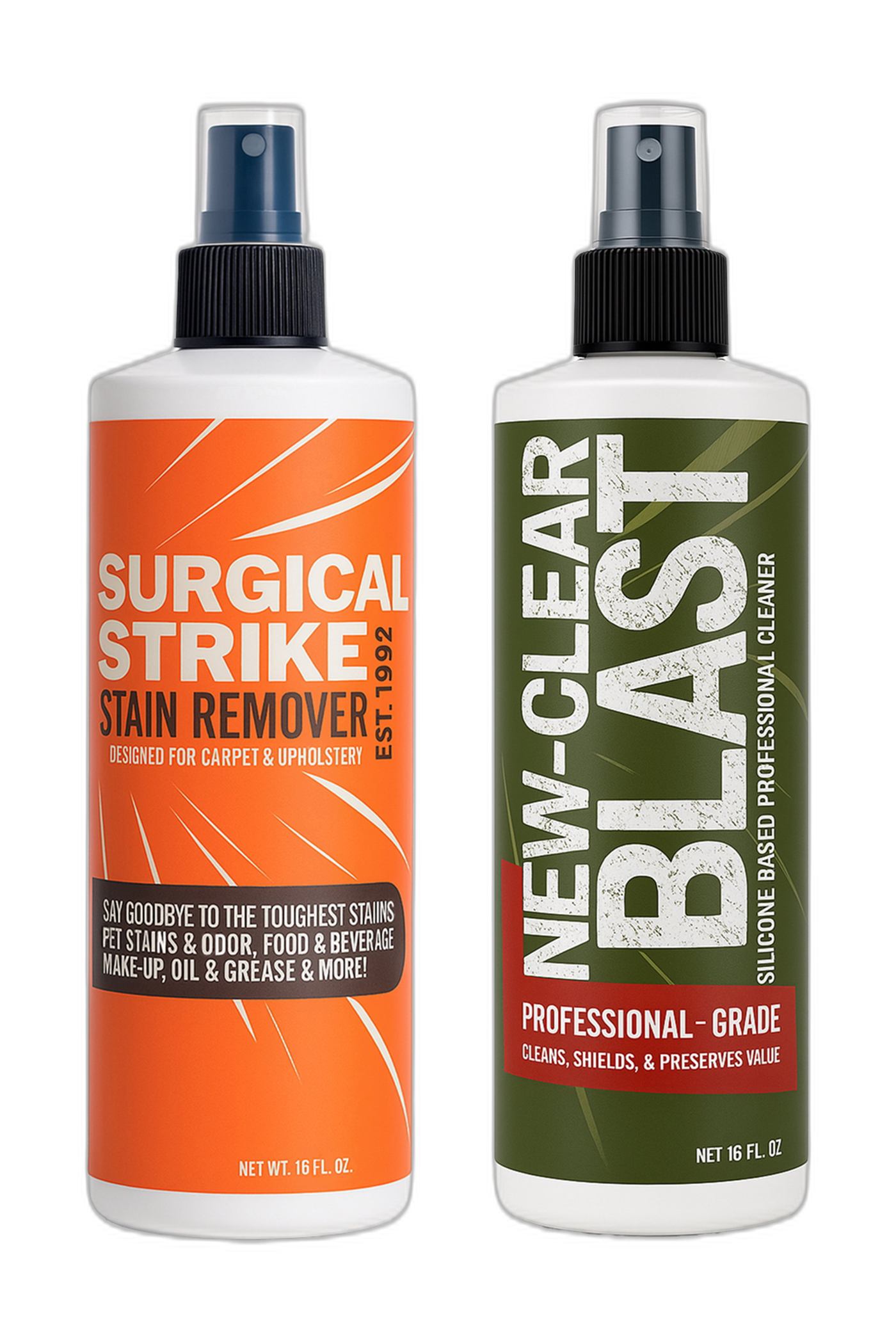
Two formulas. Serious range.
Use Surgical Strike for stains and odor, then New-Clear Blast to clean, shield and preserve hard surfaces.