Solar panel installations represent a significant investment in clean energy technology and operational sustainability. To maintain the expected energy output and protect the lifespan of these assets, a consistent and well-planned maintenance strategy is essential. A critical component of this strategy is cleaning. This article explores how adopting sustainable, non-corrosive cleaning methods helps maintain panel performance, protects sensitive surfaces, and aligns with the core environmental principles of renewable energy. For more on how cleaning solutions are used across various sectors, see our full Applications list.
Understanding Solar Panel Soiling and Performance Loss
The accumulation of environmental contaminants on solar panels, known as soiling, directly obstructs sunlight and can cause measurable losses in energy production. The severity of these losses varies based on climate, geographic location, and specific site conditions. Common sources of soiling include airborne dust, pollen, bird droppings, industrial pollutants, and agricultural particles.
These contaminants create a film that reduces the amount of light reaching the photovoltaic cells, which directly lowers the system's efficiency. Over time, this buildup can lead to significant energy deficits and financial losses. An effective maintenance plan must therefore account for these local contamination sources to manage system performance and prevent long-term degradation of the panels.
The Imperative for Sustainable Cleaning Practices
Sustainable cleaning practices go beyond just removing dirt. They are fundamental to protecting the solar panels themselves and the surrounding environment. Using non-corrosive, coating-compatible cleaning methods is critical for preserving delicate anti-reflective coatings, glass surfaces, seals, and frame materials that are essential to panel function and integrity.
By adopting eco-friendly cleaning, facility managers align their maintenance activities with the environmental ethos of renewable energy. This approach emphasizes responsible resource management, including water conservation and the use of minimal chemistry. Controlled application methods that reduce runoff and waste help protect local ecosystems, ensuring that the process of maintaining clean energy assets remains clean itself.
Key Takeaways for Sustainable Solar Panel Care
An effective solar panel maintenance program is built on several core principles that balance performance with asset preservation. These practices ensure long-term operational success.
- Prioritize Non-Corrosive Cleaning: The primary goal is to protect the panel's components, especially anti-reflective coatings, from chemical damage. Using aggressive cleaners can cause irreversible harm.
- Adapt Cleaning Frequency: A fixed cleaning schedule is often inefficient. Instead, cleaning frequency should be determined by local conditions, such as dust levels, pollution, and seasonal weather patterns, to maximize impact.
- Conserve Water and Use Low-Residue Chemistry: Minimizing water usage and selecting cleaning solutions that leave no film behind are key to sustainability. Residue can attract new dirt, accelerating the soiling cycle.
- View Panels as Critical Assets: Incorporating solar panel care into a comprehensive maintenance program helps ensure they deliver their expected performance and service life.
Failure Modes and Operational Risks in Solar Panel Maintenance
While cleaning is necessary, improper methods can cause more harm than good, offsetting any potential gains in energy output. Abrasive tools or chemically aggressive cleaning solutions can create micro-scratches on the glass, which may reduce light transmission and lead to accelerated wear over the panel's service life.
The use of corrosive cleaners presents a significant risk to multiple panel components. These chemicals can degrade the anti-reflective coatings designed to maximize light absorption. They can also damage the seals and frame materials, which compromises the panel's structural integrity and can lead to moisture intrusion and electrical failures. Such surface damage ultimately reduces both the immediate performance and long-term viability of the solar asset.
Mechanism-to-Outcome Map for Effective Cleaning
Understanding the link between cleaning mechanisms and their outcomes is key to developing a successful maintenance protocol.
- Mechanism: Utilizing non-corrosive chemistry and gentle application methods. Outcome: This protects sensitive anti-reflective coatings, glass, seals, and frame materials from chemical and physical damage, preserving the panel's overall integrity.
- Mechanism: Implementing a site-specific cleaning frequency based on regular assessment. Outcome: This approach effectively addresses variable contamination levels from dust, pollen, and pollution, helping to maintain optimal energy capture without the cost of unnecessary cleaning cycles.
- Mechanism: Prioritizing water conservation and low-residue chemistry. Outcome: This reduces the environmental impact of maintenance activities and prevents the formation of a sticky film on panel surfaces that could attract new soiling.
Selecting Non-Corrosive Cleaning Solutions
The choice of cleaning solution is a critical decision in any solar panel maintenance plan. The primary requirement is that the solution must be non-corrosive to prevent any damage to the panel's materials, which include specialized glass, metals, polymers, and coatings. A compatible cleaner supports a longer service life by avoiding chemical degradation.
An effective solution should be capable of removing common contaminants like grime, pollen, dust, and other buildup without harming the surface integrity. Furthermore, solutions designed to leave minimal residue are highly preferred. A clean, residue-free surface is less likely to attract new contaminants and will not impede light transmission after the cleaning process is complete.
Optimizing Cleaning Frequency and Methods
Determining the right time to clean solar panels is not based on a universal schedule. The optimal frequency depends entirely on site-specific conditions. Factors such as local dust load, seasonal pollen, industrial pollution, and rainfall patterns must be considered. Regular visual inspections and performance monitoring can help determine when cleaning will be most impactful.
The cleaning method itself is just as important as the schedule. It is crucial to employ techniques that do not cause physical damage. This means avoiding high-pressure water jets and abrasive materials like stiff brushes or scouring pads. Gentle, low-pressure application methods help protect the panel's integrity and prevent scratches or other surface damage that could degrade performance over time.
Integrating Solar Panel Cleaning into Facility Asset Management
Treating solar panels as high-value Facilities assets is essential for maximizing their return on investment. By integrating solar panel upkeep into a broader asset management program, organizations can support consistent energy production, improve operational uptime, and extend the service life of the system.
A proactive asset management approach includes regular inspections, clear documentation of all cleaning and maintenance activities, and ongoing performance monitoring. This data helps facility managers make informed decisions about maintenance schedules and resource allocation. Such a structured program enhances the reliability and operational efficiency of the entire solar installation.
Selection Checklist for Sustainable Solar Panel Cleaning
When developing or refining a cleaning protocol for solar panels, use this checklist to guide your selection of solutions and methods.
- Verify Material Compatibility:Confirm that any cleaning solution is certified or documented as non-corrosive and compatible with anti-reflective coatings, glass, aluminum frames, and junction box seals.
- Prioritize Environmental Responsibility: Choose methods that conserve water and select chemistries that minimize chemical runoff to meet sustainability goals.
- Assess Site-Specific Needs: Analyze the primary sources of soiling at your location to determine the most effective and efficient cleaning frequency.
- Confirm Gentle Cleaning Protocols: Ensure that cleaning procedures explicitly forbid the use of abrasive tools or high-pressure spray methods that could cause physical damage to the panels.
Environmental and Safety Considerations for Solar Panel Cleaning
A responsible solar panel cleaning program must balance effectiveness with environmental and operator safety. Eco-friendly practices should be standard, prioritizing water conservation and the use of low-residue chemistry to minimize the ecological footprint of maintenance activities.
Controlled application methods are important for reducing runoff and preventing the discharge of cleaning solutions into surrounding environments. For the safety of maintenance personnel, it is essential to follow all product label directions. Always use products with adequate ventilation. Avoid contact with eyes and prolonged skin contact. As with any chemical product, keep out of reach of children.
Clean and prep surfaces with CG Chemicals
If you are dealing with buildup, residues, or tough soil before maintenance or finishing work, CG Chemicals offers practical cleaning solutions for high-use environments. Explore New-Clear Blast and Surgical Strike based on your surface and soil type.
Sources
- https://www.sciencedirect.com/topics/engineering/photovoltaic-cleaning
- https://www.seia.org/solar-industry-research-data
- https://www.nrel.gov/research/advanced-materials.html
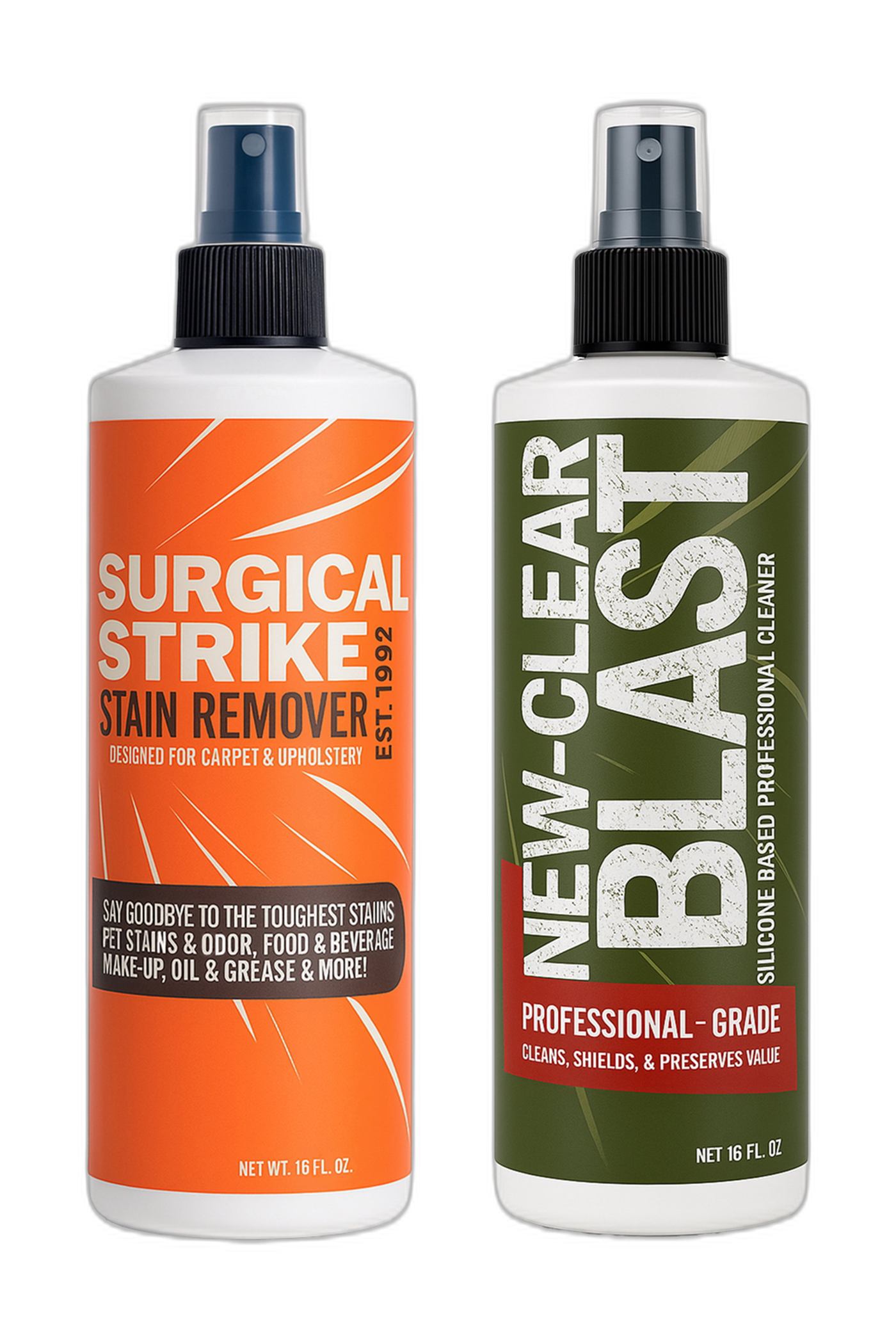
Two formulas. Serious range.
Use Surgical Strike for stains and odor, then New-Clear Blast to clean, shield and preserve hard surfaces.