In the food processing industry, adherence to Current Good Manufacturing Practice (cGMP) is the cornerstone of food safety. However, a forward-thinking approach to sanitation involves looking beyond baseline compliance to integrate sustainability. This strategy addresses environmental responsibility, worker safety, and long-term operational efficiency. By adopting advanced cleaning protocols, facilities can meet rigorous regulatory standards while also achieving broader sustainability goals.
Key Takeaways
- Sustainable cleaning in food processing should be viewed as an upgrade to cGMP compliance, not a replacement for its foundational requirements.
- Effective sustainability claims center on reducing chemical hazard, minimizing water use, lowering waste, and improving worker safety through reduced exposure.
- Biodegradable or lower-impact cleaners require rigorous evidence and validation to ensure they consistently meet essential food-safety outcomes.
- Connecting cleaning chemistry, equipment design, and operational procedures to environmental management objectives drives continuous improvement in sustainability.
- Worker safety is a critical aspect of sustainable cleaning, addressing risks from sprays, aerosols, caustics, and disinfectants.
Beyond cGMP: The Foundation for Sustainable Cleaning in Food Processing
The regulatory landscape for food safety is built upon Current Good Manufacturing Practice (cGMP) and the Food Safety Modernization Act (FSMA). These frameworks establish the non-negotiable baseline for sanitation and preventive controls in food facilities, ensuring that operations are conducted in a manner that prevents contamination. Every cleaning protocol must, at a minimum, satisfy these requirements to produce safe, high-quality food products.
While cGMP provides the foundation, a sustainable cleaning program seeks to build upon these requirements by incorporating environmental and worker health considerations. This is not about replacing proven sanitation methods but rather enhancing them. Moving beyond baseline compliance involves a critical evaluation of existing cleaning protocols to identify opportunities for reducing environmental impact without compromising food safety outcomes. This includes assessing chemical selection, water usage, and waste generation.
Food plants can pursue lower-impact cleaning strategies while still meeting their cleaning requirements. The key is a balanced approach that validates the performance of any new procedure or product. CG Chemicals provides Cleaning and surface-prep solutions for soil and residue removal in demanding Manufacturing environments, as part of a facility's broader operational goals.
Defining Sustainable Cleaning for Industrial Food Environments
Sustainable cleaning in an industrial context is guided by the principles of green chemistry, which advocate for the design of chemical products and processes that reduce or eliminate the use and generation of hazardous substances. This approach shifts the focus from managing waste and exposure after the fact to preventing them at the source. Key elements of this strategy include minimizing water consumption, decreasing waste generation, and ensuring safer conditions for workers.
A comprehensive sustainable cleaning program aligns with a facility's overall environmental management system, such as one following ISO 14001 guidelines. By integrating cleaning practices with broader sustainability objectives, an organization can create a more cohesive and impactful environmental strategy. The most credible sustainability claims are those that emphasize source reduction and safer chemical design, reflecting a commitment to proactive environmental stewardship.
Cleaning in food processing settings also demands careful attention to chemical compatibility with various surfaces and operational efficacy. The goal is to select solutions that effectively remove soils and residues without damaging equipment or leaving behind harmful substances. This requires a thorough understanding of both the cleaning chemistry and the specific challenges of the production environment, including adherence to chemical safety best practices.
Operational Benefits of Advanced Cleaning Strategies
One of the most significant benefits of implementing sustainable cleaning strategies is the direct positive impact on worker safety. By carefully selecting chemicals with lower hazard profiles, facilities can reduce the risks associated with exposure to harsh or caustic agents. This is particularly important in tasks involving sprays or aerosols, where respiratory health can be a concern. Adhering to established chemical safety guidelines helps protect personnel from both acute and long-term health effects.
Minimizing hazardous components in cleaning formulations can also streamline operations. It may reduce the need for extensive personal protective equipment (PPE) and complex engineering controls like specialized ventilation systems, as outlined by occupational safety standards. This not only reduces chemical hazards for workers but can also simplify training and daily procedures for sanitation crews.
A commitment to a safer work environment is a powerful tool for attracting and retaining skilled labor. Furthermore, sustainable cleaning protocols that optimize resource use, such as reducing water and energy consumption, contribute directly to greater operational efficiency. These resource savings can translate into lower utility costs and a more resilient operation, demonstrating that sustainability and sound business practices can go hand in hand.
Mechanism-to-Outcome Map for Sustainable Cleaning Programs
Understanding the link between specific actions and their results is key to building a successful sustainable cleaning program. This map outlines the core mechanisms and their expected outcomes.
-
Mechanism: Green Chemistry Principles: Choosing cleaning formulations designed to reduce inherent hazard, waste, and environmental impact.
Outcome: Lower environmental burden, reduced generation of hazardous waste, and adherence to environmental management objectives. -
Mechanism: Chemical Selection: Opting for less harsh cleaning formulations with validated performance.
Outcome: Reduced strong fumes and less harsh residues. -
Mechanism: Optimized Process Controls: Implementing efficient water use, waste reduction, and controlled application methods.
Outcome: Resource conservation, lower operating costs, and a smaller ecological footprint for cleaning operations. -
Mechanism: Performance Validation: Documenting that cleaning agents, including biodegradable ones, consistently meet cleaning and product quality requirements.
Outcome: Maintained product quality, prevention of unwanted residues, and sustained operational adherence.
Selecting Cleaning Solutions for Environmental Performance
When selecting cleaning solutions, the primary goal is to identify products that reduce environmental impact without compromising the critical sanitation requirements of a food processing facility. Any cleaner labeled as biodegradable or eco-friendly must undergo rigorous performance validation to confirm it achieves the necessary food-safety outcomes in a real-world operational environment.
Third-party programs can provide valuable guidance. For example, the EPA's Safer Choice program helps purchasers identify cleaning formulations with lower toxicity profiles, making it easier to procure products that align with sustainability goals. This external validation adds a layer of confidence to the selection process.
It is also essential to evaluate a product's efficacy on the various food-contact and non-food-contact surfaces within the plant. The objective is complete residue removal and effective cleaning every time. For practical application, facilities should consider the concentration and dilution rates of products like New-Clear Blast or Surgical Strike to optimize resource use.
Regulatory, Safety, and Compliance Considerations
All cleaning programs in the food processing sector must operate within a strict regulatory framework. cGMP requirements mandate sanitary conditions and require a hazard analysis as part of a facility's preventive controls plan. This forms the legal and operational basis for any sanitation protocol, whether traditional or sustainable.
The Food Safety Modernization Act (FSMA) further reinforces this with its focus on a preventive, risk-based food safety system. Sanitation procedures are a critical component of this system. Concurrently, agencies like OSHA and NIOSH provide guidelines on chemical safety, emphasizing hazard communication, proper labeling, and exposure control strategies to protect workers.
Sustainable cleaning practices should be formally integrated into a facility's environmental management system, such as one based on ISO 14001, to ensure a cycle of continuous improvement. By implementing lower-hazard cleaning solutions, a facility can support compliance across multiple domains, reducing chemical hazards for employees while still meeting the stringent hygiene demands of food safety regulations.
Avoiding Failure Modes and Managing Operational Risks
The primary failure mode in any food processing cleaning program is inadequate sanitation, which can lead to microbial contamination and non-compliance with cGMP and FSMA regulations. This risk underscores the importance of validating any new cleaning product or procedure before full-scale implementation.
Relying on unvalidated 'eco-friendly' claims can introduce significant risk. If a product does not perform as needed, it can lead to cleaning shortfalls, leaving behind soils, residues, or pathogens that compromise food safety. Similarly, improper chemical handling, storage, or ventilation can result in worker exposure, posing health risks and increasing the likelihood of safety incidents in Facilities.
To mitigate these risks, robust standard operating procedures (SOPs) are essential. Without clear, repeatable SOPs for sustainable cleaning, variability can creep into the process, making consistent performance and regulatory adherence difficult. Continuous monitoring and validation of cleaning effectiveness are necessary to protect the integrity of food products and the safety of the entire processing environment.
Sustainable Cleaning Selection Checklist
Use this checklist to guide the selection of cleaning solutions that align with both performance requirements and sustainability goals.
- Validated Efficacy: Confirm the cleaner's ability to effectively remove target soils and reduce microbial load on specific surfaces. Performance data should be relevant to your operational conditions.
- Ingredient Safety: Prioritize formulations with lower toxicity profiles for both human health and the environment. Resources like the EPA's Safer Choice list can assist in this evaluation.
- Environmental Profile: Review data on biodegradability, water usage requirements, and waste generation potential to understand the product's full life-cycle impact.
- Material Compatibility: Ensure the cleaner is compatible with all food-contact and facility surfaces, including stainless steel, plastics, and flooring, to prevent damage or residue accumulation.
- Supplier Support: Choose suppliers that provide comprehensive technical data, safety information (SDS), and training resources to ensure proper and safe product use.
- Regulatory Compliance: Verify that the chosen solutions are appropriate for use in a food processing facility and meet all relevant cGMP, FSMA, and other food safety regulations.
- Application Method: Consider the efficiency and safety of various application methods (e.g., foam, spray, clean-in-place), minimizing aerosols and ensuring adequate ventilation is always used.
Clean and prep surfaces with CG Chemicals
If you are dealing with buildup, residues, or tough soil before maintenance or finishing work, CG Chemicals offers practical cleaning solutions for high-use environments like Manufacturing and Facilities. Explore New-Clear Blast and Surgical Strike based on your surface and soil type.
Sources
- https://www.ecfr.gov/current/title-21/chapter-I/subchapter-B/part-117
- https://www.epa.gov/greenchemistry
- https://www.tandfonline.com/doi/abs/10.1080/10937404.2023.2213783
- https://www.fda.gov/food/food-safety-modernization-act-fsma
- https://www.iso.org/standard/73906.html
- https://www.cdc.gov/niosh/topics/chemical-safety/default.html
- https://www.annals.org/doi/10.7326/M23-1234
- https://www.osha.gov/chemical-hazards
- https://www.epa.gov/greenerproducts/safer-choice
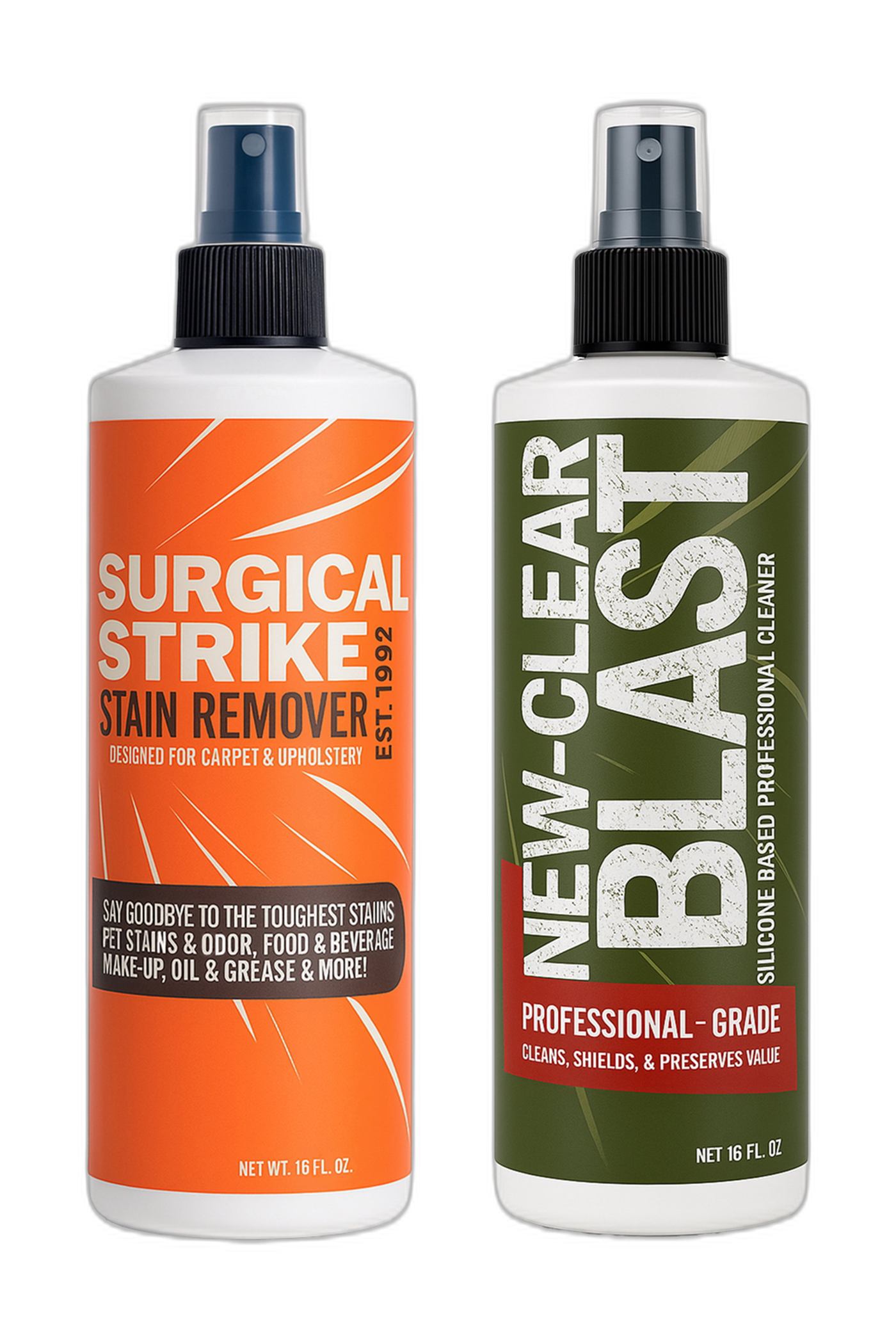
Two formulas. Serious range.
Use Surgical Strike for stains and odor, then New-Clear Blast to clean, shield and preserve hard surfaces.