In pharmaceutical manufacturing, cleanliness is not just a standard but a regulatory mandate. The quality, safety, and efficacy of drug products depend directly on the sterility and purity of the production environment. This article explores the critical role of advanced cleaning protocols, the challenges of validation, and the importance of selecting appropriate chemistries to meet stringent industry standards.
Key Takeaways
- Validated cleaning processes are mandated by Current Good Manufacturing Practice (cGMP) regulations to prevent cross-contamination and ensure product sterility.
- Addressing cleaning validation challenges, such as consistent residue detection and process repeatability, requires the use of specialized chemistries and well-defined protocols.
- Sustainable cleaning innovations are gaining traction, utilizing biodegradable, low-VOC chemicals that reduce environmental impact without compromising effectiveness.
- The use of non-toxic cleaning agents supports compliance with OSHA and EPA standards, helping to lower health risks for employees and reduce operational costs associated with handling hazardous materials.
The Mandate for Precision: cGMP and Sterility in Pharmaceutical Manufacturing
The U.S. Food and Drug Administration (FDA) enforces Current Good Manufacturing Practice (cGMP) regulations to ensure that drug products are safe, pure, and effective. A cornerstone of cGMP is the requirement for validated cleaning processes designed to prevent cross-contamination and maintain sterile conditions. These regulations are not just guidelines; they are the law, and failure to comply can result in significant penalties, including product recalls and facility shutdowns.
Cleaning validation is the documented evidence that a specific cleaning procedure consistently removes residues of the active pharmaceutical ingredient (API), excipients, and cleaning agents to predetermined levels. This process is essential for confirming that equipment is suitable for manufacturing subsequent batches of the same or a different product without risk of contamination. Precision cleaning helps prepare surfaces so they are free from chemical and microbial contaminants, which is vital for preventing batch failures and safeguarding drug integrity.
Navigating Cleaning Validation Challenges
Pharmaceutical manufacturers face distinct challenges in cleaning validation. One of the primary difficulties is the accurate and consistent detection of residues at very low levels. The methods used for sampling surfaces and analyzing for residual contaminants must be sensitive, specific, and reproducible to meet stringent regulatory limits. Ensuring that cleaning processes are consistent from one batch to the next across different operators and equipment also presents a significant hurdle.
Without proper cleaning and validation, the unintended transfer of material from one product to another can lead to cross-contamination. This not only risks patient safety but also leads to regulatory non-compliance. To overcome these challenges, facilities must develop robust protocols that utilize specialized cleaning chemistries formulated to effectively remove specific types of pharmaceutical soils while being compatible with equipment surfaces.
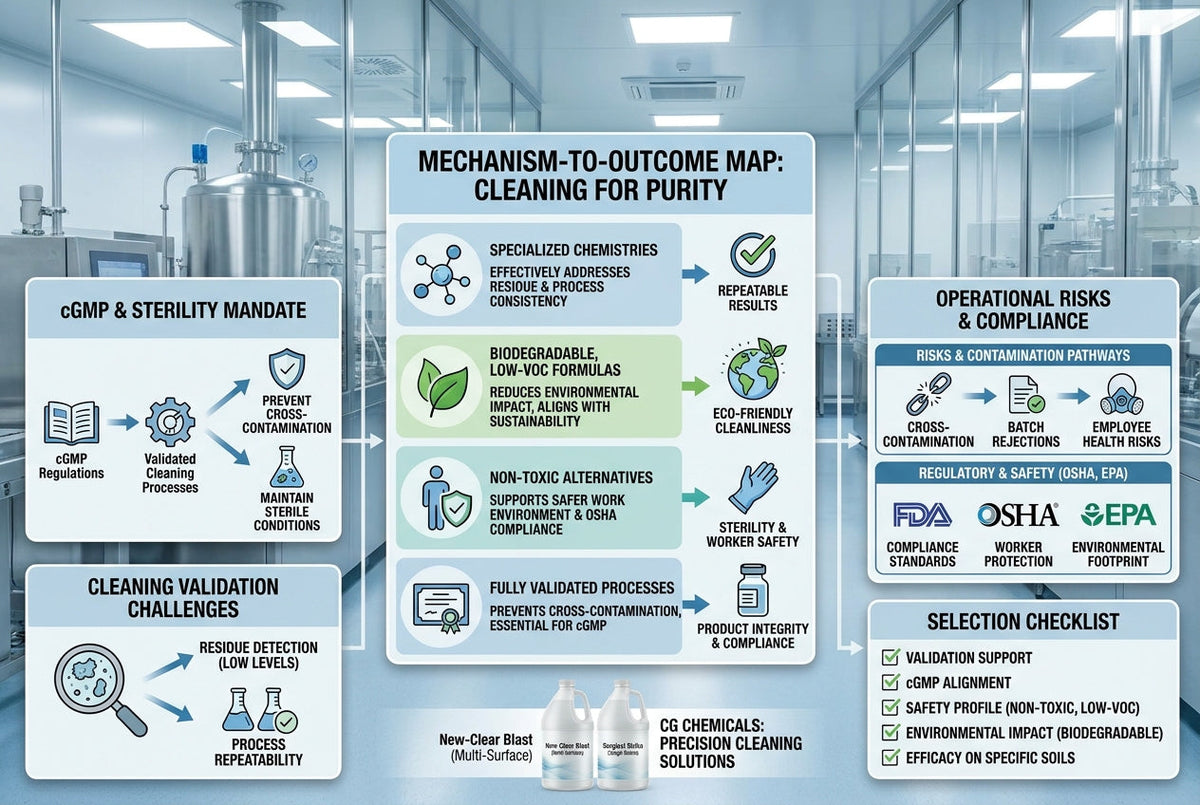
Mechanism-to-Outcome Map: Cleaning for Pharmaceutical Purity
-
Mechanism: Utilizing specialized cleaning chemistries.
Outcome: Effectively addresses residue detection and process consistency challenges in cleaning validation, helping ensure repeatable results. -
Mechanism: Implementing biodegradable, low-VOC cleaning formulas.
Outcome: Reduces environmental impact and aligns with corporate sustainability goals without compromising the necessary level of cleanliness. -
Mechanism: Employing non-toxic cleaning alternatives.
Outcome: Supports a safer work environment for staff, assists with OSHA compliance, and enables sterility in critical environments. -
Mechanism: Establishing fully validated cleaning processes.
Outcome: Prevents cross-contamination, helps maintain pharmaceutical product sterility, and is a fundamental requirement for cGMP compliance.
Operational Risks and Preventing Contamination Pathways
The failure to properly implement and validate cleaning processes introduces significant operational risks. Undetected residues can lead to cross-contamination between product batches, compromising product quality and potentially causing adverse patient effects. Such failures inevitably result in non-compliance with cGMP regulations, which can trigger costly investigations, batch rejections, and regulatory actions.
Beyond product quality, operational risks also extend to employee health. Regular exposure to harsh, traditional cleaning chemicals can pose health risks to personnel. Studies have shown a link between exposure to certain cleaning agents and increased respiratory issues. Furthermore, inadequate surface preparation before key manufacturing steps can compromise processes that follow, increasing the risk of batch failure and financial loss.
Sustainable Approaches to Industrial Hygiene
The pharmaceutical industry is increasingly adopting sustainable practices, and industrial hygiene is no exception. Innovations in green chemistry are leading to the development of effective, biodegradable, and low-VOC (Volatile Organic Compound) cleaning chemicals. These products maintain high efficacy in removing tough residues while minimizing their environmental impact.
Adopting eco-friendly cleaners also contributes to waste reduction efforts, particularly concerning the plastic packaging associated with many traditional chemicals. By shifting to more sustainable solutions, companies can create a safer working environment for their employees. This approach can also lead to cost savings by reducing the need for specialized handling, extensive personal protective equipment (PPE), and disposal of hazardous waste.
Regulatory, Safety, and Compliance Considerations
Adherence to regulatory standards is non-negotiable in pharmaceutical production. Cleaning protocols must be meticulously designed and executed to comply with the FDA's cGMP regulations, which are focused on preventing contamination and ensuring product quality. Every step of the cleaning process must be documented and validated to demonstrate control over the manufacturing environment.
Worker safety and environmental protection are also key compliance areas. Utilizing non-toxic cleaning alternatives can help facilities meet Occupational Safety and Health Administration (OSHA) and Environmental Protection Agency (EPA) standards. By choosing cleaners with favorable safety profiles, companies can better protect their workforce and minimize their environmental footprint while upholding the stringent cleanliness required for pharmaceutical operations.
Selection Checklist for Pharmaceutical Cleaning Solutions
- Validation Support: Does the cleaning solution support established validation protocols and is it compatible with common residue detection methods?
- cGMP Alignment: Is the cleaner's formulation and recommended use consistent with cGMP requirements for preventing cross-contamination and maintaining sterility?
- Safety Profile: Is the solution formulated with non-toxic and low-VOC ingredients to reduce health risks for operators and support a safer workplace?
- Environmental Impact: Does the cleaning solution feature biodegradable ingredients and help reduce the facility's overall environmental footprint?
- Efficacy on Specific Soils: Is the cleaner proven to be effective against the specific pharmaceutical residues and soils present in the facility, while remaining compatible with equipment materials?
CG Chemicals: Supporting Precision Cleaning in Manufacturing
CG Chemicals provides solutions designed for effective cleaning and surface preparation in demanding environments, including pharmaceutical Manufacturing. Our products are formulated to address the types of soils and residues found in complex industrial settings, helping facilities maintain their equipment and work zones as part of a comprehensive cleaning program. Proper cleaning is a critical preparatory step before and after other manufacturing or finishing processes.
For general multi-surface cleaning and preparing equipment, New-Clear Blast can be used to remove grime and buildup from a variety of surfaces. When faced with tougher challenges, Surgical Strike helps address stubborn stains, odors, and degreasing requirements. Our solutions are developed to support operational efficiency by assisting with the removal of unwanted material, thereby preparing surfaces for their next use in the production cycle.
Optimize Pharmaceutical Cleaning and Surface Prep
Effective cleaning and surface preparation are important for good manufacturing practices and product quality in pharmaceutical manufacturing. Discover how CG Chemicals offers practical cleaning solutions for high-use environments, designed to address residues and unwanted material. Explore New-Clear Blast and Surgical Strike to support your operational cleanliness standards.
- Use with adequate ventilation.
- Avoid contact with eyes and prolonged skin contact.
- Keep out of reach of children.
- Follow label directions.
Sources
- https://www.fda.gov/drugs/pharmaceutical-manufacturing/current-good-manufacturing-practice-regulation-drugs-and-biologics
- https://www.pharmaceutical-technology.com/features/cleaning-validation-pharma-challenges-solutions/
- https://cen.acs.org/sustainability/green-chemistry/Sustainable-cleaning-Pharma-Innovations-Best/101541
- https://cgchemicalsllc.com/blogs/articles/green-cleaning-and-osha-what-you-didn-t-know
- https://cgchemicalsllc.com/blogs/articles/cleaners-in-healthcare-facilities
- https://cgchemicalsllc.com/blogs/articles/schools-cleaning-with-toxins
- https://cgchemicalsllc.com/blogs/articles/environmental-impact-cleaning-chemicals
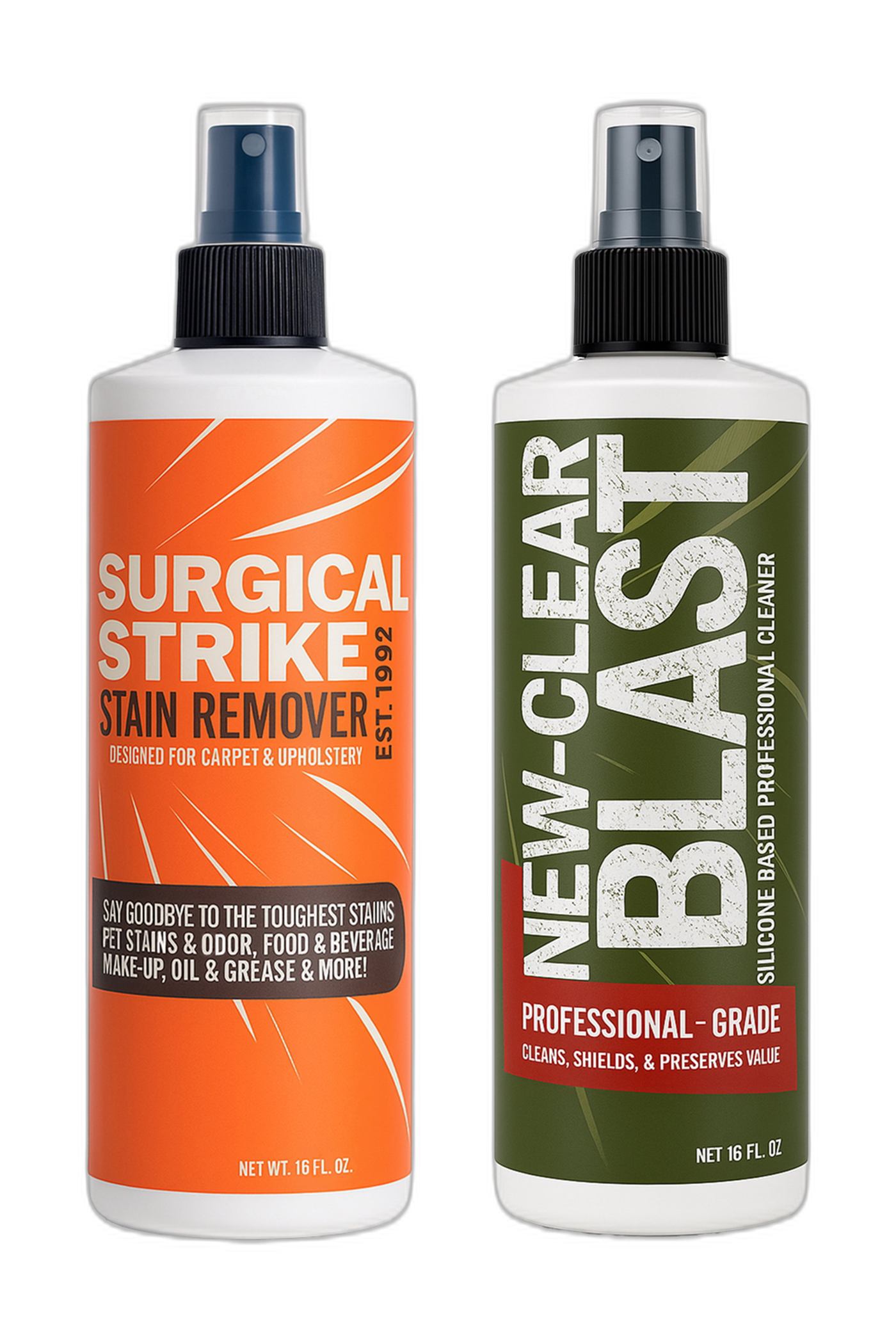
Two formulas. Serious range.
Use Surgical Strike for stains and odor, then New-Clear Blast to clean, shield and preserve hard surfaces.