Key Takeaways
- Specialty cleaning protocols are essential for removing contaminants such as oils, particulates, and shop soils, which is a critical step in preparing surfaces for subsequent processes like coating.
- The SAE J1315 standard defines performance criteria for automotive cleaning agents, guiding manufacturers on efficacy, residue levels, and material compatibility to maintain quality control.
- Research indicates that inadequate part cleanliness can reduce coating adhesion strength, directly impacting component reliability and longevity.
- Adopting eco-friendly cleaners supports rising automotive industry sustainability mandates by helping to reduce Volatile Organic Compound (VOC) emissions and waste generation.
- Implementing precision cleaning protocols can contribute to operational efficiency, including lower rework costs through enhanced quality control.
The Critical Role of Precision Cleaning in Automotive Manufacturing
In the complex world of automotive production, every component must meet exacting standards for performance, safety, and longevity. A foundational, yet often underestimated, step in this process is precision cleaning. This is not a simple wipe-down but a highly specialized procedure designed to remove microscopic contaminants, including oils, grease, metal fines, and dust from component surfaces. Effective surface preparation is fundamental to the integrity of parts throughout the Manufacturing process.
The goal of specialty cleaning is to create a pristine surface that is ready for subsequent steps such as coating, bonding, or assembly. Failure to achieve the required level of cleanliness can introduce variables that compromise the quality of the final product. Contaminants left on a surface can interfere with adhesion, leading to paint defects or bonding failures down the line. Consequently, the reliability and operational safety of the vehicle can be affected, making precision cleaning a non-negotiable aspect of modern automotive quality control.
Failure Modes and Operational Risks from Inadequate Cleaning
The consequences of insufficient cleaning are significant and costly. Poor part cleanliness can weaken coating adhesion on automotive components. This weakness creates a failure point where coatings can chip, peel, or delaminate prematurely, exposing the underlying substrate to corrosion and wear. Residual contaminants act as a barrier, preventing a strong mechanical and chemical bond between the surface and the applied finish.
These failures have a cascading effect on operations. They can result in expensive rework, higher rates of scrapped parts, and an increase in warranty claims once the vehicle is in the hands of the consumer. Beyond the financial impact, such issues can damage a brand's reputation for quality and reliability. Maintaining surface quality through effective cleaning protocols is a proactive measure that prevents these downstream problems and supports overall component integrity.
Industry Standards and Best Practices for Automotive Cleanliness
To standardize quality, the automotive industry relies on established guidelines. The SAE J1315 standard, for example, provides a comprehensive framework for evaluating the performance of automotive cleaning agents. It outlines specific tests to measure a cleaner's efficacy, the level of acceptable residue it leaves behind, and its compatibility with various materials. This helps ensure that a cleaning solution effectively prepares a surface without causing unintended damage.
For many critical applications, standards like SAE J1315 require that residue levels fall below 1 mg/m² to support optimal adhesion for coatings and adhesives. Adherence to these protocols is essential for consistent quality control across the supply chain. As vehicle technology advances, cleanliness standards are evolving, pushing manufacturers to adopt more sophisticated cleaning technologies and processes to meet new demands for performance and reliability.
Mechanism-to-Outcome Map: How Cleaning Impacts Performance
Understanding how precision cleaning works helps clarify its importance. The process involves a direct relationship between the cleaning mechanism and the final performance outcome of the component.
- Contaminant Removal: Specialized cleaning chemistries are formulated to break down and lift specific soils. Surfactants reduce surface tension, allowing the solution to penetrate and dissolve oils and greases, while other agents help suspend particulates so they can be rinsed away completely.
- Surface Energy Optimization: A clean surface is a high-energy surface. By removing low-energy contaminants like oils, the cleaning process helps prepare the substrate to accept a coating or adhesive, allowing for better wetting and a more uniform bond.
- Material Interaction: The choice of cleaning agent is matched to the substrate to prevent negative interactions like etching, corrosion, or staining. This preserves the component's structural and aesthetic integrity.
- Adhesion Strength: A properly prepared surface is critical for adhesion. Optimized precision cleaning can support stronger adhesion for subsequent coatings on automotive steel components.
- Component Longevity: By helping to create a robust bond for protective coatings and ensuring defect-free assembly, precision cleaning is a direct contributor to the operational life and durability of automotive parts.
Regulatory, Safety, and Environmental Considerations in Cleaning
The automotive industry is facing increasing pressure to align with global sustainability mandates. This has led to a shift toward eco-friendly cleaning agents that reduce VOC emissions and minimize waste. Using cleaning solutions designed to have a lower environmental impact supports these goals while also reducing worker exposure to harsh chemicals.
Programs like the U.S. EPA's Safer Choice help manufacturers identify and select cleaning chemicals that meet stringent criteria for performance and environmental responsibility. Choosing cleaning products with favorable safety profiles can reduce worker exposure to harsh chemicals. Compliance with environmental and safety regulations is now a key factor in the selection of cleaning agents for any modern automotive manufacturing facility.
Selection Checklist: Choosing Precision Cleaning Solutions
When selecting a cleaning solution for an automotive application, procurement and engineering teams should consider several key factors to ensure optimal results. A systematic evaluation can help balance performance with operational and regulatory requirements.
- Efficacy: Does the solution effectively remove the specific contaminants present in your process, as verified by performance standards like SAE J1315?
- Residue Profile: Does the product rinse cleanly, leaving minimal or no residue that could interfere with subsequent coating, bonding, or assembly steps?
- Material Compatibility:Is the solution confirmed to be compatible with all substrates in the component, including metals, plastics, and composites, without causing damage?
- Environmental Impact: Does the formula align with your company's sustainability goals? Does it minimize VOCs?
- Worker Safety: Does the solution come with a clear safety data sheet that fits your operators' handling and ventilation practices?
- Cost-Effectiveness: Does the product's performance help reduce rework and waste?
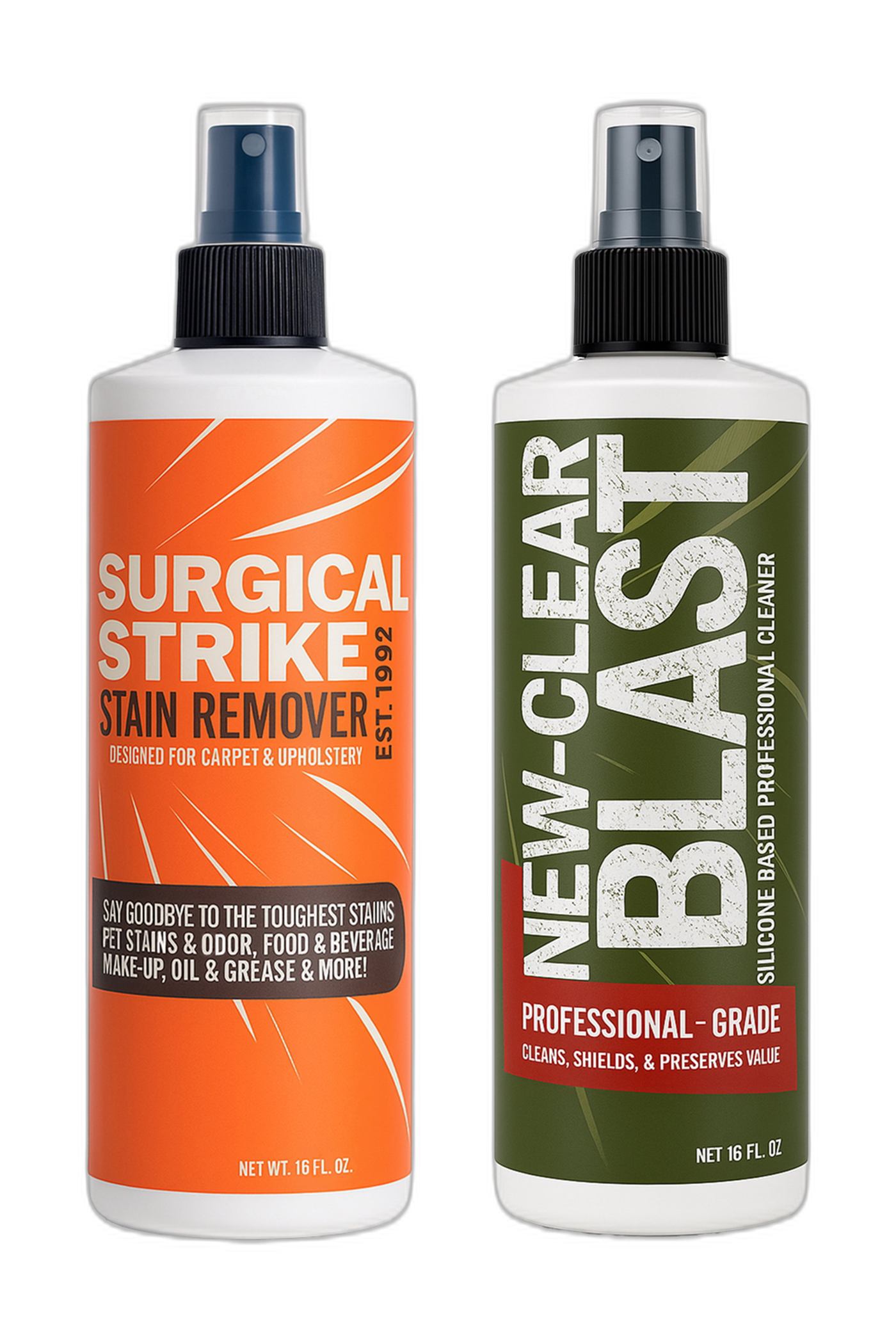
Solutions like Surgical Strike for degreasing and stain removal, or New-Clear Blast for multi-surface cleaning, are examples of products that can be evaluated against these criteria for use in surface preparation workflows.
Streamlining Operations: Costs and Quality Control
Investing in effective cleaning protocols is not just a quality measure; it is a sound business decision. Advanced cleaning processes can support cost reductions in automotive manufacturing by lowering defect rates. Better cleaning means fewer parts are rejected for coating flaws or bonding issues, which reduces rework and scrap material costs.
This enhanced quality control streamlines the entire production line. When components are properly prepared, they move smoothly to the next manufacturing stage without delays or interruptions. Ultimately, a commitment to precision cleaning supports better quality assurance, resulting in a more reliable final product. This strengthens brand reputation and contributes to greater operational efficiency and profitability in a competitive market.
Conclusion: Advancing Automotive Component Integrity Through Precision Cleaning
Precision cleaning is a critical discipline in automotive manufacturing that directly influences component integrity, vehicle performance, and operational efficiency. By removing contaminants at a microscopic level, manufacturers prepare surfaces for the demanding requirements of modern vehicle production. Adherence to industry standards such as SAE J1315 provides a clear path for mitigating risks associated with contamination and ensuring consistent quality.
The strategic selection and application of specialized cleaning solutions supports part longevity and reliability. It can also support operational improvements. As the automotive sector continues to evolve, choosing effective and environmentally responsible cleaning products will be essential for meeting the industry's present and future demands.
Clean and prep surfaces with CG Chemicals
If you are dealing with buildup, residues, or tough soil before maintenance or finishing work, CG Chemicals offers practical cleaning solutions for high-use environments. Explore New-Clear Blast and Surgical Strike based on your surface and soil type.
Sources
- https://www.sciencedirect.com/science/article/pii/S0257897223001234
- https://www.sae.org/standards/content/j1315_202003/
- https://cgchemicalsllc.com/blogs/articles/environmental-impact-cleaning-chemicals
- https://ihsmarkit.com/products/automotive-manufacturing-supply-chain-report-2025.html
- https://www.epa.gov/saferchoice
- https://cgchemicalsllc.com/blogs/articles/schools-cleaning-with-toxins
Two formulas. Serious range.
Use Surgical Strike for stains and odor, then New-Clear Blast to clean, shield and preserve hard surfaces.