In the high-stakes environment of a data center, uptime is the primary measure of success. Even minor disruptions can lead to significant financial and operational consequences. While factors like power redundancy and network stability are well understood, the role of advanced cleaning protocols is often underestimated. This article explores how specialized cleaning methods help ensure the reliability and performance of critical data center infrastructure by preventing dust contamination and maintaining a controlled environment.
Key Takeaways
- Dust and debris are significant contributors to overheating, corrosion, and equipment failure in data centers.
- Using specialized tools, such as HEPA-filtered vacuums and anti-static wipes, alongside non-abrasive cleaners is essential for careful contaminant removal.
- Implementing routine cleaning schedules, including quarterly deep cleans and more frequent interventions for high-risk areas, helps maintain operational integrity.
- Properly trained personnel and documented cleaning procedures with pre and post particulate measurements help ensure compliance and may support equipment warranties.
- Cleaning the subfloor and raised floor plenums is critical to prevent dust recirculation and support optimal airflow for cooling systems.
Failure Modes and Operational Risks in Data Centers
The operational integrity of a data center depends on maintaining a meticulously controlled environment. Dust, metallic particles, and other debris present serious threats to sensitive IT equipment. One of the most common failure modes is overheating caused by contaminant accumulation on heat sinks and within server chassis, which disrupts critical airflow and forces cooling systems to work harder.
Beyond thermal issues, contaminants can lead to corrosion on electronic components, degrading performance and shortening the lifespan of expensive hardware. Furthermore, improper cleaning methods can introduce new risks. Using unsuitable chemical agents or tools can generate static electricity, leading to electrostatic discharge (ESD) that can instantly damage or destroy integrated circuits. An uncontrolled environment with high particulate matter directly correlates with an increased likelihood of system failures, data loss, and costly downtime.
Mechanism-to-Outcome Map: Cleaning for Data Center Integrity
Effective cleaning protocols are built on a clear understanding of how specific actions produce desired outcomes. This mechanism-to-outcome relationship is key to justifying and implementing a successful data center hygiene program.
- Mechanism: Regular removal of airborne particulates and surface dust. Outcome: This practice prevents disruptions to airflow and reduces the risk of equipment overheating, which supports consistent and reliable operation.
- Mechanism: Use of HEPA-filtered vacuums and anti-static tools. Outcome:These specialized tools extract contaminants without redistributing fine dust into the air or generating harmful electrostatic discharge near sensitive electronics.
- Mechanism: Application of low-residue, non-abrasive cleaning agents. Outcome: Using appropriate cleaners ensures that surfaces are free of soils without leaving behind chemical films that could attract new dust or adversely react with equipment materials.
- Mechanism: Focused cleaning of subfloor and raised floor plenums. Outcome: This essential step eliminates hidden reservoirs of dust and debris, preventing recirculation through the cooling system and optimizing airflow efficiency.
Regulatory, Safety, and Compliance Considerations
Adhering to established best practices for data center cleaning is not just about maintenance; it is also about risk management and compliance. Many equipment manufacturers stipulate cleanliness standards in their warranty agreements, and failure to meet these can result in voided coverage. Proper cleaning helps mitigate these operational risks.
Because of the high value and sensitivity of the equipment, personnel training is a critical component of any cleaning program. Technicians should be certified or trained in data center-specific protocols, including ESD-safe procedures, to reduce the risk of accidental damage. To ensure accountability and track progress, documenting pre and post-cleaning particulate measurements with tools like laser particle counters is recommended. This data provides tangible validation of the cleaning program's effectiveness and demonstrates compliance with internal or external standards.
Establishing Robust Cleaning Protocols
A proactive and structured approach to cleaning is far more effective than reactive interventions. Establishing robust protocols begins with creating a routine schedule based on the specific needs of the facility. This often includes monthly deep cleaning of raised floors, server racks, and HVAC system exteriors to prevent the gradual buildup of dust and other particulates.
In addition to monthly tasks, a quarterly deep cleaning schedule should address cooling systems, air filters, and precision equipment to maintain optimal cleanliness. A critical part of this quarterly routine is a thorough underfloor cleaning of the raised floor plenum, which ensures no debris is present to obstruct critical airflow pathways. By implementing a proactive cleaning plan, facility managers can prevent dust-related failures and contribute to the overall reliability and efficiency of their infrastructure.
Specialized Tools and Cleaning Agents
General-purpose cleaning equipment is not suitable for data centers. The environment requires specialized tools designed to capture contaminants without creating new hazards. HEPA-filtered vacuums are standard, as they are engineered to trap microscopic particles that would pass through conventional filters and be redistributed into the air. Similarly, anti-static wipes, brushes, and tools are employed to prevent ESD, a silent threat that can cause significant damage to electronic components.
The chemical agents used are just as important as the tools. Cleaners for facilities like data centers must be non-abrasive to protect surfaces and low-residue to avoid leaving behind films that attract dust. The objective is to remove residues effectively without causing any adverse effects to delicate components or finishes. Products designed for preparing equipment exteriors and structural surfaces are an integral part of a comprehensive protocol. For general surface prep, a solution such as New-Clear Blast can be used to remove grime and residues as part of a maintenance schedule.
Maintaining Environmental Controls and Air Quality
Effective data center cleaning directly supports the environmental controls necessary for equipment cooling and performance. By systematically removing dust and particulates, cleaning protocols help maintain optimal airflow from cooling systems to server intakes, preventing the formation of hot spots.
Controlling dust also helps facility managers maintain air quality that aligns with standards recommended by organizations such as ASHRAE for sensitive environments. A primary focus should always be on cleaning raised floor plenums and subfloors, as these areas are major collection points for debris that can be drawn into cooling units and recirculated throughout the data center. A well-maintained and controlled environment with minimal particulates reduces thermal risks and supports equipment longevity.
Selection Checklist for Data Center Cleaning Solutions
When selecting cleaning agents for a data center, facility managers should evaluate products based on several key criteria to ensure safety and effectiveness.
- Material Compatibility:Verify that cleaning products are compatible with common data center materials, including plastics, metals, and flooring, without posing a risk to electronic components.
- Residue and Abrasion: Ensure cleaning solutions are non-abrasive and low-residue to protect sensitive surfaces and prevent the buildup of films that attract new contaminants.
- Static Properties: Whenever possible, choose solutions that possess anti-static properties to help mitigate the risk of electrostatic discharge in critical environments.
- Application Suitability: Select solutions appropriate for specific tasks, from cleaning subfloors and equipment exteriors to removing tougher soils. For stubborn buildup or specific residues, a product like Surgical Strike can be used as part of surface preparation.
- Protocol Alignment: Choose cleaning solutions that align with your established protocols and contribute to documented soil reduction efforts. A multi-purpose cleaner like New-Clear Blast is often suitable for routine tasks on non-energized surfaces.
Clean and prep surfaces with CG Chemicals
If you are dealing with buildup, residues, or tough soil before maintenance or finishing work, CG Chemicals offers practical cleaning solutions for high-use environments. Explore New-Clear Blast and Surgical Strike based on your surface and soil type.
- Use with adequate ventilation.
- Avoid contact with eyes and prolonged skin contact.
- Keep out of reach of children.
- Follow label directions.
Sources
- https://www.team-prosource.com/optimizing-data-center-processes-to-enhance-reliability-and-reduce-downtime/
- https://dataspan.com/blog/is-your-data-center-properly-cleaned/
- https://www.datacentre-cleaning.com/blog/data-center-cleaning-best-practices/
- https://www.datacenterknowledge.com/operations-and-management/a-clean-sweep-why-data-center-maintenance-is-more-critical-than-ever
- https://blog.pegasusclean.com/data-center-cleaning-checklist
- https://f.hubspotusercontent00.net/hubfs/3699353/Data%20Center%20Cleaning%20Guide/Data%20Center%20Cleaning%20Guide.pdf
- https://moveitgroup.com.hk/en/blog/best-practices-for-regular-data-center-cleaning-and-maintenance
- https://www.ashrae.org/technical-resources/standards-and-guidelines/ashrae-standards
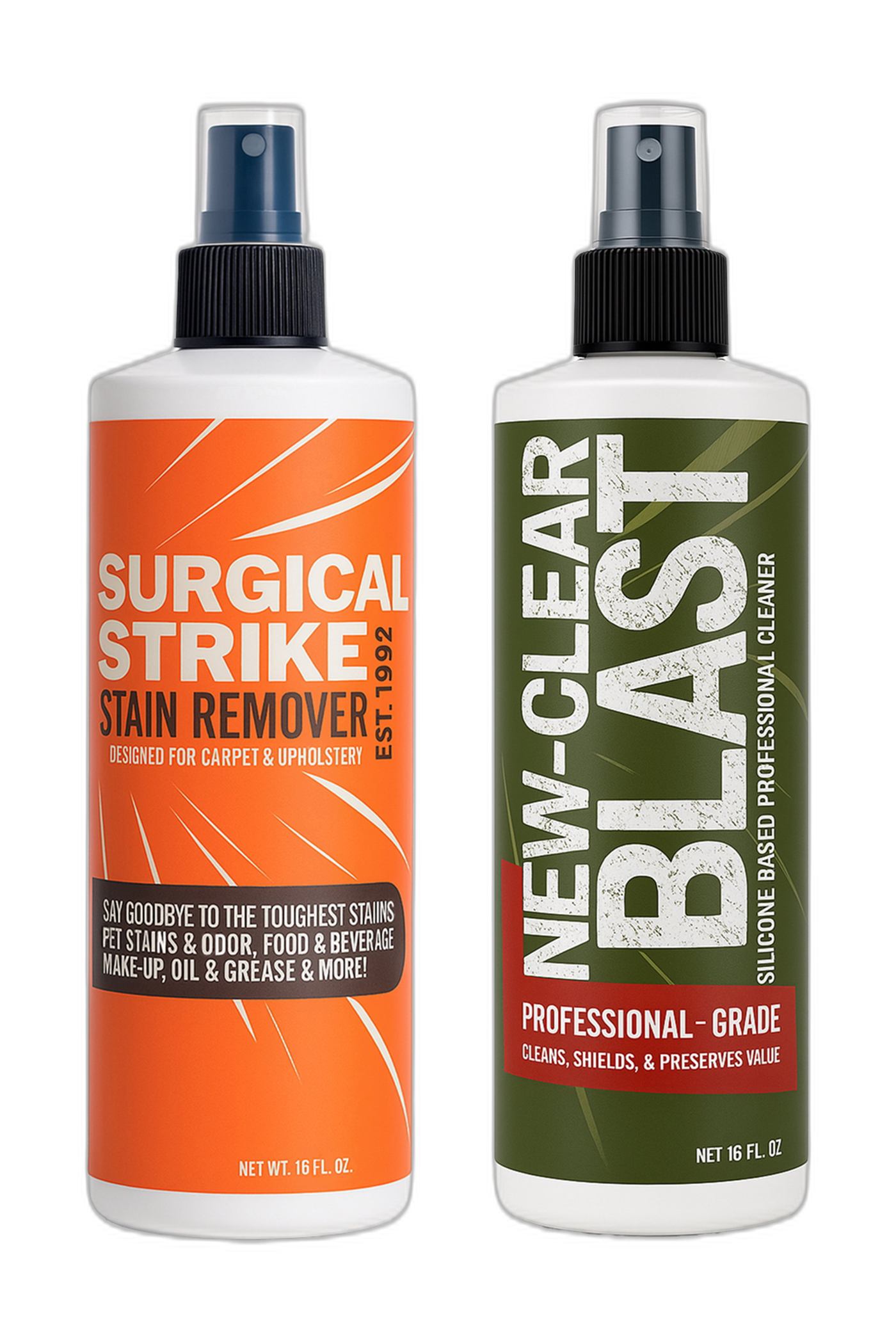
Two formulas. Serious range.
Use Surgical Strike for stains and odor, then New-Clear Blast to clean, shield and preserve hard surfaces.