Introduction: Managing Hazardous Material Spills in Industrial Settings
Hazardous material spills in industrial environments present significant risks to personnel safety, environmental stability, and operational continuity. A reactive approach is insufficient; a structured and compliant response is necessary to minimize exposure and mitigate damage across various industrial settings, including Facilities and Manufacturing operations. Without a clear plan, spills can lead to costly downtime, regulatory fines, and long term liability.
An effective spill response framework involves immediate hazard identification, controlled scene management, and the application of appropriate cleaning protocols. The Occupational Safety and Health Administration’s (OSHA) Hazardous Waste Operations and Emergency Response (HAZWOPER) standard provides a detailed framework for managing emergency response operations that involve hazardous substances. This regulation establishes the minimum requirements for protecting workers engaged in these high risk activities, from initial assessment to final site cleanup. The Environmental Protection Agency (EPA) also provides extensive guidance on spill prevention and response to further support environmental protection.
Key Takeaways for Effective Spill Response
For industrial decision makers overseeing safety and compliance, understanding the core components of a successful spill response is critical. These key principles form the foundation of a resilient and effective program:
- Prioritize Safety First: Any spill response must begin with immediate hazard identification, isolation of the area, and selection of the correct personal protective equipment (PPE) before cleanup actions commence.
- Contain and Control: Containment measures are crucial for preventing the spread of hazardous materials, which helps reduce worker exposure and limit environmental release into soil or waterways.
- Select Compatible Methods: Cleanup chemicals and methods must be chosen based on the specific hazard class of the spilled material. Consulting a chemical hazard guide is a necessary step to avoid dangerous reactions or ineffective cleaning.
- Plan and Train: A written contingency plan, properly trained personnel, and clearly defined disposal procedures are central to a compliant and effective spill response.
- Leverage Modern Tools: Today's spill kits offer specialized absorbents and improved organization, which can support response speed and reduce the potential for errors during a high stress event.
Initial Response: Hazard Identification and Scene Control
The first step in any industrial spill is to identify the hazard and isolate the scene to prevent further exposure and ensure worker safety. This immediate action is the most important part of limiting the incident's impact. Personnel must be trained to recognize potential hazards and understand how to access Safety Data Sheets (SDS) to identify the substance, its risks, and initial response recommendations.
OSHA’s HAZWOPER standard applies directly to these emergency response operations, mandating specific procedures and tiered training levels for all involved personnel. Selecting the correct personal protective equipment (PPE) is a critical component of this initial phase. The choice of PPE must be based on the specific chemical hazards, potential exposure routes like skin contact or inhalation, and the risk of splash. An incident command system helps coordinate these efforts, ensuring a clear chain of command and efficient management of resources and personnel to maintain scene safety.
Operational Principles for Spill Containment and Spread Prevention
Once the scene is secured, the next priority is containment. Effective containment is a primary control measure designed to stop a spill from spreading, which in turn limits environmental damage and reduces the area requiring decontamination. The goal is to confine the material to the smallest possible footprint.
Containment often involves deploying physical barriers like absorbent booms, dikes, or berms around the spill's perimeter. Covering floor drains and preventing entry into municipal sewer systems or nearby waterways is another critical action. The selection of containment materials must be based on compatibility with the spilled substance. Using an incompatible absorbent could lead to a chemical reaction, material degradation, or failure of the barrier. Rapid and correct deployment of these methods minimizes the spill area and simplifies the subsequent cleanup and disposal processes.
Selecting Appropriate Cleaning Solutions and Decontamination Methods
The safety and efficacy of a spill cleanup depend on matching the right cleaning agent to the spilled material. A one-size-fits-all approach is not practical and can be dangerous. It is essential to consult Safety Data Sheets (SDS) and official resources like the NIOSH Pocket Guide to Chemical Hazards for information on chemical incompatibilities, required PPE, and initial cleanup guidance.
For this final stage of general cleaning and surface preparation, targeted solutions are needed. For general industrial cleaning needs in Manufacturing environments, for example, a product like Surgical Strike can be used as part of a protocol to address degreasing, tough stains, and odors on equipment or facility surfaces. Proper cleaning of personnel and equipment is also a mandatory step after a hazardous spill, often requiring specialized agents and documented procedures to ensure all residues are removed.
Common Operational Risks in Industrial Spill Cleanup
Several operational risks can compromise safety and effectiveness during an industrial spill cleanup. Awareness of these potential failures is the first step toward preventing them. A primary risk is the use of inadequate or incorrect PPE, which significantly increases the chance of chemical exposure and injury for response personnel.
Another common failure is ineffective containment, which allows the spill to spread and escalates the environmental impact and the complexity of the cleanup. Using incompatible cleaning agents or absorbents can also create new hazards, such as dangerous chemical reactions, toxic off-gassing, or simply an ineffective cleanup that leaves behind residues. Furthermore, poorly executed decontamination procedures can lead to cross-contamination of clean areas, vehicles, or personnel. Finally, non-compliant hazardous waste disposal can result in severe regulatory penalties and long-term environmental liabilities.
Regulatory, Safety, and Compliance Considerations
Compliance with federal and state regulations is not optional. The EPA mandates that industrial facilities handling hazardous materials must have a written contingency plan and emergency procedures in place to manage potential incidents. This plan serves as a roadmap for a coordinated and effective response.
A cornerstone of compliance is training. Personnel involved in any aspect of spill response must be trained according to OSHA HAZWOPER standards. This training covers hazard recognition, proper use of PPE, containment techniques, and decontamination procedures, with different levels of training required based on an individual's role. Clear and established procedures for hazardous waste disposal are also essential for regulatory compliance and environmental protection, requiring proper classification, labeling, and documentation for all waste generated during the cleanup.
Optimizing Spill Response Kits and Preparedness
Preparedness is an active process, and a key element is the maintenance of well-stocked and strategically placed spill kits. Modern spill kits are increasingly designed with specialized absorbents tailored to specific chemical types, along with improved organization to help reduce errors and improve response speed during an emergency.
When procuring spill kits, it is important to consider the specific types of chemicals present in your Manufacturing or operational environment. The absorbents must be compatible with those substances to be effective. Facilities should also conduct regular inspections and replenish their spill kits, checking for expired materials or damaged components to maintain a constant state of readiness. The strategic placement of these kits throughout Facilities ensures that they are quickly accessible when an incident occurs, saving valuable time.
Hazardous Waste Disposal and Documentation
The final phase of any spill response is the proper management and disposal of all contaminated materials. This includes used absorbents, soiled rags, disposable PPE, and any cleaning residues. If these materials meet the regulatory criteria, they must be managed as hazardous waste.
Strict adherence to labeling, storage, and transportation regulations is required for all hazardous waste to prevent secondary contamination and ensure compliance. This process requires meticulous record-keeping. Detailed documentation of the spill incident should include the response actions taken, materials used, personnel involved, and copies of all final waste disposal manifests. For certain wastes, such as used oils and petroleum-based products, specific recycling or disposal pathways exist and must be followed according to EPA guidance to promote sustainability and meet regulatory requirements.
Selection Checklist for Industrial Spill Response Readiness
Assessing your facility's readiness can help identify gaps before an incident occurs. Use this checklist to review your current spill response preparedness:
- Is a documented, facility-specific contingency plan in place and reviewed regularly?
- Are all potential responders HAZWOPER trained to the appropriate level for the anticipated hazards on site?
- Are readily accessible and regularly inspected spill kits maintained with compatible absorbents for the chemicals used in your operations?
- Are clear procedures established for identifying spilled materials and quickly consulting Safety Data Sheets (SDS)?
- Are contracts or internal processes in place for the compliant handling, transport, and disposal of hazardous waste?
- Are general cleaning protocols and surface preparation procedures defined for post-spill cleanup to return the area to a safe, operational state?
Sources
- https://www.osha.gov/laws-regs/regulations/standardnumber/1910/1910.120
- https://www.epa.gov/emergency-response/spill-prevention-and-response-policies-and-guidance
- https://www.cdc.gov/niosh/npg/default.html
- https://cen.acs.org/safety/spill-kits/99/i22
- https://www.cdc.gov/niosh/topics/chemicals/default.html
- https://www.epa.gov/hw/contingency-planning
- https://www.epa.gov/hw/used-oil-management-program
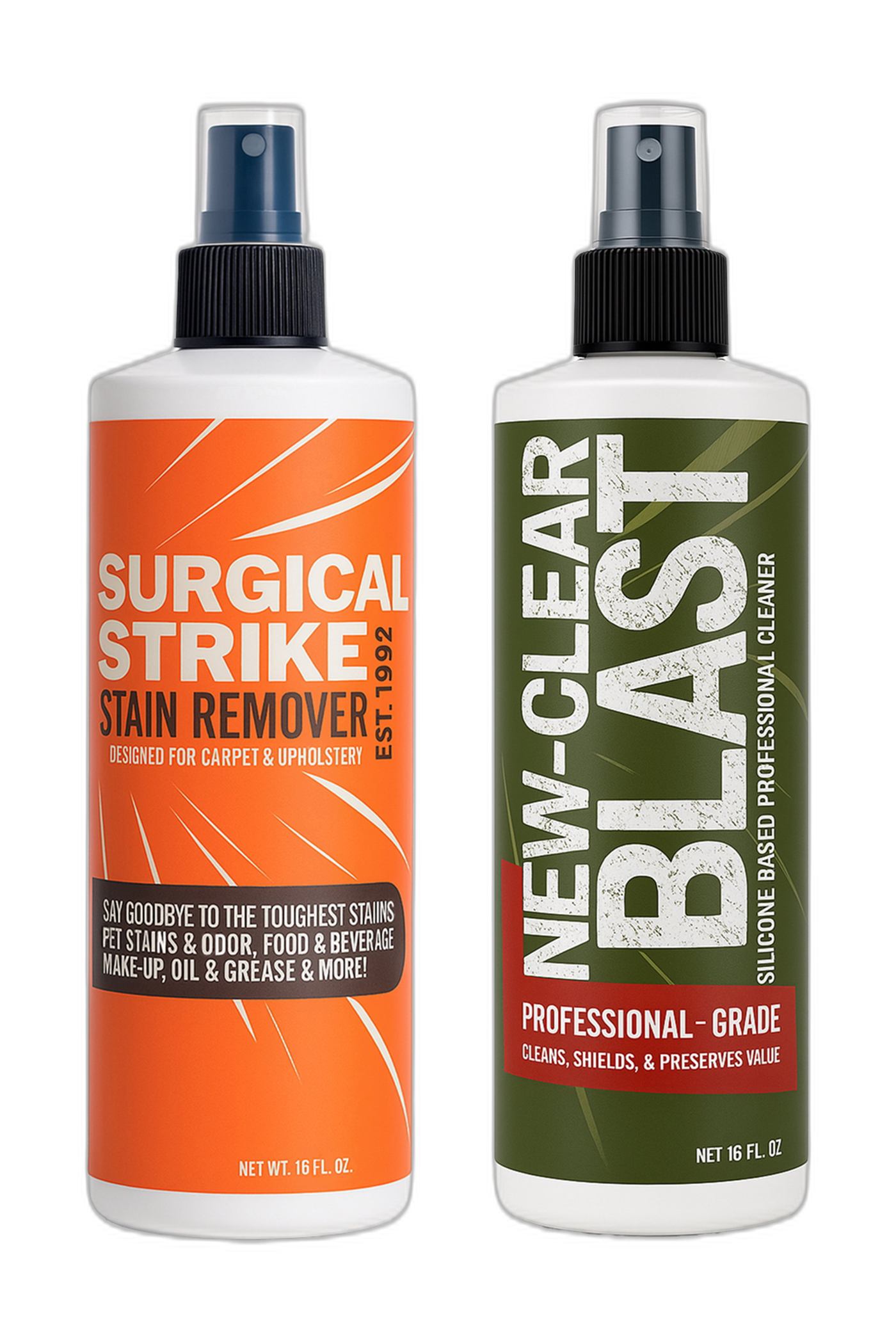
Two formulas. Serious range.
Use Surgical Strike for stains and odor, then New-Clear Blast to clean, shield and preserve hard surfaces.