Key Takeaways
For operators in the food service industry, maintaining a clean and safe environment is paramount. This includes the often unseen components of a commercial kitchen: the exhaust system. Sustainable cleaning practices offer a way to meet stringent safety standards while minimizing environmental impact and harsh-chemical exposure.
- The National Fire Protection Association (NFPA) standard 96 highlights that regular, effective cleaning of kitchen exhaust systems is essential for preventing grease buildup, a primary fuel source for fires in commercial kitchens.
- Conventional cleaning chemicals can contribute to environmental pollution. Choosing eco-friendly alternatives helps reduce the operational footprint of a commercial kitchen.
- Many traditional cleaners contain compounds that can pose health risks, such as endocrine disruptors or respiratory irritants. Plant-based options reduce maintenance staff's exposure to harsh solvents during grease removal.
- Adopting sustainable cleaning protocols can support operational efficiency. This may involve reducing the amount of product needed for a job or using solutions that do not require extensive personal protective equipment (PPE), which reduces worker exposure.
The Urgency of Exhaust System Cleaning: Fire Prevention and Compliance
In any commercial kitchen, the accumulation of fats, oils, and grease (FOG) within the exhaust system represents a significant hazard. This buildup is not merely an issue of cleanliness; it is a critical fire risk. Grease deposits are highly flammable and can ignite easily, leading to fires that spread rapidly through ductwork, endangering staff, patrons, and the entire facility.
Recognizing this danger, the National Fire Protection Association established NFPA 96, the standard for Ventilation Control and Fire Protection of Commercial Cooking Operations. This standard mandates the regular inspection and cleaning of hoods, ducts, and fans to control fire hazards and ensure the ventilation system functions correctly. Adherence to NFPA 96 is a fundamental requirement for operational safety, worker protection, and maintaining regulatory compliance in the food service industry.
Hidden Costs: Environmental and Health Impacts of Conventional Cleaners
While effective grease removal is non-negotiable, the choice of cleaning chemistry has far-reaching consequences. Many conventional degreasers are petroleum-based and contain volatile organic compounds (VOCs) that can contribute to air pollution. When washed down drains, residues from these products can also impact local water systems and ecosystems.
Beyond the environmental toll, there are significant health considerations. Some conventional cleaning agents contain endocrine disruptors, chemicals that may interfere with biological systems in both humans and wildlife. For the maintenance personnel tasked with cleaning exhaust systems, direct exposure to harsh cleaners can lead to respiratory issues, skin irritation, and other occupational health problems. These hidden costs underscore the need for more sustainable alternatives that do not compromise on performance.
Protecting Your Team: Fewer Harsh Chemicals with Sustainable Solutions
The safety and well-being of maintenance staff are critical components of a well-run operation. Workers regularly exposed to harsh cleaning chemicals can face elevated risks for chronic health issues, including occupational asthma and other respiratory problems. Shifting to sustainable cleaning solutions is a direct way to reduce these exposures and harsh fumes.
Formulations designed without harsh chemicals can reduce the need for extensive personal protective equipment (PPE), making the cleaning process simpler and more comfortable for staff. When workers are not handling aggressive chemicals, the potential for accidental splashes or inhalation is lower. This focus on worker safety contributes to overall operational efficiency by helping to reduce exposure-related downtime and fostering a more positive work environment.
Mechanism-to-Outcome Map: How Grease Buildup Creates Risk and How Cleaning Mitigates It
Understanding the direct relationship between kitchen operations, risk, and maintenance is key to effective management. The process can be broken down into a clear cause-and-effect map:
- Mechanism: The continuous cooking of foods releases vaporized fats, oils, and grease (FOG) into the air. As this hot air is pulled into the ventilation system, it cools, causing the FOG to condense and accumulate on the interior surfaces of exhaust hoods, ducts, and fans.
- Outcome: Over time, this grease buildup becomes a thick, highly combustible fuel source. A simple spark from the cooking line can ignite this material, resulting in a dangerous and difficult-to-control duct fire.
- Counter-Mechanism: A program of regular, thorough cleaning that removes these grease deposits is the primary defense. This involves using effective degreasing chemistries designed to break down and lift away stubborn, baked-on FOG.
- Outcome: This proactive maintenance directly mitigates fire hazards by removing the fuel source. It also helps maintain optimal airflow, supports better indoor air quality, and keeps the entire kitchen environment cleaner and compliant.
Navigating Regulations: NFPA 96 Compliance for Commercial Kitchens
NFPA 96 is the definitive standard for fire protection and ventilation control in commercial cooking environments. It provides clear, enforceable guidelines that building owners and restaurant operators must follow to ensure safety. The standard is not a suggestion; it is the benchmark used by fire marshals, health inspectors, and insurance providers.
A core component of NFPA 96 is the requirement for scheduled cleaning of the entire exhaust system, including hoods, ducts, and fans. The frequency of this cleaning depends on the type and volume of cooking. For instance, operations using solid fuel like charcoal or wood require more frequent cleaning than a non-grease-producing steam kettle. Compliance is a legal and operational necessity, essential for preventing fires, protecting assets, and ensuring the business can continue to operate without interruption.
Choosing the Right Chemistry: Advanced Sustainable Degreasers
The move toward sustainability does not mean sacrificing cleaning power. Modern chemistry has produced highly effective degreasers that are formulated with environmental and human safety in mind. A key innovation is the use of plant-based surfactants, which serve as a powerful alternative to traditional petrochemicals in breaking down grease and grime. These ingredients are derived from renewable resources and offer a more sustainable profile.
Effective, eco-friendly cleaners are often biodegradable and formulated to be free of VOCs, reducing their impact on air and water quality. These solutions are engineered to tackle the tough, baked-on grease found in commercial exhaust systems, proving that performance can be achieved without relying on harsh chemicals. For stubborn buildup, a specialized degreaser like Surgical Strike is formulated to assist with the removal of challenging residues, preparing surfaces for routine maintenance.
Operational Risks: The Consequences of Neglecting Exhaust Maintenance
Ignoring or delaying exhaust system maintenance can lead to a cascade of negative consequences for any food service business. The risks extend far beyond the immediate threat of a fire and can impact finances, safety, and operational continuity.
- Increased Fire Risk: This is the most severe consequence. A grease-laden duct system is a fire waiting to happen, threatening lives and potentially causing a total loss of the business.
- Reduced Ventilation Efficiency: As grease accumulates, it restricts airflow. This can lead to poor indoor air quality, smoke-filled kitchens, and higher ambient temperatures, creating an uncomfortable and unsafe environment for staff.
- Regulatory Penalties: Non-compliance with NFPA 96 and local health codes can result in significant fines, mandated operational shutdowns, and difficulties with insurance coverage in the event of an incident.
- Equipment Strain: A clogged exhaust system forces the fan motor to work harder, leading to increased energy consumption and a higher likelihood of premature equipment failure and costly repairs.
Checklist for Cleaner Selection: Ensuring Performance and Sustainability
When sourcing cleaning solutions for kitchen exhaust systems, procurement managers and operators should evaluate products based on safety, efficacy, and environmental impact. Use this checklist as a guide:
- Check for Biodegradability and VOC Content: Prioritize products that are readily biodegradable and formulated without volatile organic compounds (VOCs) to minimize environmental footprint.
- Identify Key Ingredients:Look for cleaners that utilize plant-based surfactants and other renewable ingredients as an alternative to harsh, petroleum-based solvents.
- Verify Performance: Ensure the product is proven effective for breaking down the high-temperature, baked-on grease specific to commercial kitchen exhaust systems. The chemistry must match the challenge.
- Assess Handling Profile: Select solutions that reduce occupational exposure risks for cleaning staff and are designed for use in food service environments. Review safety data sheets (SDS) for handling and storage requirements.
Best Practices: Implementing an Eco-Friendly Exhaust Cleaning Program
A successful sustainable cleaning program is built on consistency, training, and the right tools. The first step is to establish a cleaning schedule that aligns with NFPA 96 requirements, taking into account the type and volume of cooking performed. This schedule should be clearly documented and followed without exception.
Proper training is essential. All personnel involved in the cleaning process must understand the correct application procedures for the chosen sustainable solutions. Regular inspection of the exhaust system is also critical to monitor grease accumulation between cleanings and verify that the program is effective. For large or complex Facilities with diverse cleaning needs, a paired approach using multiple solutions may be beneficial. A bundle like the Power Pack can provide versatile options for both heavy-duty degreasing and general surface maintenance.
Clean and prep surfaces with CG Chemicals
If you are dealing with buildup, residues, or tough soil before maintenance or finishing work, CG Chemicals offers practical cleaning solutions for high-use environments. Explore New-Clear Blast and Surgical Strike based on your surface and soil type.
Sources
- https://www.nfpa.org/Assets/Files/AboutNFPA/Publications/NFPA-News/2023/Spring-2023/NFPA-96-Cleanliness-Commercial-Kitchen-Hoods.pdf
- https://cgchemicalsllc.com/blogs/articles/environmental-impact-cleaning-chemicals
- https://cgchemicalsllc.com/blogs/articles/the-hidden-threat-endocrine-disruptors-in-household-cleaners
- https://cgchemicalsllc.com/blogs/articles/schools-cleaning-with-toxins
- https://cgchemicalsllc.com/blogs/articles/how-to-safely-disinfect-your-home-without-harsh-chemicals
- https://www.foodservicetrends.com/kitchen-hygiene/sustainable-solutions-for-exhaust-systems
- https://www.greasecontrol.com/resources-and-training/
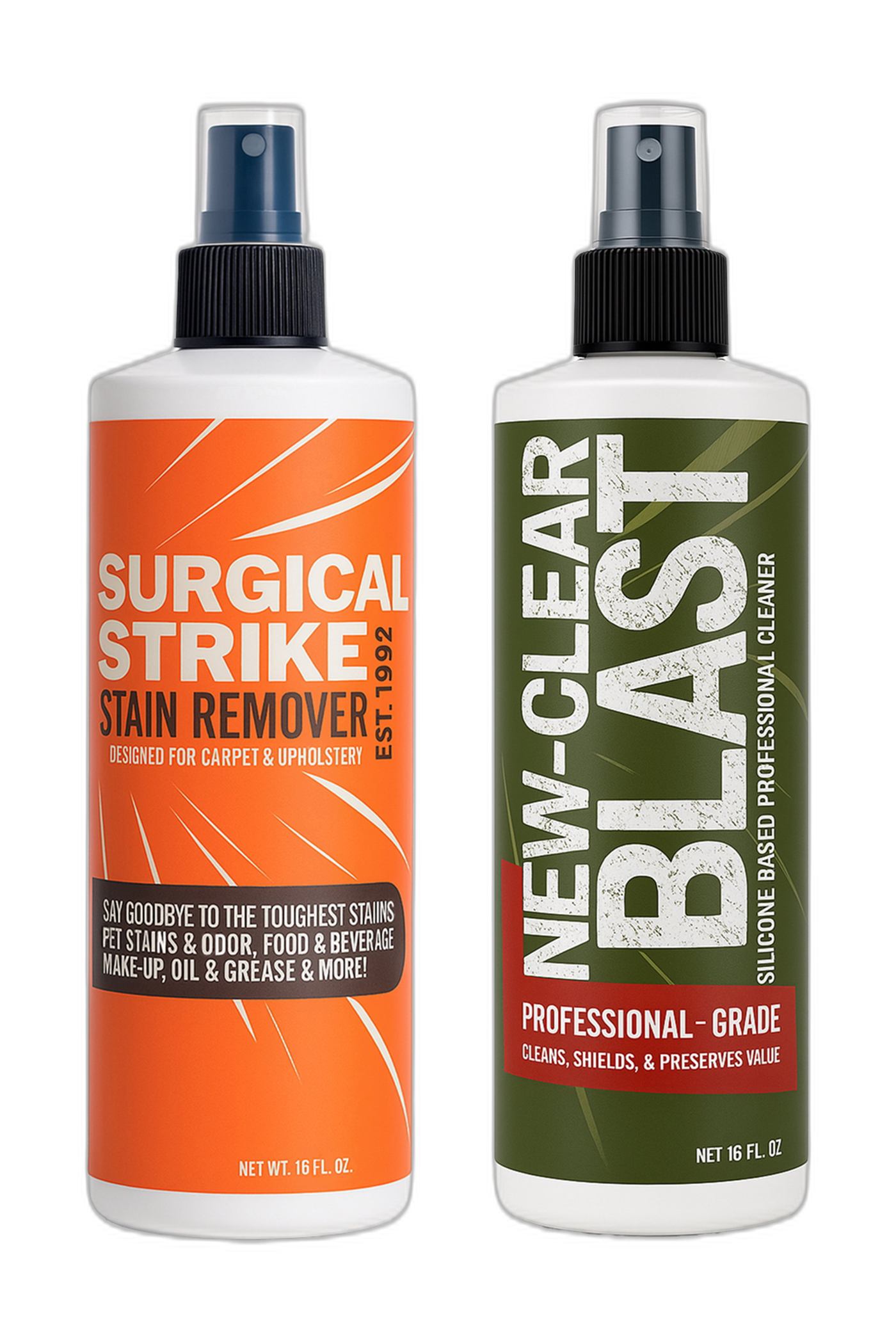
Two formulas. Serious range.
Use Surgical Strike for stains and odor, then New-Clear Blast to clean, shield and preserve hard surfaces.