Key Takeaways
Maintaining hygiene in a food processing plant is a complex task that balances safety, compliance, and operational costs. A successful food processing plant sanitation program is built on a foundation of clear, repeatable procedures and informed chemical management. Understanding these core principles helps protect consumers, employees, and the company's reputation.
- Comprehensive Sanitation Plans: Effective contamination control relies on detailed Sanitation Standard Operating Procedures (SSOPs). These plans outline every step of the cleaning process, from daily equipment wipedowns to deep cleaning schedules, ensuring consistency and accountability.
- Correct Chemical Use: The selection and application of detergents and sanitizers are critical. Each serves a different purpose at a specific stage of cleaning. Proper rinsing between steps is crucial to support the efficacy of sanitizing agents.
- Training and Verification: Consistent results depend on a well trained team. Regular employee training on SSOPs, chemical handling, and safety protocols is essential. Scheduled verification and documentation confirm that sanitation goals are met and provide a clear record for regulatory audits.
Regulatory Compliance and Food Safety Standards
Navigating the regulatory landscape is a primary responsibility for any food processing operation. Compliance is not just about avoiding penalties; it is about building a culture of food safety that protects the public. Key frameworks guide the development of robust sanitation programs.
The Hazard Analysis and Critical Control Points (HACCP) system is a cornerstone of modern food safety. It provides a systematic approach to identifying, evaluating, and controlling food safety hazards. Adhering to HACCP principles helps facilities proactively manage risks throughout the production process.
Alongside HACCP, Good Manufacturing Practices (GMP) establish the operational and environmental conditions necessary for producing safe food. GMPs cover everything from facility design and maintenance to personnel hygiene, ensuring a baseline of sanitary conditions. Documenting these procedures in Sanitation Standard Operating Procedures (SSOPs) creates a clear, actionable plan that supports consistent execution and simplifies compliance audits.
Managing Chemical Selection and Application for Food Safety
The chemicals used in a sanitation program are tools, and selecting the right ones is essential for success. The choice depends on the type of soil, the surface material, and the specific hygiene standards that must be met. An effective program typically involves a multi-step process using different types of cleaning solutions.
First, detergents are used to break down and remove organic matter like fats, proteins, and carbohydrates from surfaces. After a thorough rinse, sanitizers are applied to reduce the number of microorganisms to a safe level on food-contact surfaces. The selection process must ensure that the chosen chemicals are appropriate for a food processing environment and will not cause damage to equipment.
Proper application is just as important as selection. Following manufacturer guidelines for dilution, temperature, and contact time is critical. Furthermore, a complete rinsing protocol after using detergents is necessary to remove all chemical residues, which could otherwise interfere with the effectiveness of the final sanitizing step.
Operational Risks: Preventing Contamination and Chemical Hazards
Failures in sanitation protocols create significant operational risks, including cross-contamination and chemical hazards that can compromise product safety. One of the most common points of failure is inadequate rinsing after applying a detergent. Alkaline residues left on a surface can neutralize acid based sanitizers, rendering them ineffective and allowing microorganisms to survive.
Improper chemical use can also lead to direct product contamination or create safety hazards for employees. To mitigate these risks, personnel must be trained on proper handling procedures and the use of personal protective equipment (PPE). Strict adherence to personal hygiene practices, such as proper handwashing techniques, is another vital control measure. These practices help prevent employees from becoming vectors for contamination within the plant.
Mechanism-to-Outcome: Understanding Chemical Interactions for Effective Cleaning
Effective cleaning is a result of controlled chemical reactions. Understanding the mechanism behind how cleaning agents work helps teams troubleshoot issues and optimize their processes. Detergents, for example, contain surfactants that reduce the surface tension of water. This allows them to penetrate and break down soils by emulsifying fats and oils and suspending solid particles, which makes them easy to rinse away.
The pH level of cleaning agents plays a critical role in their function and interaction. Many powerful detergents are alkaline, which is effective for breaking down organic soils. However, if these alkaline residues are not completely rinsed off, they can neutralize the acidic sanitizers that are often used in the final step. This chemical interaction undermines the entire sanitation process.
Finally, process controls like contact time are essential for sanitizers to achieve their purpose. Each sanitizer requires a specific amount of time in contact with a surface to reduce microorganisms to a level considered safe for food production. This contact time must be carefully monitored and followed to ensure the desired outcome.
Strategic Planning for Cost-Effective Sanitation Programs
A well designed sanitation program can support operational efficiency and manage costs without compromising safety. This begins with a comprehensive, documented plan that clearly defines procedures, schedules, and responsibilities. A clear plan minimizes waste and ensures that resources like labor and chemicals are used effectively.
Empowering employees through operator led sanitation programs can also yield significant benefits. When the teams working directly with the equipment are involved in the cleaning process, they often have better insights into potential issues, leading to more efficient and thorough sanitation. For large scale Manufacturing environments, this approach can improve accountability and process ownership.
Looking forward, integrating innovative cleaning technologies and automation can offer long term efficiency gains. Automated Clean-In-Place (CIP) systems, for example, can provide consistent and verifiable cleaning for pipes and tanks while potentially reducing water and chemical usage. Staying informed about new technologies helps facilities continuously improve their sanitation efficacy and cost structure.
Implementing the 7-Step Cleaning and Sanitizing Protocol
A structured, multi-step approach to cleaning and sanitizing ensures that every surface is properly prepared and treated. While specifics can vary, most protocols in the food industry follow a similar sequence to achieve consistent results. The following steps provide a general framework for effective sanitation.
The process begins with a dry clean to remove any large, gross debris from surfaces and floors. This is followed by a preliminary rinse with water to wash away looser soils. The third step is the application of a suitable detergent, often combined with mechanical action like scrubbing, to break down and lift remaining organic matter and residues.
After the detergent has had adequate contact time, a thorough post-rinse is performed to remove all the detergent and suspended soil. This step is critical before moving on. The surface is then inspected to ensure it is visibly clean. Once cleanliness is confirmed, a sanitizer is applied and allowed to sit for its required contact time. The final step may involve a final rinse or allowing the surface to air dry, depending on the sanitizer used.
Selection Checklist for Sanitation Chemicals and Processes
Choosing the right chemicals and processes is fundamental to a successful sanitation program. This decision should be guided by a systematic evaluation of the facility's specific needs and regulatory requirements. A checklist can help ensure all key factors are considered.
- Efficacy and Suitability: Evaluate chemicals based on their effectiveness against the specific microorganisms and soil types present in your facility. The chosen agents must be appropriate for a food production environment.
- Surface Compatibility: Consider how cleaning agents will interact with different materials in your plant, such as stainless steel, aluminum, or plastics. The goal is to avoid corrosion, residue buildup, or other surface degradation that could compromise hygiene.
- Regulatory Alignment: Ensure that all selected chemicals, and the processes for using them, align with your facility's HACCP plan and Good Manufacturing Practices (GMP). This includes verifying any necessary approvals for food-contact surfaces.
Training and Verification for Consistent Hygiene Standards
Even the best sanitation plan is only effective if it is implemented correctly and consistently. This requires a strong emphasis on employee training and a robust verification system to confirm that standards are being met. These elements are crucial for maintaining food safety and demonstrating regulatory compliance.
Comprehensive training should cover all aspects of the sanitation program, including proper chemical handling, specific cleaning techniques for different equipment, personal hygiene protocols, and safety procedures. Regular refresher courses help reinforce these practices and keep the team updated on any changes to the protocols.
Verification procedures provide the proof that sanitation is effective. This can include visual inspections, environmental swabbing, and monitoring of critical parameters like chemical concentrations and water temperatures. Documenting all training activities, cleaning schedules, and verification results creates an auditable record that is essential for compliance and continuous improvement.
Clean and prep surfaces with CG Chemicals
If you are dealing with buildup, residues, or tough soil before maintenance or finishing work, CG Chemicals offers practical cleaning solutions for high-use environments. Explore New-Clear Blast and Surgical Strike based on your surface and soil type.
Use with adequate ventilation. Avoid contact with eyes and prolonged skin contact. Keep out of reach of children. Follow label directions.
Sources
- https://weeverapps.com/sanitation-management/sanitation-best-practices/
- https://droppe.com/blog/article/practices-for-food-processing-plant-sanitation/
- https://www.nsf.org/knowledge-library/clean-food-processing-facilities
- https://www.fda.gov/food/guidance-compliance-regulatory-information/haccp-guidance-industry
- https://www.foodlogistics.com/articles/11400-chemical-management-best-practices-in-food-processing
- https://www.food-safety.com/articles/4090-sanitation-best-practices
- https://www.ecolab.com/~/media/ecolab/ecolab%20home/documents/documentlibrary/publishedarticles/thedosanddontsoffoodplantpersonalhygienepractices_oct14.pdf
- https://www.foodengineeringmag.com/articles/95696-innovations-in-food-plant-sanitation-for-2024
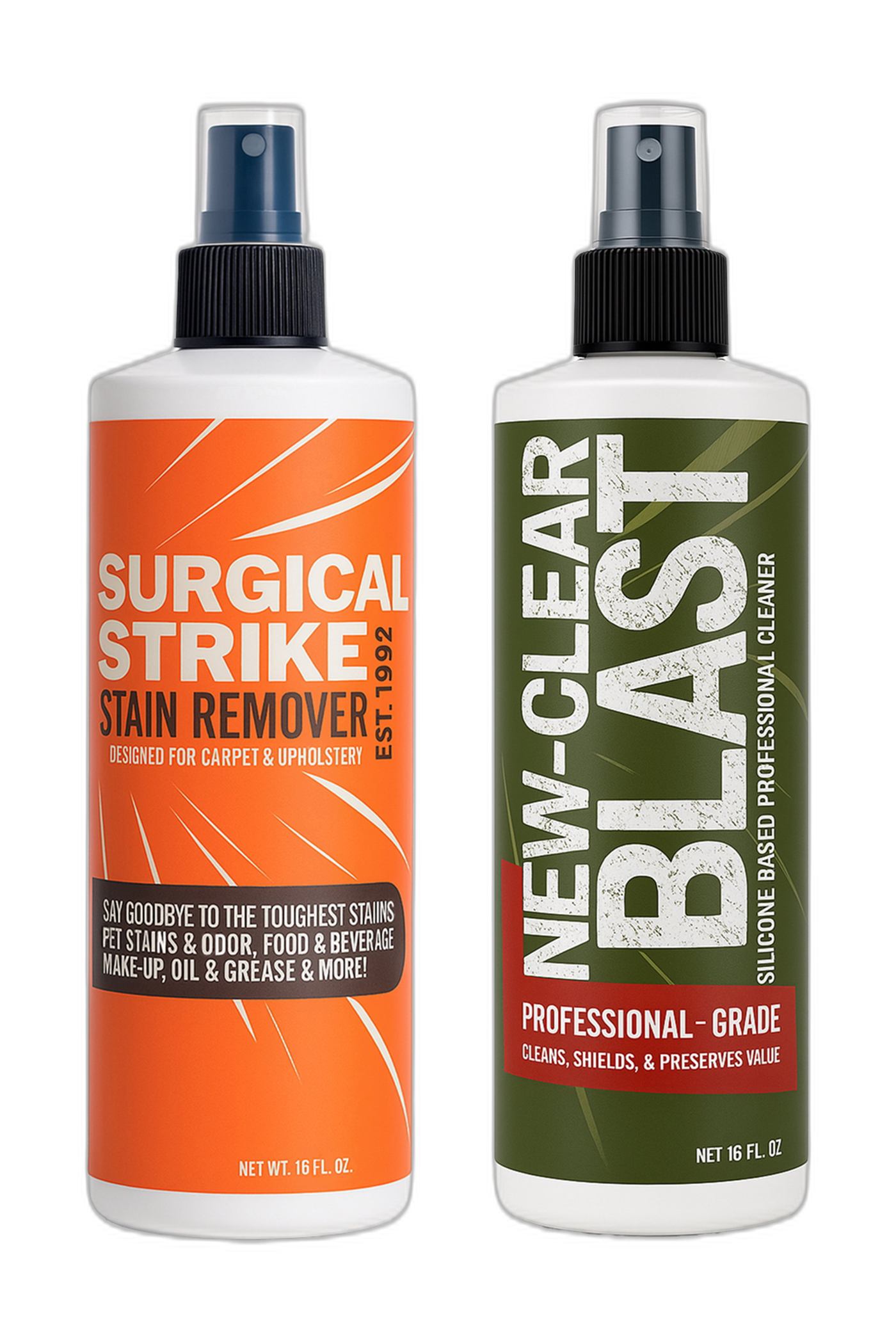
Two formulas. Serious range.
Use Surgical Strike for stains and odor, then New-Clear Blast to clean, shield and preserve hard surfaces.