Key Takeaways
For managers and operators of water treatment plants, implementing sustainable cleaning strategies is a foundational component of modern facility management. These practices support the long-term performance and reliability of critical water treatment infrastructure. Key insights include:
- Eco-friendly cleaning solutions contribute to environmental protection and reduce worker exposure to harsh chemicals.
- Optimized cleaning practices can lead to more efficient resource utilization, including reduced water usage.
- Regular, targeted cleaning helps prevent common operational issues like scaling, biofouling, and equipment degradation.
- Implementing sustainable cleaning strategies supports the long-term performance and reliability of water treatment infrastructure.
The Imperative of Sustainable Cleaning in Water Treatment
Water treatment facilities are a cornerstone of public health and environmental stability. Their function depends on precise and consistent maintenance to ensure water quality and operational continuity. However, these environments face persistent challenges, including the accumulation of biofilm, mineral scale, and chemical residues. These contaminants can impair system efficiency, obstruct flow, and increase energy consumption over time.
Sustainable cleaning approaches offer a path forward by integrating effective soil removal with environmental responsibility and worker well being. This means selecting cleaning agents and developing protocols that are effective against tough industrial soils without introducing unnecessary hazards or pollutants into the ecosystem. By doing so, facilities can better manage their operational footprint and align with community expectations for environmental stewardship.
Adopting eco-friendly solutions also plays a direct role in meeting regulatory compliance. Environmental agencies have established clear guidelines for industrial discharges and worker safety. Using cleaning products with a lower environmental impact helps facilities adhere to these standards, minimizing the risk of fines and operational disruptions. This proactive stance on compliance is a hallmark of a well-managed and sustainable operation.
Maintaining Operational Efficiency Through Strategic Cleaning
Strategic cleaning is fundamental to maintaining operational efficiency in any water treatment plant. A regular and systematic approach prevents the buildup of contaminants like scale and biofilm that can reduce the performance of filtration systems, pipes, pumps, and tanks. When equipment is kept clean, it operates closer to its designed specifications, which supports consistent and reliable water treatment outcomes.
Proactive maintenance and cleaning protocols are essential for asset preservation. By regularly removing corrosive or abrasive residues, facilities can extend the operational lifespan of expensive equipment. This practice helps defer major capital expenditures and reduces long-term replacement costs. For professionals in Manufacturing and industrial environments, asset longevity is a key performance indicator directly supported by sound maintenance routines.
Furthermore, effective cleaning can help optimize the energy consumption of water treatment processes. Pumps and filtration systems that are free of obstructive buildup require less energy to move water, leading to lower utility costs. Minimizing downtime due to unexpected equipment failure is another crucial benefit. A planned cleaning schedule is far less disruptive and costly than emergency shutdowns, ensuring a consistent water supply for the community the facility serves.
Enhancing Environmental Protection with Eco-Friendly Solutions
A primary goal of sustainable cleaning is to minimize the environmental impact of maintenance activities. Transitioning to biodegradable and low-toxicity cleaning agents is a significant step toward this goal. Such products break down more readily in the environment, reducing the chemical load on discharged wastewater and surrounding ecosystems. This shift is critical for facilities operating under strict environmental discharge permits.
Using eco-friendly solutions reduces the risk of introducing harmful or persistent chemicals into local waterways. This aligns with the core mission of water treatment: delivering clean water and protecting the environment. By carefully selecting cleaning products, facility managers can prevent the secondary pollution that can result from maintenance operations, reinforcing their commitment to broader environmental protection goals.
True sustainability involves considering the entire lifecycle impact of cleaning products, from their manufacturing and transportation to their use and disposal. Choosing concentrated formulas, for example, can reduce packaging waste and transportation emissions. This holistic view supports compliance with stringent environmental regulations governing industrial discharges and waste management, helping facilities operate as responsible environmental stewards.
Ensuring Worker Safety in Water Treatment Environments
Worker safety is a non-negotiable priority in water treatment environments. The use of less hazardous cleaning chemicals directly reduces worker exposure to corrosive fumes, skin irritants, and respiratory hazards. While strong chemicals may seem effective, their long-term cost in terms of health and safety incidents can be substantial.
Beyond product selection, proper training is essential. Personnel must be thoroughly trained on chemical handling, appropriate dilution, spill response procedures, and the correct use of personal protective equipment (PPE). A comprehensive safety program that includes regular training reduces the likelihood of accidents, chemical burns, or long-term health issues associated with aggressive cleaning agents.
When workers are equipped with less hazardous products and robust safety protocols, the entire facility benefits. A safer work environment is a priority in its own right. This focus on worker well being is not just a regulatory requirement; it is a key component of a resilient and efficient operational culture.
Cost Management and Resource Optimization in Facility Maintenance
An effective cleaning strategy is also a powerful tool for cost management. Preventive cleaning and maintenance routines are consistently more cost-effective than reactive measures. By addressing potential issues like scale and corrosion before they cause equipment failure, Facilities can avoid the high costs of emergency repairs and premature asset replacement.
Procurement strategies can also yield significant savings. Choosing concentrated cleaning solutions can lower per-use costs, reduce shipping expenses due to lower weight and volume, and minimize the physical space required for storage. These efficiencies add up, contributing positively to the overall maintenance budget.
Resource conservation is another key financial benefit. Efficient cleaning protocols that minimize water consumption for dilution and rinsing contribute directly to lower utility bills. Furthermore, optimized maintenance schedules, supported by effective cleaning, can extend asset longevity. Maximizing the return on investment for every piece of equipment is crucial for the long-term financial health of the operation.
Failure Modes and Operational Risks in Water Treatment Facilities
Neglecting proper cleaning protocols introduces significant operational risks. The gradual accumulation of mineral scale, organic matter, and biofilms in pipes, tanks, and on membranes can lead to reduced treatment capacity, increased pressure, and eventual equipment failure. These buildups force systems to work harder, consuming more energy and increasing mechanical stress on components.
The use of improper cleaning agents or neglecting certain surfaces can accelerate corrosion. This can compromise the structural integrity of tanks, pipes, and other critical components, leading to leaks and costly failures. Material compatibility is a crucial consideration that, if overlooked, can cause irreversible damage to expensive assets.
Perhaps the most critical risk is the potential for contamination of treated water. Inadequate sanitation practices can allow harmful microorganisms to proliferate within the system, posing a significant public health hazard and undermining the primary mission of the facility. Ineffective cleaning also leads to a cascade of other problems, including increased consumption of treatment chemicals to compensate for inefficiencies, higher waste disposal costs, and a greater risk of non-compliance with health and environmental standards.
Mechanism-to-Outcome Map for Effective Cleaning
Achieving desired outcomes in a water treatment facility relies on understanding the direct link between cleaning mechanisms and operational results. A systematic approach ensures that every action is purposeful and effective.
Cleaning Chemistry: The selection of appropriate pH levels, surfactant action, or chelating agents directly impacts the removal of specific contaminants. For instance, an acidic cleaner is typically needed for mineral scale, while an alkaline solution is more effective against oils and organic buildup. Matching the chemistry to the soil is the first step toward efficient cleaning.
Surface Conditions: Understanding material compatibility is crucial to prevent damage. The porosity of concrete, the finish on stainless steel, and the chemical resistance of various plastics and seals all influence which cleaning solutions and methods are compatible. The goal is to remove contaminants without causing corrosion, etching, or degradation, thereby preserving asset integrity.
Maintenance Practices: Consistency is key. Adhering to a defined schedule with specific cleaning frequencies, methods, and precise solution concentrations helps ensure sustained operational efficiency. This discipline extends equipment lifespan and minimizes unexpected downtime by addressing issues before they become critical failures.
Water Usage: Resource conservation is an important outcome of optimized cleaning. Efficient cleaning solutions that work quickly and rinse freely contribute to significant reductions in water consumption. Well-designed rinsing protocols further minimize water and wastewater generation, lowering utility and disposal costs.
Selection Checklist for Sustainable Cleaning Solutions
Choosing the right cleaning products is a critical decision that impacts efficiency, safety, and environmental compliance. A structured evaluation process helps ensure the selected solutions meet all necessary criteria.
- Cleaning Efficacy: Assess the product's effectiveness against typical soils found in the facility, including mineral scale, organic buildup, and organic films. Formulations like New-Clear Blast are designed for multi-surface use, while products like Surgical Strike can be used for tough degreasing and stain removal tasks.
- Material Compatibility: Confirm the solution is compatible with all materials present in the facility, such as stainless steel, concrete, PVC, and various gaskets and seals, to prevent costly damage.
- Concentration and Dilution: Evaluate product concentration and recommended dilution ratios. Highly concentrated products are often more cost-effective and reduce waste and shipping logistics.
- Water Requirements: Consider the volume of water required for the complete cleaning and rinsing cycle to support the facility's overall water conservation efforts.
- Worker Safety: Prioritize solutions with reduced VOCs, non-corrosive properties, and minimal health risks. Review the Safety Data Sheet (SDS) for each product to understand handling requirements and necessary PPE.
Regulatory, Safety, and Compliance Considerations
Operating a water treatment facility requires strict adherence to a complex web of regulations. Federal, state, and local environmental rules govern everything from wastewater discharge limits to chemical usage reporting. Maintaining compliance is paramount to avoid penalties and ensure the facility's license to operate.
In addition to environmental laws, occupational health and safety standards must be rigorously followed. Organizations like the EPA provide guidance on the safe storage, handling, and application of chemicals to protect workers. These standards are not suggestions; they are enforceable requirements designed to prevent accidents and injuries.
A cornerstone of any safety program is the availability and understanding of Safety Data Sheets (SDS) for all chemicals used on site. The SDS provides essential information on hazards, handling procedures, and emergency response. All personnel must know where to find these documents and how to interpret them. This knowledge is crucial for both routine handling and emergency planning.
Finally, compliance is an ongoing effort that depends on regular training. Personnel must be consistently trained on safe operating procedures, the use of personal protective equipment, and emergency response protocols. A well-trained workforce is the first and best line of defense in maintaining a compliant and safe work environment.
Clean and prep surfaces with CG Chemicals
If you are dealing with buildup, residues, or tough soil before maintenance or finishing work, CG Chemicals offers practical cleaning solutions for high-use environments. Explore New-Clear Blast and Surgical Strike based on your surface and soil type. Use with adequate ventilation. Avoid contact with eyes and prolonged skin contact. Keep out of reach of children. Follow label directions.
Sources
- https://www.waterandwastedigest.com/articles/cleaning-strategies-water-treatment-plants
- https://www.awwa.org/publications/journal-awwa
- https://www.epa.gov/sites/default/files/2023-05/documents/ewater-treatment-operator-health-safety.pdf
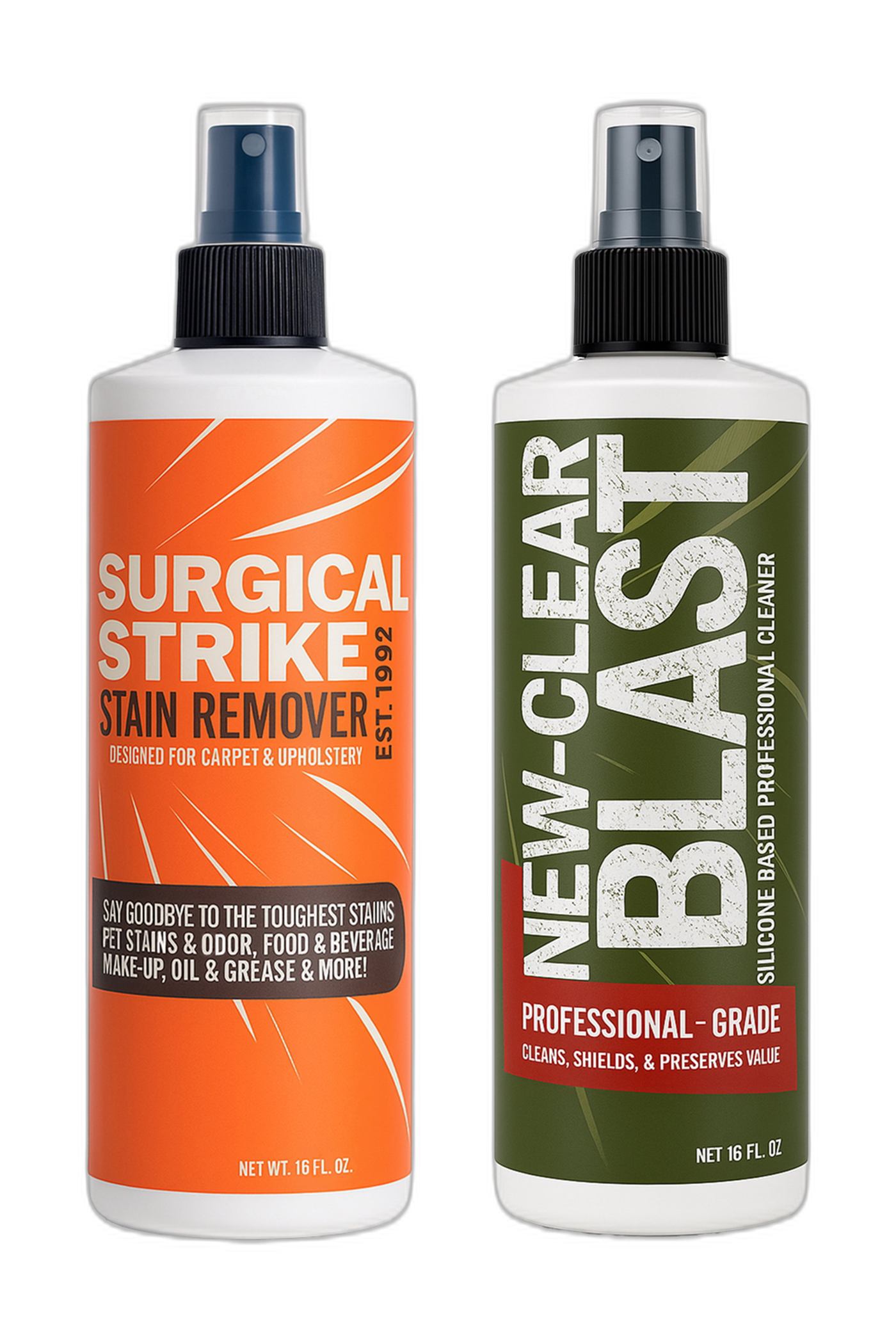
Two formulas. Serious range.
Use Surgical Strike for stains and odor, then New-Clear Blast to clean, shield and preserve hard surfaces.