Key Takeaways for Healthcare HVAC Cleaning
Maintaining optimal indoor air quality in healthcare settings is a non-negotiable aspect of patient safety and infection control. The proper maintenance of heating, ventilation, and air conditioning (HVAC) systems is central to this effort. Below are critical points for facility managers and maintenance teams to consider.
- HVAC systems are fundamental to infection control, managing air quality, humidity, filtration, and the crucial pressure relationships between different zones.
- Targeted HVAC cleaning reduces the buildup of dust, debris, and biological contaminants, which helps to lower the risk of airborne infections for both patients and staff.
- Following guidance from authoritative bodies like ASHRAE (Standard 170), the CDC, and the EPA is necessary for maintaining system performance and compliance.
- The use of high-efficiency filtration, particularly HEPA filters, is vital for trapping airborne pathogens in sensitive areas of a healthcare facility.
- Consistent maintenance, including the cleaning of coils, air handling units, and ductwork, is key to preventing re-contamination and supporting system efficiency.
HVAC Systems as Critical Infection Control Tools
In healthcare environments, HVAC systems are much more than climate control; they are engineered infection control tools. Their primary functions extend to tempering air, regulating humidity, and filtering a wide range of airborne contaminants. One of their most critical roles is establishing and sustaining precise pressure relationships that guide airflow from cleaner areas, such as operating theaters, to less clean areas, like waiting rooms.
Properly functioning systems assist in diluting airborne pathogens through specified air changes per hour (ACH) rates, creating a safer indoor environment for everyone. This function is a cornerstone of infection control guidance from organizations like the American Society for Health Care Engineering (ASHE) and the Centers for Disease Control and Prevention (CDC). By managing airflow and filtration, these systems actively contribute to a facility's overall strategy for preventing the spread of infectious agents.
Risks of Contaminated HVAC in Healthcare Facilities
When HVAC systems are not regularly and thoroughly cleaned, they can become reservoirs for contaminants. Dust, debris, and moisture can accumulate within ductwork, on coils, and in drain pans, creating an environment where microorganisms may thrive. This buildup poses a direct threat to indoor air quality (IAQ) and can contribute to the dispersal of harmful agents throughout a facility.
For vulnerable populations, especially immunocompromised patients, the risks are significantly higher. Contaminated systems can circulate particles that may contribute to respiratory issues or healthcare-associated infections. A disciplined cleaning protocol is essential for addressing these potential sources of contamination and supporting a healthier environment for patient care. Regular maintenance helps mitigate the risk of the HVAC system itself becoming a vector for contaminants.
Regulatory Frameworks and Performance Standards
Healthcare facilities are subject to strict standards for air quality and ventilation designed to protect patients and staff. A key document in this framework is ASHRAE Standard 170, Ventilation of Health Care Facilities, which outlines minimum requirements for ventilation rates, filtration efficiency, and pressure differentials to manage the transmission of airborne diseases.
A critical component of these standards is the use of high-efficiency particulate air (HEPA) filters. These filters are mandatory in sensitive areas like operating rooms and protective environment (PE) rooms for highly immunocompromised patients. HEPA filters are designed to capture at least 99.97 percent of airborne particles as small as 0.3 microns. Furthermore, standards often specify high air change rates; for example, airborne infection isolation (AII) rooms typically require around 12 ACH to dilute and remove contaminated air effectively.
Mechanism-to-Outcome Map: Cleaning for Optimal Air Quality
Effective HVAC cleaning in healthcare Facilities is a process where specific actions lead to direct, positive outcomes for air quality and system performance. Understanding this relationship helps prioritize maintenance tasks.
-
Mechanism: Routine cleaning of coils, air handling units, and ductwork removes accumulated soils, including dust, grime, and biological films.
Outcome: This action directly supports the performance of high-efficiency filters by preventing them from becoming overloaded with debris, which can cause air to bypass the filter media. This helps maintain optimal particle capture. -
Mechanism: Removing obstructions from system components helps ensure proper airflow throughout the ductwork.
Outcome: Unrestricted airflow allows the ventilation system to achieve its designed air change rates and maintain the critical pressure differentials required to control contaminant migration between different zones. -
Mechanism: The physical removal of contaminants from surfaces within the HVAC system minimizes the amount of particulate matter available for circulation.
Outcome: This reduces the potential for re-aerosolization of pathogens and other harmful particles, contributing to significantly better indoor air quality throughout the building.
Practical HVAC Cleaning Protocols and Scheduling
A systematic approach to HVAC cleaning is essential for maintaining performance in a hospital setting. Routine maintenance often includes quarterly inspections of filters and overall system cleanliness to identify issues before they escalate. This proactive schedule helps ensure the system operates as designed.
More intensive tasks, such as cleaning coils and air handling units, should adhere to manufacturer recommendations and standards like those from the National Air Duct Cleaners Association (NADCA). To manage long-term contamination, comprehensive ductwork cleaning is typically recommended every three to five years. All cleaning activities must be carefully planned, often during off-hours, and executed with strict containment measures to protect adjacent patient care areas. The use of specialized equipment, such as HEPA-filtered vacuums that exhaust air safely, is standard practice.
Failure Modes and Operational Risks from Poor HVAC Maintenance
Neglecting HVAC maintenance introduces significant operational and financial risks. Dirty coils and clogged filters restrict airflow, forcing fans and other components to work harder. This leads to reduced energy efficiency and higher utility costs. Over time, the accumulated grime and potential biological growth can degrade sensitive equipment components, shortening their operational lifespan and leading to more frequent and costly repairs.
Beyond equipment health, poor maintenance directly compromises the system's ability to maintain the specific environmental conditions required for patient care and sensitive medical equipment. This increases the likelihood of unplanned shutdowns in critical areas, which can disrupt patient services and impact operational continuity. Furthermore, inadequate cleaning elevates the risk of re-contamination, undermining other infection control efforts and leading to persistent problems with indoor air quality.
Regulatory, Safety, and Compliance Considerations
Maintaining a safe and compliant healthcare environment requires a multi-faceted approach to indoor air quality. EPA guidance emphasizes an integrated strategy that combines proper ventilation and filtration with source control and moisture management. Cleaning protocols are a key part of this source control strategy.
During any HVAC cleaning operation, personnel must follow stringent containment and zoning protocols to prevent the spread of contaminants to patient areas. This often involves scheduling work during non-peak hours to minimize disruption. Safety measures include using HEPA vacuums and ensuring exhaust air is managed correctly. All activities must comply with the facility's internal infection control policies and relevant industry standards. Proper worker training is also essential for managing risks associated with these specialized cleaning tasks.
Selection Checklist for Healthcare HVAC Cleaning Solutions
Choosing the right cleaning solutions is a critical step in any HVAC maintenance plan. Facility managers should consider several factors to ensure products are both effective and appropriate for a sensitive healthcare environment. This checklist can guide the selection process:
- Effectiveness: Does the solution effectively remove common contaminants found in HVAC systems, such as dust, grime, oils, and biological films?
- Material Compatibility: Is the product compatible with the various materials in air handlers, coils, and ductwork, including aluminum, copper, and galvanized steel?
- Safety and Application: Does the product support safe application protocols? Consider factors like VOC content and whether it requires special ventilation during use to align with facility safety standards.
- Operational Integration: Can the solution be integrated into existing cleaning procedures efficiently? Does it meet the operational needs for turnaround times during maintenance windows?
- Alignment with Goals: Does the product contribute positively to the facility's overall indoor air quality program and infection control mission?
Solutions like Surgical Strike can be used as part of a protocol to address grease and stubborn buildup, while New-Clear Blast is a multi-surface cleaner that can be used for general cleaning tasks. A full Applications list can help identify the appropriate solution for specific needs.
Clean and prep surfaces with CG Chemicals
If you are dealing with buildup, residues, or tough contamination before maintenance or finishing work, CG Chemicals offers practical cleaning solutions for high-use environments. Explore New-Clear Blast and Surgical Strike based on your surface and soil type.
Sources
- https://www.ashe.org/system/files/media/file/2022/11/01%20-%20Facilities%20Director%20Guidance_FINAL_CDC.pdf
- https://info.hughesenv.com/breathing-clean-hvac-ductwork-cleaning-in-healthcare-facilities
- https://www.ashrae.org/technical-resources/periodicals/ashrae-journal
- https://www.ashe.org/system/files/media/file/2022/04/01%20-%20Health-Care-Facilities-Manager-Guide_FINAL.pdf
- https://cadencenow.com/hvac-for-infection-control-in-healthcare-settings/
- https://modernpurair.com/hospital-air-duct-cleaning-guide/
- https://atirestoration.com/wp-content/uploads/2021/10/HVAC-Cleaning-and-Maintenance-in-a-Hospital-Healthcare-Setting.pdf
- https://www.ashrae.org/file%20library/technical%20resources/covid-19/i-p_a19_ch09_health_care_facilities.pdf
- https://www.epa.gov/iaq/healthcare-facilities-indoor-air-quality-and-infection-control
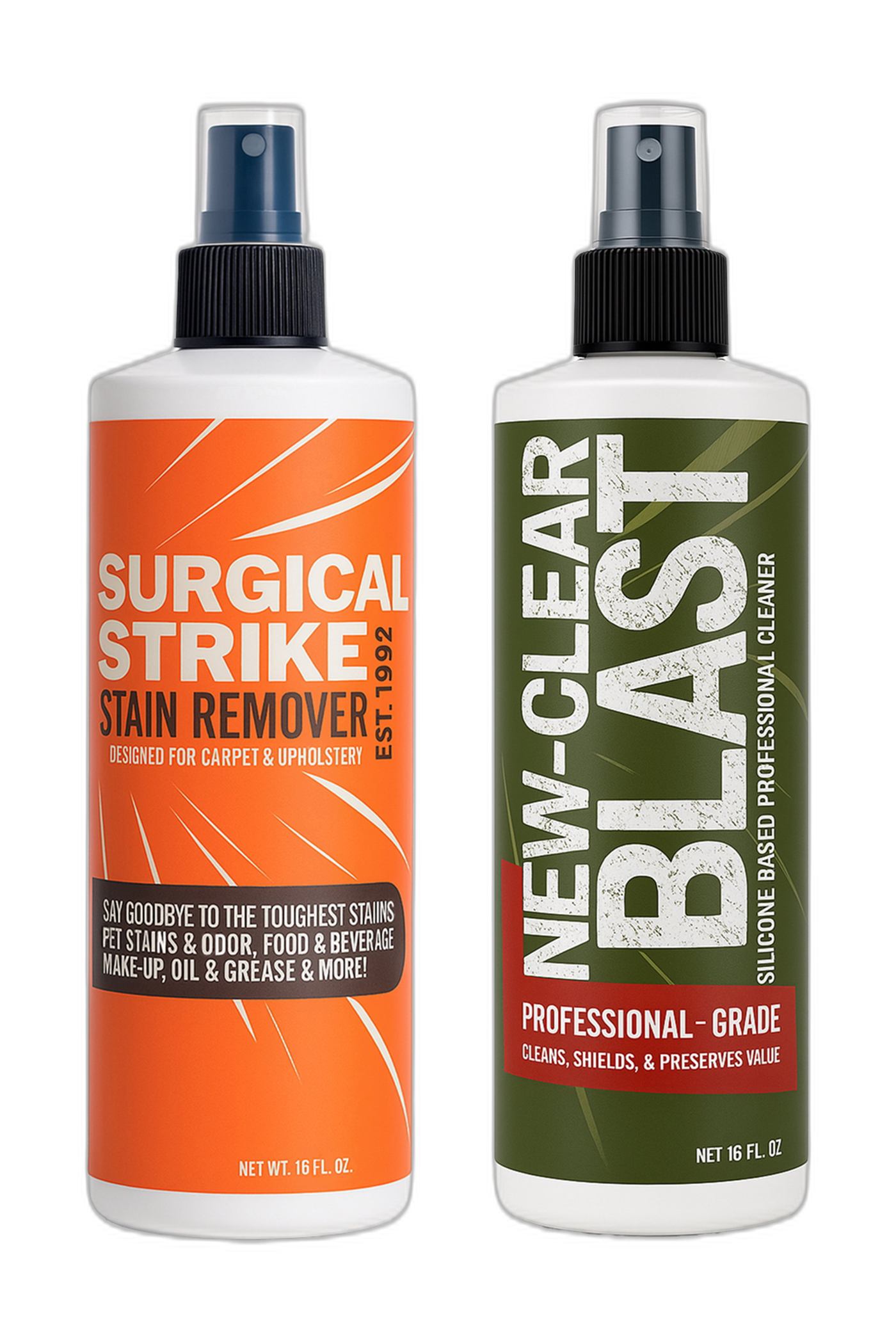
Two formulas. Serious range.
Use Surgical Strike for stains and odor, then New-Clear Blast to clean, shield and preserve hard surfaces.