Key Takeaways
For procurement specialists and operations managers in the medical device sector, understanding the role of cleaning is vital. The integrity and safety of medical devices are directly linked to the quality of the cleaning and surface preparation processes they undergo during production. This is not just a matter of aesthetics but a core component of quality control and regulatory adherence.
- Effective cleaning is a fundamental practice for maintaining the integrity of medical devices, preparing them for subsequent manufacturing stages.
- Thorough cleaning directly supports patient safety by removing contaminants that could otherwise lead to adverse events or device failure.
- Following a robust cleaning protocol helps facilities meet stringent regulatory compliance requirements, such as those outlined in industry standards.
- Surface preparation through cleaning is a critical precursor to many manufacturing and finishing processes, establishing a foundation for product quality.
- CG Chemicals provides cleaning and surface preparation solutions designed to support manufacturing operations as part of a comprehensive maintenance program.
The Critical Role of Cleaning in Medical Device Manufacturing
In the highly regulated world of medical device manufacturing, cleaning is a foundational step that influences every subsequent process. It serves to remove a wide range of contaminants, including oils, particulates, and biological residues, that could otherwise compromise device performance and patient safety. The primary goal is to produce a consistently clean surface that is ready for assembly, finishing, or packaging.
Proper surface preparation is essential for operations such as bonding, welding, and the application of specialized finishes. Any residual contamination can interfere with these processes, leading to product defects or failures. The cleanliness of a medical device directly influences its functionality and lifespan in a clinical setting. For instance, a properly cleaned surface supports the intended interaction between the device and biological systems, whereas a contaminated one can lead to unforeseen complications.
Establishing and maintaining consistent cleaning protocols is key to ensuring batch-to-batch product reliability. This consistency is a cornerstone of quality management systems and provides confidence that every device leaving the facility meets the same high standards of cleanliness and integrity.
Ensuring Product Integrity Through Effective Surface Preparation
Effective surface preparation is directly linked to the integrity and reliability of the final medical device. The process focuses on removing residues from manufacturing, handling, and the environment, which is critical for preventing potential material degradation. These residues, if left on the surface, could interact with biological systems or compromise the device's structural integrity over time.
For many medical devices, subsequent steps like applying functional coatings or bonding components are necessary. The success of these steps depends entirely on the condition of the substrate. A pristine, properly prepared surface is required to ensure strong adhesion and a uniform finish. Without it, delamination or other defects could occur, rendering the device unfit for use.
Ultimately, a diligent approach to surface preparation contributes to the overall quality of the medical device. It helps avoid defects that could arise from contaminated surfaces during the manufacturing process, supporting the production of reliable and safe products for clinical use.
Challenges in Maintaining Cleanliness in Manufacturing Environments
Medical device manufacturing environments present unique challenges for maintaining cleanliness. These facilities contend with a variety of contaminants, including dust from the air, oils from machinery, and residues from the manufacturing processes themselves. Each of these contaminants must be effectively removed without damaging the device.
The complexity of modern medical devices adds another layer of difficulty. Many devices have intricate geometries, internal channels, and are made from diverse material compositions, from stainless steel to advanced polymers. Cleaning protocols must be robust enough to address these complexities, ensuring that all surfaces, even those that are hard to reach, are thoroughly cleaned.
In high-volume production settings, maintaining consistent cleanliness requires repeatable and validated cleaning processes. The risk of re-contamination after a cleaning step is also a significant concern. Facilities must implement strict handling and environmental controls to ensure that a device remains clean throughout the final stages of production and packaging.
Regulatory, Safety, and Compliance Considerations for Medical Device Cleaning
The cleaning of medical devices is governed by a strict regulatory framework designed to ensure patient safety. Regulatory bodies like the U.S. Food and Drug Administration (FDA) provide comprehensive guidance on cleaning, disinfection, and sterilization processes. This guidance underscores the importance of validating cleaning procedures to demonstrate their effectiveness and repeatability.
Compliance with industry standards is also critical for manufacturers. For example, the ANSI/AAMI ST98:2023 standard provides a framework for the cleaning validation of reusable medical devices, and its principles are widely applied to single-use devices as well. Adherence to such standards is essential for market approval and demonstrates a commitment to quality and safety. Failure to meet these established cleaning protocols can have serious consequences, including regulatory actions, product recalls, and harm to patients.
Proper cleaning is a prerequisite for any subsequent sterilization or disinfection process. If a device is not thoroughly cleaned, residual soil can shield microorganisms from the sterilant, rendering the process ineffective. This makes cleaning a non-negotiable step in mitigating infection risks and ensuring that devices are safe for clinical use.
Selection Checklist for Cleaning Solutions in Medical Device Manufacturing
Choosing the right cleaning solution is a critical decision that impacts device integrity, safety, and regulatory compliance. Operations managers and procurement teams should consider several factors to make an informed choice. A systematic evaluation helps ensure the selected chemistry is appropriate for the specific application.
- Material Compatibility: The cleaning solution must be compatible with all materials used in the device. It should effectively clean without causing corrosion, discoloration, swelling, or other forms of degradation to metals, polymers, or elastomers.
- Efficacy Against Specific Soils: The solution should be proven effective against the specific types of soils encountered in the manufacturing process, which can range from machining oils and polishing compounds to biological residues.
- Residue Profile: An ideal cleaning agent should rinse freely from the device surface, leaving behind no toxic or interfering residues. Any remaining substances could affect device performance or patient safety.
- Safety and Environmental Protocols: The solution should align with the facility's safety protocols for operators and environmental regulations. This includes considerations for toxicity, flammability, and disposal requirements.
Mechanism-to-Outcome Map: How Cleaning Impacts Device Performance
Understanding the direct link between a cleaning mechanism and a performance outcome helps clarify why specific cleaning protocols are so important. The actions performed during cleaning have tangible effects on the final product's quality and reliability.
- Mechanism: Removal of particulates and organic residues. The physical and chemical lifting of soils from the surface prevents obstruction in device channels and ensures that moving parts function as designed. This action is crucial for devices with tight tolerances.
- Mechanism: Chemical interaction with soils. Cleaning agents work by dissolving, saponifying, or emulsifying contaminants. This chemical breakdown allows the soils to be lifted from the surface and washed away, preparing a clean substrate for subsequent steps.
- Mechanism: Surface wetting and rinsing. Proper wetting ensures the cleaning solution reaches all surface areas, including crevices and complex geometries. A thorough rinse then removes both the cleaning agent and the loosened soils, preventing residual contamination.
- Mechanism: Controlled cleaning process. A validated and repeatable cleaning process reduces variability in product quality. This control helps ensure that every device meets the required cleanliness specifications, which supports consistent manufacturing reliability and performance.
Failure Modes or Operational Risks Due to Inadequate Cleaning
The consequences of inadequate cleaning in medical device manufacturing are significant, affecting patient safety, operational efficiency, and regulatory standing. Incomplete cleaning can leave behind a biofilm or a layer of residue that may cause the device to malfunction or have a shortened operational lifespan.
From an operational perspective, contaminated surfaces can compromise the adhesion of coatings or the integrity of bonds during assembly. This can lead to higher rates of product rejection, rework, and scrap, all of which negatively impact production efficiency and cost. These failures not only delay production schedules but also represent a waste of materials and labor.
The most serious risk is to patient safety. Residual foreign matter on a device can lead to adverse events, including infections or immunological reactions. Furthermore, regulatory non-compliance resulting from failed cleaning validation can lead to warning letters, fines, or facility shutdowns, posing a substantial business risk.
CG Chemicals: Supporting Cleanliness and Surface Preparation in Manufacturing
CG Chemicals provides targeted cleaning solutions designed for diverse industrial and manufacturing needs. Our products are formulated to support the rigorous cleaning demands of high-use environments, contributing to surface readiness for subsequent processes. We understand that proper surface preparation is a critical step in a larger quality control framework.
For general cleaning of various surfaces where a protective finish is also beneficial, consider using New-Clear Blast. It is formulated to help remove common soils found in production areas. When addressing more challenging tasks such as degreasing, tough stains, or odors, Surgical Strike offers a potent solution to help prepare surfaces for the next stage of work.
If you are dealing with buildup, residues, or tough contamination before maintenance or finishing work, CG Chemicals offers practical cleaning solutions for high-use environments. Explore New-Clear Blast and Surgical Strike based on your surface and soil type.
Sources
- https://www.fda.gov/medical-devices/letters-health-professionals/devices-and-radiation-emitting-products-letter-december-9-2023
- https://standards.ite.in/catalog/view/20975
- https://www.hindawi.com/journals/jhe/
- https://cgchemicalsllc.com/pages/manufacturing
- https://cgchemicalsllc.com/products/new-clear-blast
- https://cgchemicalsllc.com/products/surgical-strike
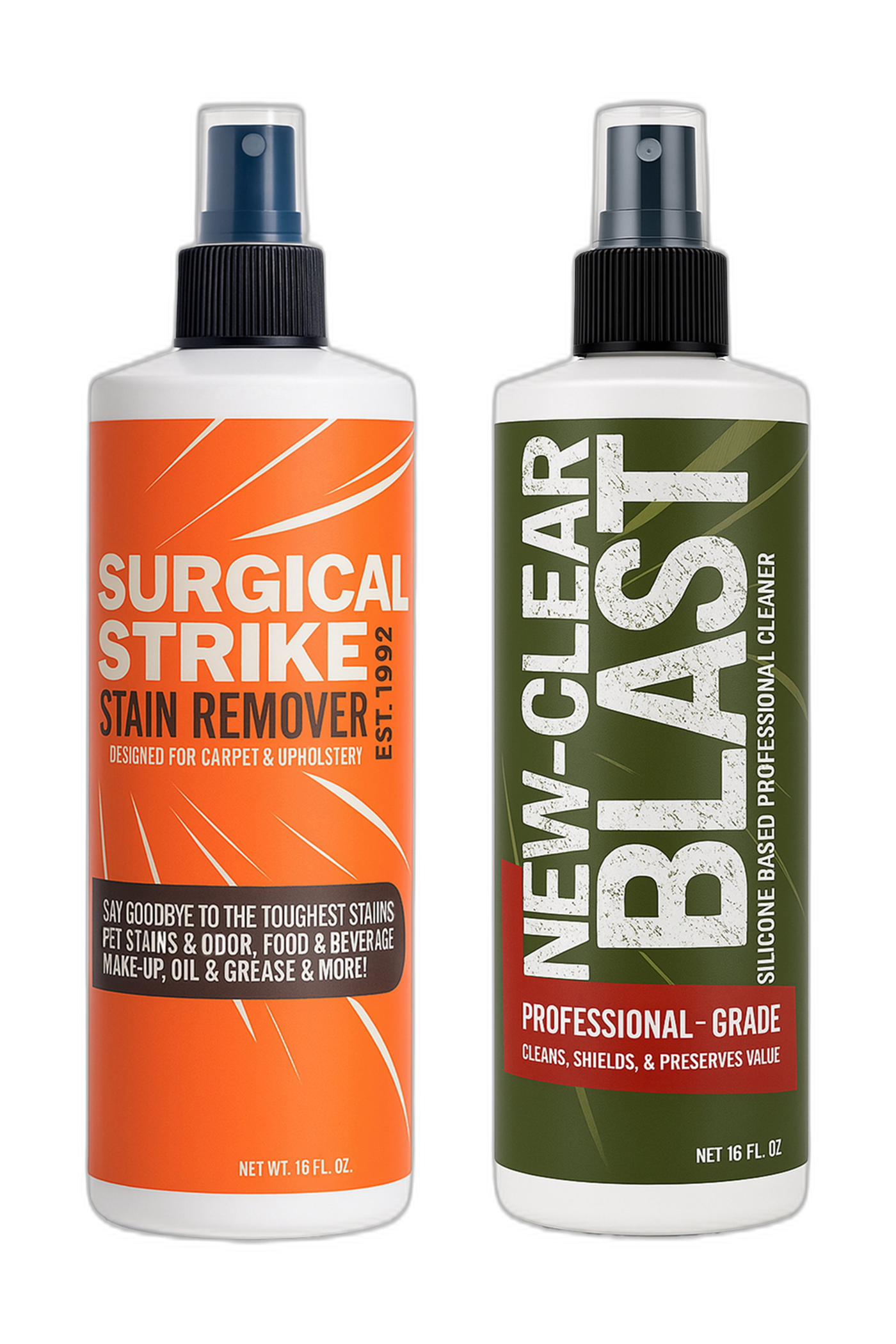
Two formulas. Serious range.
Use Surgical Strike for stains and odor, then New-Clear Blast to clean, shield and preserve hard surfaces.