In the world of semiconductor manufacturing, the difference between a high-yield production run and a costly failure can be smaller than a single speck of dust. The fabrication of microelectronics demands a level of cleanliness that is orders of magnitude beyond conventional manufacturing. This article explores the critical role of advanced cleaning and surface preparation in achieving the ultra-high purity levels necessary for modern semiconductor devices.
The Imperative of Ultra-Purity in Semiconductor Manufacturing
Semiconductor fabrication is a process of building intricate, multi-layered structures on a silicon wafer. Each layer is incredibly thin, and the features are measured in nanometers. At this scale, even a single microscopic particle can cause a short circuit or an open circuit, rendering the final device useless. Preventing defect formation is directly tied to maintaining an environment of exceptional purity.
The impact of contamination extends beyond physical blockages. Trace chemical residues can interfere with subsequent process steps, such as film deposition or etching. Unwanted materials on a wafer surface can affect film adhesion, leading to delamination, and introduce unintended chemical interactions that alter the electrical properties of the device. Therefore, the cleaning processes used are not just about removing visible dirt; they are about achieving molecular-level surface integrity to support device functionality and reliability.
Key Takeaways for Purity in Fabrication
Achieving the necessary purity in semiconductor fabrication relies on a carefully orchestrated set of principles and technologies. Understanding these key points is fundamental to appreciating the complexity of the cleaning challenge:
- Selective Chemistries are Essential: Advanced cleaning solutions must be formulated with high-purity components. More importantly, they must be selective, targeting specific contaminants like organic residues or metallic ions without damaging the delicate silicon wafers or thin-film layers.
- The Rise of Ultrapure Water (UPW): Modern wafer fabrication facilities are increasingly using ultrapure water in cleaning processes. This shift helps reduce the presence of volatile organic compounds (VOCs) and trace metal contamination often associated with other solvents, supporting both environmental goals and process purity.
- Preventing Recontamination is Critical: The goal of any cleaning protocol is to remove contaminants without reintroducing new ones. High-purity cleaning solutions and rinsing agents are vital to prevent the re-deposition of particles, ions, or chemical residues. This focus on purity is a primary factor in supporting yield and overall device reliability.
Mechanism-to-Outcome Map: Precision Cleaning Dynamics
Precision cleaning in semiconductor fabrication involves specific mechanisms designed to achieve predictable outcomes. The RCA cleaning process, for example, is a foundational multi-step wet-chemical sequence. The first step, Standard Clean 1 (SC-1), uses a mixture of ammonium hydroxide and hydrogen peroxide to remove organic contaminants and particles. The second step, Standard Clean 2 (SC-2), uses hydrochloric acid and hydrogen peroxide to remove metallic contaminants.
Beyond traditional wet chemistry, physical methods play a significant role. Ultrasonic and megasonic cleaning use high-frequency sound waves to dislodge fine particulates from complex surface topographies. These systems can operate at frequencies from 40 to 170 kHz, allowing engineers to match the frequency to the component geometry for effective removal while preserving surface integrity. The integration of ultrapure water into these cleaning cycles further minimizes the risk of contamination excursions, which can reduce test wafer usage and decrease tool downtime in advanced sub-14 nm processes.
Advanced Chemistries for Wafer Surface Preparation
The selection of cleaning chemistries is a critical decision in surface preparation for wafers. These solutions must remove a wide range of contaminants, including photoresist residues, metallic ions from previous steps, and ambient particles, all without etching or damaging the underlying silicon. This requires solutions formulated with ultra-high purity and tailored selectivity.
For particularly stubborn organic contamination, aggressive solutions are sometimes necessary. A Piranha clean, which is a highly reactive mixture of sulfuric acid and hydrogen peroxide, is frequently used to remove heavy organic residues like photoresist. It also effectively oxidizes trace metals, preparing them for removal in a subsequent step. The development of these specialized chemical solutions is geared toward supporting manufacturing efficiency by ensuring that surfaces are properly prepared for the next stage of fabrication.
Optimizing Contamination Control Processes
Effective contamination control is a combination of advanced chemistries and optimized processes. In modern 300mm wafer fabs, the move toward using ultrapure water for wet cleans is a key process optimization. This strategy helps mitigate risks associated with VOCs and trace metals, which is particularly important in advanced technology nodes.
Mechanical cleaning processes are also finely tuned. The frequency of ultrasonic cleaning systems, for instance, is chosen based on the geometry of the parts being cleaned to maximize particulate removal without causing damage. Supporting these processes are specialized consumables, such as cleanroom wipes. These wipes are designed to be compatible with various cleaning agents and are constructed to effectively trap and remove particles and residues without shedding fibers or introducing new contaminants into the controlled environment.
Failure Modes and Operational Risks from Contamination
The consequences of inadequate cleaning in semiconductor manufacturing are severe. Even trace levels of contamination can increase particle counts on a wafer, which directly correlates with device failure. These contaminants can also compromise the adhesion of thin films deposited in subsequent steps, leading to structural defects. Furthermore, unwanted chemical residues can trigger unintended interactions during high-temperature processes, altering the material properties of the device.
A significant operational risk is the reintroduction of particles, ions, or other residues after a cleaning step. This can happen if rinsing agents are not pure enough or if handling protocols are not strictly followed. Ultimately, any lapse in the precision cleaning regimen can directly impact product yield and the long-term reliability of the semiconductor devices being produced.
Regulatory, Safety, and Compliance Considerations
The semiconductor industry operates under stringent guidelines to ensure product quality and operational safety. Industry bodies like SEMI provide authoritative standards and guidelines for cleanroom protocols, material handling, and contamination control in fabrication environments. Adherence to these standards is fundamental for any manufacturer in the global supply chain.
Environmental compliance is another major consideration. The industry's shift toward using ultrapure water in wet cleaning processes is partly driven by the desire to reduce the use and emission of volatile organic compounds (VOCs). Regardless of the specific chemistries used, operator safety is paramount. All personnel working with cleaning solutions in manufacturing environments should follow label directions, ensure the use of adequate ventilation, and wear appropriate personal protective equipment.
Selection Checklist for Ultra-Pure Cleaning Solutions
Choosing the right cleaning solution for a specific application in semiconductor manufacturing requires careful evaluation. Procurement managers and process engineers can use a checklist to guide their selection:
- Verify Purity Level: Confirm that the solution meets the ultra-high purity specifications required for your process. This is essential to prevent the re-deposition of metallic ions or other contaminants onto sensitive wafer surfaces.
- Confirm Material Compatibility: Ensure the chemistry is compatible with the specific materials in your process, including silicon wafers, various thin films, and equipment components. The goal is to avoid unintended etching, corrosion, or other forms of damage.
- Evaluate Contaminant Removal Effectiveness: Assess the solution’s ability to effectively and selectively remove the target contaminants, whether they are organic photoresist residues, metallic ions, or fine particles.
- Assess Process Integration: Consider how the cleaning solution and its associated process steps integrate with your existing manufacturing workflow. The chosen solution should support overall manufacturing efficiency and contribute positively to yield.
Partnering for Purity and Performance in Manufacturing Environments
Achieving and maintaining the ultra-purity required in semiconductor fabrication is a continuous challenge that depends on consistent, well-defined cleaning and surface preparation protocols. While the chemistries discussed here are highly specialized for wafer processing, the underlying principles of contamination control and surface readiness apply to the broader manufacturing ecosystem. Effective cleaning solutions are foundational to operational efficiency and asset maintenance in any high-stakes industrial setting.
For facilities dealing with buildup, residues, or tough unwanted material on equipment, work surfaces, or facility components, practical cleaning solutions are essential. If you are preparing surfaces for maintenance or other finishing work, CG Chemicals LLC offers products designed for demanding industrial applications. Explore our Applications list to see how New-Clear Blast and Surgical Strike can be used as part of your maintenance and surface preparation protocols based on your specific surface and soil type.
Sources
- https://www.ultrapuretechnology.com/industries-we-serves/semiconductor-cleanrooms/
- https://www.vem-co.com/precision-cleaning-methods-semiconductor-advanced-manufacturing-equipment/
- https://www.foamtecintlwcc.com/cleaning-semiconductor-wafer-process-equipment-with-ultrapure-water-upw/
- https://msr-fsr.com/what-is-the-cleaning-process-of-semiconductors/
- https://envirotechint.com/industries-semiconductor/
- https://labproinc.com/blogs/cleanroom-wipes/elevating-cleanliness-and-protection-in-semiconductor-fabs-with-cleanroom-wipes
- https://www.uct.com/industries/semiconductor-equipment/default.aspx
- https://www.semi.org/en/standards
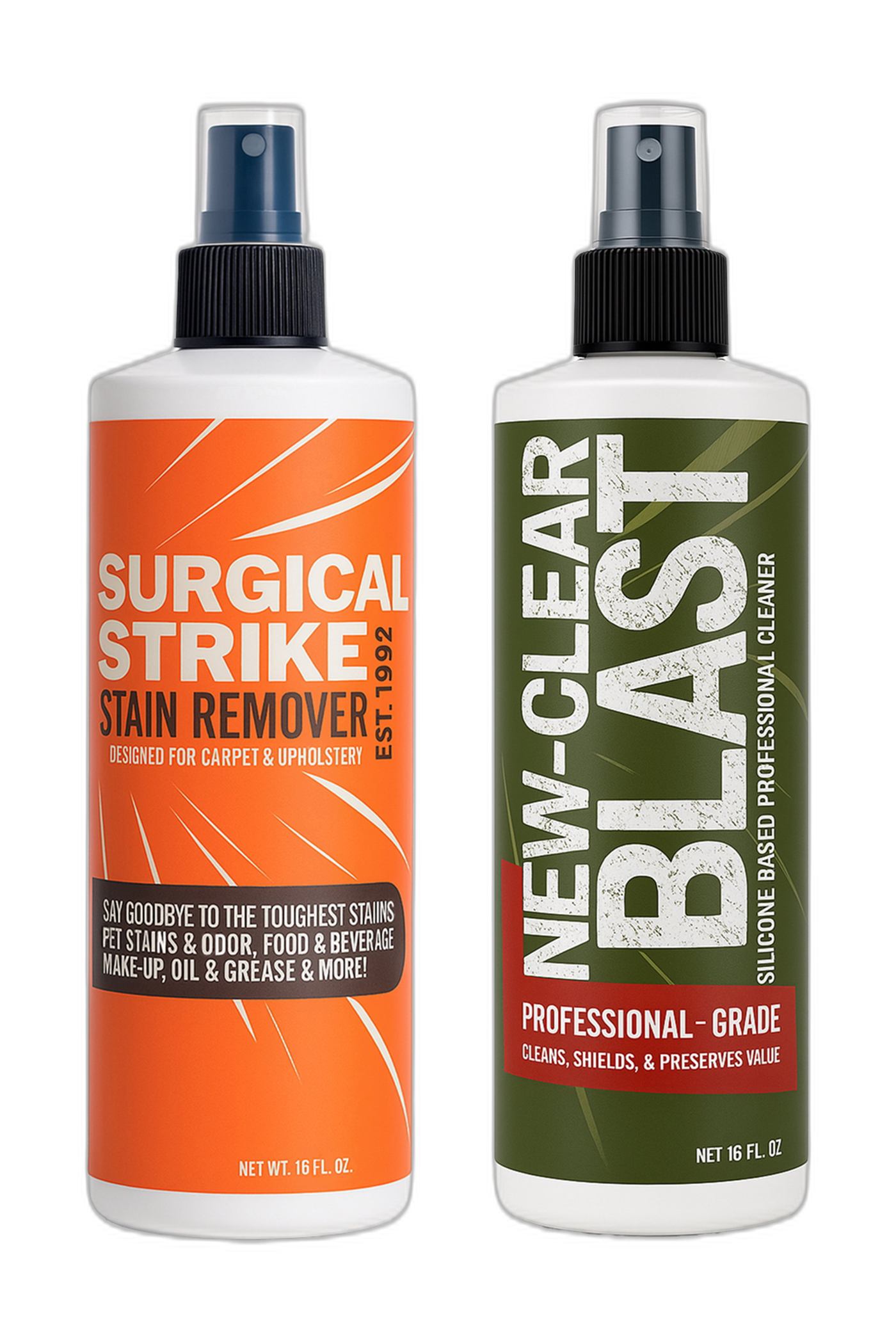
Two formulas. Serious range.
Use Surgical Strike for stains and odor, then New-Clear Blast to clean, shield and preserve hard surfaces.