Key Takeaways for Maintaining Specialized Fitness Equipment
For facility operators, maintaining the operational readiness and cleanliness of expensive, specialized fitness machinery is a primary concern. The following points summarize the core principles of effective equipment care that balances member comfort with asset preservation.
- Specialized fitness equipment requires cleaning with equipment-compatible products, which should be applied to a cloth first to avoid damaging sensitive components or electronics.
- Sweat, moisture, and unsuitable chemicals can cause corrosion, dull finishes, discolor plastics, and damage internal components; proper drying is crucial after cleaning.
- High-touch areas like handles, grips, seats, and consoles demand consistent cleaning attention to manage body oils, sweat residue, and built-up grime.
- Manufacturer guidelines consistently favor mild soap, water, and soft cloths over harsh chemicals like bleach or ammonia to preserve equipment surfaces.
- Regular cleaning protocols contribute to equipment uptime and extended lifespan by preventing grime buildup and moisture intrusion.
- Precision care for specialized equipment differs from general facility cleaning, focusing on component-specific routines for various machine parts.
The Criticality of Precision Cleaning for Specialized Fitness Equipment
Maintaining specialized fitness equipment extends far beyond routine, general-area cleaning. It involves a detailed approach aimed at component-level preservation and protecting critical user contact points. This precision is necessary to address the unique challenges posed by complex cardio machines, strength training systems, and functional training rigs. Unlike wiping down floors or mirrors, these assets have sensitive electronics, moving parts, and specialized materials that demand specific care.
The primary goal of these protocols is to extend the operational lifespan of high-value machinery. Persistent body oils, corrosive sweat, and accumulated grime can degrade finishes, interfere with mechanisms, and lead to premature failure if not properly managed. A consistent cleaning regimen directly impacts the operational reliability of equipment, helping to reduce downtime and costly repairs. Furthermore, keeping every touchpoint clean is essential for member comfort and satisfaction in high-traffic fitness facilities.
Understanding Failure Modes and Operational Risks
One of the most significant maintenance concerns for fitness equipment is the control of sweat and moisture. Lingering liquid from sweat or cleaning solutions can seep into seams and openings, contributing to rust and corrosion on metal components and potential damage to internal electronics. Over time, this moisture intrusion can compromise both the structural integrity and the functionality of the machine.
Similarly, the gradual buildup of grime, dust, and body oils can negatively affect the operational reliability of cardio, strength, and specialty machines. This accumulation can impede the smooth operation of guide rods, cables, and other moving parts, which increases wear and can eventually cause malfunction. The use of improper cleaning chemicals, such as those containing bleach or ammonia, can accelerate these issues. Such harsh substances can dull finishes, make plastics brittle, and damage protective finishes, leaving sensitive components exposed to damage.
Mechanism-to-Outcome Map: Cleaning Chemistry and Equipment Longevity
The relationship between cleaning practices and equipment longevity is direct. Using mild, equipment-compatible cleaners helps protect the various materials found in modern fitness equipment, including finishes, upholstery, and plastic shrouds. When cleaners are applied indirectly, by spraying them onto a cloth first, it protects sensitive electronics from chemical exposure and fluid damage.
This method of application prevents overspray from entering electrical openings, vents, or damaging screens, which preserves the functionality of consoles and monitors. A core function of any cleaning protocol is the consistent removal of body oils and sweat residues. This action helps to prevent corrosive buildup that can degrade metal parts and finishes over time. Finally, proper drying after cleaning is a critical, yet often overlooked, step. It is essential for preventing moisture-related degradation and extending the functional life of all equipment components.
Selecting Equipment-Compatible Cleaning Solutions
When selecting cleaning products, guidance from equipment manufacturers consistently recommends mild soap and water applied with a soft microfiber cloth. This approach is often sufficient for daily wipe-downs and helps preserve sensitive surfaces and finishes. It is important to avoid harsh cleaners containing bleach, ammonia, or other strong solvents. These chemicals can damage protective finishes, discolor plastics, degrade upholstery, and accelerate corrosion on metal components.
For facilities needing to address more persistent soils, it is important to choose cleaning products formulated to be equipment-compatible while effectively tackling grime. For heavy buildup of body oils and residues, maintenance teams can use a solution like Surgical Strike, a degreaser, stain and odor remover. For general surface care on a variety of materials, a product such as New-Clear Blast, a multi-surface cleaner, can be part of a daily maintenance routine. Always test a cleaner on a small, inconspicuous area first.
Application Protocols for Protecting Sensitive Components
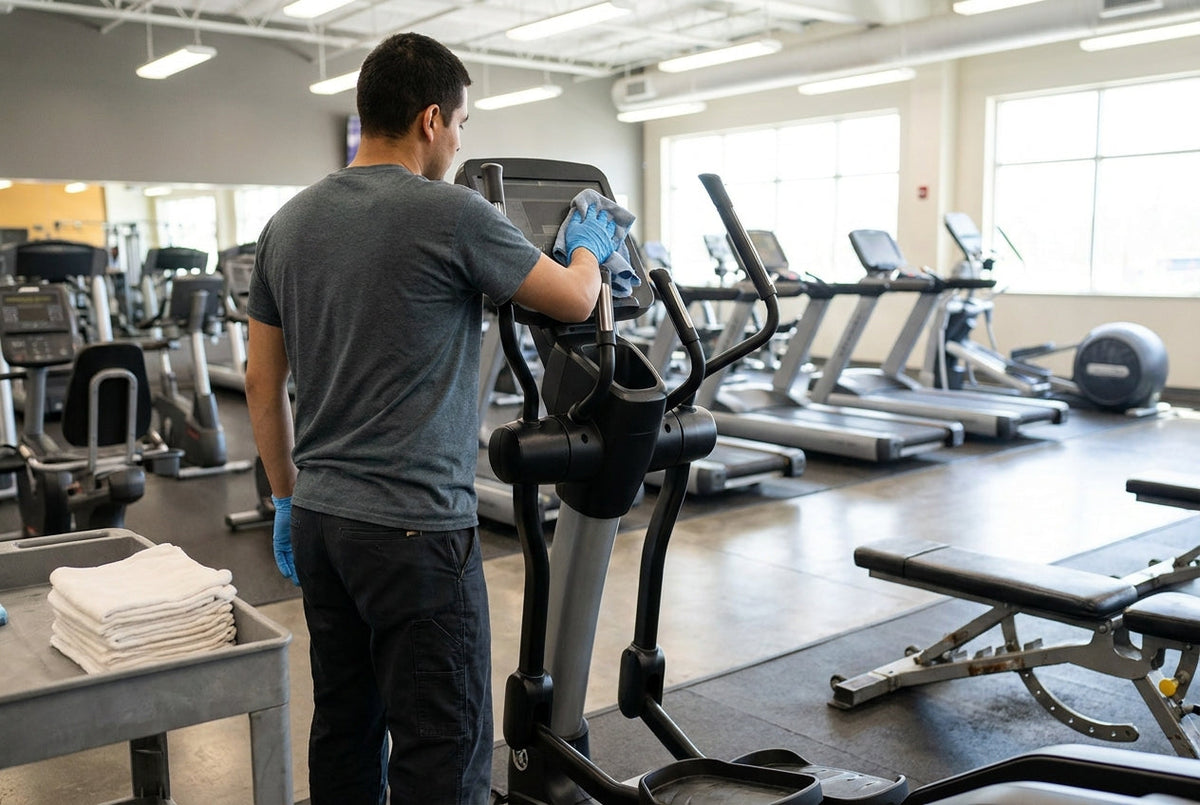
The method of application is as important as the cleaning solution itself. To protect sensitive equipment, always apply cleaning solutions to a cloth or wipe first, rather than spraying directly onto the machine. This simple step prevents liquid from seeping into seams, joints, and electronic components, which could lead to short circuits or corrosion.
Direct spraying creates overspray that can easily find its way onto and into touchscreens, consoles, and moving parts, causing unintended damage. For good results and to avoid damaging surfaces, use soft, non-abrasive cloths, such as microfiber. These cloths effectively lift dirt and moisture without scratching screens, finishes, or upholstery, and they do not leave behind lint that can clog mechanisms.
Component-Specific Cleaning: Cardio, Strength, and Functional Rigs
Different types of equipment require tailored cleaning approaches. For cardio and strength machines, maintenance must focus on high-touch surfaces such as consoles, grips, pads, and adjustment pins. Additionally, attention should be given to mechanical parts like cables, pulleys, and rails, where grime can accumulate and affect performance.
The highest priority should be on cleaning zones with direct user contact, including handles, seats, and support pads. These areas accumulate the most body oils and sweat residue, so they need the most frequent attention. For free weights, kettlebells, and functional training rigs, regular wiping and occasional degreasing helps remove built-up grime from textured surfaces. This practice keeps those surfaces clean to the touch and helps preserve a reliable grip.
Moisture Control and Drying Protocols
After any cleaning process, thorough drying of all surfaces is essential to prevent moisture-related damage. Even equipment-compatible cleaners can contribute to corrosion or electronic failure if liquid is left to stand on surfaces or seep into crevices. Wiping every part of the machine dry with a clean cloth removes residual moisture and cleaning solution.
If the cleaning protocol includes a product that requires a specific dwell time to be effective, facility staff must follow the product instructions carefully. Once the contact time is complete, it is critical to wipe the surface completely dry. This prevents chemical residue from building up, which can attract more dirt and potentially damage finishes over time. Never leave surfaces, especially metal components, wet for extended periods, as this will accelerate material degradation.
Frequency and Consistency: Maintaining Clean Contact Points and Asset Health
A consistent cleaning schedule is fundamental to both clean contact points and the long-term condition of fitness equipment. The baseline standard in most facilities is wiping down high-touch surfaces after each use, a practice often encouraged for members to perform themselves. This helps manage the immediate transfer of sweat and oils between users.
Beyond individual wipe-downs, facility staff should clean all high-touch contact points, such as grips, seats, pads, and consoles, at least daily. During peak hours in busy gyms, the frequency of these cleanings should increase to keep pace with usage. This routine cleaning schedule does more than keep surfaces clean; it is a form of preventative maintenance that helps maintain equipment uptime and longevity by stopping the corrosive buildup of grime and moisture before it can cause significant wear.
Regulatory and Handling Considerations
When implementing any cleaning program, careful product handling should be a top priority. Always follow the label directions for any cleaning product being used. Pay close attention to the manufacturer's instructions regarding application methods, required contact times for specific cleaning products, and any personal protective equipment (PPE) recommendations. When cleaning, especially in enclosed or poorly ventilated spaces, ensure there is adequate airflow to disperse any fumes from the cleaning solutions. Standard handling practices also include avoiding direct contact with eyes and minimizing prolonged skin contact with cleaning agents. Finally, it is crucial to keep all cleaning products out of the reach of children and gym members by storing them securely in designated areas.
Selection Checklist for Fitness Equipment Cleaners and Practices
To establish an effective, equipment-compatible cleaning protocol for specialized fitness equipment, facility managers should follow a clear set of practices. This checklist can serve as a guide for selecting products and implementing procedures that protect both users and assets.
- Choose mild, pH-neutral cleaners that are either recommended by equipment manufacturers or specifically designed for use on sensitive surfaces found in fitness environments.
- Ensure cleaning solutions are always applied to a microfiber cloth or sponge, never sprayed directly onto electronics, consoles, or into equipment openings.
- Prioritize products that effectively remove body oils, sweat residue, and grime without containing harsh chemicals like bleach or ammonia.
- Confirm that all cleaning routines include a thorough drying step to prevent moisture accumulation and the potential for corrosion.
- Select cleaners that support the longevity of the various materials found in fitness equipment, including plastics, upholstery, metals, and delicate finishes.
- Implement a consistent cleaning schedule that aligns with equipment usage patterns, paying special attention to high-touch surfaces.
Sources
- https://www.johnsonfitness.com/Equipment-Cleaning
- https://www.athleticbusiness.com/operations/maintenance/article/15160868/cleaning-fitness-equipment
- https://www.clubindustry.com/equipment/article/21272630/the-importance-of-regular-cleaning-and-maintenance-of-fitness-equipment
- https://www.truefitness.com/wp-content/uploads/2020/03/TRUE-Equipment-Cleaning-and-Disinfecting-Recommendations.pdf
- https://www.athleticbusiness.com/facilities/fitness/article/15157114/how-to-clean-your-high-end-fitness-equipment
- https://www.bannerhealth.com/healthcareblog/advise-me/sanitizing-your-workout-equipment

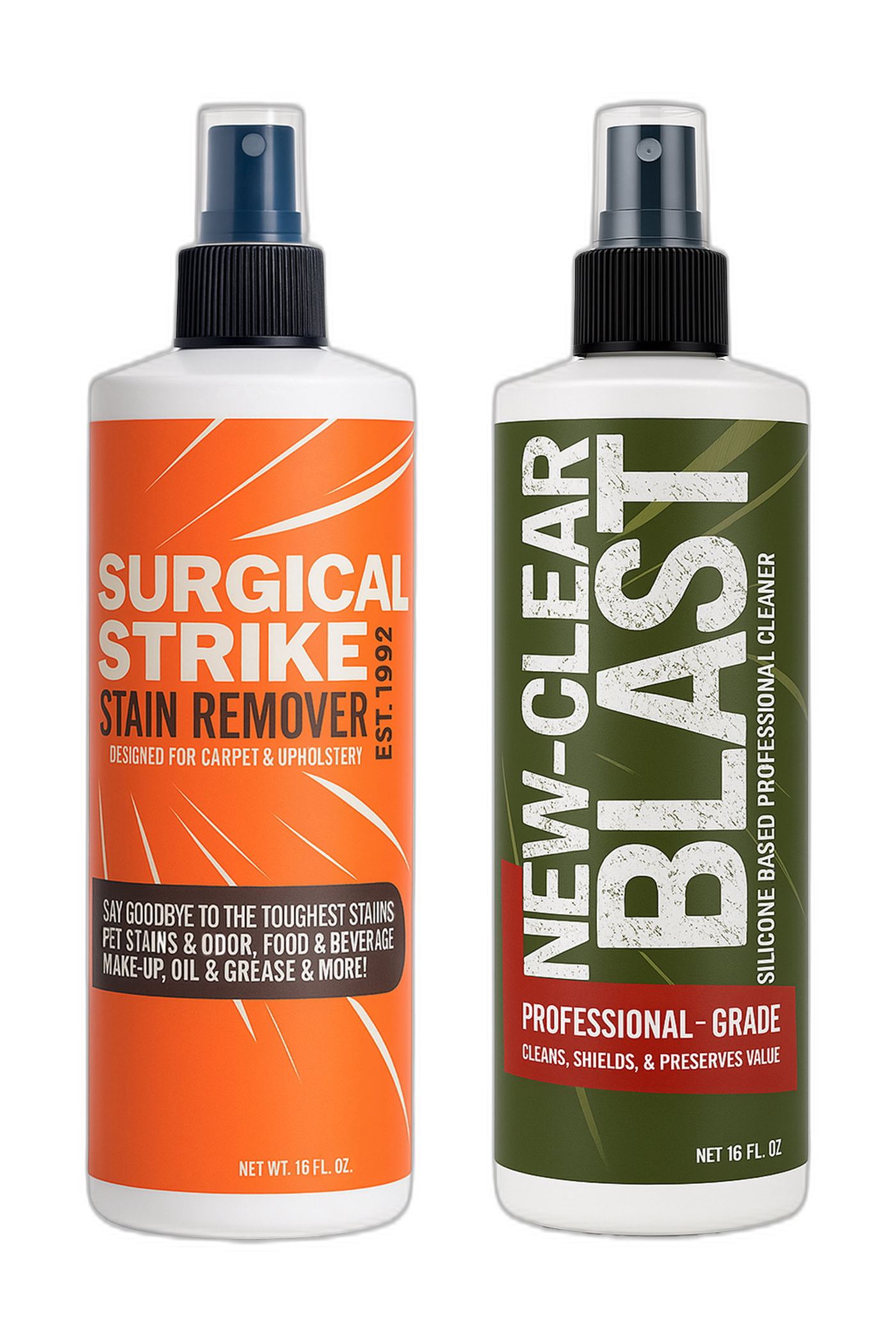
Two formulas. Serious range.
Use Surgical Strike for stains and odor, then New-Clear Blast to clean, shield and preserve hard surfaces.